Patchouli oil has long been celebrated for its rich, earthy aroma — but its benefits for hair and scalp health are increasingly being recognized by both consumers and the cosmetic industry.
From stimulating scalp circulation to controlling excess sebum and supporting the conditions that promote healthy hair growth, Pogostemon cablin oil brings a compelling combination of functional properties and natural fragrance to hair care formulations.
This guide covers two audiences. For individuals exploring patchouli oil as a natural hair care ingredient, the first sections explain what it does, how to use it safely, and what the research says.
For cosmetic formulators, hair care brand owners, and essential oil buyers, the latter sections of this article provide the technical specification, grade selection guidance, usage rates, and sourcing information you need to incorporate Indonesian patchouli oil into your commercial hair care product line.
Related Reading
→ Indonesian Patchouli Oil — Origins, Grades & Sourcing Guide
→ Patchouli Essential Oil — Product Specifications
What Is Patchouli Oil? A Quick Overview
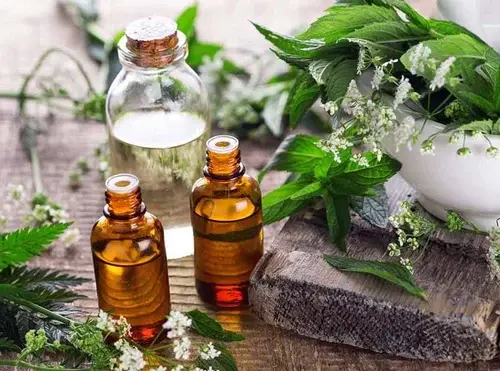
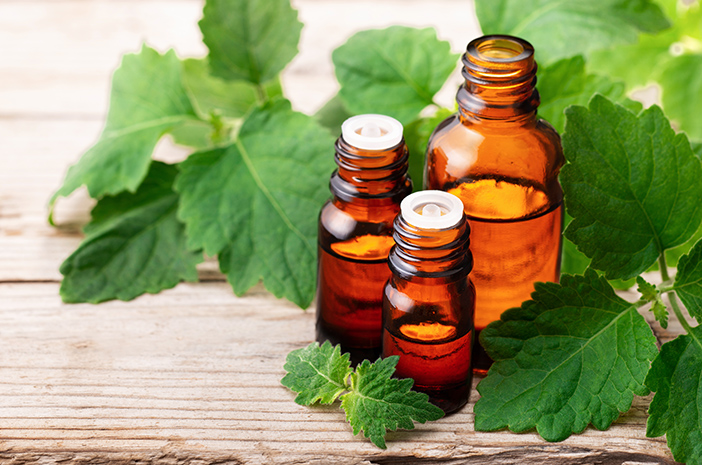
Patchouli oil is an essential oil steam-distilled from the dried leaves of Pogostemon cablin, a tropical herb native to Southeast Asia.
Indonesia — particularly Sulawesi and Sumatra — produces approximately 80–90% of the world's patchouli oil supply, making it the definitive source for this ingredient globally.
The oil's primary active compound is patchoulol (patchouli alcohol) — a sesquiterpene alcohol that constitutes 29–35% of the oil depending on grade.
Patchoulol is responsible for the oil's characteristic deep, earthy aroma and contributes to its anti-inflammatory and antimicrobial properties that make it relevant for scalp and hair care applications.
Patchouli oil is available in three commercial grades — Dark, Light (Iron-Free), and Molecular Distilled (MD) — each with different colour profiles and slight aroma variations.
For hair care applications, the grade choice matters significantly, as we explain in the formulator's section below. For a complete technical guide to grades, see: Patchouli Oil Grades Explained: Dark, Light & MD.
Patchouli Oil Benefits for Hair and Scalp
Scalp Circulation and Hair Follicle Stimulation
One of patchouli oil's most discussed benefits for hair growth is its ability to stimulate scalp circulation when applied topically.
The warming sensation and mild vasodilatory effect of patchoulol and associated sesquiterpenes may support increased blood flow to hair follicles — delivering more oxygen and nutrients to the follicular bulb, which is critical for active hair growth phases.
A 2025 study published in PMC on Light Fraction Patchouli Oil (LFPO) — a processed variant of patchouli oil — showed inhibition of Malassezia globosa (the fungus primarily responsible for dandruff) of 31.18mm, and demonstrated a 41.6mm increase in hair length in the test model compared to controls.
This represents one of the most recent scientific validations of patchouli oil's hair care relevance, and positions Light (Iron-Free) grade patchouli specifically as the preferred option for hair tonic and scalp treatment formulations.
Sebum Regulation
Patchouli oil functions as a natural astringent — it helps regulate excess sebum production on the scalp surface.
This makes it particularly useful in formulations targeting oily scalp conditions, where excess sebum can block follicles and create an environment unfavorable for healthy hair growth.
Regular use in a scalp serum or pre-shampoo oil treatment can help balance scalp sebum levels over time.
Antifungal Activity for Dandruff Control
The antifungal properties of patchouli oil — specifically against Malassezia species — position it as a scientifically-supported active in anti-dandruff formulations.
Unlike synthetic antifungal agents (zinc pyrithione, selenium sulfide, ketoconazole), patchouli oil offers a natural, plant-derived alternative that appeals to the growing segment of consumers seeking clean, botanical hair care products.
Anti-inflammatory Support for Scalp Health
Chronic scalp inflammation is a contributing factor in several hair loss conditions, including androgenetic alopecia and telogen effluvium.
Patchouli oil's mild anti-inflammatory activity — driven by β-caryophyllene and patchoulol — may support a calmer scalp environment that is more conducive to healthy hair retention and growth.
Natural Conditioning and Fragrance
Beyond its functional properties, patchouli oil contributes natural conditioning benefits to hair care formulations — its lipophilic character helps coat the hair shaft, reducing frizz and improving shine.
And its long-lasting, tenacious aroma — one of the best natural fixatives in perfumery — means that hair products formulated with patchouli maintain their scent significantly longer than those using more volatile essential oils.
How to Use Patchouli Oil for Hair: Application Guide
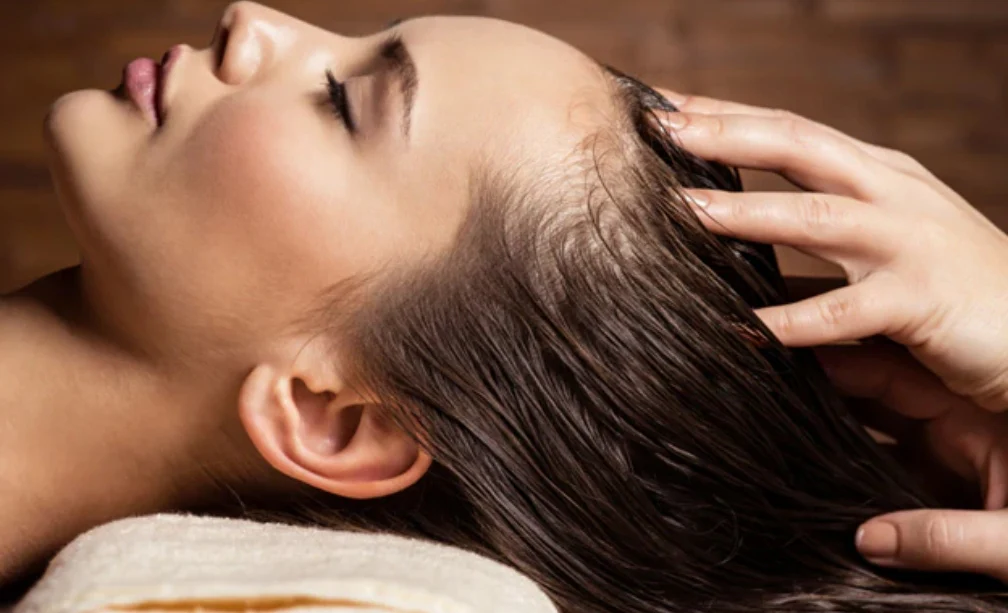
Scalp Massage Oil
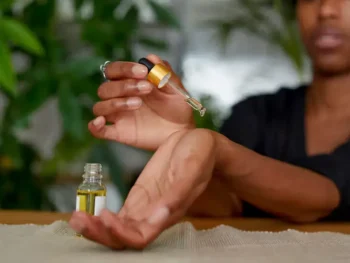
The simplest and most direct application of patchouli oil for hair and scalp benefits is as a pre-shampoo scalp massage oil.
Blend 2–3 drops of patchouli oil into 1 tablespoon of a carrier oil — Virgin Coconut Oil (VCO) is an excellent choice for this purpose, as it penetrates the hair shaft, provides additional scalp nourishment, and complements patchouli's warm aroma.
Massage into the scalp in circular motions for 5–10 minutes, leave for 20–30 minutes, then shampoo as normal.
Add to Shampoo or Conditioner
Add 3–5 drops of patchouli oil to your regular shampoo or conditioner (per 100ml of product).
This is one of the easiest ways to incorporate patchouli oil into a daily hair care routine without changing existing habits.
The astringent and antifungal properties remain active even in a rinse-off format at these concentrations.
Leave-On Scalp Serum
For a more targeted approach, blend patchouli oil at 0.5–1% concentration in a lightweight carrier such as jojoba oil or argan oil, and apply directly to the scalp (not the hair length) at night.
This leave-on application allows more sustained contact time with the follicle environment.
Beard Oil
For beard care, patchouli oil at 1–3% in a carrier oil blend (VCO + jojoba + sweet almond) provides: conditioning for beard hair, moisturisation for the skin underneath, and a distinctive natural masculine fragrance that is both long-lasting and appealing.
The grounding, earthy-woody aroma of patchouli pairs particularly well with cedarwood, vetiver, or bergamot as blending partners in men's grooming products.
| ⚠️ Dilution Is Essential Patchouli oil should never be applied undiluted directly to the scalp or hair. Always dilute in a carrier oil at the concentrations listed above. At full strength, the oil can cause skin sensitisation and irritation. Start with lower concentrations (0.5%) if you have sensitive skin, and perform a patch test 24 hours before first full application. |
The Science: What Research Says About Patchouli Oil and Hair
The scientific literature on patchouli oil and hair care is growing, with several studies providing relevant evidence for its mechanisms of action:
- Antifungal activity vs Malassezia (2025, PMC): Light Fraction Patchouli Oil demonstrated 31.18mm inhibition zone against Malassezia globosa — the primary dandruff-causing fungus. This positions patchouli oil, particularly in its Light (Iron-Free) processed form, as a scientifically validated natural antifungal for scalp care formulations.
- Hair growth stimulation (2025, PMC): The same study demonstrated 41.6mm hair length increase in the test model compared to controls — providing direct evidence for patchouli oil's hair growth stimulating potential when formulated as a hair tonic.
- Anti-inflammatory activity: Multiple studies confirm that β-caryophyllene — present at 5–12% in patchouli oil — acts as a CB2 receptor agonist with documented anti-inflammatory effects. This supports patchouli oil's use in formulations targeting scalp inflammation.
- Antimicrobial properties: Patchoulol demonstrates antimicrobial activity against several bacteria and fungi relevant to scalp health. Combined with β-caryophyllene's anti-inflammatory properties, patchouli oil offers a multi-mechanism approach to scalp health maintenance.
| Important Note on 'Hair Growth' Claims While the evidence above is promising, 'hair growth' is a regulated claim in most major cosmetic markets (EU, US, UK). Cosmetic products can make claims related to 'supporting conditions for healthy-looking hair' or 'scalp conditioning' — but direct claims of 'regrows hair' or 'reverses hair loss' constitute drug claims in most jurisdictions and require clinical substantiation. Always work with a regulatory specialist to ensure your product claims are compliant for your target market. |
For Hair Care Formulators & Cosmetic Brands
The section below covers technical sourcing information for B2B buyers, manufacturers, and brand owners.
For Hair Care Formulators: Grade Selection & Technical Usage Guide
For cosmetic formulators and hair care brand owners looking to incorporate Indonesian patchouli oil into commercial products, this section provides the technical information needed to make the right grade choice and formulate effectively.
Which Grade for Hair Care Applications?
| Hair Care Product | Recommended Grade | Reason | Usage Rate |
| Shampoo (any colour) | Light (Iron-Free) | Dark grade imparts amber colour to clear/white shampoo base | 0.3 – 0.8% |
| Conditioner | Light (Iron-Free) | Colour neutrality; compatible with conditioning polymer systems | 0.3 – 0.5% |
| Scalp treatment serum | Light or MD | Leave-on application; colour and aroma refinement matters | 0.5 – 1.0% |
| Hair tonic / scalp spray | Light (Iron-Free) | Based on 2025 LFPO research — Light grade is specifically validated | 0.5 – 1.5% |
| Pre-shampoo scalp oil | Dark or Light | Dark acceptable in carrier oil — rich aroma; Light for lighter profile | 1.0 – 3.0% |
| Beard oil | Dark or Light | Dark preferred for masculine fragrance depth; Light for cleaner profile | 1.0 – 3.0% |
| Hair mask / deep treatment | Light | Applied to scalp and hair — colour neutrality important | 0.5 – 1.0% |
| Dry shampoo | Light or MD | Powder format — Light/MD for minimal colour impact | 0.3 – 0.5% |
For a complete technical breakdown of all three grades (Dark, Light, MD) including patchoulol content, specific gravity, and refractive index specifications, see: Patchouli Oil Grades Explained: Dark, Light (Iron-Free) & MD.
Formulation Compatibility Notes
- pH stability: Patchouli oil is stable across pH 4–8, covering the typical range of hair care products (shampoos pH 5–6, conditioners pH 3.5–5)
- Heat stability: Stable at typical processing temperatures for hair care (up to 70°C). Add after cooling for cold-process or pour-down methods
- Surfactant compatibility: Compatible with anionic, cationic, and non-ionic surfactant systems — solubiliser (e.g., polysorbate 20) recommended for clear shampoo bases at concentrations above 0.5%
- Silicone compatibility: Compatible with dimethicone and other silicones used in conditioning formulations
- IFRA compliance: For hair care leave-on products (scalp serums, oils), ensure total patchouli oil concentration is within IFRA limits for the relevant product category
Blending Partners for Hair Care
Patchouli pairs exceptionally well with the following essential oils in hair care formulations — all available from Global Essential Oil for single-supplier sourcing:
- Lemongrass Oil at 3:1 (lemongrass:patchouli) — antifungal + citrus freshness. Ideal for anti-dandruff shampoo. See: Lemongrass Oil Benefits for Cosmetics.
- Virgin Coconut Oil (VCO) as carrier at 3–5% patchouli in VCO — classic hair treatment base. VCO's lauric acid penetrates hair shaft while patchouli provides scalp benefits and fragrance.
- Cedarwood oil at 2:1 (cedar:patchouli) — woody, grounding masculine blend for men's shampoo and beard care range
- Rosemary oil at 2:1 (rosemary:patchouli) — scalp stimulating combination; rosemary's proven hair growth activity + patchouli's antifungal and conditioning benefits
Sourcing Patchouli Oil in Bulk for Hair Care Manufacturing
For hair care brands and manufacturers ready to source Indonesian patchouli oil in bulk, here are the key specifications to include in your purchase order:
- Grade: Specify explicitly — Light (Iron-Free) for most hair care applications, or MD for premium leave-on products
- Minimum patchoulol %: State 'patchoulol ≥29%' for Light/Dark, or 'patchoulol ≥32%' for MD
- COA required: Batch-specific — patchoulol %, specific gravity, refractive index, optical rotation, colour
- GCMS report: Compound fingerprint confirmation — verify authentic Indonesian patchouli profile
- Halal certificate (MUI): Required for Middle East and Muslim-market hair care products
- MSDS: Required for shipping and safety documentation
For the complete guide to supplier verification, documentation, and structuring your first bulk order from Indonesia, see: How to Source Essential Oils from Indonesia.
For verification of batch quality via COA and GCMS, see: Understanding COA & GCMS Reports.
| Launching a Patchouli-Based Hair Care Brand? If you are building a new hair care brand or expanding an existing cosmetics line to include patchouli oil-based products, Global Essential Oil's Private Label service can produce finished formulations — scalp tonics, hair oils, shampoo bases — with patchouli oil at your specified grade and concentration, under your brand name. Contact our team to discuss your product concept and formulation requirements. |
Sourcing Indonesian Patchouli Oil from Global Essential Oil
As one of Indonesia's largest patchouli oil manufacturers, Global Essential Oil supplies hair care manufacturers, cosmetic formulators, and essential oil distributors across Europe, Asia, and the Middle East with all three grades of patchouli oil — sourced from our farmer networks across Sulawesi and Sumatra.
- All grades available: Dark, Light (Iron-Free), MD — specify at time of order
- Light grade validated for hair care: Based on 2025 LFPO research, Light grade is specifically supported for scalp tonic and anti-dandruff applications
- Batch-specific COA + GCMS: Every order — patchoulol %, complete compound profile, physical parameters
- Halal certified (MUI): Verifiable at halalmui.org
- MOQ flexibility: From 50ml evaluation sample to multi-drum bulk orders
- VCO available as companion product: Source patchouli oil and carrier oil from the same supplier — single documentation set
| Request a Patchouli Oil Sample for Hair Care Formulation Contact our team to request a grade sample kit — Light (Iron-Free) and MD patchouli oil from our current Indonesian stock, with batch-specific COA, GCMS report, and Halal certificate. Suitable for direct formulation testing in shampoo, scalp serum, or hair oil applications. We respond within 1 business day. → Contact Global Essential Oil — Request Patchouli Hair Care Sample Now |
Or visit our Patchouli Essential Oil product page for full grade specifications, or explore our complete Indonesian essential oil range.