
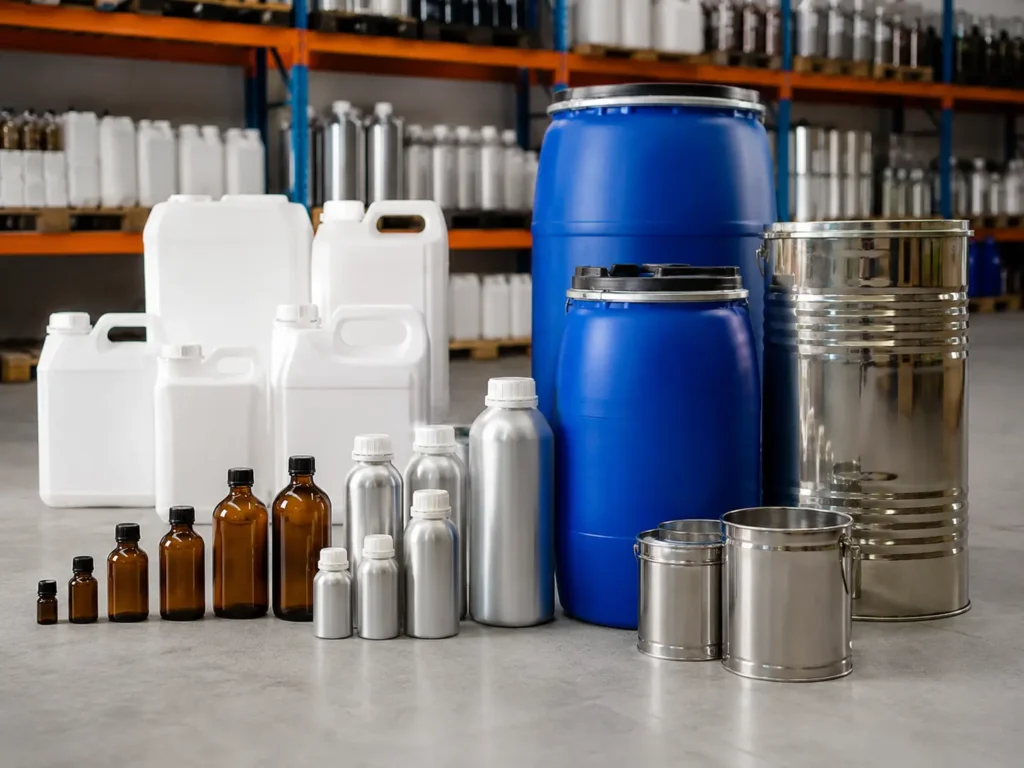
Bulk essential oil packaging is not simply a choice between a small bottle and a large drum.
For B2B buyers, the packaging format affects product integrity, warehouse handling, transfer into production, shipment planning, traceability, and in some cases transport compliance.
The right option depends on the oil itself, the order quantity, the intended storage period, the buyer's handling system, and the shipping route.
There is no single container that is automatically best for every essential oil.
A package that works well for a sample or trial order may be inefficient for regular industrial purchasing, while a large-volume container may not fit a buyer's warehouse or dispensing process.
Material compatibility, closures, liners, labeling, and shipment classification should be considered together rather than treated as separate decisions.
This guide is written for importers, distributors, fragrance and cosmetic manufacturers, home-care companies, and procurement teams that need a practical framework for selecting packaging before placing a bulk order.
Bulk Essential Oil Packaging: Quick Buyer Comparison
| Packaging Format | Typical B2B Role | Main Buyer Consideration |
| Small bottle / sample container | Samples, laboratory evaluation, R&D, formulation trials | Material compatibility, secure closure, light exposure, and clear batch identification. |
| Jerrycan | Trial orders, smaller commercial quantities, multi-product orders | Handling weight, closure integrity, container material, and compatibility with the specific oil. |
| Drum | Regular industrial bulk purchasing | Warehouse handling, dispensing, liner or internal surface, closure system, shipment requirements, and traceability. |
| IBC or other high-volume container | Large-volume industrial supply where suitable | Product compatibility, buyer facility capability, transfer equipment, logistics, and transport classification. |
Container names alone do not define the exact net fill. A supplier may offer different capacities, and the weight of oil in a container also depends on density and the agreed commercial format.
Buyers should confirm the current packaging option and net quantity for the specific product before issuing a purchase order.
Why Packaging Matters for Bulk Essential Oils
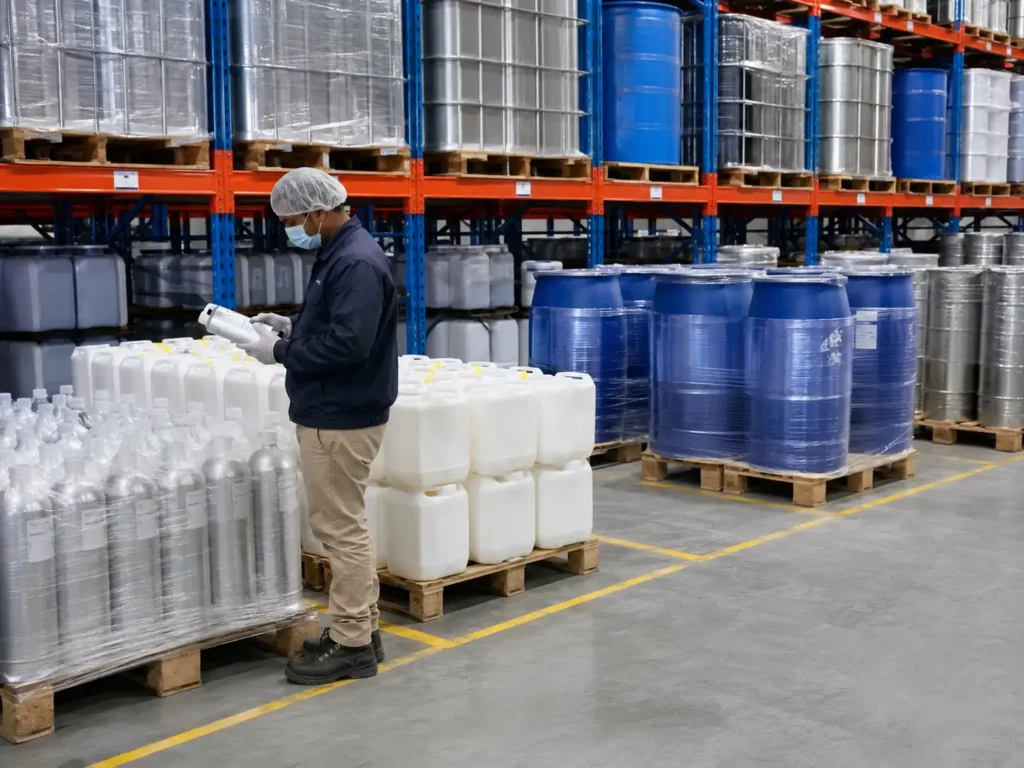
Product Integrity
Essential oils are concentrated aromatic materials, and their quality can change when they are exposed to unsuitable storage or handling conditions.
Packaging helps limit avoidable exposure to air, moisture, light, contamination, and repeated opening.
The objective is not to make the oil 'permanent,' but to preserve the agreed quality as it moves from supplier to buyer and through the buyer's own warehouse.
Leakage and Contamination Control
A suitable container is only part of the system. Closures, gaskets, liners, and filling practices matter because leakage or ingress can compromise both product and shipment integrity.
Procurement teams should ask how the container is sealed, how it is identified by batch, and whether the packaging is intended for the oil being supplied.
Warehouse and Production Handling
Packaging also affects what happens after delivery.
A 200 kg-style industrial package may be efficient for a buyer with drum-handling equipment and a controlled transfer process, but inconvenient for a small formulation team that needs to dispense material in smaller portions.
The best packaging is the one that fits both the material and the buyer's operating environment.
What Determines the Right Packaging for an Essential Oil?

1. Oil Characteristics
Essential oils do not all have the same chemical profile or physical behavior.
Terpene-rich, phenolic, resinous, heavy, and highly aromatic oils can create different compatibility and handling considerations.
Buyers should avoid assuming that a container used for one essential oil is automatically suitable for every other oil.
When compatibility is important, confirm the supplier's packaging specification or request supporting information for the proposed container, liner, and closure system.
2. Order Quantity
Samples, pilot quantities, routine replenishment, and container-scale procurement have different packaging needs.
Small formats can simplify evaluation and handling but increase the number of units.
Larger formats can reduce handling and packaging per kilogram, but require suitable storage, lifting, dispensing, and spill-control procedures at the receiving facility.
3. Storage Duration
A package intended mainly for transport may not be the ideal long-term working container after repeated opening.
If the material will remain in inventory for an extended period, buyers should consider how frequently the container will be opened, whether the oil will be subdivided, and how exposure will be controlled after receipt.
4. Manufacturing Workflow
The packaging should fit the buyer's formulation and transfer process.
A fragrance house using small additions may value manageable containers, while a home-care manufacturer with pumps or closed-transfer equipment may prefer a larger standardized package.
Procurement should involve production and QC teams before locking a packaging format into the PO.
5. Shipping Method and Destination
Air, sea, road, and multimodal shipments can involve different handling and regulatory requirements.
Destination-country rules, carrier policies, quantity limits, and the material's transport classification can all affect the packaging that is acceptable for a particular shipment.
6. Transport Classification
Some essential oils may be regulated as dangerous goods depending on their properties and transport classification.
Do not assume that every essential oil has the same classification or that every shipment requires the same package.
The FAA dangerous-goods shipping guidance explains that shippers must correctly classify the material and then determine the applicable packaging, marking, labeling, and documentation requirements.
For air transport, the IATA Dangerous Goods Regulations provide the current framework used by airlines and freight forwarders.
For dangerous goods carried by sea, buyers and shippers should also review the applicable IMDG requirements and confirm the shipment with the freight forwarder or carrier.
Common Packaging Formats for Bulk Essential Oils
Small Bottles and Sample Containers
Small containers are appropriate when the objective is evaluation rather than routine industrial use.
They are commonly used for laboratory review, organoleptic assessment, formulation trials, retained references, or pre-purchase samples.
For buyers, the key points are secure closure, clear batch identification, suitable container material, and enough quantity to run the intended evaluation without repeatedly opening the package.
Jerrycans
Jerrycans can be practical for smaller commercial quantities, trial orders, or multi-product shipments.
Their main advantage is manageability: one person or a small warehouse team can often handle them more easily than a full drum.
Buyers should confirm the container material, closure, any liner or gasket, net fill, and whether the format is suitable for the specific oil and shipping method.
Drums
Drums are one of the most relevant formats for industrial essential oil procurement because they balance volume, stackability, storage, and handling.
A buyer should not evaluate a drum only by its nominal capacity.
Important questions include the internal material or lining, closure type, condition of the package, compatibility with the oil, net fill, batch labeling, and whether the receiving site can move and dispense from the drum safely.
For routine contracts, it is useful to specify the approved packaging format in the purchase order so future deliveries do not arrive in an unexpected container.
If the packaging changes, the buyer can then review the change before the next shipment.
IBCs and Other High-Volume Containers
Intermediate bulk containers and other high-volume systems may be attractive for large users, but they should not be treated as the default upgrade from a drum.
Suitability depends on the oil, the container construction, storage duration, the buyer's unloading and transfer system, shipment classification, and route.
For high-volume purchasing, involve logistics, EHS, warehouse, and production teams before agreeing the format.
Container Materials: Glass, HDPE, Aluminum or Steel?

The material of construction matters because the container and the oil remain in direct contact.
No broad statement such as 'plastic is always unsuitable' or 'aluminum is always best' is reliable for every essential oil and every shipment.
The buyer should evaluate the proposed material together with the specific product and the supplier's packaging system.
| Material | Potential Advantages | Buyer Should Confirm |
| Glass | Chemically inert for many sample and laboratory uses; easy visual inspection. | Breakage risk, weight, light protection, closure, and practicality at the required volume. |
| HDPE / compatible plastic | Lightweight and practical in certain commercial formats. | Compatibility with the specific oil, wall construction, closure, storage duration, and shipment requirements. |
| Aluminum | Lightweight, blocks light, and is common in some essential-oil packaging formats. | Internal surface or lining, closure compatibility, package condition, and suitability for the specific oil. |
| Steel / lined metal | Durable industrial format with strong warehouse handling characteristics. | Liner or internal coating, corrosion/compatibility considerations, closure system, and handling equipment. |
Packaging Compatibility: Evaluate the Oil and Container Together
Container compatibility is a material-specific question.
The oil, container body, liner, gasket, closure, storage temperature, and duration of contact all form one packaging system.
A package can be mechanically strong and still be the wrong choice if the material or closure is not appropriate for the product.
For procurement teams, the practical approach is simple: ask the supplier what packaging is proposed for the specific oil, then confirm whether the same format has been used for that material, whether any liner or gasket is present, and whether there are transport or storage limitations.
For higher-risk or long-term applications, packaging compatibility may need to be reviewed by the buyer's quality, EHS, or technical team rather than accepted from a generic product catalog.
Closures, Liners and Seal Integrity Matter Too
Many packaging problems occur at the opening rather than through the container wall.
Caps, bungs, seals, gaskets, and liners need to remain secure during filling, transport, temperature changes, and warehouse handling.
Repeated opening can also increase exposure and contamination risk.
- Confirm the closure type and whether a liner or gasket is used.
- Check whether tamper-evident or security features are needed for the buyer's receiving procedure.
- Make sure the receiving team has the correct tools and procedure for opening and resealing the package.
- Do not reuse a transport package automatically for another product or return shipment without confirming that reuse is permitted and the package remains suitable.
For dangerous-goods shipments, the FAA specifically warns that packaging and closure instructions must be followed because unauthorized variations can compromise the package. See the FAA guidance on packaging dangerous goods.
Bulk Packaging for International Shipping
Confirm the Transport Classification First
The transport classification determines what rules apply. Review the current SDS and the shipping information for the exact oil being offered.
Classification should be confirmed before the buyer assumes that a normal commercial container is sufficient for air or sea freight.
Check Whether Special Packaging Is Required
For regulated dangerous goods, UN-specification packaging may be required depending on the material, packing group, quantity, mode, and applicable rules.
The FAA notes that air transport can impose more stringent packaging requirements than ground transport.
That is one reason buyers should confirm the final shipping mode before locking the packaging format.
Marking, Labeling and Documentation Must Match the Shipment
When dangerous-goods requirements apply, packaging decisions extend beyond the physical container. Marks, hazard labels, shipping names, UN numbers, declarations, and other shipment information may be required.
The IMO International Maritime Dangerous Goods (IMDG) Code governs packaged dangerous goods carried by sea and covers areas such as packing, marking, labeling, stowage, segregation, and handling.
Because these rules change, buyers should use current regulatory information rather than copy an old packaging checklist from a blog post.
Confirm Requirements With the Freight Forwarder or Carrier
The safest commercial workflow is to share the product identification, SDS, quantity, packaging proposal, origin, destination, and intended shipping mode with the freight forwarder before dispatch.
Carriers can also impose operational restrictions beyond the baseline regulation. Packaging should be confirmed as part of shipment planning, not after the oil has already been filled.
For the documentation side of the shipment, see our guide to essential oil export documents from Indonesia.
What Information Should Appear on Bulk Essential Oil Packaging?
Legal label requirements differ by market, mode of transport, and product classification, so a generic blog cannot provide one universal label template.
However, procurement teams should confirm that the packaging supports traceability and safe handling. Depending on the shipment, relevant information may include:
- Product or trade name and clear botanical identity where applicable.
- Batch or lot number that can be matched to the corresponding quality documents.
- Net quantity and container identification.
- Supplier or manufacturer information required by the commercial or regulatory context.
- Storage and handling information where relevant.
- Hazard marks, labels, shipping name, or UN information when required by the applicable transport rules.
- Destination-specific labeling or buyer-specific identification when agreed in the PO.
How Packaging Affects Storage After Delivery
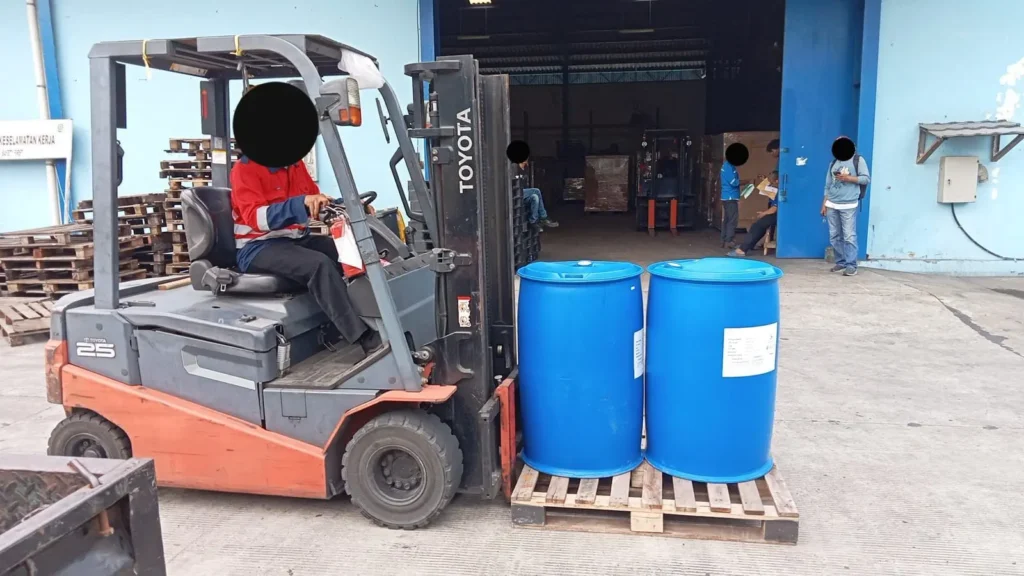
The packaging decision continues to matter after customs clearance.
Buyers should store the material according to the supplier's SDS, product specification, and internal warehouse procedures.
Keep containers properly closed, avoid unnecessary exposure, and use an appropriate controlled area for the product and quantity involved.
If a large container will be opened repeatedly, the buyer may need a controlled dispensing or subdivision process.
Do not transfer essential oils into an unverified secondary container simply because it is easier to handle.
The same compatibility, labeling, and traceability questions still apply after the original package is opened.
How Buyers Should Choose Packaging by Order Scenario
| Order Scenario | Packaging Priority | Practical Buyer Question |
| Sample evaluation | Secure small format, traceability, enough quantity for testing | Can the sample be linked to its batch and evaluated without repeated contamination or exposure? |
| Trial / small commercial order | Manageable handling and compatibility | Can the team receive, store, and dispense the container safely with existing equipment? |
| Regular industrial bulk order | Standardization, warehouse efficiency, dispensing, shipment fit | Can this packaging format become the agreed standard for repeat purchases? |
| Multiple oils in one shipment | Unit handling, labeling, segregation, traceability | Can each oil remain clearly identified and handled correctly through receiving and storage? |
| High-volume single-oil procurement | Transfer system, logistics, storage capacity, compliance | Does a larger container actually fit the facility, shipping route, and product compatibility requirements? |
Questions to Ask a Supplier About Bulk Packaging
- What packaging formats are currently available for this specific essential oil?
- What is the container material, and is there a liner, coating, gasket, or other product-contact component?
- What closure system is used, and how is the package sealed for transport?
- What is the net quantity per container and how many containers will be included in the order?
- Has the proposed packaging been used for this oil and expected storage period?
- Does the planned shipping mode require special or UN-specification packaging?
- What batch and product information will appear on each container?
- Can a custom packaging format be discussed if our facility has a specific handling requirement?
- What packaging details should be written into the purchase order and commercial documents?
Packaging should be one part of a broader supplier evaluation. If you are still comparing Indonesian suppliers, use our guide to sourcing essential oils from Indonesia for the wider procurement workflow.
Common Bulk Essential Oil Packaging Mistakes
Choosing Packaging Only by Price
The cheapest container can become expensive if it creates leakage, handling difficulty, product loss, re-packing, or transport problems.
Total procurement cost includes the receiving and production workflow, not only the packaging line on the quotation.
Assuming One Container Works for Every Essential Oil
Standardization is useful, but it should follow compatibility review. A buyer can standardize preferred formats while still allowing exceptions for oils that need different materials, liners, or shipping arrangements.
Ignoring Closures and Liners
The package body gets most of the attention, but seals and product-contact components can be equally important. Ask for the full packaging system, not just 'aluminum drum' or 'plastic jerrycan.'
Not Confirming the Shipping Classification
A commercial package that is practical in a warehouse may not automatically be authorized for a regulated shipment. Confirm classification and mode-specific requirements before filling and dispatch.
Forgetting the Buyer’s Own Handling Process
Packaging that is convenient for the supplier can still be inconvenient for the receiver.
Make sure warehouse, production, quality, and EHS teams can actually move, open, dispense, identify, and store the proposed container.
How to Specify Packaging in an Essential Oil Purchase Order
A purchase order should describe enough packaging detail to avoid ambiguity. Instead of writing only '200 kg essential oil,' define the commercial packaging requirement that has already been agreed with the supplier.
- Exact product name and botanical identity where applicable.
- Total order quantity.
- Agreed net fill per container and number of containers.
- Container type and material.
- Required liner, gasket, closure, or tamper-evident feature if applicable.
- Batch or labeling requirements.
- Required quality and shipping documents.
- Destination and agreed shipping terms.
- Any buyer-specific packaging or handling requirement that has been approved by both parties.
The packaging specification should also align with the quality documents for the material. For a detailed review of batch documentation, see our essential oil COA and GC-MS guide.
Bulk Essential Oil Packaging for Indonesian Supply
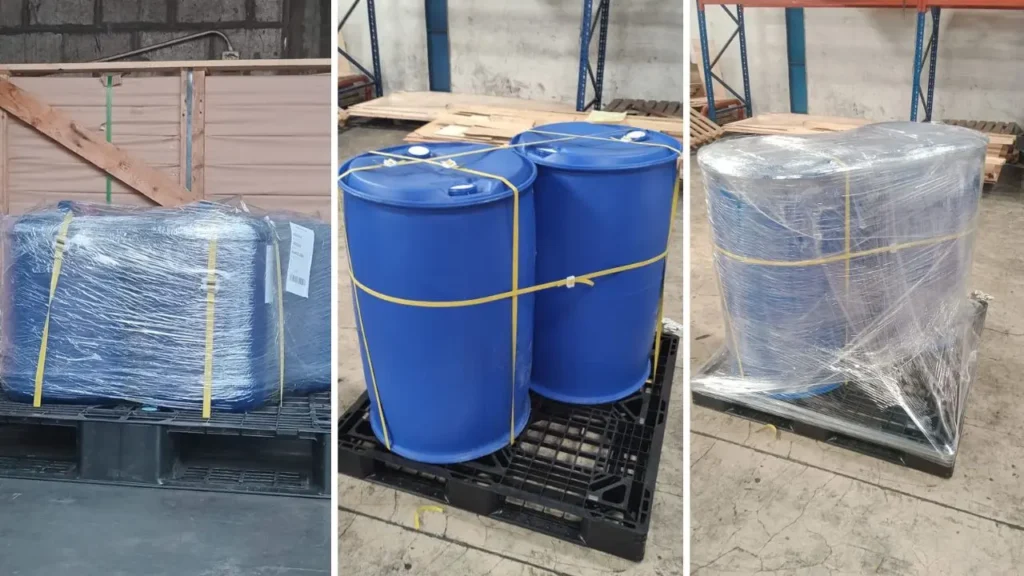
For international buyers, packaging is best discussed at the same time as the product specification, quantity, destination, and shipping plan.
This prevents a situation where the oil is technically acceptable but the proposed package does not fit the buyer's facility or freight requirements.
Global Essential Oil works with B2B buyers sourcing Indonesian essential oils for fragrance, cosmetics, personal care, home care, and manufacturing applications.
Buyers interested in Indonesian patchouli oil, nutmeg oil, or citronella oil can discuss current packaging options, product specifications, documentation availability, sample requirements, quantities, destination, and quotation details with our team.
Packaging availability can vary by product and order, so confirm the current option before placing a PO.
If you are planning a new bulk order, contact our team with the essential oil, required quantity, intended application, destination country, and preferred packaging format. We can then discuss the practical packaging and commercial requirements for the inquiry.
Frequently Asked Questions
What is the best packaging for bulk essential oils?
There is no single best format for every oil. The appropriate packaging depends on the oil's characteristics, container compatibility, quantity, storage period, buyer handling system, shipment classification, and destination. Samples may use small containers, while routine industrial orders commonly use jerrycans or drums. High-volume containers should be evaluated case by case.
Can essential oils be stored in HDPE containers?
HDPE may be used for certain products and commercial formats, but suitability should not be assumed for every essential oil. Confirm compatibility with the specific oil, container construction, closure, storage duration, and shipping requirements before selecting the package.
Are aluminum drums suitable for essential oils?
Aluminum can be a useful light-blocking and relatively lightweight packaging material for some essential oils. The buyer should still confirm the exact container construction, internal surface or lining, closure system, compatibility with the specific oil, and transport requirements.
What size containers are used for bulk essential oils?
Commercial suppliers use a range of sizes, from sample containers and jerrycans to drums and larger industrial systems. There is no universal net weight for each format because supplier packaging, density, and commercial practice vary. Always confirm the net fill and number of containers in the quotation and purchase order.
Do essential oils require UN-certified packaging for export?
Not automatically. UN-specification packaging may be required for dangerous-goods shipments depending on the material's classification, packing group, quantity, mode of transport, and applicable regulation. Review the SDS and confirm the current requirement with the carrier or freight forwarder before shipment.
What should buyers confirm before choosing essential oil packaging?
Confirm the specific oil, quantity, proposed container material, liner or gasket, closure, net fill, batch labeling, storage plan, receiving equipment, shipping mode, transport classification, destination requirements, and documentation. These details should be agreed before the packaging format is written into the PO.