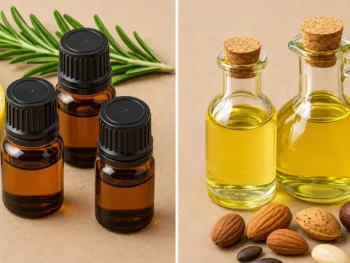
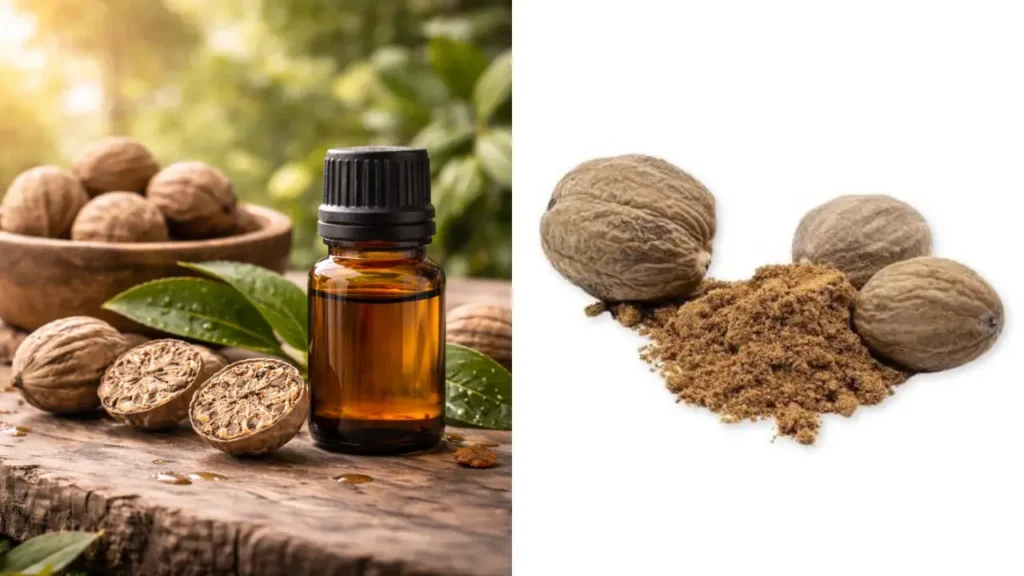
Nutmeg oil and ground nutmeg come from the same spice, but they are not the same ingredient.
Nutmeg essential oil is a concentrated liquid containing mainly volatile aroma compounds, while ground nutmeg is the powdered seed kernel, retaining its oils, solids and other natural constituents.
Ground nutmeg is generally the better choice for everyday cooking. Food and flavor manufacturers may evaluate a suitable nutmeg oil when they need concentrated aroma without spice particles.
The difference matters when choosing an ingredient for a recipe, beverage, seasoning blend or commercial formulation. Here is how the two forms compare and why replacing one with the other is not always straightforward.
Nutmeg Oil vs Ground Nutmeg: Quick Comparison
| Factor | Nutmeg essential oil | Ground nutmeg |
|---|---|---|
| Production | Steam distillation of seed kernels | Dried seed kernels, milled |
| Physical form | Concentrated liquid oil | Fine or coarse spice powder |
| Composition | Mainly volatile aromatics | Volatile and fixed oils, fiber, starch and other solids |
| Flavor character | Focused, warm, spicy and fresh-terpenic notes | Fuller whole-spice character |
| Texture in products | No inherent ground-spice particles | Adds particles; may affect color and texture |
| Behavior in water | Poor water solubility; needs suitable dispersion system | Suspends or settles depending on the formulation |
| Common applications | Suitable flavor preparations, fragrances and cosmetics | Cooking, baking, seasonings and spice blends |
| Quality checks | Identity, sensory profile, chemical analysis, COA | Moisture, particle size, volatile oil, contaminants and microbial quality |
What Is Nutmeg Essential Oil?

Nutmeg essential oil is obtained from the seed kernels of Myristica fragrans. It carries the familiar warm, woody and spicy aroma of nutmeg, often with bright, peppery or fresh nuances.
It should not be confused with nutmeg butter (the fixed fatty oil), a culinary oil infused with nutmeg, or a formulated nutmeg fragrance oil.
How Nutmeg Essential Oil Is Produced
Dried kernels are prepared for distillation. Steam carries volatile constituents out of the plant material; the vapor is then condensed and the essential oil separated from the water. \
The resulting oil captures a specific fraction of the spice rather than reproducing the entire seed.
Read our guide to how nutmeg essential oil is made for the full production process.
Nutmeg seed oil is also distinct from mace oil, which comes from the aril surrounding the seed.
Our nutmeg oil vs mace oil comparison explains that botanical and commercial distinction.
What Is Ground Nutmeg?
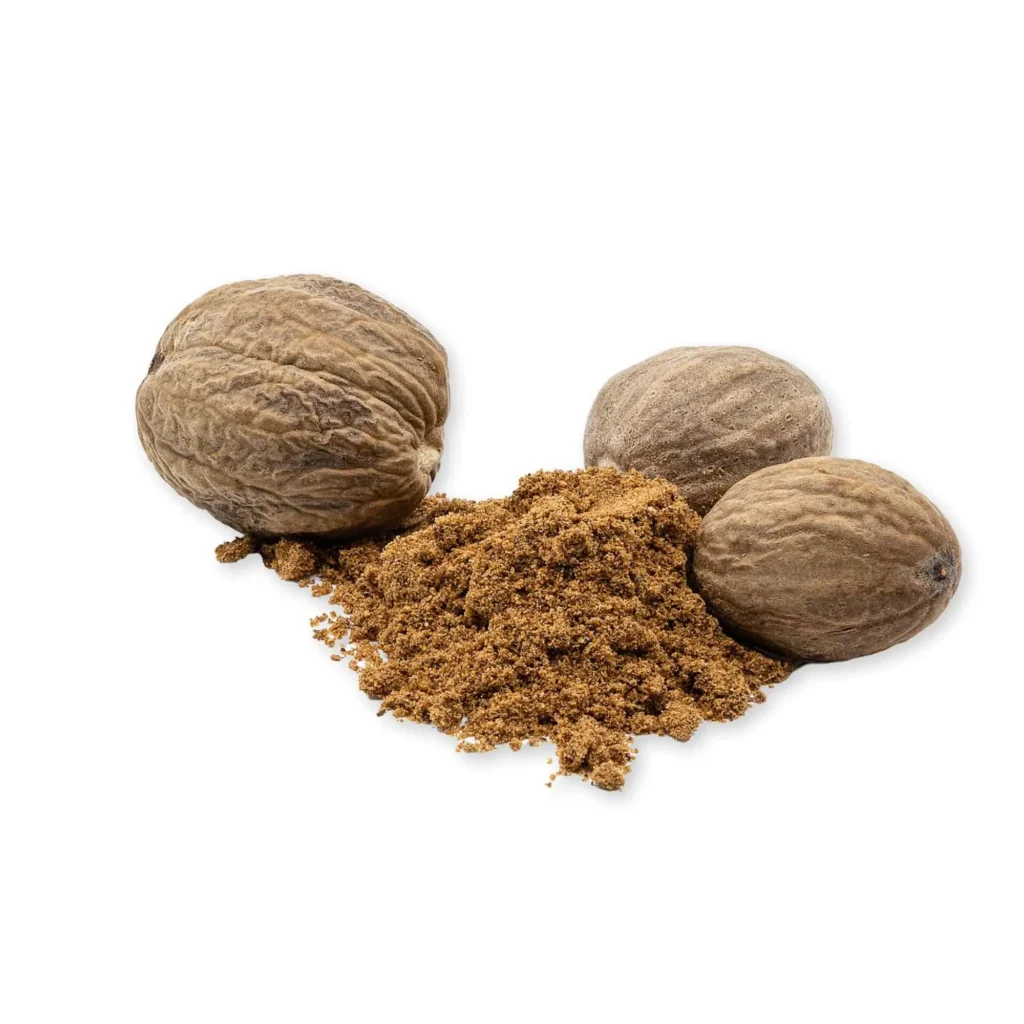
Ground nutmeg is made by grinding dried nutmeg kernels into a powder.
Unlike distilled oil, it retains the solid spice matrix and the natural fatty constituents along with the volatile aromatics.
This makes it useful when a food needs both familiar nutmeg flavor and the physical character of a ground spice.
Ground Nutmeg vs Freshly Grated Nutmeg
Pre-ground nutmeg is convenient and easy to measure in conventional recipes.
Freshly grated nutmeg often has a brighter aroma because less of its surface has been exposed to air before use.
Actual freshness depends on the age and storage of the spice, not simply whether it was bought whole or ground.
7 Key Differences Between Nutmeg Oil and Ground Nutmeg
1. Production Method
Grinding reduces particle size without intentionally separating the spice into chemical fractions. Distillation selectively recovers volatile material.
That is why a liquid made by distilling nutmeg does not have the same composition as nutmeg powder, even when both start with kernels from the same crop.
2. Chemical Composition
Distilled nutmeg oil commonly contains aromatic compounds such as sabinene, alpha-pinene and beta-pinene, with other constituents varying by raw material and process. Ground nutmeg retains additional non-volatile constituents.
A FAO technical reference on nutmeg composition describes the seed as a combination of volatile oil, fatty oil and solid plant components.
The balance of compounds in distilled oil can differ from that in the original kernel.
3. Flavor and Aroma Intensity
Nutmeg oil concentrates volatile aroma in a small volume, but that does not mean it reproduces every aspect of the taste of ground nutmeg.
A spice powder can contribute a rounder impression and mouthfeel, particularly in rich foods.
The most useful comparison is the finished product, not the intensity of the two ingredients smelled directly from their containers.
4. Texture and Solubility
Ground nutmeg introduces visible or perceptible particles, which can be desirable in a rustic recipe but unsuitable for a clear beverage.
Essential oil does not introduce those particles, yet it is not naturally water-soluble.
A liquid flavor system may need an appropriate food-compatible emulsion or other formulated delivery system; an oil without particles does not automatically produce a clear drink.
5. Storage and Shelf Life
Air, light, temperature and packaging affect both formats. Ground nutmeg can lose aroma after milling and may absorb moisture if poorly sealed.
Essential oil is vulnerable to evaporation and changes in composition during storage. Keep each material in compatible, tightly closed packaging under supplier-recommended conditions.
Do not assume that the oil always lasts longer; use its stated shelf life or retest period and consider storage after opening.
6. Applications and Versatility
Ground nutmeg is a practical ingredient for baked goods, creamy sauces, spice mixes and savory dishes.
Nutmeg essential oil is considered for concentrated aroma in suitable industrial flavor systems, fragrance and personal-care formulations.
A neat essential oil intended for perfume or aromatherapy is not a culinary seasoning and should not be treated as one.
7. Quality and Safety Considerations
For ground spice, buyers may need moisture, particle-size, microbiological and contaminant specifications, including relevant mycotoxin controls.
For distilled oil, botanical identity, scent, physical properties and chromatographic profile help characterize the material.
Neither a GC-MS report nor a purity claim alone establishes suitability for use in food. Both ingredients can be harmful when misused; concentrated oil requires particular care.
Can You Substitute Nutmeg Oil for Ground Nutmeg?
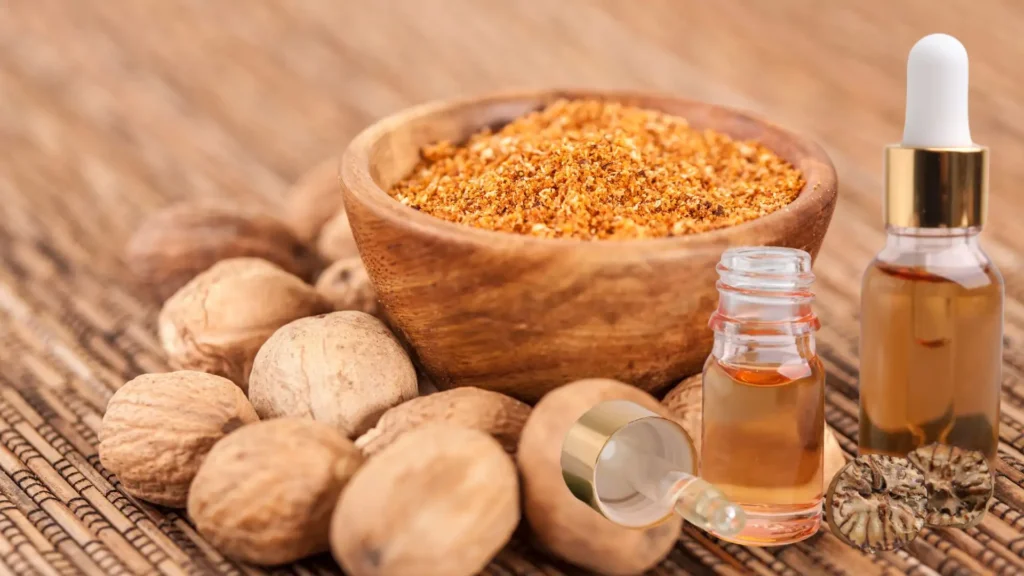
Not as a direct kitchen substitution. There is no reliable drop-to-teaspoon conversion between nutmeg essential oil and ground nutmeg.
Distillation changes the aroma profile, and commercial oils can differ in concentration, composition and intended application.
For an ordinary recipe, use ground or freshly grated culinary nutmeg instead of essential oil.
Manufacturers considering a replacement should first confirm that the specific material is appropriate for their intended food use.
A qualified flavorist or formulation team can then compare approved trial formulations against the original product, including the aroma, flavor, texture and stability.
Do not taste undiluted essential oil or add aromatherapy oil directly to food or drinks. Poison Control’s essential oil guidance explains why misuse of concentrated oils can be dangerous.
Nutmeg Oil vs Ground Nutmeg in Food and Beverage Manufacturing
The right ingredient is the one that meets the sensory target, processing requirements and food-safety specification.
These examples illustrate where each format may be worth evaluating, not a claim that every oil or powder is suitable for all foods.
Beverage and Liquid Flavor Systems
For a beverage requiring a smooth or clear appearance, ground spice may introduce sediment, haze or visible flecks.
A suitable nutmeg-based liquid flavor preparation can be easier to integrate when its dispersion and stability have been validated.
Evaluate the actual beverage after processing and during its intended shelf life, rather than assuming neat nutmeg oil will mix uniformly with water.
Bakery, Seasonings and Processed Foods
In cookies, cakes and dry seasoning blends, ground nutmeg can supply a recognizable whole-spice effect and blend naturally with other powders.
In a sauce or filling, a suitable liquid aroma ingredient may be considered if particles are unwanted.
Heat, holding time, fat content and the delivery system can change the flavor released by either form; use the actual manufacturing process in trials.
Formulation and Quality Consistency
A useful comparison starts with a reference sample of the existing product. Define what must remain unchanged, such as the warm spice note, color or mouthfeel, and what needs improvement. Then compare the candidate ingredient in the finished matrix.
Record supplier lot numbers, sensory results, dispersion, process stability and the cost per acceptable finished batch rather than simply comparing price per kilogram.
In the United States, 21 CFR § 182.20 lists nutmeg among botanical sources of essential oils and extracts recognized as safe for their intended use.
This is not blanket approval for every commercial oil, concentration, market or application.
Food manufacturers must confirm the specific ingredient, intended use and applicable requirements with their supplier and regulatory team.
Which One Should You Choose?
| Your requirement | Ingredient to evaluate first |
|---|---|
| Everyday cooking or home baking | Ground or freshly grated culinary nutmeg. |
| Traditional dry seasoning with spice particles | Ground nutmeg with a suitable particle-size specification. |
| Concentrated aroma without ground spice solids | A liquid flavor ingredient documented for the intended application. |
| Clear beverage | An appropriate, validated liquid flavor system; not neat essential oil. |
| Fragrance formulation | Nutmeg essential oil suitable for the intended fragrance application. |
| Broader concentrated spice character | Consider a suitable oleoresin or formulated spice extract. |
If you need a concentrated extract that includes more than the volatile aroma fraction, an oleoresin may be another option.
Our nutmeg oil vs oleoresin guide compares those two ingredient formats in more detail.
It is a separate decision from choosing between essential oil and the powdered whole spice.
Sourcing Nutmeg Essential Oil from Indonesia
Indonesia is an established source of nutmeg, and buyers evaluating distilled oil should specify the seed-derived material rather than relying on a generic trade name.
Global Essential Oil supplies Indonesian nutmeg essential oil for B2B enquiries.
For an initial evaluation, clarify the following with your supplier:
- Botanical identity, plant part, origin and extraction method.
- Target aroma, required specification and batch reference.
- Available Certificate of Analysis, GC-MS profile and safety data sheet, as applicable.
- Intended application and any food-use or market-specific documentation required.
- Sample requirements, bulk quantity, packaging and destination.
Our Indonesian nutmeg oil sourcing guide provides further context for comparing suppliers.
To discuss specifications, sample availability or a bulk quotation, contact our team with your intended application.
Any suitability for food use must be confirmed for the actual product and batch before purchase or formulation.
Final Thoughts
Ground nutmeg is the familiar whole-spice ingredient for everyday recipes and many seasoning applications.
Nutmeg essential oil offers a concentrated aromatic fraction for suitable formulations where the original spice particles are not needed.
For commercial buyers, the decision should be based on the intended flavor, physical format, documented suitability and finished-product performance.
If you are evaluating Indonesian nutmeg oil for a new formulation, Global Essential Oil welcomes enquiries about product specifications, samples and bulk supply.
Frequently Asked Questions
Is nutmeg oil the same as ground nutmeg?
No. Nutmeg essential oil is principally a distilled aromatic fraction, whereas ground nutmeg retains the powdered kernel, including non-volatile oils and plant solids.
Is nutmeg oil stronger than ground nutmeg?
It is more concentrated in volatile aroma compounds per unit of material, but its flavor is not identical to that of ground nutmeg. Perceived strength depends on the ingredient, concentration and finished product.
Can nutmeg essential oil replace nutmeg powder?
Not directly. Consumers should use culinary nutmeg for ordinary recipes. Industrial replacement requires a suitable food-use material, regulatory review and validated sensory and formulation trials.
Can nutmeg essential oil be used in cooking?
Only an ingredient specifically suitable for the intended food use should be considered by a qualified formulator. Do not use aromatherapy or fragrance oils as cooking ingredients. Ground culinary nutmeg is the practical choice for home recipes.
Does ground nutmeg contain essential oil?
Yes. The ground kernel naturally contains volatile aromatic oil along with fatty oil and other constituents. Distillation separates much of the volatile fraction from the other material.
What is the difference between nutmeg oil and nutmeg oleoresin?
Nutmeg essential oil is produced by distillation, while oleoresin is an extract that includes volatile and other soluble, non-volatile spice constituents. Neither is the same as ground nutmeg.