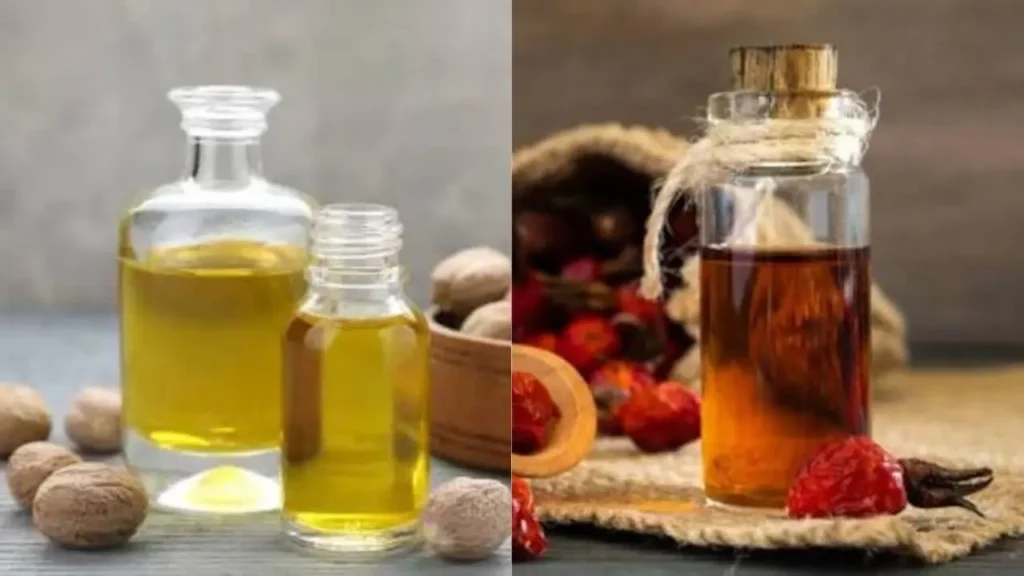
Nutmeg oil vs mace oil may sound like a comparison between nearly identical products because both come from the same Myristica fragrans fruit.
In practice, however, they are chemically distinct essential oils with different source materials, aromas, price points, and industrial applications.
Mace oil, in particular, remains one of the most under-discussed essential oils in the trade, often overshadowed by its more widely recognized sibling, nutmeg oil.
This guide compares both oils side by side to help buyers understand their composition, uses, sourcing considerations, and ideal applications.
Global Essential Oil produces certified nutmeg oil from Indonesian Banda Islands sourcing — the historic origin of Myristica fragrans. Here is how nutmeg oil compares to its lesser-known counterpart, mace oil.
| What Is the Difference Between Nutmeg Oil and Mace Oil? Nutmeg oil and mace oil both come from Myristica fragrans, but from different parts of the fruit: • Nutmeg Oil: Steam-distilled from the dried SEED (the kernel) of the fruit. Warm, woody, spicy aroma. Higher myristicin content. Widely used in flavoring, aromatherapy, and traditional medicine. • Mace Oil: Steam-distilled from the ARIL — the lacy, web-like reddish covering that wraps around the nutmeg seed. Lighter, more refined, slightly sweeter aroma than nutmeg oil. Lower yield, rarer, and more expensive. Preferred in premium flavor applications, including some cola-type beverage formulations. Both oils contain similar core compounds (myristicin, sabinene, pinenes) but in different ratios — resulting in mace oil's softer, more elegant character compared to nutmeg oil's bolder, spicier profile. |
Same Fruit, Two Different Oils: Understanding the Source
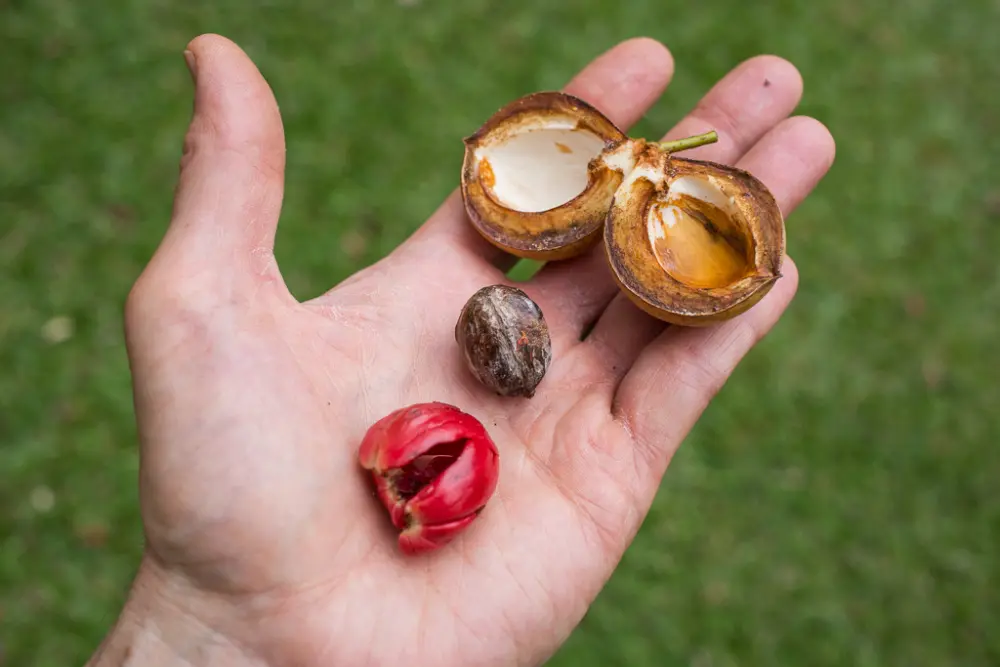
The nutmeg fruit (Myristica fragrans) is unique among spice-producing plants because it yields two completely distinct spices — and two distinct essential oils — from a single fruit:
- The seed (kernel) — dried and ground/distilled to produce nutmeg spice and nutmeg oil
- The aril — the bright red, lace-like membrane that wraps around the shell encasing the seed — dried and processed to produce mace spice and mace oil
When the fruit is harvested, it's split open to reveal the seed wrapped in this distinctive red aril.
The aril is carefully peeled away and dried separately from the seed — turning from bright red to a brittle amber-orange color.
Both parts are then either ground as whole spices or steam-distilled to produce their respective essential oils.
| Historical Note Myristica fragrans is native to the Banda Islands of Indonesia — the original 'Spice Islands.' For centuries, nutmeg and mace were among the most valuable commodities in the world, more precious than gold, and were the center of fierce colonial competition between European powers. |
Nutmeg Oil: Production, Composition, and Aroma
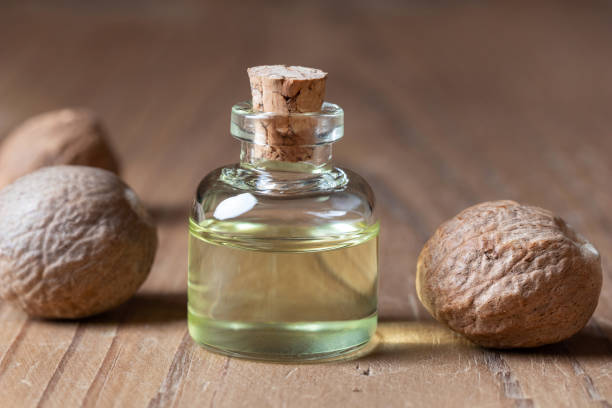
How Nutmeg Oil Is Produced
Nutmeg oil is extracted via steam distillation from the dried, ground seed kernels of Myristica fragrans.
The seeds contain 5–15% volatile oil by weight, making them a relatively efficient source material for essential oil production.
Key Compounds in Nutmeg Oil
| Compound | Nutmeg Oil (%) | Character |
| Sabinene | 15–30% | Fresh, woody, peppery — often the dominant compound |
| Alpha-pinene | 15–22% | Pine-like, fresh top note |
| Beta-pinene | 9–18% | Similar pine character, slightly softer |
| Myristicin | 4–8% | Warm, spicy, signature nutmeg note — mildly psychoactive in high doses |
| Terpinen-4-ol | 2–6% | Earthy, slightly musty undertone |
| Elemicin | 1–3% | Spicy, related to myristicin |
| Safrole | Trace–2% | Sweet, regulated compound (varies by region) |
Indonesian nutmeg oil — particularly from the Banda Islands — is considered the most potent due to high myristicin and elemicin content, making it especially prized for essential oil extraction and perfumery, though this potency also requires more careful handling.
Mace Oil: The Underexplored Sibling
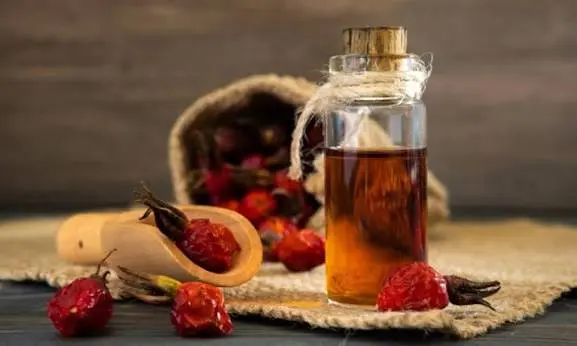
How Mace Oil Is Produced
Mace oil is steam-distilled from the dried aril of the nutmeg fruit. Unlike the seed, which is solid and dense, the aril is a thin, lacy membrane — meaning a significantly larger volume of raw material is needed to produce the same amount of oil compared to nutmeg seeds.
After harvest, the bright red aril is carefully hand-removed from the seed shell — a labor-intensive step that cannot be easily mechanized — then sun-dried or low-temperature dried until it turns brittle and amber-colored. The dried mace is then steam-distilled.
Why Mace Oil Is Rarer and More Expensive
| The Economics of Mace Oil Production Several factors make mace oil significantly more expensive and harder to source than nutmeg oil: • Lower yield per fruit: each nutmeg fruit produces far less aril (mace) by weight than seed (nutmeg) • Labor-intensive harvesting: hand-peeling the aril from the shell cannot be mechanized at scale • Lower oil content: mace's essential oil yield is typically lower than nutmeg seed's • Limited supply: most nutmeg-producing regions prioritize nutmeg (the seed) commercially, with mace treated as a secondary co-product As a result, mace oil typically commands a higher price per kg than standard nutmeg oil — though demand and pricing also fluctuate with global spice market conditions. |
Key Compounds in Mace Oil
| Compound | Mace Oil (%) | vs Nutmeg Oil |
| Sabinene | 20–35% | Higher than nutmeg — more prominent fresh-peppery character |
| Alpha-pinene | 18–28% | Slightly higher — brighter pine top note |
| Beta-pinene | 12–20% | Comparable to nutmeg, slightly elevated |
| Myristicin | 2–6% | Generally lower than nutmeg — softer, less intense spice note |
| Elemicin | 0.5–2% | Lower than nutmeg |
| Terpinen-4-ol | 1–4% | Slightly lower than nutmeg — cleaner profile |
The key takeaway: mace oil tends to have higher monoterpene content (sabinene, pinenes) but lower myristicin and elemicin than nutmeg oil.
This is precisely why mace oil's aroma reads as fresher and more refined, while nutmeg oil delivers the bolder, warmer, more 'classic' spicy character.
Aroma Profile of Mace Oil
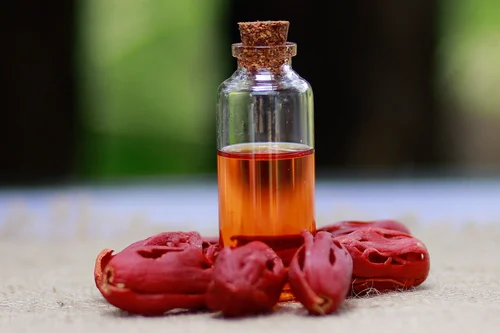
Mace oil has a more delicate, refined, and slightly sweet aroma compared to nutmeg oil. Perfumers and flavorists often describe it as 'nutmeg without the heaviness' — retaining the warm spice character but with a brighter, fresher, almost citrusy-green top note from the elevated pinene and sabinene content.
| Sensory Comparison Nutmeg oil: Warm, bold, spicy, slightly sweet, woody — the 'classic' baking spice character. Mace oil: Lighter, fresher, more refined, subtly sweet, with a brighter green-citrus opening before settling into a soft spicy base. For applications requiring subtlety and elegance over boldness, mace oil is generally preferred. |
Nutmeg Oil vs Mace Oil: Side-by-Side Comparison
| Factor | Nutmeg Oil | Mace Oil |
| Source part | Dried seed (kernel) | Dried aril (red lacy covering) |
| Sabinene content | 15–30% | 20–35% (higher) |
| Myristicin content | 4–8% (higher) | 2–6% (lower) |
| Aroma character | Warm, bold, spicy, woody | Light, refined, subtly sweet, fresher |
| Oil yield | 5–15% from dried seed | Lower — more raw material needed |
| Harvesting method | Mechanizable (seed processing) | Labor-intensive (hand-peeled aril) |
| Relative price | Lower (more widely available) | Higher (rarer, more labor) |
| Best for | Baking flavor, traditional medicine, general aromatherapy | Premium flavoring, fine fragrance, delicate formulations |
| Available from GEO | ✓ Available — multiple regional sourcing | ✓ Available on request |
Which Oil Should You Choose? Application Guide
For Food and Beverage Flavoring
Both nutmeg oil and mace oil are listed in the FEMA Flavor Ingredient Library for use as flavoring substances.
However, their practical applications differ depending on the desired aroma profile and product category.
However, their practical applications differ depending on the desired aroma profile and product category.
Nutmeg oil is the standard choice for baked goods, dairy products, and traditional spice blends where its bold, classic character is desired.
| Mace Oil in Cola-Type Beverage Flavoring One of the lesser-known facts in the flavor industry: mace oil has historically been used as a component in cola-type beverage flavor formulations. Its refined, complex spice character contributes subtle depth to proprietary cola flavor blends — a niche but valuable application that distinguishes it from standard nutmeg oil. |
For Fragrance and Perfumery

Mace oil's lighter, more nuanced profile makes it valuable in fine fragrance where a spicy note is needed without overwhelming heaviness.
Nutmeg oil, with its bolder character, is more commonly used in warm, gourmand, or oriental fragrance compositions where a strong spice anchor is desired.
For Aromatherapy and Personal Care
Nutmeg oil has well-documented traditional and modern aromatherapy applications. Mace oil is less commonly used in aromatherapy applications, primarily due to its rarity and higher cost.
For Pharmaceutical and Traditional Medicine
Nutmeg oil has a long history in Ayurvedic, Traditional Chinese Medicine, and folk remedies — used for digestive support, pain relief, and as a traditional sleep aid.
Mace's medicinal use is less documented in mainstream traditional medicine literature compared to nutmeg, though it shares similar digestive and antioxidant properties due to overlapping chemical composition.
Indonesia: A Leading Source for Both Oils
Indonesia's connection to nutmeg and mace runs deeper than almost any other spice-producing nation.
The Banda Islands — a small archipelago in Maluku — are the original native habitat of Myristica fragrans and were, for centuries, the world's only source of nutmeg and mace.
- The Banda Islands' volcanic soil and tropical humidity create ideal growing conditions for both high oil yield and intense aromatic compound concentration
- Indonesia remains one of the world's top producers of both nutmeg and mace, alongside Grenada (which inherited cultivation after 18th-century colonial smuggling)
- Indonesian-origin nutmeg and mace oil are considered among the most potent globally due to their high myristicin and elemicin content
- Indonesian producers, including Global Essential Oil, increasingly offer Halal MUI certification — important for pharmaceutical, food, and personal care buyers in Muslim-majority markets
→ For more on regional nutmeg differences: The Truth About Nutmeg from Different Regions
Safety Considerations for Both Oils
| Important Safety Notes Both nutmeg oil and mace oil contain myristicin and elemicin — compounds that are mildly psychoactive and can be toxic in high doses. Never ingest either oil without professional guidance — myristicin toxicity can cause nausea, hallucinations, and palpitations. Both oils should be diluted before topical application — undiluted use may cause skin irritation. Avoid use during pregnancy and breastfeeding without medical supervision. Safrole content (regulated in some jurisdictions) varies by origin and processing method — request GC-MS documentation from your supplier. |
→ For a complete safety guide: Nutmeg Oil Safety: Important Risks and Side Effects (applies to mace oil as well due to overlapping chemistry).
Disclaimer: This article provides general information for B2B and educational purposes. Consult regulatory guidance and a qualified safety assessor before formulating products containing nutmeg or mace oil.
| Nutmeg Oil vs Mace Oil: Quick Reference for Buyers Quick decision guide: Choose NUTMEG OIL when: • You need a bold, classic warm-spice character • Cost-efficiency and wide availability matter • Application: baking flavor, traditional aromatherapy, general spice blends Choose MACE OIL when: • You need a refined, lighter, more elegant spice note • Premium positioning justifies higher cost • Application: fine fragrance, premium flavor (including cola-type beverages), specialty formulations Both: Source from Indonesia (Banda Islands origin) for the most potent, highest-quality oil. Always request GC-MS documentation confirming myristicin and safrole levels. |
Source Nutmeg and Mace Oil from Indonesia
Global Essential Oil supplies nutmeg essential oil from Indonesian regional sources, with mace oil available on request for qualified B2B buyers. All products include:
- GC-MS certificate of analysis — myristicin, sabinene, and safrole content verified per batch
- Halal MUI certification — suitable for pharmaceutical, personal care, and food-adjacent applications
- Full documentation: COA, MSDS, Phytosanitary Certificate, Certificate of Origin
- Sourcing from Indonesia's historic nutmeg-producing regions
- Flexible MOQ: from sample quantities to bulk container shipments
→ Explore our nutmeg oil resources or contact our export team to discuss mace oil sourcing and bulk nutmeg oil pricing.
Frequently Asked Questions
What is the difference between nutmeg oil and mace oil?
Nutmeg oil is distilled from the seed of Myristica fragrans, while mace oil is extracted from the aril that surrounds the seed. Nutmeg oil has a warmer, richer aroma, whereas mace oil offers a lighter, sweeter, and more delicate spice profile.
Why is mace oil more expensive than nutmeg oil?
Mace oil is generally more expensive because the aril produces less oil than the seed and requires more labor-intensive harvesting. Its limited supply also contributes to its higher market value.
What is mace oil used for?
Mace oil is commonly used in premium food flavoring, fine fragrances, and personal care products. Its delicate spicy aroma makes it ideal for applications that require a more refined scent than nutmeg oil.
Can mace oil be substituted with nutmeg oil?
Yes, in many applications. However, nutmeg oil provides a stronger, warmer aroma, while mace oil delivers a lighter and more subtle fragrance. The best choice depends on the desired flavor or fragrance profile.
Is mace oil safe to use?
When used appropriately, mace oil is generally considered safe in diluted topical applications and aromatherapy. It should not be ingested without professional guidance and should always be used according to recommended safety practices.
Where does mace oil come from?
Mace oil is primarily produced in Indonesia and Grenada, the world's leading producers of Myristica fragrans. Indonesian mace oil is especially valued for its quality and long-standing cultivation tradition.