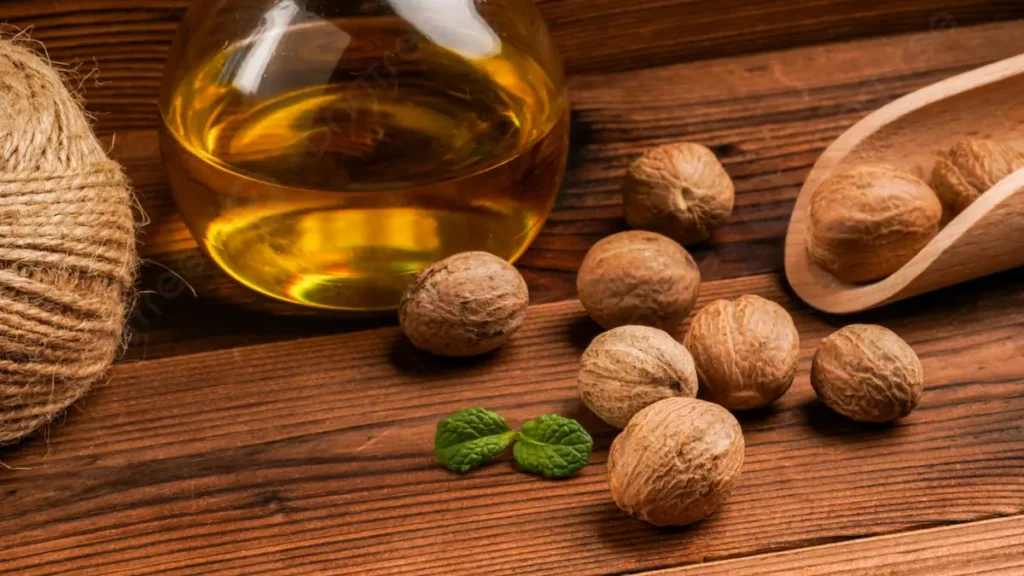
Nutmeg essential oil from different origins can share the same botanical identity - Myristica fragrans - yet still show meaningful differences from one batch to another.
Geographic origin can influence the raw material and the resulting oil, but it is only one part of the quality picture.
Fruit maturity, plant part, post-harvest handling, storage, distillation conditions, and batch selection can also change the chemical and olfactory profile.
For B2B buyers, the practical question is not simply which country produces the 'best' nutmeg oil.
The better question is whether a specific batch from a specific origin matches the identity, aroma, analytical profile, documentation, and application requirements defined by the buyer.
Quick answer: Indonesia is the native origin of Myristica fragrans and remains an important commercial source, while Grenada, India, Sri Lanka, and other tropical origins also produce nutmeg. Origin can help explain expected differences, but buyers should approve nutmeg oil on batch-level evidence rather than country reputation alone.
Nutmeg Oil Origins: Quick Comparison for Buyers
Use origin as a sourcing context, not as a standalone quality grade. The table below shows the role each origin can play in a buyer's first-pass evaluation.
| Origin | Commercial Context | What a Buyer Should Verify |
| Indonesia | Native origin of Myristica fragrans; established nutmeg and essential-oil supply from multiple producing regions. | Declared region, botanical identity, plant part, batch profile, COA/GC-MS where required, sensory fit, and traceability. |
| Grenada | Established Caribbean origin with a long nutmeg trade history; historically associated with West Indian nutmeg. | Actual batch specification, sensory profile, analytical data, plant part, extraction method, and current supply conditions. |
| India | Established cultivation in tropical regions including the Western Ghats; domestic use and processing are significant. | Species, plant part, extraction method, batch chemistry, documentation, and application performance. |
| Sri Lanka | Established spice-growing origin where Myristica fragrans is cultivated commercially. | Batch-level composition, origin statement, specification, sensory profile, and documentation rather than broad regional assumptions. |
Why Geographic Origin Can Affect Nutmeg Essential Oil
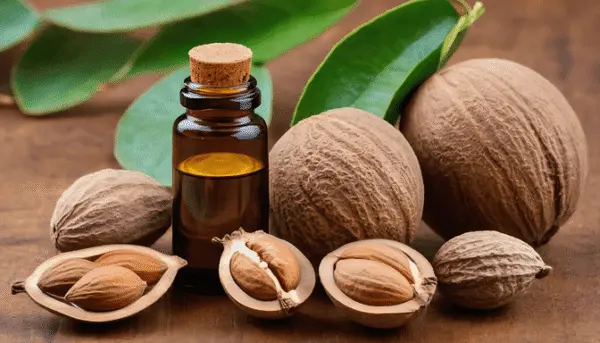
Natural essential oils are agricultural materials. Even when two oils come from the same species, the starting material is not identical.
Climate, soil, crop maturity, post-harvest handling, storage, and processing can influence what reaches the still and, ultimately, what appears in the finished oil.
Geographic Origin and Chemical Profile
A study of Indonesian nutmeg essential oils from Sulawesi and the Maluku region found substantial variation in the concentrations of compounds monitored by industrial perfumers.
The researchers also found that geographic origin and nut maturity could be differentiated using GC-MS and infrared-based chemometric analysis.
The important procurement lesson is that origin can matter, but the result is not a simple country ranking.
Even oils produced within one country can vary enough that a buyer still needs batch-level verification.
Maturity, Handling, and Distillation Also Matter
The same research also showed that maturity and the extraction process can affect nutmeg oil composition.
This means a buyer should avoid treating origin as the only explanation for a different aroma or chemical profile.
Two samples from the same region may still perform differently if the raw material or production process differs.
This is why a robust sourcing specification normally combines origin with identity, processing information, physical parameters, chemical markers, sensory expectations, and batch documentation.
Indonesia: The Native Origin and a Diverse Supply Base

Myristica fragrans is native to the Maluku Islands of Indonesia.
Modern reviews of nutmeg essential oil continue to identify Maluku as the botanical origin from which the crop spread to other tropical regions.
For B2B buyers, however, “Indonesian nutmeg oil” should not be treated as one chemically uniform material. Indonesia itself contains multiple producing areas.
Published work comparing samples from Sulawesi and Maluku found high variation among regional oils, reinforcing the need to ask for the declared region and the actual batch data rather than relying on the country name alone.
This is especially relevant to fragrance, flavor, cosmetics, and other applications where small differences in aroma or key chemical constituents can affect formulation decisions.
A buyer sourcing Indonesian material should define what matters for the intended application, then evaluate the available sample against that requirement.
Grenada: An Established West Indian Nutmeg Origin

Grenada developed into an important nutmeg origin after nutmeg was introduced from Banda in the nineteenth century. FAO historical material records the introduction of planting material to Grenada in 1843 and the establishment of commercial plantations in the following decades.
In older trade literature, Grenadian material is commonly associated with “West Indian” nutmeg, while Indonesian and other Asian material may be grouped under “East Indian” descriptions.
These labels can still be useful as historical trade shorthand, but they should not replace a current specification or batch analysis.
A buyer comparing Grenadian and Indonesian oils should therefore focus on the actual oil in front of the procurement team: sensory profile, physical data, chromatographic profile where required, traceability, and performance in the intended formulation.
India and Sri Lanka: Other Established Cultivation Origins
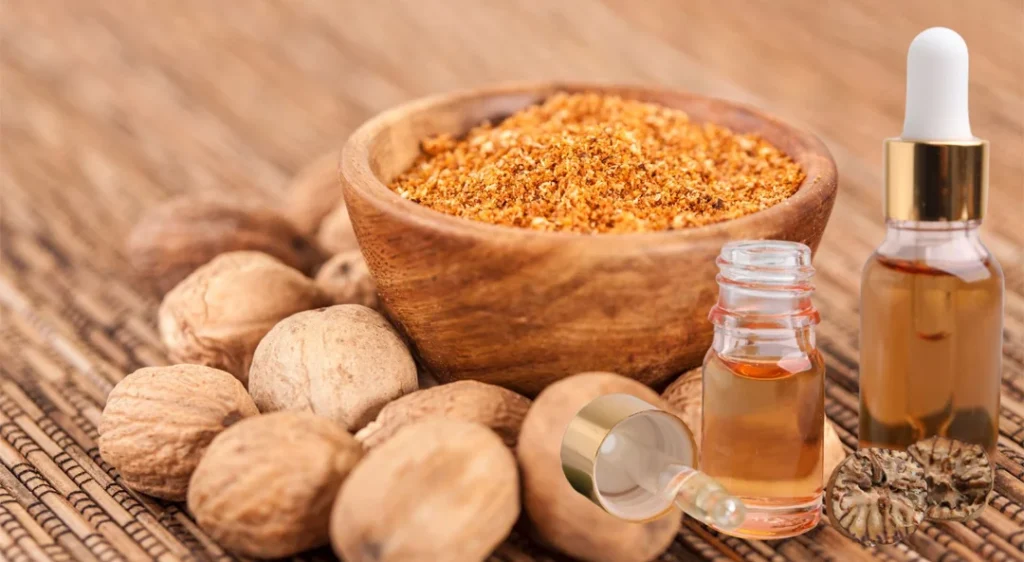
Myristica fragrans is also cultivated in India and Sri Lanka. These origins can be relevant to buyers looking for alternative supply routes or evaluating how regional production affects a formulation brief.
Research from the Western Ghats of India demonstrates another important sourcing point: nutmeg oil is not defined by geography alone.
Oils from different plant parts - including kernel, seed, mace, and leaf - can show markedly different compositions.
A buyer should therefore confirm the plant part and extraction method before comparing one origin with another.
Published reviews also show that nutmeg oils from different producing countries can vary in constituents such as myristicin, safrole, elemicin, and related compounds.
Rather than converting those observations into a country-level quality ranking, use them as a reason to request current batch data.
East Indian vs West Indian Nutmeg Oil: Useful Trade Context, Not a Quality Shortcut
Older technical and trade references often divide nutmeg oil into East Indian and West Indian types.
Historically, the East Indian category has been associated mainly with Southeast Asian production, while West Indian material has been associated with Grenada and other Caribbean supply.
For modern B2B procurement, this distinction can help explain why two suppliers may offer oils with different sensory or physical expectations.
It should not be used as a substitute for a purchase specification.
The buyer still needs to know the botanical identity, plant part, extraction method, origin, batch reference, relevant physical parameters, and chemical profile required for the application.
Does Origin Determine Nutmeg Oil Quality?
No - not by itself. Origin is one variable in a natural raw material.
It can influence the expected profile, but it cannot prove that an oil is authentic, compliant, suitable for a formulation, or better than another origin.
A strong procurement decision separates three questions:
- Identity: Is the material genuinely the botanical product, plant part, and extraction type specified by the buyer?
- Quality: Does the batch fall within the agreed physical, chemical, sensory, and documentation requirements?
- Application fit: Does the batch perform acceptably in the buyer's fragrance, cosmetic, flavor, home-care, or other manufacturing system?
A country name can help frame those questions, but it cannot answer them on its own.
What B2B Buyers Should Compare Across Nutmeg Oil Origins
When comparing samples or quotations from different origins, use the same evaluation framework for each supplier.
This makes the decision more objective and reduces the risk of choosing a material based on reputation alone.
| Buyer Check | Why It Matters |
| Botanical identity | Confirm Myristica fragrans and avoid relying only on a generic “nutmeg oil” trade name. |
| Plant part | Seed/kernel oil and mace oil are different materials; leaf oil is different again. |
| Declared origin and region | Country and regional origin can support traceability and help explain expected natural variation. |
| Extraction method | Steam distillation conditions can influence the resulting profile. |
| Physical specification | Compare relevant parameters such as appearance, relative density, refractive index, or optical rotation when they are part of the agreed specification. |
| Chemical profile | Review key chromatographic markers when GC-MS or other analysis is required for the purchasing decision. |
| Sensory profile | Evaluate whether the batch fits the aroma or flavor brief rather than assuming all oils from one origin smell the same. |
| Batch traceability | Documents should relate to the sample or commercial batch being assessed. |
| Application trial | Confirm that the material performs acceptably in the actual formulation before commercial commitment. |
When Does Nutmeg Oil Origin Matter Most?
Fragrance and Perfumery
For perfumers, origin matters when it produces a meaningful change in the sensory profile or in the batch chemistry that affects the fragrance brief.
The decision should be made through smelling, formulation trials, and analytical review where required - not through a country label alone.
For a deeper application-focused discussion, see our Nutmeg Essential Oil for Perfumery guide.
Flavor, Personal Care, and Other Manufacturing Uses
In other industries, origin can matter when it changes the incoming-goods specification, sensory expectation, regulatory review, or finished-product performance.
The buyer should define those acceptance criteria before comparing suppliers.
A broad statement such as “Indonesian is stronger” or “Grenadian is milder” is not precise enough for professional procurement because natural variation occurs within origins as well as between them.
How to Evaluate a Nutmeg Oil Sample From a New Origin
When a buyer is considering a nutmeg oil from a new region or supplier, evaluate the sample as a commercial raw material rather than as a country stereotype.
- Confirm the botanical identity, plant part, extraction method, and declared origin.
- Record the sample or lot number and match it with the supplied documentation.
- Compare appearance and aroma with the target specification or an approved reference.
- Review the COA and, where relevant, the GC-MS or other chromatographic profile.
- Run the material in the intended formulation at a realistic use level.
- Document the acceptance criteria that will control the later bulk purchase order.
For the complete procurement workflow, use our Essential Oil Sample Evaluation Before Bulk Order guide.
What Documents and Data Should Buyers Request?
The exact document package depends on the application, destination market, supplier, and batch.
As a practical starting point, buyers can ask for the latest available information relevant to the material being evaluated:
- Product specification with botanical identity, plant part, extraction method, and declared origin.
- Certificate of Analysis (COA) for the batch or a clearly identified representative lot.
- GC-MS or other chromatographic documentation when chemical-profile verification is part of the buyer's acceptance process.
- SDS/MSDS for hazard communication, handling, and transport-related review.
- Batch or lot information that links the physical sample to the supporting documents.
- Any origin, traceability, or compliance documentation specifically required by the buyer or destination market.
If your team needs help interpreting analytical documentation, see our Essential Oil COA and GC-MS Guide.
Nutmeg Oil vs Mace Oil: Do Not Confuse Origin With Plant Part
A sourcing comparison becomes misleading if one supplier offers nutmeg seed oil and another offers mace oil.
Both come from the same Myristica fragrans fruit, but they are produced from different plant materials and should be evaluated as different essential-oil products.
For the plant-part comparison, see Nutmeg Oil vs Mace Oil: Differences, Uses & Which to Source.
Sourcing Indonesian Nutmeg Essential Oil
For buyers considering Indonesian nutmeg essential oil, the value of origin is strongest when it is combined with a clear commercial specification.
Define the required botanical identity, plant part, sensory profile, analytical expectations, quantity, application, and documentation before requesting a commercial offer.
Global Essential Oil works with B2B buyers sourcing Indonesian nutmeg oil.
Current product details can be reviewed on our Nutmeg Essential Oil product page, while buyers who need a broader supplier-verification framework can use our Nutmeg Essential Oil Manufacturer Indonesia sourcing guide.
Available specifications, samples, analytical documents, packaging, quantities, and other commercial details should be confirmed with our team for the specific product and batch being discussed.
Ready to discuss an Indonesian nutmeg oil requirement? Contact Global Essential Oil to discuss your specification, sample, and quotation requirements.
Frequently Asked Questions
Where does nutmeg essential oil originally come from?
Myristica fragrans is native to the Maluku Islands of Indonesia. The crop later spread to other tropical producing regions, including Grenada, India, Sri Lanka, and others.
Is Indonesian nutmeg oil better than Grenada nutmeg oil?
Origin alone does not establish that one oil is better. Indonesian and Grenadian material can differ in trade history, sensory character, and analytical profile, but a professional buyer should compare the actual batches against the same specification and application requirements.
Does geographic origin change nutmeg essential oil composition?
It can. Published research shows that geographic origin is associated with variation in nutmeg essential-oil composition. However, maturity, plant part, storage, and distillation also influence the final oil, so origin should be assessed together with batch-level data.
What is the difference between East Indian and West Indian nutmeg oil?
These are historical trade descriptions used to distinguish nutmeg oils from different producing regions, with East Indian generally associated with Asian supply and West Indian associated with Grenada and the Caribbean. For modern procurement, the label should be supported by a current product specification and batch documentation.
What should buyers request when comparing nutmeg oil origins?
At minimum, confirm botanical identity, plant part, extraction method, declared origin, product specification, batch traceability, and the relevant COA or analytical documentation. A physical sample should also be evaluated in the intended application before a larger commercial commitment when appropriate.
Can nutmeg oil from the same country vary between batches?
Yes. Natural essential oils can vary within the same country because of regional origin, harvest maturity, post-harvest handling, storage, processing, and distillation. This is why a country name should not replace batch-level acceptance criteria.