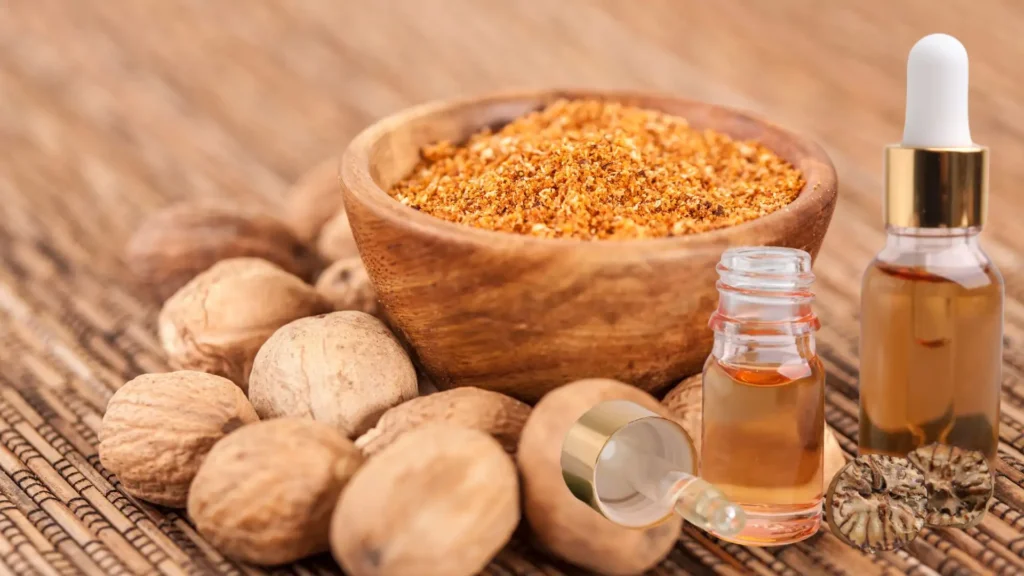
Nutmeg essential oil for perfumery is more than a familiar kitchen-spice aroma.
In professional fragrance work, natural nutmeg oil can add a warm, spicy, woody, and slightly fresh character that helps shape cologne, woody, amber-style, gourmand, and spice-led compositions.
The material is typically steam-distilled from Myristica fragrans seed, and its natural chemical profile means the aroma can vary from batch to batch.
For perfumers and B2B fragrance buyers, the key question is not simply whether nutmeg smells pleasant. The more useful questions are: How does the oil behave in a formula? Does the sample fit the fragrance brief? Is the batch traceable? Do the analytical documents support the material being offered?
And can the supplier maintain an acceptable profile when the order moves from sample to bulk volume?
This guide explains the olfactory role of nutmeg essential oil, how it interacts with other fragrance directions, what can cause natural batch variation, and what a professional buyer should review before approving a bulk purchase.
Why Is Nutmeg Essential Oil Used in Perfumery?

Nutmeg oil is useful in perfumery because it can reinforce a spice effect without behaving exactly like a dry ground spice.
Its distilled profile can combine warm spice, woody facets, fresh terpenic lift, and a slightly sweet nuance.
This makes it useful as a supporting material rather than only as a dominant “nutmeg” note.
Professional fragrance ingredient references also position nutmeg oil as a modifier for spicy notes.
Givaudan's Nutmeg Oil Indonesia ingredient reference describes Indonesian nutmeg as a natural fragrance material and documents steam distillation of the dried seed.
In practice, the exact olfactory effect will still depend on the batch, dosage, and surrounding materials in the composition.
For a fragrance house, this versatility is valuable. Nutmeg can add warmth to woods, bring contrast to citrus openings, deepen a spice accord, or support an amber-style structure without forcing the finished fragrance to smell like a single culinary spice.
What Does Nutmeg Essential Oil Smell Like?
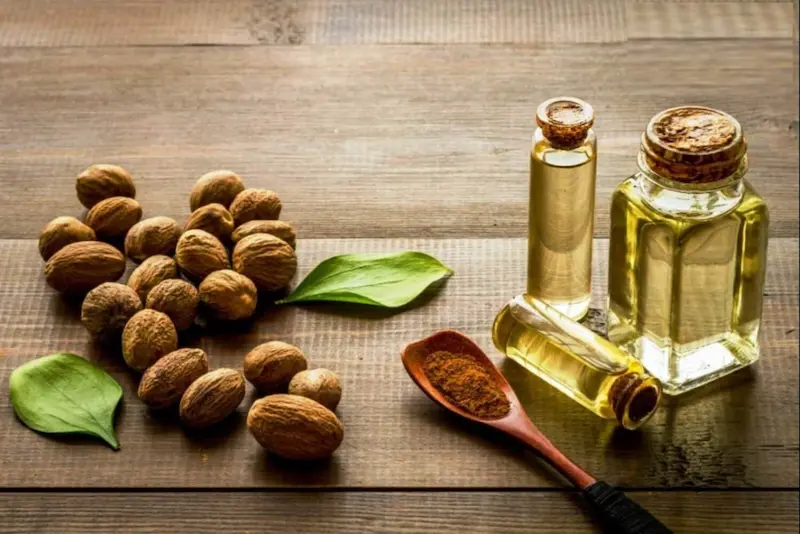
A good nutmeg essential oil is usually experienced as a layered natural material rather than a flat “spice” smell.
The exact balance differs by origin and batch, but buyers and perfumers often encounter a combination of warm spice, woody character, fresh pine-like or terpenic lift, and a restrained sweetness.
Initial Impression
The opening can feel brighter than expected. Fresh, terpenic, peppery, or pine-like facets may appear first, especially when the oil is evaluated neat on a blotter.
These brighter facets help nutmeg connect with citrus, aromatic, and cologne-style structures.
Heart Character
As the material develops, the warm spicy identity becomes clearer. This is where nutmeg can help round out pepper, clove, ginger, cinnamon-style, or resinous effects while adding its own softer woody-spice signature.
Woody and Earthy Drydown
Later in the evaluation, woody and dry natural facets may become more noticeable.
This helps explain why nutmeg can work comfortably beside vetiver, cedarwood-type notes, patchouli, resins, and other materials used to build depth.
| Aroma Character | Possible Perfumery Effect |
| Warm spice | Adds aromatic warmth and helps build spice accords. |
| Woody | Supports depth and connects well with woody structures. |
| Fresh / terpenic | Can provide lift and link the spice note to citrus or aromatic materials. |
| Slightly sweet | Can soften sharper spice facets and support amber or gourmand directions. |
| Earthy / dry | Adds natural texture in woody, spicy, or darker compositions. |
Where Does Nutmeg Sit in a Fragrance Composition?
It is tempting to label every material as a fixed top, middle, or base note, but natural nutmeg oil does not need to be treated that rigidly.
Depending on the specific oil and the surrounding formula, its brighter terpenic facets can appear early while the warmer spicy character continues into the heart.
For practical formulation, it is often more useful to think of nutmeg as a spicy modifier with opening-to-heart behavior.
At lower dosage it may add lift, warmth, or complexity without announcing itself as “nutmeg.”
At a more obvious level it can become a recognizable spice signature.
This is one reason sample evaluation matters. Two natural lots can both be genuine nutmeg oil yet create slightly different effects in the same fragrance concentrate.
Fragrance Families That Work Well With Nutmeg Oil
Woody Fragrances
Nutmeg can warm up dry woods and add a subtle spice layer around materials such as vetiver, cedarwood-type notes, patchouli, and other woody naturals.
The goal is usually integration: the nutmeg should add dimension without making the entire composition smell culinary.
Spicy Fragrances
In a spice-led composition, nutmeg can bridge sharper and warmer ingredients. It can support peppery, clove-like, ginger-like, or cinnamon-style effects while helping the accord feel rounder and more natural.
Amber-Style Compositions
Warm spice can sit naturally beside resinous, balsamic, vanilla-style, and incense-like directions.
Nutmeg is useful when the perfumer wants texture and warmth but does not want to rely entirely on sweet materials.
Gourmand Fragrances
Nutmeg can reinforce edible-spice associations in gourmand work, but professional use does not have to imitate a bakery accord.
At controlled levels, the oil can add dry spice and natural complexity around vanilla, cocoa, coffee-style, creamy, or sweet amber directions.
Cologne and Masculine Structures
The fresher terpenic side of nutmeg can connect with citrus, aromatic herbs, woods, and dry spice.
This makes it relevant to cologne-style and traditionally masculine fragrance structures, although its use is not limited to any one market or gender positioning.
How Nutmeg Works With Other Notes in Perfume Formulations
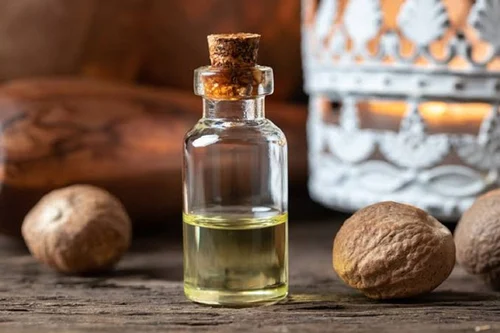
The purpose of blending is not to build a universal recipe. A professional perfumer decides how nutmeg should function inside a specific brief.
The table below is better treated as a formulation direction map than as a drop-by-drop formula.
| Fragrance Direction | Materials / Note Families | What Nutmeg Can Contribute |
| Woody | Vetiver, cedarwood-type notes, patchouli, sandalwood-style accords | Warmth, dryness, and a natural spice bridge into the woods. |
| Citrus-spice | Bergamot-style, orange, lemon, aromatic citrus structures | Warm contrast underneath a bright opening; helps create a more textured transition. |
| Spice accord | Pepper, clove, ginger, cinnamon-style materials | Rounds the spice structure and adds a recognizably warm natural character. |
| Amber / resinous | Resins, incense-style materials, balsamic notes, vanilla-style materials | Adds dry spice, warmth, and complexity without relying only on sweetness. |
| Gourmand | Vanilla-style notes, cocoa, coffee-style notes, creamy or sweet materials | Adds an edible-spice association while keeping a woody-natural edge. |
| Aromatic / cologne | Citrus, herbs, dry woods, aromatic materials | Connects fresh terpenic facets with a warmer heart. |
If you are also evaluating mace as a related spice material, see our Nutmeg Oil vs Mace Oil comparison for a separate side-by-side discussion. This article keeps its focus on nutmeg essential oil in fragrance work.
Natural Nutmeg Essential Oil as a Perfumery Raw Material
Botanical Identity
For B2B sourcing, the material should be identified botanically as Myristica fragrans when that is the oil being offered.
A commercial name such as “nutmeg oil” is not a substitute for clear botanical identity, because the buyer needs to connect the sample, specification, analytical records, and purchase order to the same material.
Plant Part and Extraction
Nutmeg essential oil used for fragrance applications is commonly obtained by steam distillation of the dried seed.
The plant part matters because nutmeg seed oil and mace oil come from different parts of the same fruit and can present different olfactory and commercial profiles.
Indonesian Origin
Indonesia is a major origin for Myristica fragrans and Indonesian nutmeg is well established in the international fragrance and flavor supply chain.
For buyers who need a commercial product overview, specifications, and packaging information, review the Global Essential Oil Nutmeg Essential Oil product page.
Why Nutmeg Oil Can Vary Between Batches
Natural essential oils are not manufactured as single synthetic molecules.
The composition can be influenced by raw material origin, harvest condition, storage, drying, distillation, and post-distillation handling.
That does not mean variation is automatically a defect; it means professional buyers need a defined acceptance window.
- Raw material and origin: growing location and harvested material can influence the balance of volatile compounds.
- Distillation: process conditions can change the balance between lighter and heavier aromatic fractions.
- Storage and oxidation: terpene-rich natural materials can change with poor storage, oxygen exposure, heat, or light.
- Batch chemistry: different genuine lots can show shifts in major-compound percentages while still falling within an agreed specification.
For a fragrance buyer, the practical response is to define both analytical and olfactory acceptance criteria.
A COA can show whether physical and chemical parameters fall inside the agreed range, while a GC or GC-MS profile can help the buyer review chemical composition. Neither replaces an actual formulation trial.
How Fragrance Buyers Should Evaluate a Nutmeg Oil Sample
A procurement team should evaluate nutmeg oil as both a natural raw material and a functional ingredient. The sample needs to work analytically, sensorially, and in the intended formula.
1. Check the Aroma Against the Fragrance Brief
Evaluate the sample on a blotter and, when appropriate, at a controlled dilution. Record the spicy, woody, fresh, sweet, or off-note characteristics that matter to the brief.
Do not rely on memory alone; keep a written reference so later lots can be compared consistently.
2. Confirm Identity and Batch Traceability
The botanical name, lot or batch reference, product specification, and analytical documents should refer to the material actually being evaluated.
If a supplier sends a generic report that cannot be connected to the offered batch, the document has less value for approval.
3. Review the Analytical Profile
Compare key physical and chemical parameters with your internal specification or the agreed supplier specification.
For a deeper explanation of what to review in these documents, use our guide on how to read an essential oil COA and GC-MS report.
4. Run a Formulation Trial
This is the step many generic quality guides miss. A sample can look acceptable on paper but still be unsuitable for the intended fragrance.
Test it in the actual base or fragrance concentrate at the relevant development stage.
Observe whether the nutmeg creates the desired effect, clashes with other naturals, becomes too terpenic, or disappears at the intended dosage.
For the full sample-to-PO workflow, including approval, conditional approval, and rejection criteria, see our Essential Oil Sample Evaluation Before Bulk Orders guide.
Documents Fragrance Buyers Should Review Before a Bulk Order
The exact document package depends on the product, destination market, intended application, and buyer quality system. However, fragrance procurement commonly involves several core records.
Product Specification
Defines the agreed identity and measurable quality parameters. It should be clear which specification will be used to accept or reject the commercial lot.
Certificate of Analysis (COA)
Summarizes batch-specific results for the parameters being reported. Buyers should verify that the batch reference and product identity correspond with the material offered.
GC or GC-MS Profile
Supports chemical-profile review and can help identify whether the offered material is consistent with the expected natural oil. Analytical data should be interpreted in context rather than treated as a single automatic pass/fail number.
SDS / MSDS
Provides safety, handling, storage, and transport information relevant to the raw material.
Current Fragrance Compliance Requirements
Finished-product use levels should not be guessed from a blog article or copied from another formulation.
Fragrance houses should review the current IFRA Standards Library and applicable local or regional regulations for their product category.
IFRA also notes that its Standards do not replace national or local legal requirements.
Nutmeg Essential Oil vs Nutmeg Fragrance Accord: What Buyers Should Know
A natural nutmeg essential oil and a formulated nutmeg fragrance accord can both create a nutmeg-like direction, but they are different raw-material choices. Neither is automatically “better.”
The appropriate choice depends on the fragrance brief, naturality requirements, consistency target, cost structure, regulatory strategy, and desired olfactory effect.
| Factor | Natural Nutmeg Essential Oil | Formulated Nutmeg Accord |
| Origin | Botanical material from Myristica fragrans; natural batch variation is expected within specification. | A formulated fragrance construction; composition depends on the fragrance house or supplier. |
| Aroma | Complex natural profile with spice, wood, fresh terpenic, and other minor facets. | Can be designed to emphasize a specific “nutmeg” impression or consistency target. |
| Consistency | Requires batch review and an agreed acceptance range. | Can often be designed for tighter olfactory repeatability. |
| Documentation | Botanical identity, batch specification, COA, SDS and analytical profile may be relevant. | Documentation depends on the fragrance mixture and its supplier. |
| Best fit | Useful when natural botanical character and traceability are part of the brief. | Useful when a constructed olfactory effect or specific consistency target is the priority. |
What Should Perfumers Request Before Sourcing Nutmeg Essential Oil?
Before moving from evaluation to a commercial order, a buyer should make the requirements explicit. A practical request can include:
- Botanical name and plant part.
- Origin information and extraction method.
- Current product specification.
- Representative sample for olfactory and formulation evaluation.
- Batch-linked COA and available chromatographic documentation where relevant.
- SDS / MSDS and other documents required by the buyer or destination market.
- Packaging options and required order quantity.
- Agreed acceptance criteria for the commercial batch.
- Quotation and lead-time information for the required volume.
If the sourcing question is broader than perfumery performance - for example supplier verification, MOQ, packaging, or Indonesian manufacturer selection - use our Nutmeg Essential Oil Manufacturer Indonesia sourcing guide.
Keeping those supplier-selection topics on the sourcing page helps this article stay focused on fragrance application and evaluation.
Sourcing Indonesian Nutmeg Essential Oil for Fragrance Applications
Global Essential Oil works with B2B buyers sourcing Indonesian nutmeg essential oil for fragrance, cosmetic, and related manufacturing applications.
If your team is evaluating nutmeg for a perfume formula, you can discuss the required product identity, sample, specification, available analytical documentation, packaging, quantity, and quotation with our team.
Start with the Nutmeg Essential Oil product page for the current commercial product information, or contact Global Essential Oil to discuss a sample or bulk sourcing requirement.
The exact documents available should be confirmed for the product and batch being purchased.
Frequently Asked Questions
Is nutmeg essential oil used in perfumery?
Yes. Natural nutmeg essential oil is used as a fragrance raw material, particularly where a formula needs warm spice, woody character, or a natural spicy modifier. Its exact role depends on the batch, dosage, and surrounding fragrance materials.
What does nutmeg essential oil smell like in perfume?
Nutmeg essential oil can present warm spicy, woody, fresh terpenic or pine-like, slightly sweet, and dry natural facets. In a finished perfume it may be obvious as a spice note or used more subtly to warm and connect other materials.
Is nutmeg a top, middle, or base note?
It is more useful to treat natural nutmeg oil as an opening-to-heart spicy modifier than to force it into one fixed position. Brighter terpenic facets may appear early while the warm spice character continues into the heart, depending on the oil and formula.
What fragrance notes blend well with nutmeg?
Nutmeg can work with woody, citrus, aromatic, spicy, resinous, amber-style, and gourmand directions. Common formulation partners can include vetiver, patchouli, cedarwood-type notes, citrus materials, pepper, clove, ginger, resins, incense-style materials, and vanilla-style notes. The appropriate combination depends on the fragrance brief.
Should a fragrance buyer review GC-MS before ordering nutmeg oil?
GC or GC-MS can be useful for reviewing the chemical profile of a natural oil, especially when combined with a batch-specific COA and clear specification. It should not replace olfactory evaluation and formulation testing. Buyers should decide the required verification level based on risk, application, and internal quality procedures.
What should buyers check before ordering nutmeg essential oil in bulk?
Confirm botanical identity, plant part, origin, extraction method, sample performance, product specification, batch documentation, safety data, required compliance review, packaging, quantity, and the acceptance criteria that will apply to the commercial lot.