Clove oil for anxiety is often promoted in aromatherapy, but the available evidence does not establish clove essential oil as a treatment for anxiety disorders or chronic stress.
Its warm, spicy aroma may be used in fragrance and wellness products, while research specifically connecting clove oil with emotional outcomes remains limited and highly context-dependent.
Recent evidence includes a 2024 mouse study examining clove essential oil in an inflammation-related model and a 2022 randomized clinical trial of clove aromatherapy during electroconvulsive therapy.
Neither study demonstrates that routine home diffusion of clove oil treats anxiety in humans.
The most accurate conclusion is that clove oil may be evaluated as an aromatic ingredient, not as a replacement for professional mental-health care.
| Medical note This article provides general educational information. It does not diagnose or treat anxiety, depression, insomnia, or another health condition. Persistent, severe, or worsening symptoms should be discussed with a qualified healthcare or mental-health professional. |
Key Takeaways
- Direct human evidence for clove oil as an anxiety or stress treatment is limited.
- Research on whole cloves, clove extracts, isolated eugenol, or animal models cannot automatically be applied to clove essential oil use in humans.
- Aroma responses are subjective. Some people may find clove's warm scent comforting, while others may find it strong, stimulating, or irritating.
- Clove oil is rich in eugenol, a compound associated with skin irritation and allergic skin reactions at relevant exposure levels.
- B2B buyers should verify the plant part, chemical profile, COA, GC-MS report, SDS, intended application, and finished-product safety requirements.
What Is Clove Essential Oil?
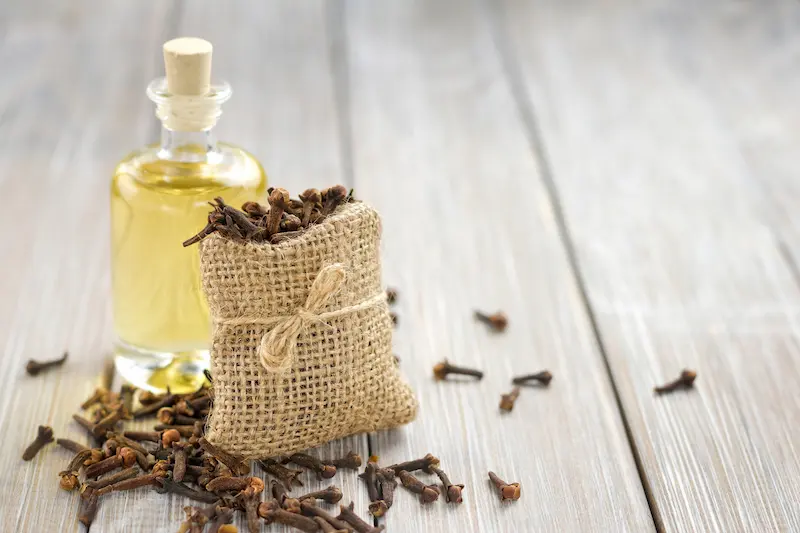
Clove essential oil is a concentrated volatile oil produced from Syzygium aromaticum. Commercial oils may be distilled from the flower buds, leaves, or stems.
These materials do not produce identical oils: their aroma, eugenol concentration, minor constituents, price, and preferred industrial applications can differ.
Eugenol is usually the dominant constituent, but its percentage depends on the plant part, origin, distillation conditions, storage, and batch.
Buyers who need a practical comparison can review GEO's guide to clove bud oil vs clove leaf oil vs clove stem oil.
The presence of a biologically active compound does not prove that the complete oil has a clinical effect on anxiety.
It also does not establish a universal concentration, exposure route, or finished-product format that is effective and safe.
Cloves vs Clove Essential Oil for Anxiety
Search results often mix whole cloves, clove tea, extracts, essential oil, and eugenol. These are different materials, and findings from one form should not be presented as proof for another.
| Material | What It Is | Why the Distinction Matters |
| Whole cloves | Dried flower buds used as a spice or traditional preparation. | Food use and traditional claims do not establish the effects of inhaling a concentrated essential oil. |
| Clove extract | A concentrated preparation whose composition depends on the solvent and extraction method. | Extract studies may contain non-volatile compounds that are absent or present at different levels in essential oil. |
| Clove essential oil | Steam-distilled volatile oil from buds, leaves, or stems. | This is the material discussed in the article, but product type and batch composition still matter. |
| Eugenol | An individual aromatic compound and a major constituent of many clove oils. | A study on isolated eugenol is not identical to a study on the complete essential oil. |
What Does Research Say About Clove Oil for Anxiety?
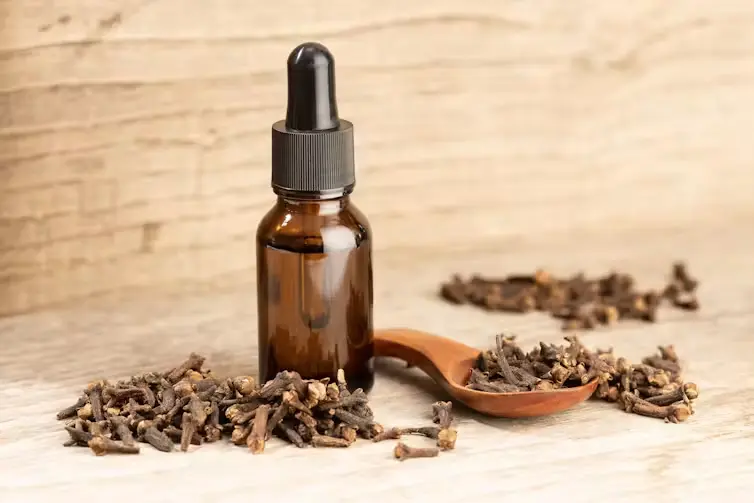
Human Evidence Remains Limited
A 2022 randomized controlled trial involved 100 patients receiving electroconvulsive therapy.
The experimental group inhaled a 2.5% clove essential oil preparation for five minutes, three times per week, while the control group received routine care.
The study evaluated memory and cortisol rather than everyday anxiety.
It found that clove aromatherapy did not significantly improve the total memory score or cortisol level compared with the control group.
This trial is useful because it shows that a clinical use of clove aroma does not automatically produce a measurable stress-related outcome.
It does not prove that clove oil is ineffective for every aromatic purpose, but it does not support broad claims that clove oil reliably reduces stress, improves mood, or acts as a sedative.
A 2024 Animal Study Is Not Human Clinical Proof
A 2024 study used mice exposed to lipopolysaccharide to create inflammation-related cognitive and behavioral changes.
The researchers examined clove essential oil, hydrogen inhalation, and a combined treatment.
They reported changes in anxiety- and depression-like behavior and described an additive effect in the combined-treatment group.
The study is preclinical. It involved an induced mouse model, not people with generalized anxiety, workplace stress, insomnia, or another diagnosed condition.
Its exposure conditions also cannot be treated as instructions for consumer diffusion, topical use, or self-treatment.
What the Evidence Cannot Establish
- That clove oil treats an anxiety disorder or clinical depression.
- That diffusing clove oil at home produces the same effect as a controlled research protocol.
- That clove oil is an established sleep aid or sedative.
- That more concentrated exposure produces better results.
- That a result involving isolated eugenol, whole cloves, or an extract applies to every clove essential oil batch.
Evidence at a Glance
| Evidence | What Was Reported | Main Limitation |
| Human randomized trial, 2022 | Clove aromatherapy did not significantly improve total memory scores or cortisol during ECT. | The study focused on memory during ECT, not routine anxiety or stress management. |
| Mouse study, 2024 | Clove essential oil was associated with changes in anxiety- and depression-like behavior in an inflammation-related model. | Animal model; does not establish efficacy or dosage for humans. |
| General aromatherapy literature | Odor exposure can interact with perception, emotion, memory, and physiological responses. | Effects vary by oil, context, protocol, expectations, and study quality. |
How Is Clove Oil Used in Aromatherapy?
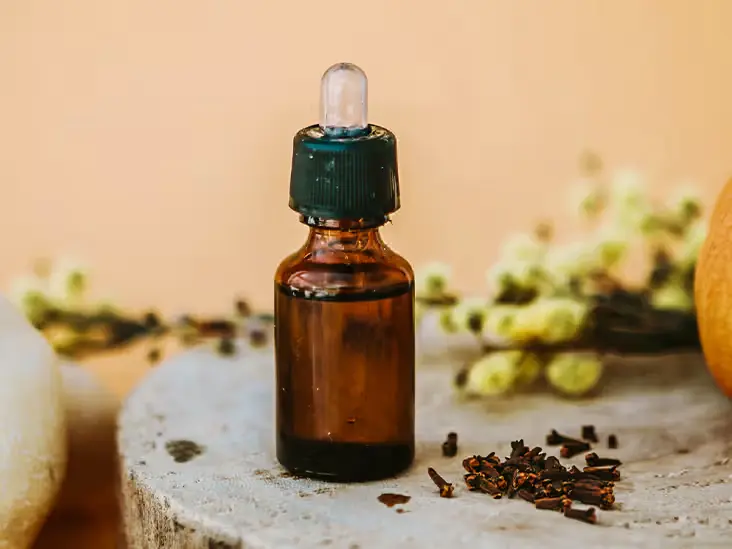
In commercial aromatherapy and wellness products, clove oil may be used as a warm, spicy aromatic note.
It can appear in diffuser blends, room fragrance, massage or wellness formulations, and personal-care products.
This describes its role as an aromatic ingredient; it does not mean the finished product is clinically proven to treat stress or anxiety.
Because clove oil can be intense and irritating, users should follow the directions supplied with the finished product, use it in a ventilated area, and avoid assuming that a stronger aroma provides a better result.
Undiluted essential oil should not be applied directly to the skin.
Cosmetic and personal-care formulators can review GEO's dedicated guide to clove oil safety for cosmetics for a formulation-focused discussion of concentration, sensitization, and documentation.
Does Clove Oil Make You Sleepy?
Clove oil is not established as a sleep aid. Some people may perceive its warm aroma as comforting, but others may find it stimulating, heavy, or irritating. Individual preference is not the same as a sedative effect.
Claims that clove oil causes sleep, treats insomnia, or provides instant relaxation are not supported by strong human evidence.
People with persistent sleep problems or anxiety-related insomnia should seek qualified healthcare advice rather than relying on an essential oil as a substitute for assessment or treatment.
Safety Considerations for Clove Oil
Skin and Eye Exposure
Eugenol is classified in PubChem hazard data as causing skin irritation and as capable of causing an allergic skin reaction. Concentrated clove oil may also irritate the eyes and mucous membranes.
Use a finished product according to its label. Do not apply undiluted clove essential oil directly to the skin, temples, face, or other sensitive areas. Stop use and seek professional advice when a reaction is significant or persistent.
Inhalation and Shared Spaces
Use aromatic products in a ventilated area and discontinue exposure if the aroma causes coughing, breathing discomfort, eye irritation, headache, dizziness, or nausea. A stronger or longer exposure is not automatically more effective.
Keep concentrated essential oil and finished products out of reach of children and animals. Product labels may contain restrictions for particular users, environments, or application methods.
Ingestion
Internal use of concentrated clove essential oil is not recommended as a method for stress relief.
The composition and concentration of essential oils differ from culinary use of whole cloves or approved flavor formulations.
Accidental ingestion or a significant exposure should be assessed using the product label and advice from an appropriate poison-information or medical service.
Pregnancy, Medical Conditions, and Mental-Health Care
People who are pregnant or breastfeeding, managing a medical condition, using prescription medication, or considering use around children should follow product restrictions and consult an appropriately qualified professional when needed.
Clove oil should not replace evidence-based care for anxiety, depression, panic attacks, trauma-related symptoms, or sleep disorders.
Immediate help should be sought when symptoms involve danger to oneself or others.
Considerations for Product Formulators and B2B Buyers
For a buyer, the relevant question is not only whether clove oil has a warm aroma.
The raw material must be evaluated in relation to the intended application, target concentration, regulatory market, and finished-product safety requirements.
1. Confirm the Raw Material
Specify whether the product is clove bud oil, clove leaf oil, clove stem oil, or a rectified material. These oils can differ in eugenol concentration, minor constituents, aroma, price, and suitability for fragrance, oral care, personal care, household, or industrial applications.
2. Review Batch-Specific Composition
Do not rely only on a generic specification. A batch-specific COA and GC-MS report can help confirm botanical identity, major constituents, specification compliance, and unusual variations.
3. Assess the Complete Formulation
The safety and sensory performance of a finished product depend on all ingredients, not only clove oil.
Formulators should consider the exposure route, total fragrance system, allergens, irritation and sensitization risk, packaging, stability, target population, labeling, and applicable regulations.
4. Request Appropriate Documentation
- Product specification and botanical identity.
- Batch-specific Certificate of Analysis.
- GC-MS or other relevant chemical-profile report.
- SDS or MSDS for handling and transport.
- Packaging, MOQ, lead-time, and export-document details.
- Any application-specific documentation required by the buyer's market.
Buyers evaluating Indonesian material can review the clove essential oil manufacturer page for product and packaging information.
Source Indonesian Clove Oil for B2B Applications
Global Essential Oil supplies Indonesian clove oil for B2B applications.
Buyers and formulators can discuss the required clove-oil type, intended application, product specification, available COA, GC-MS and SDS documentation, packaging, and bulk supply requirements with the export team.
Contact Global Essential Oil to request product information or discuss a quotation.
The suitability and safety of a finished product depend on its complete formulation, concentration, intended use, target market, and applicable regulations.
Frequently Asked Questions
Is clove oil good for anxiety?
Direct human evidence is limited, so clove oil should not be presented as a proven anxiety treatment. Its aroma may be included in wellness or fragrance products, but subjective aromatic preference is different from clinical efficacy.
Can clove oil reduce stress?
Current evidence does not establish clove oil as a reliable treatment for chronic stress. Any perceived calming effect may vary by person, product, concentration, setting, and expectation.
Does clove oil make you sleepy?
Clove oil is not an established sedative or sleep aid. Some people may find the aroma comforting, while others may find it strong or stimulating.
Is clove essential oil the same as eating cloves?
No. Whole cloves are a culinary spice, whereas essential oil is a concentrated volatile material. The dose, composition, exposure route, and safety considerations are different.
Can clove oil be applied directly to the skin?
Undiluted clove essential oil should not be applied directly to the skin. Eugenol can irritate and sensitize the skin. Follow the directions and restrictions of the finished product.
Can clove oil replace anxiety treatment?
No. Clove oil should not replace professional assessment, psychotherapy, prescribed medication, or another evidence-based treatment.