
When deciding between clove bud oil vs clove leaf oil, many B2B buyers find themselves confused by the distinct differences in eugenol content, aroma, and price.
These oils are all derived from the same tree, Syzygium aromaticum, but they are chemically distinct products with very different industrial applications.
These are all derived from the same tree, Syzygium aromaticum, but they are chemically distinct products with very different prices, aromas, and industrial applications.
Choosing the wrong type can affect your formulation quality, your compliance with IFRA or pharmaceutical standards, and your cost-efficiency as a buyer. This guide breaks down everything you need to know.
Global Essential Oil produces all three types of clove oil from Indonesian farms — GC-MS tested and Halal certified. Here is exactly how they differ.
| What Is the Difference Between Clove Bud Oil, Clove Leaf Oil, and Clove Stem Oil? All three are essential oils from Syzygium aromaticum (clove tree), but each comes from a different part of the plant and has a distinct chemical profile: • Clove Bud Oil: Distilled from the dried flower buds. The most expensive type. Eugenol content: 72–90%. Also contains significant eugenyl acetate (5–15%), giving it a softer, more refined aroma. Used in high-end flavoring, dental products, and fine fragrance. • Clove Leaf Oil: Distilled from dried fallen leaves. The most widely traded type globally. Eugenol content: 70–82%. Lower eugenyl acetate (<1%), giving a harsher, more pungent aroma. Used in industrial applications, personal care, and as the primary source for eugenol extraction. • Clove Stem Oil: Distilled from the small twigs/stems. Highest eugenol yield of all three: 85–92%. Sharp, intensely medicinal aroma. Primarily used for eugenol isolation in pharmaceutical and synthesis applications. Quick guide: Need premium quality for flavor/pharma? → Bud oil. Need cost-effective for cosmetics/industrial? → Leaf oil. Need maximum eugenol content for isolation? → Stem oil. |
The Three Types of Clove Essential Oil: A Quick Overview

The clove tree (Syzygium aromaticum, formerly Eugenia caryophyllata) produces aromatic essential oils in virtually all of its parts — buds, leaves, stems, and even roots. However, commercial production focuses on three main types because they represent the best yield-to-quality ratio for industrial processing.
| Type | Source Part | Primary Use | Relative Price |
| Clove Bud Oil | Dried, unopened flower buds | Flavoring, dental, fine fragrance | Highest (3–5× leaf oil) |
| Clove Leaf Oil | Dried, fallen leaves | Industrial, cosmetics, eugenol isolation | Lowest (most affordable) |
| Clove Stem Oil | Small twigs and branches | Eugenol isolation, pharmaceutical | Medium (between bud and leaf) |
| Clove Leaf Rectified | Redistilled leaf oil | Cosmetics requiring higher purity | Medium-high |
All three contain eugenol as the dominant compound — but the concentration, secondary compounds, and aroma character differ significantly, which determines their suitability for different applications.
Clove Bud Oil: The Premium Choice
How Clove Bud Oil Is Produced
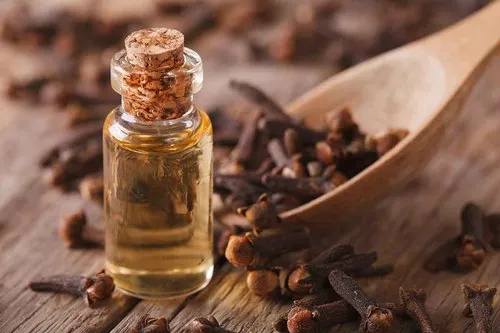
Clove bud oil is extracted via steam distillation from the dried, unopened flower buds of Syzygium aromaticum.
The buds are harvested before they open — typically when they turn from green to a pinkish-red color.
Timing is critical: harvest too early and the oil yield is low; harvest too late and the buds flower, dramatically reducing eugenol content.
The dried buds are then steam-distilled, yielding approximately 15–20% essential oil by weight — significantly more per kg of raw material than leaves or stems.
This higher yield per kg of premium raw material is one reason bud oil commands a higher price.
| Indonesian Clove Bud Production Indonesia (particularly North Maluku, Java, and Sulawesi) accounts for approximately 70–80% of global clove production. The majority of Indonesian cloves are consumed domestically by the kretek (clove cigarette) industry — which is why Indonesian clove bud oil commands a premium: competition for raw material is intense. |
Eugenol Content & Chemical Composition of Clove Bud Oil
The chemical composition of clove bud oil distinguishes it from leaf and stem oil in two important ways:
| Compound | Clove Bud Oil (%) | Notes |
| Eugenol | 72–90% | Primary active compound — antimicrobial, analgesic, antioxidant |
| Eugenyl acetate | 5–15% | KEY DIFFERENTIATOR — responsible for softer, sweeter aroma; almost absent in leaf & stem |
| Beta-caryophyllene | 5–12% | Sesquiterpene — anti-inflammatory properties; contributes to woody depth |
| Alpha-humulene | 0–2% | Trace sesquiterpene |
| Methyl eugenol | 0–1% | Minor component; monitored for IFRA compliance |
The presence of eugenyl acetate (5–15%) is the most important chemical distinction of bud oil.
This compound softens and sweetens the overall aroma, making bud oil far more suitable for fine fragrance and premium food flavoring applications where raw, harsh eugenol character would be undesirable.
Aroma Profile of Clove Bud Oil
Clove bud oil has a warm, sweet, spicy aroma with a distinct floral undertone from the eugenyl acetate content. It is significantly softer and more rounded than leaf or stem oil.
Perfumers describe it as 'warm clove with a sweet edge' — reminiscent of freshly ground cloves rather than the sharper, more medicinal character of the leaf.
→ Clove bud oil is the preferred type for fragrance applications. For a detailed overview of eugenol in perfumery and pain management, see: Clove Essential Oil and Pain Management
Clove Leaf Oil: The Industrial Workhorse
How Clove Leaf Oil Is Produced
Clove leaf oil is distilled from the dried leaves of Syzygium aromaticum — typically dead or fallen leaves collected from the ground beneath the trees, or pruned leaves from maintenance.
This makes it a byproduct of clove cultivation that would otherwise be agricultural waste.
Because leaves are abundant, continuously available, and inexpensive to collect, clove leaf oil is produced at much larger volumes than bud oil — and at significantly lower cost.
Indonesia and Madagascar are the dominant producers. The oil yield is approximately 2–3% from dried leaves.
| Why Leaf Oil Dominates Global Trade According to industry data, clove leaf oil accounts for approximately 70–80% of all clove essential oil traded globally by volume. Its low cost, high eugenol content, and year-round availability make it the preferred choice for industrial applications where premium aroma character is not required. |
Eugenol Content & Chemical Composition of Clove Leaf Oil
| Compound | Clove Leaf Oil (%) | vs Bud Oil |
| Eugenol | 70–82% | Comparable to bud, slightly variable |
| Eugenyl acetate | < 1% | MUCH LOWER — this is the critical difference |
| Beta-caryophyllene | 10–18% | Higher than bud oil — more prominent woody note |
| Alpha-humulene | 1–3% | Slightly higher than bud |
| Methyl eugenol | 0.5–2% | Often higher than bud — relevant for IFRA limits |
The critically low eugenyl acetate content (<1%) is what gives clove leaf oil its harsher, more pungent character compared to bud oil.
The higher beta-caryophyllene also contributes a more prominent woody-medicinal note that can be undesirable in fine fragrance but is perfectly acceptable — or even beneficial — in industrial applications.
Clove Leaf Oil Rectified: What Is It and When Do You Need It?
Clove leaf oil rectified (also called redistilled clove leaf oil) is produced by redistilling standard clove leaf oil to concentrate the eugenol content and remove unwanted volatiles. The result is an oil with:
- Eugenol content: 85%+ (compared to 70–82% in standard leaf oil)
- Reduced methyl eugenol content — important for IFRA and EU cosmetic compliance
- Lighter color — more suitable for clear cosmetic formulations
- Slightly smoother aroma profile
Global Essential Oil produces clove leaf oil rectified with guaranteed eugenol content of 85%+ — preferred by cosmetic manufacturers who need to meet regulatory specifications without paying bud oil prices.
Clove Stem Oil: The Underrated Option

How Clove Stem Oil Is Produced
Clove stem oil (also called clove twig oil) is distilled from the dried, woody stems and branches of Syzygium aromaticum — the small twigs remaining after bud harvest and leaf collection. Like leaf oil, stems are a byproduct of clove farming.
The yield from clove stems is approximately 5–7% — higher than leaves but requiring more woody material per batch. Production is most efficient when done close to the farm, as dry stems are bulky to transport.
Why Clove Stem Oil Is the Top Choice for Eugenol Isolation
Clove stem oil has the highest eugenol content of all three types — typically 85–92%, sometimes reaching 95% in high-quality batches. This makes it the preferred raw material for industrial eugenol isolation and chemical synthesis:
- Eugenol isolation: stem oil is distilled or chemically processed to extract pure eugenol (pharmaceutical or industrial grade)
- Vanillin synthesis: eugenol from clove stem oil is one of the primary feedstocks for natural-process vanillin production
- Isoeugenol production: eugenol undergoes isomerization to produce isoeugenol, used in fragrance synthesis
- Methyl eugenol production: used as an insect attractant and in some fragrance applications
→ For detailed information about eugenol specifications and industrial applications: Eugenol Manufacturer & Supplier — GEO's eugenol product page.
Side-by-Side Comparison: Clove Bud vs Leaf vs Stem Oil
Use this table as your quick reference guide when evaluating which type to source:
| Factor | Clove Bud Oil | Clove Leaf Oil | Clove Stem Oil |
| Source part | Dried flower buds | Dried fallen leaves | Small twigs/branches |
| Eugenol content | 72–90% | 70–82% | 85–92% |
| Eugenyl acetate | 5–15% (KEY DIFFERENCE) | <1% | <1% |
| Beta-caryophyllene | 5–12% | 10–18% | 6–10% |
| Aroma character | Warm, sweet, spicy, refined | Pungent, sharp, medicinal | Intensely medicinal, harsh |
| Oil yield from plant | 15–20% from dried buds | 2–3% from dried leaves | 5–7% from dried stems |
| Relative price | Highest (3–5× leaf) | Lowest | Medium |
| Color | Pale yellow to yellow | Pale yellow | Pale yellow to colorless |
| Primary applications | Flavoring, dental, perfume, pharma | Cosmetics, industrial, eugenol source | Eugenol isolation, pharma synthesis |
| IFRA classification | Monitored (methyl eugenol) | Restricted (higher methyl eugenol) | Industrial use — check application |
| B2B availability from GEO | ✓ Available | ✓ Available (incl. rectified 85%) | ✓ Available |
Eugenol Content: The Most Critical Factor for B2B Buyers
For most industrial buyers, eugenol content is the single most important quality metric. Here is why it matters per application:
| Application | Minimum Eugenol Required | Recommended Oil Type | Reason |
| Dental products (eugenol ZOE cement) | ≥ 85% pharmaceutical grade | Clove bud OR clove leaf rectified | USP/BP eugenol purity requirements |
| Eugenol isolation (industrial) | ≥ 85% to be economical | Clove stem oil | Highest yield per kg; most cost-effective |
| Vanillin / isoeugenol synthesis | ≥ 80% | Clove stem or leaf oil | Volume and consistency over aroma quality |
| Fine fragrance (IFRA compliant) | < 0.5% methyl eugenol in final product | Clove bud oil (lowest methyl eugenol) | IFRA limits methyl eugenol strictly |
| Cosmetic formulation (EU compliant) | Eugenol must be declared > 0.001% (leave-on) | Leaf rectified or bud oil | Lower methyl eugenol in rectified |
| Food flavoring (FEMA GRAS) | High purity bud preferred | Clove bud oil | Softer aroma; eugenyl acetate adds quality |
Which Clove Oil Should You Choose? Recommendations by Industry
For Pharmaceutical & Dental Applications
Use clove bud oil or clove leaf oil rectified (85%+). Both meet USP/BP eugenol content requirements when properly certified.
Bud oil is preferred when a purer eugenol profile and lower methyl eugenol content are required by your specification.
Always request GC-MS report confirming eugenol % and methyl eugenol levels.
| GEO's Pharmaceutical-Grade Options Global Essential Oil provides COA and GC-MS report for every batch. For pharmaceutical buyers, we offer: clove bud oil (eugenol 75–90%) and clove leaf oil rectified (eugenol 85%+), both with full traceability documentation. |
For Fragrance & Perfumery
Use clove bud oil. The eugenyl acetate content (5–15%) is essential for a refined, rounded clove character in fine fragrance.
Clove leaf oil's harsh, pungent character and higher methyl eugenol content make it less suitable for skin-contact fragrance applications. IFRA compliance documentation is available on request.
For Food Flavoring (FEMA GRAS)
Use clove bud oil for premium flavoring applications (confectionery, baked goods, beverages).
Its softer, sweeter character from eugenyl acetate is much preferred by flavor houses.
Clove leaf oil can be used in industrial flavor applications where cost efficiency is prioritized over aroma refinement.
For Personal Care & Cosmetics (IFRA / EU Compliant)
Use clove leaf oil rectified or clove bud oil. Standard clove leaf oil has higher methyl eugenol content which may exceed EU Cosmetic Regulation thresholds for certain product categories.
Rectified leaf oil resolves this while maintaining cost efficiency over bud oil.
→ For safety guidelines, dilution rates, and IFRA compliance overview: Clove Oil Safety Tips and Dilution Guide.
→ For personal care applications of clove oil: Clove Oil for Hair: Benefits and How to Use It.
Why Indonesia Is the World’s Leading Source for All Three Types
Indonesia is not merely a significant supplier — it is the dominant global source for clove essential oil across all three types, for reasons deeply rooted in agricultural history, climate, and scale:
- Indonesia produces approximately 70–80% of the world's cloves by volume, primarily in North Maluku (the original Spice Islands), Sulawesi, Java, and Sumatra
- The kretek (clove cigarette) industry consumes the majority of domestic clove production — creating constant farming activity and a steady stream of leaf and stem as co-products
- The scale of Indonesian clove farming enables year-round leaf and stem oil production, critical for buyers who need consistent supply
- Java's clove growing conditions produce oil with consistently high eugenol content and low methyl eugenol — particularly valued by European cosmetic formulators
- Indonesian producers, including Global Essential Oil, hold Halal MUI certification — an increasingly important requirement for Middle Eastern and Asian pharmaceutical and food buyers
Safety Notes for Industrial Use of Clove Oils
| ⚠️ Important Safety Considerations for All Three Types Clove oils — bud, leaf, and stem — are among the most potent essential oils in terms of dermal sensitization risk due to high eugenol content. • IFRA restricts clove leaf oil more strictly than bud oil due to higher methyl eugenol content • All three types require significant dilution before skin contact (max 0.5% in leave-on products per IFRA guidelines) • Methyl eugenol content must be checked via GC-MS — it varies between batches and affects regulatory compliance • For pharmaceutical applications, request USP/BP-grade documentation • Always store in cool, dark, sealed containers — clove oil oxidizes and eugenol content can change over time |
Disclaimer: This article provides general technical guidance for B2B buyers. Regulatory requirements vary by country and application. Always consult your regulatory affairs team and request full technical documentation from your supplier before formulation.
| Which Type of Clove Oil Should I Source? Quick Decision Guide Quick selection guide for B2B buyers: ✓ Clove BUD Oil — choose when: • You need refined aroma for fine fragrance or premium food flavoring • Your application requires eugenyl acetate (the soft, sweet character) • IFRA compliance for skin-contact fragrance is required (lowest methyl eugenol) • Pharmaceutical grade eugenol with full purity documentation ✓ Clove LEAF Oil — choose when: • Cost efficiency is the primary driver • Application is industrial or cosmetic (not fine fragrance) • Volume is high and aroma refinement is secondary • You want clove leaf oil rectified (85%+) for EU cosmetic compliance ✓ Clove STEM Oil — choose when: • You need maximum eugenol yield for isolation/extraction • Your application is pharmaceutical synthesis or vanillin production • Aroma quality is irrelevant (eugenol is isolated from the oil) |
Source Certified Clove Oils from Indonesia
Global Essential Oil supplies all three types of clove essential oil — bud, leaf, and stem — along with clove leaf oil rectified (85%+), directly from Indonesian production facilities. All products are:
- GC-MS tested per batch — eugenol %, eugenyl acetate %, methyl eugenol % all documented
- Halal MUI certified — suitable for pharmaceutical and food buyers
- Available with full documentation: COA, MSDS, GC report, Phytosanitary Certificate
- Exportable with Indonesian origin documentation for EU, US, and Middle East buyers
- Flexible MOQ: from sample quantities to full ISO-tank shipments
→ View our clove essential oil product page or contact our export team for samples and a quotation.
Frequently Asked Questions
What is the difference between clove bud oil and clove leaf oil?
Clove bud oil is distilled from dried flower buds and has a smoother, sweeter aroma due to its higher eugenyl acetate content. Clove leaf oil is distilled from the leaves and has a sharper, more medicinal scent. Both contain high levels of eugenol but are used for different applications.
Which clove oil has the highest eugenol content?
Clove stem oil typically contains the highest eugenol content, making it the preferred choice for industrial eugenol extraction. Clove bud and clove leaf oils also contain high eugenol levels but are commonly selected based on their aroma and intended use.
Is clove leaf oil the same as clove oil?
Not always. "Clove oil" is a general term that may refer to clove bud, leaf, or stem oil. Because the composition and aroma differ, buyers should always confirm the specific type with their supplier.
Can I use clove leaf oil instead of clove bud oil?
It depends on the application. Clove leaf oil is a cost-effective option for many industrial and cosmetic uses, while clove bud oil is generally preferred for premium fragrances, food flavoring, and applications requiring a more refined aroma.
What is clove leaf oil rectified?
Clove leaf oil rectified is refined through an additional distillation process to increase eugenol content and reduce unwanted compounds. It is commonly used in cosmetic and pharmaceutical applications that require stricter quality specifications.
What is clove stem oil used for?
Clove stem oil is primarily used as a raw material for eugenol extraction. The isolated eugenol is widely used in pharmaceutical, dental, flavor, and fragrance industries.
Which clove oil is best for cosmetics?
Rectified clove leaf oil and clove bud oil are commonly preferred for cosmetic formulations because they offer higher purity and are better suited to industry quality requirements. Buyers should always review the supplier's GC-MS report before use.
Does Global Essential Oil supply all three types of clove oil?
Yes. We supply clove bud oil, clove leaf oil, clove stem oil, and rectified clove leaf oil. All products are supported by batch-specific COA, GC-MS reports, MSDS, and relevant certification documents for international buyers.