
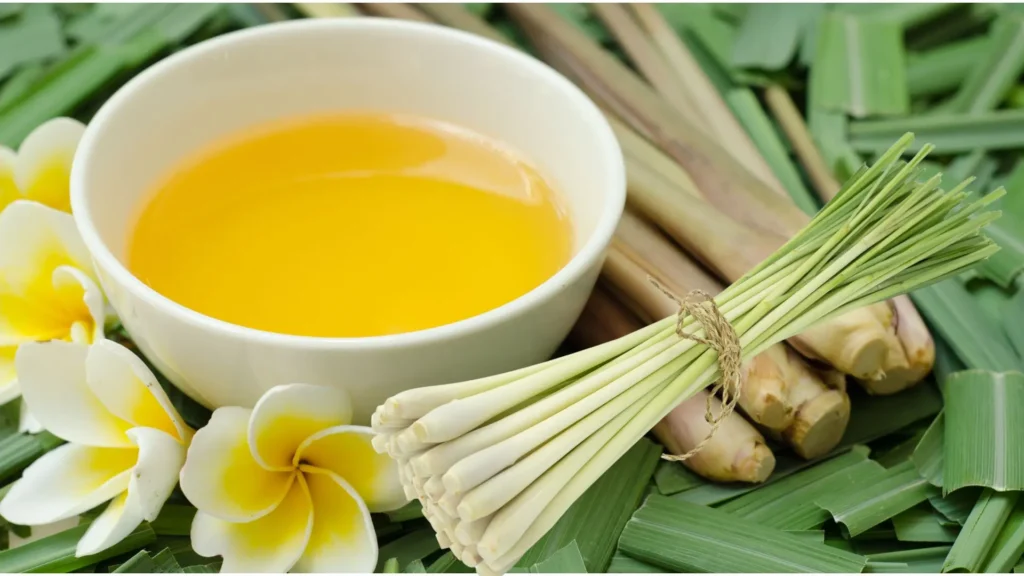
Citronella Oil for Anxiety is increasingly discussed as an aromatherapy option for supporting mood, relaxation, and everyday stress management.
Although citronella essential oil is best known as a mosquito repellent, a small human study has also examined its effects on mood states, nervous-system activity, and brain-wave patterns.
This guide reviews what the existing research does and does not show, explains how scent may influence emotional responses, and provides practical ways to use citronella essential oil safely as a complementary wellness tool.
⚕️ Important note: This article discusses citronella oil as an aromatic wellness tool. It is not a treatment for anxiety disorders, depression, or any mental health condition. If you are experiencing significant mental health challenges, please consult a qualified healthcare professional.
| Does Citronella Oil Help with Anxiety? Yes — there is credible evidence that citronella essential oil can help reduce anxiety symptoms and improve mood through inhalation aromatherapy. However, the effect is modest and works best as a complement to other strategies, not as a standalone treatment. What the evidence shows: • A study on 'Harmonizing Effects of Citronella Oil on Mood States and Brain Activities' measured both subjective mood (using the POMS — Profile of Mood States scale) and objective brain activity (EEG). Citronella inhalation produced measurable changes in mood and brain wave patterns. • Tisserand Aromatherapy, one of the UK's most credible essential oil brands, notes that citronella is 'wonderful when you feel emotionally low or need a pick-me-up' — supported by their qualified aromatherapist team. • The mechanism: citronella's aromatic compounds (citronellal, geraniol) travel via the olfactory nerve directly to the limbic system — the brain's emotional regulation center — producing calming or uplifting effects depending on concentration and individual response. Best method: diffuse 4–6 drops of Java type citronella essential oil for 20–30 minutes in a well-ventilated space. Important: citronella is not a treatment for clinical anxiety disorder. It is an aromatic support tool that may help manage mild daily stress and low mood. |
How Citronella Oil Affects the Brain: The Olfactory-Limbic Connection
To understand why citronella can affect mood and anxiety, you need to understand a simple but remarkable neurological pathway that makes aromatherapy different from most other wellness approaches.
Why Inhaling Citronella Changes How You Feel
When you inhale citronella oil, aromatic molecules travel through your nasal cavity and bind to olfactory receptor neurons.
This triggers a signal that travels through the olfactory nerve directly to the olfactory bulb — and from there, directly to the limbic system.
The limbic system is the brain's emotional control center. It includes the amygdala (processes fear and anxiety), hippocampus (memory and emotional context), and hypothalamus (regulates cortisol and autonomic stress response).
Unlike most sensory information, olfactory signals bypass the thalamus — meaning scent reaches emotional processing centers faster than almost any other sensory input.
This is why a familiar scent can instantly trigger a strong emotional response. It is also why aromatherapy — when it works — works quickly.
→ For more on citronella's olfactory effects in the context of insect repellency: citronella aromatherapy and repellent properties
Citronellal, Geraniol, and Mood: The Active Compounds
Java type citronella oil (Cymbopogon winterianus) contains two key compounds that are relevant to mood:
- Citronellal (35–45%): The dominant compound. Has an uplifting, fresh-citrus quality that is associated in aromatherapy practice with mental clarity and mood elevation. Research on related compounds suggests interaction with the serotonergic system — though direct human studies on citronellal specifically are limited.
- Geraniol (21–24%): The secondary active compound. Geraniol has been studied for anxiolytic (anti-anxiety) properties in animal models. It is also found in rose essential oil, which has one of the strongest evidence bases for mood and anxiety effects among natural aromatics.
What Research Says: The Mood and Brain Activity Study
The most directly relevant research on citronella and mental health is a study titled 'The Harmonizing Effects of Citronella Oil on Mood States and Brain Activities' — available on ResearchGate and cited in academic literature on aromatic plant compounds.
Mood States Measured (POMS Scale)
| Study Method and Mood Findings Researchers assessed participants' mood before and after citronella oil inhalation using the POMS (Profile of Mood States) — a validated psychological tool that measures six mood dimensions: • Tension-Anxiety • Depression-Dejection • Anger-Hostility • Vigor-Activity • Fatigue-Inertia • Confusion-Bewilderment Participants who inhaled citronella oil showed measurable shifts in mood state scores across multiple dimensions. Important caveat: The full numerical findings require access to the complete paper. This article describes the study's methodology and general findings — for specific data, consult the original research via ResearchGate. |
Brain Activity Changes (EEG)
Alongside subjective mood measurement, the study used EEG (electroencephalogram) to measure objective brain wave activity changes following citronella inhalation.
EEG measures electrical activity in different brain regions. Certain wave patterns (alpha waves, for example) are associated with relaxed alertness — a state relevant to anxiety reduction without sedation.
The fact that the study used both a subjective measure (POMS) and an objective measure (EEG) gives it more credibility than studies relying on self-report alone.
This dual-methodology approach is relatively uncommon in aromatherapy research.
Citronella Oil for Anxiety: What It Can and Cannot Do
| Citronella Oil CAN help with | Citronella Oil CANNOT replace |
| Mild daily anxiety and nervousness | Clinical anxiety disorder treatment (GAD, panic disorder, PTSD) |
| Situational stress (work, social, environmental) | Prescription anxiolytic medication when medically needed |
| Low mood and emotional fatigue ('the blues') | Therapy or counseling for depression or mood disorders |
| Creating a calming atmosphere for relaxation | Emergency intervention for acute anxiety attacks |
| Supporting a bedtime routine for stress-related insomnia | Medical treatment for sleep disorders |
| Complementing breathing exercises or meditation | Any form of psychotherapy |
The honest picture: citronella oil is a useful mood support tool. It is not a pharmaceutical, and it cannot address the root causes of anxiety or depression. For mild, situational stress and low mood, it is a reasonable, low-risk addition to a wellness routine.
Citronella Oil for Stress Relief
Stress and anxiety are related but distinct. Stress is typically a response to an external trigger (deadline, conflict, noise); anxiety is a more internalized state of worry or dread.
Citronella oil appears useful for both, through different mechanisms.
For stress specifically, citronella's most useful property is its ability to shift the sensory environment.
The act of diffusing citronella in a stressful space creates an olfactory signal that the environment is safe and calm — activating the parasympathetic nervous system ('rest and digest') response over the sympathetic ('fight or flight') response.
- Use citronella diffuser during work sessions to reduce environmental stress accumulation
- Diffuse for 20–30 minutes after a stressful event as a 'reset' for the nervous system
- Combine with box breathing (4-4-4-4 breath pattern) while diffusing for stronger effect
Citronella Oil for Low Mood and Emotional Fatigue
This is where citronella has a distinct advantage over more sedating oils like lavender and vetiver.
Citronella's fresh, bright citrus-green character creates an uplifting effect — it calms without sedating, making it suitable for daytime use when you need to remain alert but want to lift your mood.
Jo Kellett TIDHA MIFPA CIMI, Tisserand's essential oil expert and qualified aromatherapist, specifically describes citronella as 'a wonderful essential oil to use when you feel emotionally low or need a pick-me-up' — a professional endorsement from a credentialed aromatherapist.
- Morning diffusion: 3 drops citronella + 2 drops sweet orange = energizing mood blend for starting the day
- Afternoon energy dip: 3 drops citronella + 2 drops peppermint = mental clarity and mood boost blend
- After difficult interactions: 3 drops citronella + 3 drops geranium = emotional balancing blend
How to Use Citronella Oil for Mental Health Benefits
Method 1: Ultrasonic Diffuser (Most Researched)
Diffusion is the method used in most aromatherapy mood studies, including the citronella mood/brain study. It delivers a consistent, controllable concentration of aromatic molecules into the air.
- Add 4–6 drops of Java type citronella oil to your ultrasonic diffuser
- Run for 20–30 minutes in a room of 15–20 sqm for best effect
- Well-ventilated space preferred — avoid running all night in a sealed bedroom
- Blend option: 3 drops citronella + 3 drops lavender for a balanced calming + uplifting effect
| Java Type for Better Effect Use Java type citronella (Cymbopogon winterianus) rather than Ceylon type. The higher citronellal content (35–45% vs 5–15%) creates a more pronounced aromatic effect. Ask your supplier for GC-MS documentation confirming citronellal percentage. |
Method 2: Personal Inhaler or Cotton Ball
For portable, on-demand anxiety relief — particularly useful for situational anxiety (before presentations, during commutes, in crowded spaces):
- Add 3–4 drops to a personal aromatherapy inhaler (nasal stick inhaler) for discreet use anywhere
- Or: add 2–3 drops to a cotton ball and inhale slowly for 5–10 breath cycles
- Inhale through the nose, hold for 2 seconds, exhale through the mouth
- Repeat for 5–10 breaths while focusing attention on the scent — acts as an anchoring technique for anxiety
Method 3: Bath or Massage (Combined Aromatherapy)
Combining citronella's aromatic effect with physical relaxation amplifies both benefits:
- Bath: mix 5–8 drops citronella into 1 tablespoon of carrier oil or bath salts before adding to warm bath
- Massage: dilute 2–3% in jojoba or sweet almond oil — apply to neck, shoulders, and temples with slow, gentle massage
- The warmth of bath or massage accelerates aromatic volatilization, increasing the olfactory effect
Best Citronella Blends for Anxiety and Mood
| Blend Name | Recipe (drops for diffuser) | Target Mood State | Best Time to Use |
| Morning Lift | 3 citronella + 2 sweet orange + 1 peppermint | Low energy, sluggish mood, mental fog | Morning, 7–10am |
| Work Focus & Calm | 3 citronella + 3 lavender | Mild work anxiety, difficulty concentrating | Mid-morning or afternoon |
| Emotional Balance | 3 citronella + 3 geranium + 2 mandarin | Mood swings, emotional fatigue, irritability | Afternoon or after work |
| Evening Wind-Down | 2 citronella + 4 lavender + 2 vetiver | Stress carryover from day, pre-sleep anxiety | Evening, 1 hour before bed |
| Social Anxiety Support | 4 citronella + 2 bergamot | Nervousness before social events | 30–60 min before event |
→ Citronella candles for ambient mood support: how to make citronella candles with essential oil
Citronella vs Other Essential Oils for Anxiety: A Realistic Comparison
Citronella is not the strongest essential oil for anxiety — it is important to be honest about this. Here is where it sits relative to other commonly used oils:
| Essential Oil | Anxiety Evidence | Mood Effect | Best For vs Citronella |
| Lavender (Lavandula angustifolia) | Strongest evidence base — multiple human RCTs | Calming and sedating | Better for evening anxiety and insomnia; citronella better for daytime |
| Bergamot | Good evidence — reduces anxiety in human studies | Uplifting + calming | Similar 'energizing calm' to citronella; can combine well |
| Citronella (Java type) | Moderate — POMS/EEG study; traditional use | Uplifting, refreshing, balancing | Unique: uplifting without stimulating; good for emotional fatigue |
| Vetiver | Limited but positive | Deeply grounding, sedating | Better for sleep anxiety and overwhelm; too sedating for daytime |
| Rose (Rosa damascena) | Good — particularly for mood and emotional grief | Deeply uplifting and comforting | Better for grief/emotional pain; citronella better for daily stress |
Citronella's niche: it sits between the strongly sedating oils (lavender, vetiver) and the purely stimulating oils (peppermint, eucalyptus).
This makes it particularly suitable for daytime use when you want to feel calmer and more positive without feeling drowsy.
Safety Notes and Medical Disclaimer
| Important Safety Information Citronella oil is for aromatic use — not for ingestion for mental health purposes. People with aldehyde sensitivity or very sensitive skin should use citronella cautiously — test in a well-ventilated space first. Citronella is an aldehyde-class oil — avoid topical use if you have highly sensitive skin (Tisserand's own caution applies). Pregnant women: brief inhalation in a ventilated space is generally considered low risk, but consult your midwife or doctor first. Children: diffuse in well-ventilated rooms only; lower concentration (2–3 drops) for rooms where young children are present. |
⚕️ Medical Disclaimer: Citronella essential oil is not a treatment for any mental health condition, including anxiety disorders, depression, or PTSD. If you are experiencing clinical anxiety or depression, please seek support from a qualified mental health professional. The information in this article is for educational and wellness purposes only.
| Best Ways to Use Citronella Oil for Anxiety and Mood Quick reference for using citronella essential oil for mental health support: FOR ANXIETY: Diffuse 4–6 drops of Java type citronella oil for 20–30 minutes FOR STRESS: 3 drops citronella + 3 drops lavender in diffuser during stressful periods FOR LOW MOOD: 3 drops citronella + 2 drops sweet orange — morning mood lift blend FOR PORTABLE USE: 3 drops on personal aromatherapy inhaler for on-the-go relief FOR SLEEP-RELATED ANXIETY: 2 drops citronella + 4 drops lavender + 2 drops vetiver (evening only) Key rule: Use Java type citronella (Cymbopogon winterianus) — citronellal 35–45%. This type has a significantly stronger aromatic effect than Ceylon type (5–15% citronellal). ⚕️ Not a medical treatment. Consult a healthcare provider for clinical anxiety or depression. |
Source Java Type Citronella Essential Oil
Global Essential Oil produces and exports Java type citronella essential oil (Cymbopogon winterianus) with documented high citronellal content — the variety most relevant for mood and aromatherapy applications.
- GC-MS verified: citronellal 35–45%, Total Geraniol ≥85% confirmed per batch
- SNI 06-3953-1995 compliant — Indonesia's national quality standard
- Halal MUI certified
- Available in sample quantities and bulk for aromatherapy product manufacturers
→ Learn about our quality grades and chemotypes: citronella oil chemotypes and grades explained
→ Compare citronella with DEET for outdoor use: citronella oil vs DEET mosquito repellent comparison
Frequently Asked Questions
Does citronella oil help with anxiety?
Citronella oil may help promote relaxation and support mood through aromatherapy. While some studies suggest potential benefits for mild stress and situational anxiety, it should be viewed as a complementary practice rather than a treatment for anxiety disorders.
How do I use citronella oil for anxiety?
The most common method is diffusion. Add a few drops of citronella essential oil to a diffuser and inhale the aroma in a well-ventilated room. Many people combine aromatherapy with relaxation techniques such as deep breathing or mindfulness.
What does citronella oil do for mood?
Citronella oil is often described as having a fresh, uplifting aroma that may help improve mood and promote a sense of calm alertness. Individual responses vary, and scientific evidence remains limited.
Is citronella good for stress?
Citronella oil may support relaxation and help reduce everyday stress when used in aromatherapy. For ongoing or severe stress, it should complement—not replace—professional medical or mental health care.
What is the best citronella blend for anxiety?
Citronella oil is commonly blended with essential oils such as lavender, bergamot, or geranium to create a balanced aroma for relaxation. The ideal blend depends on personal preference and the intended use.
Is citronella better than lavender for anxiety?
Lavender has stronger clinical evidence for supporting relaxation and reducing anxiety symptoms. Citronella may be preferred by people who enjoy a fresher, more uplifting scent, especially for daytime aromatherapy.
Is citronella oil safe to diffuse?
Yes, citronella oil is generally safe to diffuse when used according to the manufacturer's instructions in a well-ventilated room. People with respiratory sensitivities, young children, or pets may require additional precautions.