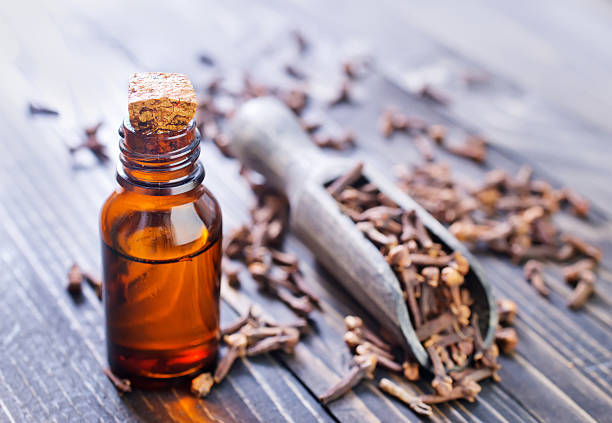
When it comes to clove oil safety cosmetics formulation, understanding the potency of this essential oil is critical. Clove essential oil is one of the most potent and commercially important essential oils in industrial use — but that potency is a double-edged characteristic. The same high eugenol content (typically 70–90% depending on type) that makes clove oil an exceptional dental anesthetic, fragrance ingredient, and antimicrobial agent also makes it one of the more sensitising essential oils when used incorrectly in cosmetic and personal care formulations.
This guide is written for cosmetic formulators, QC managers, procurement officers, and product developers who need technically accurate, compliance-ready information about clove oil safety — not generic consumer tips. It covers: the chemistry of eugenol and why it requires careful handling, IFRA maximum usage limits by product category, MSDS key safety data, dermal sensitisation assessment, handling protocols for bulk storage, and how to verify eugenol content via COA before approving a batch for production.
For sourcing information, MOQ, and supplier verification, see our companion guide: Bulk Clove Oil from Indonesia — What Importers Need to Know. For product specifications, visit our Clove Essential Oil product page.
Related Reading
→ Clove Essential Oil — Product Page, Grades & Specifications
→ Eugenol USP — Pharmaceutical & Dental Grade from Indonesia
→ Bulk Clove Oil Supplier Indonesia — Importer's Sourcing Guide
Understanding Eugenol: The Primary Active Compound in Clove Oil
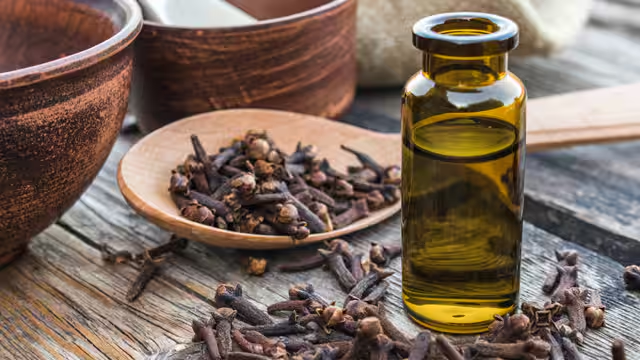
Before examining safety parameters, it's essential to understand why eugenol is both the most valuable and most safety-critical compound in clove essential oil. Eugenol (4-allyl-2-methoxyphenol, CAS: 97-53-0) is a naturally occurring phenylpropanoid — a class of compounds known for their strong biological activity and, at higher concentrations, their potential for dermal sensitisation.
Eugenol Content by Clove Oil Type
| Clove Oil Type | Source Part | Eugenol Content | Primary Applications |
| Clove Bud Oil | Dried flower buds | 75 – 85% | Fine fragrance, dental, premium cosmetics, aromatherapy |
| Clove Leaf Oil | Leaves | 70 – 78% | Soap, personal care, fragrance compounds, eugenol isolation |
| Clove Stem Oil | Dried stalks | 80 – 92% | Pharmaceutical compounding, industrial fragrance, eugenol source |
| Eugenol USP (isolated) | Distilled from leaf/bud | ≥ 99.0% | Dental anesthetic, pharmaceutical API, food flavouring |
The eugenol content directly determines: (1) the oil's aromatic potency, (2) its antimicrobial and analgesic efficacy, and (3) the dermal sensitisation risk and therefore the IFRA usage limits that apply. Always request and verify eugenol % from the batch-specific COA before approving any clove oil for production use. See: Understanding COA & GCMS Reports in Essential Oil Trading.
Other Key Compounds in Clove Oil
- Eugenyl acetate (2–15%): Contributes sweet, fruity-spicy facets; lower sensitisation potential than eugenol
- β-Caryophyllene (5–12%): Sesquiterpene with anti-inflammatory properties; contributes woody-spicy depth
- α-Humulene (trace): Anti-inflammatory sesquiterpene — contributes to clove oil's therapeutic activity
| Why Eugenol Content Varies Between Batches Eugenol % in clove oil is not fixed — it varies based on: (1) harvest timing — buds harvested at optimal ripeness have higher eugenol than over- or under-ripe material; (2) distillation pressure and duration — high-pressure steam can degrade eugenol esters; (3) storage age — eugenol content may decrease slightly over time due to oxidation. This is why batch-specific COA verification is non-negotiable for any production use of clove oil. |
Clove Oil Safety Cosmetics: IFRA Maximum Usage Limits

The International Fragrance Association (IFRA) sets maximum usage concentrations for fragrance materials in cosmetic and personal care products. For clove oil, IFRA limits are based on its eugenol content — eugenol is classified as a skin sensitiser under IFRA standards and the EU Cosmetics Regulation (Annex III). The following limits apply to clove oil with typical eugenol content of ~80% (adjust proportionally for different eugenol %):
| Product Category | IFRA Category | Max Usage in Finished Product | Examples |
| Fine fragrance | Cat 1 | 0.025% | Perfume, EDPs, EDTs applied to clothing/skin |
| Deodorants & antiperspirants | Cat 1 | 0.025% | Spray, roll-on, stick deodorant |
| Face moisturiser / serum (leave-on) | Cat 2 | 0.025% | Face cream, eye cream, serum, face oil |
| Body lotion / body oil (leave-on) | Cat 3 | 0.050% | Body moisturiser, body oil, hand cream |
| Lip products | Cat 4 | 0.050% | Lip balm, lip gloss — note mucous membrane sensitivity |
| Baby products (leave-on) | Cat 5a | 0.0125% | Baby lotion, baby oil — strictest limit |
| Rinse-off body wash / shower gel | Cat 6 | 0.10% | Body wash, shower gel, bath products |
| Shampoo / conditioner | Cat 7 | 0.10% | Hair care rinse-off products |
| Face wash / facial cleanser | Cat 8 | 0.10% | Rinse-off facial products |
| Bar soap | Cat 9 | 0.25% | Cold-process, hot-process, glycerin soap |
| Non-skin contact products | Cat 10a | No limit stated — use good practice | Candles, reed diffusers, home fragrance |
| Fine fragrance (non-skin exposure) | Cat 11a | 0.25% | Air freshener sprays, potpourri |
| 🚨 Critical Compliance Note These limits are for finished cosmetic products, not the fragrance concentrate. If you use clove oil at 1% in a fragrance concentrate that then goes into a body lotion at 10% loading, the final eugenol exposure in the finished lotion must still be within the IFRA limit for that product category. Always calculate backwards from the finished product concentration. IFRA limits are updated periodically — the above is based on the IFRA 51st Amendment. Always verify current limits at ifrafragrance.org before commercial launch, particularly for EU and UK markets where CPSR (Cosmetic Product Safety Report) is required for leave-on products. |
| Calculating Clove Oil Usage in Your Formulation Formula: Max clove oil % in finished product = IFRA limit ÷ eugenol % in your specific oil Example: Body lotion (Cat 3, IFRA limit 0.050%), using clove bud oil with 80% eugenol: Max clove oil = 0.050% ÷ 0.80 = 0.0625% clove bud oil in finished lotion This is why high-eugenol stem oil (90%) allows even less clove oil per kg of finished product than bud oil (80%). Always calculate from your batch-specific eugenol %, not a generic average. |
Dermal Sensitisation: What Formulators Need to Know
Eugenol is classified as a category 1B skin sensitiser under GHS (Globally Harmonized System of Classification) — meaning there is sufficient evidence of its sensitising potential in humans. This classification drives the IFRA limits above and must be considered in your safety assessment documentation.
Sensitisation vs Irritation — An Important Distinction
- Skin irritation: Immediate, non-immune-mediated reaction — redness, burning on first contact at excessive concentration. Reversible. Can happen to anyone if concentration is too high.
- Skin sensitisation: Immune-mediated allergic reaction that develops after repeated exposure. Once sensitised, even trace amounts of eugenol can trigger a reaction. This is why IFRA limits are conservative — they protect against sensitisation in the broader population, not just irritation.
Population Groups Requiring Extra Caution
- Previously sensitised individuals: Anyone with a documented eugenol allergy — common in dental patients who have had clove-oil based treatments — may react to eugenol in cosmetics even at IFRA-compliant concentrations
- Children (under 2 years): Baby products have the strictest IFRA limits (Cat 5a: 0.0125%). Clove oil is generally not recommended for any product intended for infants
- Damaged or compromised skin: Barrier-impaired skin (eczema, psoriasis, post-procedure skin) absorbs eugenol at higher rates — use with extra caution
- Mucous membranes: Lip products (Cat 4) have stricter limits than body products — mucous membrane absorption is significantly higher than intact skin
Safety Assessment Requirements by Market
| Market | Safety Requirement | Specific to Clove/Eugenol |
| European Union | CPSR (Cosmetic Product Safety Report) by qualified safety assessor mandatory for leave-on products | Eugenol must be declared as an allergen on label if >0.001% in leave-on, >0.01% in rinse-off |
| United Kingdom (post-Brexit) | UK-equivalent CPSR required | Same allergen declaration requirement as EU |
| United States (FDA) | No mandatory pre-market CPSR but ingredient declaration required | Eugenol listed as INCI ingredient if present |
| Canada | Cosmetic Notification Form required | Eugenol declaration if present above threshold |
| Australia / NZ | AICIS notification for industrial use | Standard cosmetic labelling requirements |
| Middle East / GCC | Halal certification + local conformity | No specific eugenol restriction beyond IFRA |
Related Reading
→ Lemongrass Oil Benefits for Cosmetics — IFRA Compliance Comparison
→ Patchouli Oil Grades Explained — Safety & Grade Selection for Cosmetics
MSDS Key Data: Safe Handling of Bulk Clove Oil
Every bulk shipment of clove oil is accompanied by a Material Safety Data Sheet (MSDS/SDS) — a legally required document for DG (Dangerous Goods) classification, handling, storage, and emergency response. Here are the critical MSDS parameters for clove bud and leaf oil that QC managers, warehouse staff, and logistics teams need to know:
| MSDS Parameter | Clove Bud Oil | Clove Leaf Oil | Relevance |
| GHS Classification | Skin sensitiser Cat 1B; Flammable liquid Cat 4 | Skin sensitiser Cat 1B; Flammable liquid Cat 4 | Determines PPE, storage, and shipping requirements |
| Flash Point | ~100°C (closed cup) | ~93°C (closed cup) | Both are flammable liquids — no open flame near storage |
| Shipping Classification | DG Class 3 — Flammable Liquid (IMDG/ADR) | DG Class 3 — Flammable Liquid | Requires DG declaration for sea freight |
| Required PPE | Chemical-resistant gloves, eye protection, lab coat | Same | Mandatory for bulk handling and sampling |
| Storage Temperature | Below 25°C, away from heat and light | Same | Cool, dark warehouse — avoid direct sunlight |
| Storage Container | Aluminium or stainless steel (sealed) | Same | Iron/galvanized containers react with eugenol |
| Ventilation Requirement | Well-ventilated area — vapours can be irritating | Same | Avoid prolonged inhalation of concentrated vapours |
| Skin Contact Response | Remove contaminated clothing; wash with soap and water for 15+ minutes | Same | Seek medical attention if irritation persists |
| Eye Contact Response | Flush with water for 15+ minutes; seek medical attention | Same | Eugenol is a significant eye irritant |
| Spill Response | Absorb with inert material (sand, vermiculite); do NOT use combustible materials | Same | Keep away from ignition sources |
| Disposal | In accordance with local regulations for flammable/hazardous waste | Same | Do NOT dispose in drain or waterway |
| ⚠️ Shelf Life & Oxidation Risk Eugenol-rich oils can oxidise over time — particularly when exposed to air, heat, or UV light. Oxidised eugenol has significantly higher sensitisation potential than fresh oil. Key storage rules: (1) Keep drums and jerrycans tightly sealed. (2) Store in cool, dark warehouse (below 25°C). (3) Once opened, use within 12 months for cosmetic applications. (4) Bulk drums: use nitrogen blanketing if partially emptied and storing for extended periods. Shelf life of properly stored clove oil: 24–36 months from production date. |
QC Verification: How to Confirm Clove Oil Safety Before Production Use
For any cosmetic or pharmaceutical production use, the following verification steps should be completed before approving a batch of clove oil for use in your formulation:
| QC Step | What to Check | Pass / Fail Criteria |
| 1. COA Eugenol Verification | Confirm eugenol % matches your purchase order specification | Pass: within ±2% of specified minimum. Fail: significantly below spec — may be adulterated or mislabelled type |
| 2. GCMS Compound Verification | Confirm compound fingerprint matches genuine clove oil profile — eugenol, eugenyl acetate, β-caryophyllene ratios | Fail: presence of unexpected synthetic eugenol peaks or uncharacteristic compounds |
| 3. Specific Gravity Check | Measure with calibrated hydrometer: Bud 1.041–1.054; Leaf 1.028–1.060 | Deviation >0.005 from spec range triggers retest |
| 4. Refractive Index Check | Refractometer measurement: Bud 1.528–1.537; Leaf 1.531–1.535 | Outside range = quality alert — request explanation from supplier |
| 5. Organoleptic Evaluation | Aroma assessment by trained nose: should be warm, spicy, strongly clove-characteristic | Off-notes (rancid, musty, chemical) = reject batch |
| 6. Colour Assessment | Bud: pale yellow to light amber. Leaf: pale to medium amber | Dark brown or reddish tint = possible oxidation or quality issue |
| 7. IFRA Calculation | Calculate maximum usage in each product formulation using batch eugenol % | All finished product concentrations must be within IFRA limits for category |
| 8. Batch Documentation | COA, GCMS, MSDS, Halal cert — all batch-specific, not generic | Any document without batch number = reject documentation set |
For detailed guidance on reading COA and GCMS documents, including how to identify adulteration markers specific to clove oil, see: Understanding COA & GCMS Reports in Essential Oil Trading.
Choosing the Right Clove Oil Type for Your Application
The safety profile and IFRA limits above apply across all clove oil types, but the optimal type varies significantly by application. Choosing the wrong type can mean over-specification (paying more than needed) or under-specification (insufficient performance):
- Clove Bud Oil (75–85% eugenol): Best for fine fragrance, premium aromatherapy, and dental formulations where the full aromatic profile is important. Higher price but most complete aroma character.
- Clove Leaf Oil (70–78% eugenol): Best for soap, personal care, and fragrance compounds where maximum aroma at cost-effective pricing is the priority. Most widely used type in industrial cosmetics.
- Clove Stem Oil (80–92% eugenol): Best as eugenol source for pharmaceutical compounding and industrial applications. Not typically used in finished consumer cosmetics due to harsher aroma profile.
- Eugenol USP (≥99% eugenol): Best for dental anesthetics, pharmaceutical APIs, food flavouring where pure eugenol — not the full essential oil profile — is the required ingredient. Requires specific IFRA limit calculation as pure eugenol, not as whole oil.
Related Reading
→ Clove Essential Oil — Bud, Leaf & Stem: Complete Product Specifications
→ Eugenol USP Manufacturer Indonesia — Pharmaceutical Grade
→ Bulk Clove Oil Sourcing from Indonesia — MOQ, Grades & Export Docs
Pre-Production Safety Checklist for Formulations Containing Clove Oil
Use this checklist before signing off any formulation that includes clove oil for commercial production:
| Action | Details | Status |
| ☑ Confirm eugenol % from batch COA | Match to purchase order spec — use actual batch figure for IFRA calculations | ☐ Done |
| ☑ Verify GCMS for adulteration | Confirm compound profile matches genuine clove oil — not synthetic blend | ☐ Done |
| ☑ Calculate IFRA-compliant usage | Use batch eugenol % + product category IFRA limit — show working in documentation | ☐ Done |
| ☑ Allergen declaration prepared | For EU/UK: eugenol declared on label if >0.001% in leave-on or >0.01% in rinse-off | ☐ Done |
| ☑ CPSR commissioned (EU/UK leave-on) | Safety assessor signed off IFRA-compliant concentration in finished product | ☐ Done |
| ☑ MSDS filed and accessible | SDS available to warehouse, QC, and logistics team | ☐ Done |
| ☑ Storage confirmed compliant | Cool (<25°C), dark, aluminium/SS container, sealed — not iron or galvanized | ☐ Done |
| ☑ PPE protocol in place | Chemical-resistant gloves, eye protection, ventilation for all bulk handling | ☐ Done |
| ☑ Oxidation date tracked | Date of drum opening recorded — use within 12 months for cosmetic applications | ☐ Done |
| ☑ Halal cert obtained if needed | Required for Middle East, Malaysia, and Muslim-majority markets | ☐ Done |
Sourcing Clove Oil with Complete Safety Documentation from Global Essential Oil
For cosmetic and industrial buyers who need clove oil with complete compliance-ready documentation, Global Essential Oil provides full documentation with every bulk order — not just a COA, but the complete set required for regulatory compliance across major markets:
- Batch-specific COA: Eugenol %, specific gravity, refractive index, optical rotation — per batch, not generic
- GCMS report: Full compound fingerprint confirming genuine Indonesian clove oil — adulteration-free verification
- MSDS/SDS: Current, accurate safety data sheet for all three clove oil types and Eugenol USP
- Halal Certificate (MUI): Verifiable at halalmui.org — required for Middle East and Muslim-market formulations
- Certificate of Origin: Confirms Indonesian (Maluku/East Java) origin — relevant for import duty calculations
- DUNS Registration: Verified manufacturer credentials — verifiable at dnb.com
We also supply Eugenol USP for buyers requiring pharmaceutical-grade isolated eugenol rather than whole clove oil. For private label formulations containing clove oil, see: Private Label Essential Oil Manufacturing from Indonesia.
Related Reading
→ How to Source Essential Oils from Indonesia — Supplier Verification & Documentation Guide
→ All Indonesian Essential Oils from Global Essential Oil
Final Thoughts
Clove oil's high eugenol content is simultaneously its greatest asset and its most important safety consideration. By mastering clove oil safety cosmetics principles and staying within IFRA limits, clove oil is a safe, effective, and commercially proven ingredient across fragrance, cosmetics, pharmaceutical, and food applications. The key is treating it as the potent ingredient it is — not as a generic botanical extract — and applying the verification, calculation, and documentation discipline that professional formulation requires.
At Global Essential Oil, every clove oil shipment comes with the documentation set that makes this professional discipline straightforward: batch COA with eugenol %, GCMS compound fingerprint, MSDS, and Halal certificate. If you need Eugenol USP for pharmaceutical applications, that is available separately with its own USP-grade documentation.
| Request Clove Oil Sample with Full Safety Documentation Contact our team to request a clove oil sample (Bud, Leaf, or Stem type) complete with batch-specific COA (eugenol %), GCMS report, MSDS, and Halal certificate. Ready to discuss bulk pricing and volume? We respond within 1 business day. → Contact Global Essential Oil — Request Clove Oil Sample & Safety Docs Now |
Or visit our Clove Essential Oil product page for full specifications, or our Eugenol USP page for pharmaceutical-grade isolated eugen