Indonesia supplies 80–90% of the world's patchouli oil — a dominance that is the direct result of the country's exceptional conditions for cultivating Pogostemon cablin, the aromatic herb that produces one of perfumery's most irreplaceable essential oils.
But understanding where patchouli oil comes from means understanding more than geography: it means understanding how the plant is grown, harvested, and processed — and critically, how decisions made at every stage of cultivation directly affect the patchoulol content and overall quality of the oil that reaches formulators and buyers worldwide.
This guide covers patchouli plant cultivation in Indonesia comprehensively — from the botanical characteristics of the plant and the specific growing conditions that make Indonesian patchouli exceptional, to a complete cultivation calendar, harvest optimisation, and the direct connection between farming practices and oil quality.
We write as Global Essential Oil, an Indonesian patchouli oil manufacturer with direct sourcing relationships with farmer communities across Sulawesi and Sumatra — the heartland of Indonesian patchouli production.
| Quick Summary: Patchouli Cultivation in Indonesia Patchouli (Pogostemon cablin) is cultivated primarily in South and Central Sulawesi and Aceh, Sumatra. It is a tropical shrub growing to 0.5–1.5m, propagated from stem cuttings (not seeds), harvested every 4–6 months after initial establishment, and requiring volcanic highland soil, tropical temperatures (24–32°C), and partial shade for optimal patchoulol accumulation. Indonesia's volcanic soil mineral profile is the primary reason Indonesian patchouli consistently shows higher patchoulol content than any other origin. |
Pogostemon cablin: Botanical Profile of the Patchouli Plant
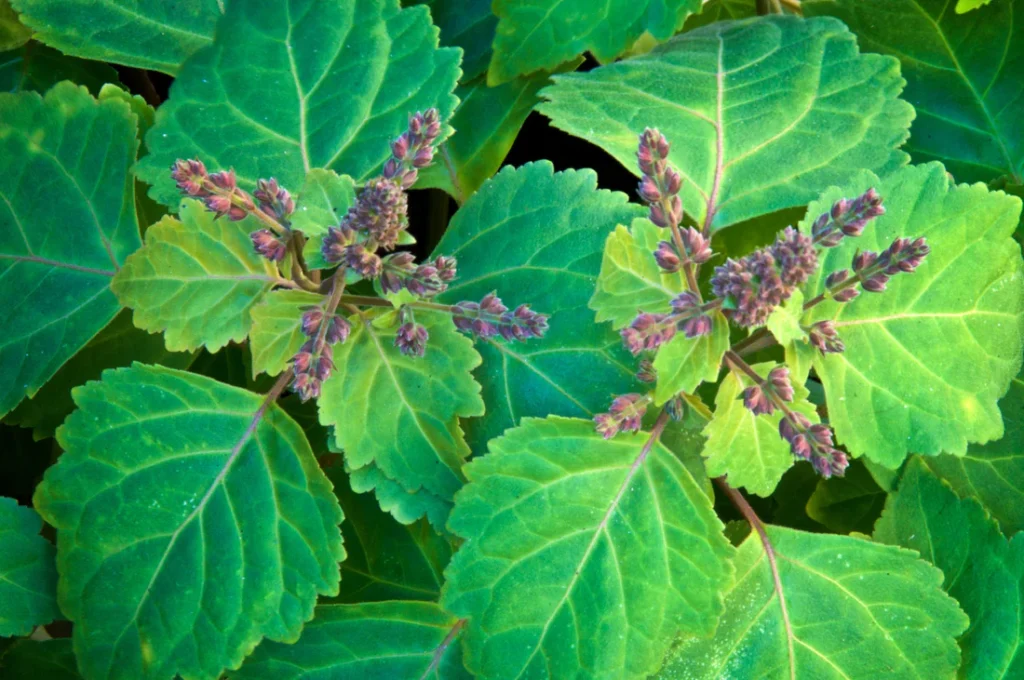
Pogostemon cablin (Blanco) Benth. is a perennial aromatic herb in the family Lamiaceae (the mint family — which also includes lavender, rosemary, and basil).
Native to tropical Asia — with the Philippines, India, and Indonesia as its original home range — it has been cultivated for aromatic purposes for centuries.
Plant Characteristics
- Growth habit: Erect, branching shrub reaching 0.5–1.5 metres in height. Stems are soft and herbaceous when young, becoming slightly woody with age
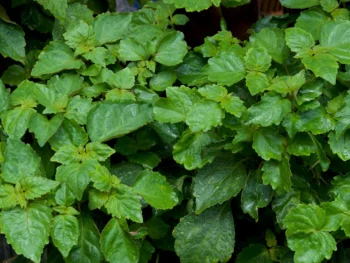
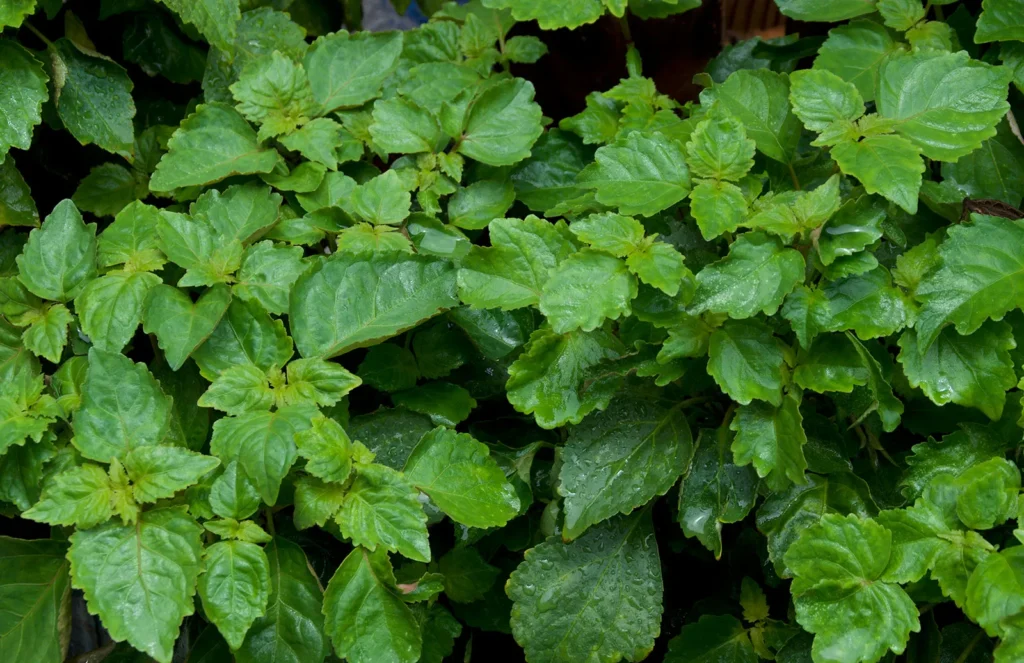
- Leaves: The primary commercial product — large (5–10cm), ovate, deeply toothed margins, covered with fine hairs on both surfaces. The essential oil is stored in secretory glands on the leaf epidermis. Leaves have an intensely distinctive earthy-musky aroma when crushed
- Flowers: Small, pale lilac-white, arranged in terminal spikes. Flowering is generally avoided in commercial cultivation — it reduces oil yield in the leaves as the plant's energy shifts to reproductive activity
- Reproduction: Patchouli does not produce viable seeds under most cultivation conditions — it is propagated exclusively by vegetative means (stem cuttings). This is a critical agronomic characteristic that shapes the entire cultivation system
- Root system: Shallow, fibrous root system — makes the plant sensitive to waterlogged conditions but also means it establishes quickly from cuttings
Why Patchouli Is Not Grown from Seeds
The fact that patchouli is sterile — it almost never produces viable seeds — means every patchouli plant in Indonesia is a vegetative clone propagated from stem cuttings taken from an established mother plant.
This has significant implications:
- All Indonesian commercial patchouli is essentially the same genotype — agronomic and environmental factors, not genetic variation, drive differences in oil quality between regions
- New plantings require access to a cutting source — which creates social networks of farmers sharing planting material and makes expansion of cultivation a gradual, community-based process
- The consistent genotype is part of why Indonesian patchouli's quality advantage over Indian patchouli is so reliably tied to environment rather than plant variety
Ideal Growing Conditions for Patchouli in Indonesia
Climate Requirements
| Parameter | Optimal Range | Effect of Going Outside Range |
| Temperature | 24 – 32°C | Below 18°C: stunted growth, cold stress. Above 35°C: leaf scorch, reduced oil accumulation |
| Rainfall | 2,500 – 3,500 mm/year | Under-watering: reduced leaf biomass, stress triggers. Over-watering: root rot, fungal disease |
| Humidity | 70 – 85% relative humidity | Low humidity: increased water stress. Too high: fungal and bacterial disease pressure |
| Altitude | 0 – 1,200 m above sea level | Mid-altitude highland (250–800m) produces the highest patchoulol content — key differentiator for Sulawesi |
| Shade requirement | 30 – 50% shade cover preferred | Full sun: leaf scorch, reduced oil accumulation. Full shade: reduced photosynthesis, poor growth |
Soil Requirements
Soil is the single most important environmental factor distinguishing Indonesian patchouli quality from other origins — and it deserves detailed attention:
- Soil type: Well-draining loam or sandy loam preferred. Heavy clay soils cause waterlogging that kills the shallow root system. Volcanic andosols (the dominant soil type in South Sulawesi and Aceh highlands) are ideal — their mineral richness and excellent drainage create optimal conditions for patchoulol biosynthesis
- pH: 5.5 – 6.5 optimal. Below 5.0: nutrient deficiency and aluminium toxicity. Above 7.0: micronutrient lock-up
- Organic matter: High organic matter soils support better growth and higher oil yield. Regular mulching with crop residues is standard practice in Indonesian patchouli farming
- Key minerals: Potassium, phosphorus, magnesium, and sulfur are particularly important for sesquiterpene biosynthesis. Volcanic soils naturally provide these in forms highly available to patchouli plants — this is the key mechanism behind Indonesian patchouli's higher patchoulol content
| The Volcanic Soil Advantage — Why It Matters for Patchoulol Research confirms that patchoulol content in Pogostemon cablin is influenced by soil mineral availability — particularly potassium and magnesium, which are co-factors in sesquiterpene biosynthesis pathways. The volcanic andosols of South Sulawesi (Sidrap, Enrekang) and Aceh's Gayo Highland provide naturally high potassium and magnesium concentrations in bioavailable forms, driving higher patchoulol accumulation in leaves compared to the alluvial and red laterite soils of Indian patchouli cultivation. This is why simply transplanting the same patchouli clone to Indian soil does not replicate Indonesian oil quality — the soil's mineral profile cannot be replicated by fertilisation alone. |
Primary Cultivation Regions: Sulawesi, Aceh, and Java
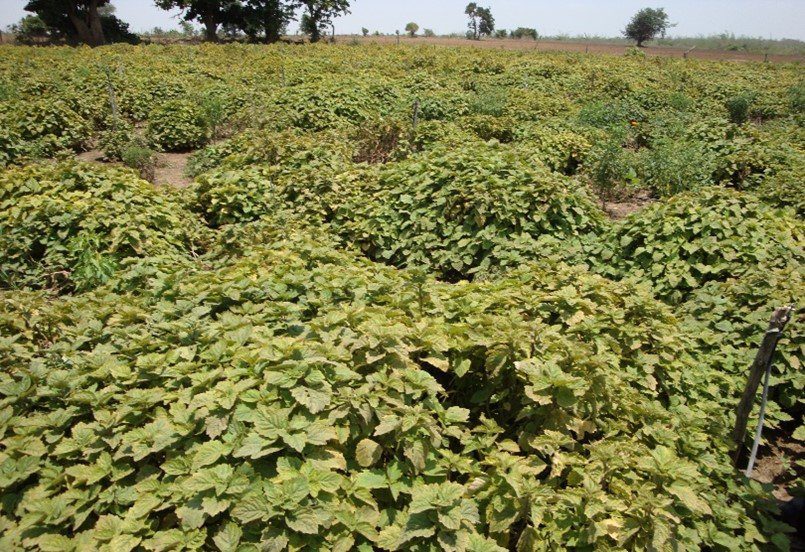
Indonesia's patchouli production is concentrated in three main regions, each with distinct cultivation characteristics that affect the character of the oil produced:
| Region | Primary Districts | Altitude | Soil Type | Patchoulol Range | Oil Character |
| South & Central Sulawesi | Sidrap, Enrekang, Luwu, Soppeng | 200 – 700m | Volcanic andosol — high mineral | 30 – 35% | Deepest, most intense, highest complexity — global benchmark |
| Aceh, Sumatra | Aceh Tengah, Bener Meriah, Gayo Highland | 800 – 1,200m | Volcanic highland — slightly cooler | 29 – 34% | Slightly fresher, more refined — cleaner top note |
| West Java | Sukabumi, Cianjur, Tasikmalaya | 200 – 600m | Volcanic alluvial | 28 – 32% | Cleaner, lighter — commercial standard grade |
Sulawesi — Indonesia’s Patchouli Heartland
South and Central Sulawesi — particularly the Sidrap, Enrekang, and Luwu districts — produce the majority of Indonesia's patchouli and consistently deliver the highest patchoulol content of any commercially traded origin.
The combination of volcanic andosol at mid-altitude, consistent tropical rainfall, and multi-generational farming expertise has made Sulawesi the global benchmark for premium patchouli oil.
Farmers here have been cultivating patchouli for decades, accumulating the agronomic knowledge that is not written in any textbook.
Aceh, Sumatra — The Premium Highland Origin
The Gayo Highland of Aceh Tengah and Bener Meriah — the same region famous for Gayo arabica coffee — produces a distinctly premium patchouli oil.
At higher altitudes (800–1,200m) with cooler temperatures and volcanic highland soil, Aceh patchouli develops a slightly fresher, more refined top note than Sulawesi, while maintaining competitive patchoulol content.
The ILO's Promise II Impact Project has been supporting Aceh patchouli farmers — including young farmer Teuku Razuan from Aceh Jaya — to scale up distillation capacity, highlighting the region's growing commercial importance.
West Java — Commercial Standard Grade
West Java (Sukabumi, Cianjur) produces significant volumes of patchouli at lower altitudes and slightly less mineralised volcanic soil.
The oil has a cleaner, lighter profile than Sulawesi — suitable for personal care and general fragrance applications where maximum patchoulol depth is not required.
Global Essential Oil's production facilities in Sukabumi are strategically located in this region.
Complete Patchouli Cultivation Calendar: From Planting to Harvest
Propagation — Month 0
Patchouli is propagated from stem cuttings taken from established, healthy mother plants.
Each cutting should be 15–20cm in length with 3–4 leaf nodes, taken from semi-hardened (not too young, not too woody) stems.
Lower leaves are removed and the cutting is planted directly in prepared nursery beds or propagation trays.
- Rooting time: 2–4 weeks in nursery bed under partial shade and consistent moisture
- Success rate: 70–90% rooting rate in good conditions
- Nursery period: 4–6 weeks total before transplanting to the field
Field Preparation — Month 0 to 1
- Land clearing and tillage: Soil prepared to 30–40cm depth to break up compaction and improve drainage
- pH correction: Lime added if pH below 5.5; sulfur if pH above 7.0
- Organic matter incorporation: Compost or well-rotted manure incorporated at 5–10 tonnes/hectare before planting
- Planting spacing: 60 × 60cm or 70 × 70cm — allowing approximately 20,000–25,000 plants per hectare
- Shade establishment: If no natural canopy, temporary shade structures or intercropped shade trees (banana, cassava) established before planting
Establishment Phase — Month 1 to 4
After transplanting, patchouli requires careful management during the establishment phase:
- Irrigation: Consistent moisture — 2–3 times per week in dry conditions. Avoid waterlogging
- Fertilisation: NPK fertiliser at 150–200 kg/ha (first application at 1 month after transplanting), with emphasis on potassium for oil quality
- Weeding: 3–4 weeding cycles in the first 2 months — patchouli is a poor competitor against weeds during establishment
- Pest monitoring: Watch for early signs of leaf miners, aphids, and fungal leaf spot — the most common establishment-phase problems
First Harvest — Month 5 to 6
The first harvest occurs 5–6 months after planting. This is the most important harvest in terms of oil quality — first-year patchouli from well-managed volcanic soil typically has the highest patchoulol content.
- Harvest indicator: Plant reaches 60–100cm height and branches are dense with mature leaves. Just before any flower buds appear is the optimal moment — patchoulol content peaks at this stage
- Harvest method: Cut stems at 20–30cm above ground level — preserving the basal nodes that will regenerate the plant for subsequent harvests. Traditional hand-harvesting remains standard in Indonesian smallholder operations, though mechanised cutters are being introduced (as Teuku Razuan in Aceh describes — his machine processes 2 tonnes of leaves per hour vs 500kg per day manually)
- Yield: First harvest: approximately 10–15 tonnes of fresh leaf per hectare
Subsequent Harvests — Every 4–6 Months
After the first harvest, patchouli regenerates from the cut stems within 4–6 months for a second harvest.
A well-managed patchouli field can be harvested 3–4 times per year, though quality typically peaks at first and second harvest.
After 2–3 years of continuous cropping, patchouli plants are uprooted and the field is replanted — replanting with fresh cuttings from healthy stock restores vigour and oil quality.
| Harvest | Timing | Typical Fresh Leaf Yield/ha | Patchoulol Quality Note |
| 1st Harvest | 5–6 months after planting | 10–15 tonnes | Highest patchoulol potential — plant at peak oil accumulation |
| 2nd Harvest | 4–6 months after 1st harvest | 12–18 tonnes | Good quality — plant well-established |
| 3rd Harvest | 4–6 months after 2nd harvest | 10–15 tonnes | Moderate — plant ageing, some quality decline |
| 4th+ Harvest | 4–6 months intervals | 8–12 tonnes | Declining — plant replanting typically recommended after 2–3 years |
Post-Harvest Processing: The Steps Between Farm and Oil
Wilting and Drying — The Critical Step
After harvest, fresh patchouli leaves are dried in the shade for 3–7 days before distillation.
This drying step is unique to patchouli among the major Indonesian essential oils — lemongrass is distilled semi-fresh, clove is distilled relatively quickly, but patchouli requires this deliberate drying period. Why?
- Cell wall breakdown: Drying breaks down the cellular structure of the leaves, making the oil glands more accessible to steam during distillation — improving oil yield
- Patchoulol precursor conversion: This is the critical quality mechanism. During drying, enzymatic activity converts patchouli pyridine and related precursor compounds into patchoulol through a natural fermentation-adjacent process. This is the primary reason why well-dried Indonesian patchouli produces higher patchoulol content than quickly distilled material
- Optimal drying duration: 3–7 days in shade. Under-dried: incomplete precursor conversion, lower patchoulol. Over-dried: volatile top note compounds lost, degraded aroma quality
Chopping or Shredding
Before loading into the still, dried patchouli is chopped or shredded to increase surface area for steam contact.
Traditional practice used manual machetes — as Teuku Razuan in Aceh describes, his team could process 500kg of leaves per day manually.
Modern mechanical shredders can process 2 tonnes per hour — a 40× improvement in labour productivity that is transforming the economics of Indonesian patchouli production.
Steam Distillation
Steam distillation of dried, chopped patchouli takes 4–8 hours in commercial production.
For the complete technical guide to the distillation process, see: Essential Oil Steam Distillation Process — How It Works.
The Farm-to-Oil Connection: How Cultivation Decisions Affect Patchoulol Content
This is the section that directly matters to buyers and formulators — understanding that the patchoulol % in the oil you receive is determined more by farming decisions than by distillation:
| Farming Decision | Effect on Oil Quality | Impact on Patchoulol % |
| Harvest timing (before vs after flowering) | Pre-flowering harvest: maximum patchoulol accumulation. Post-flowering: significant drop as plant energy shifts to reproduction | ±3–5% patchoulol — one of the biggest single factors |
| Drying duration (3–7 days optimal) | Optimal drying: full precursor conversion to patchoulol. Under-drying: incomplete conversion. Over-drying: volatile top note loss | ±2–4% patchoulol from optimal drying vs rushed distillation |
| Soil mineral management (potassium, magnesium) | Adequate K and Mg: higher sesquiterpene biosynthesis. Deficiency: reduced oil synthesis generally | ±1–3% from fertilisation management |
| Harvest cycle (first vs later harvests) | First harvest typically highest patchoulol. Later harvests from ageing plants show gradual quality decline | ±1–3% across harvest cycles |
| Growing region (Sulawesi vs Java) | Volcanic highland andosol vs lower-altitude alluvial: consistent quality differential | ±2–5% between Sulawesi and Java commercial grades |
| Post-harvest storage (dried leaf before distillation) | Short storage (3–7 days): optimal conversion. Long storage (>14 days): volatile compound degradation | ±1–2% from extended storage |
For buyers, this means: specifying Sulawesi origin AND first/early harvest material — which a transparent manufacturer can confirm — gives you the highest probability of receiving oil in the 30–35% patchoulol range.
See our complete grade comparison: Indonesian Patchouli Oil vs Indian Patchouli Oil.
For grade specifications: Patchouli Oil Grades Explained — Dark, Light & MD.
Patchouli Farming Communities: The Human Side of Indonesian Patchouli
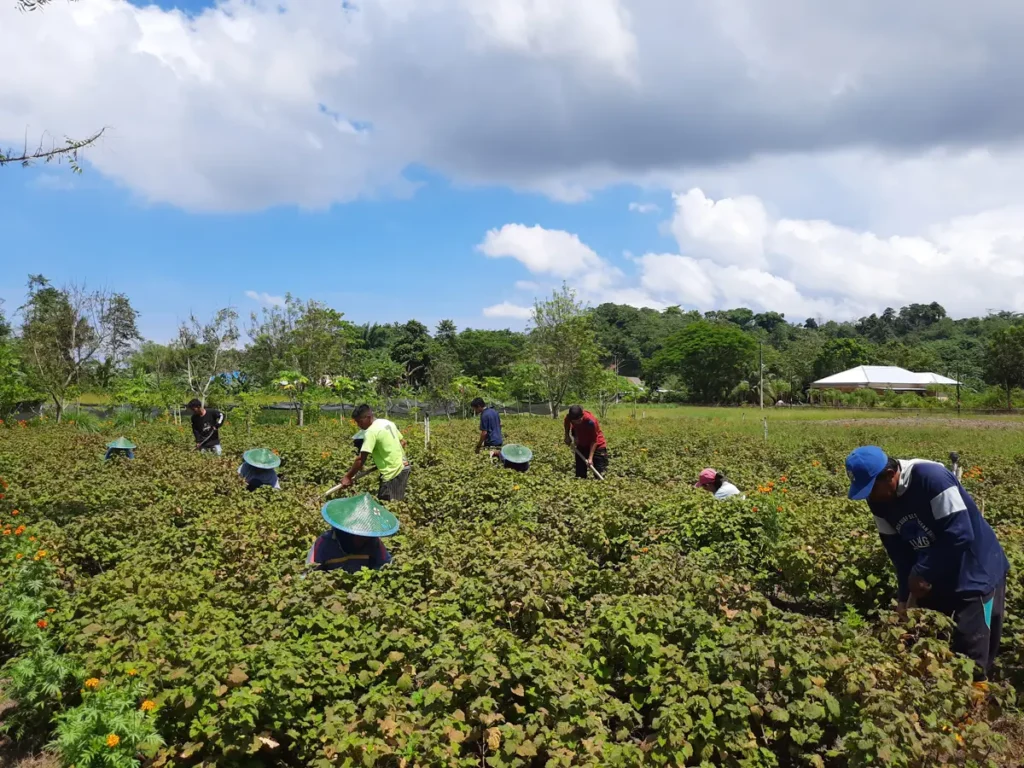
Understanding Indonesian patchouli cultivation means understanding the smallholder farming communities that produce it.
An estimated 60,000–200,000 farming families across Indonesia depend on patchouli cultivation as part of their livelihood.
The economics of patchouli farming are shaped by commodity price cycles — a reality vividly described by Aceh farmer Teuku Razuan in his ILO Voices story: his family's experience of the 1999 patchouli price collapse, when prices fell so dramatically that farmers could not recover their seedling costs, left generational trauma in farming communities.
When patchouli prices recover, it transforms communities — the same story is repeated in Sulawesi and Sumatra, where a good patchouli price cycle means motorcycles, school fees, and infrastructure for farming villages.
For buyers, this social context is not just background information — it directly affects supply.
When patchouli prices fall below production cost, farmers in Sulawesi and Aceh switch to corn, palm oil, or cassava.
The 2022–2024 market cycle saw exactly this dynamic, creating the supply shortages and subsequent price spikes that affected global buyers.
Stable, direct manufacturer relationships with transparent pricing are the most effective supply chain risk management against this cycle. See: Sustainable Essential Oil Sourcing — A Practical Buyer's Guide.
Frequently Asked Questions
Where is patchouli grown in Indonesia?
Patchouli is primarily cultivated in Sulawesi, Aceh, and West Java. Among these regions, Sulawesi is widely recognized for producing high-quality patchouli oil with strong patchoulol content and a rich aroma profile.
How long does patchouli take to grow before first harvest?
Patchouli is typically ready for its first harvest 5–6 months after planting. Under good cultivation practices, the crop can be harvested multiple times per year and remain productive for several years.
Why does Indonesian patchouli have higher patchoulol content than Indian patchouli?
Indonesian patchouli benefits from favorable growing conditions, including volcanic soils, climate, and traditional post-harvest practices. These factors contribute to the higher patchoulol content often associated with Indonesian-origin patchouli oil.
How is patchouli propagated? Can it be grown from seed?
Commercial patchouli is propagated almost exclusively through stem cuttings rather than seeds. This method provides more consistent plant quality and is the standard approach used by growers worldwide.
What is the optimal harvest time for patchouli to maximize oil quality?
Patchouli is generally harvested just before flowering, when patchoulol content is at its highest. Harvest timing plays an important role in both oil yield and overall quality.
Why are patchouli leaves dried before distillation?
Drying helps improve essential oil extraction efficiency and supports the development of desirable aromatic compounds. Properly dried leaves typically produce higher-quality patchouli oil than freshly harvested material.
How many harvests can you get from a patchouli plant per year?
How many harvests can you get from a patchouli plant per year?
Does patchouli cultivation require specific soil conditions?
Yes. Patchouli grows best in well-drained, fertile soils with good organic matter content. Soil quality can significantly influence plant growth, oil yield, and patchoulol concentration.
From Sulawesi Fields to Global Markets: Global Essential Oil’s Farmer Networks
At Global Essential Oil, our patchouli oil is sourced from farmer networks across Sulawesi and Aceh/Sumatra — the two premium-origin regions this guide has described in detail.
This is not a generic claim: we can specify the district of origin for our Sulawesi and Aceh batches, confirm first vs subsequent harvest material on request, and provide batch-specific COA data showing the patchoulol % that the cultivation and distillation practices described in this article actually produce.
- Sulawesi origin available: Sidrap/Enrekang district — benchmark patchoulol 30–35%
- Aceh/Sumatra origin available: Gayo Highland — patchoulol 29–34%, slightly cleaner profile
- All grades: Dark, Light (Iron-Free), MD — specify per application
- Documentation: Batch-specific COA + GCMS, MUI Halal, DUNS verification
| Source Sulawesi Patchouli Oil Directly from Indonesia Contact Global Essential Oil to request a patchouli oil sample kit — Sulawesi Dark, Light (Iron-Free), and MD grades from our current stock — with batch-specific COA (patchoulol %), GCMS report, and MUI Halal certificate. We respond within 1 business day. → Contact Global Essential Oil — Request Patchouli Oil Sample from Sulawesi |