The global essential oil market is projected to exceed USD 14 billion by 2026, and a growing share of that value is being captured not by large multinationals, but by indie brands, wellness entrepreneurs, and regional distributors who understand one key advantage: you don't need to own a distillery to sell your own premium essential oil brand.
Choosing the right private label essential oil manufacturer Indonesia has become the fastest, most capital-efficient route to market for essential oil businesses. And Indonesia, as the world's largest producer of several of the most commercially important essential oils, is the most strategically positioned country from which to source them.
This guide walks you through the complete private label process: from understanding what private label actually means in the context of essential oils, to selecting your product range, evaluating a manufacturer, customising your offering, navigating regulations, and placing your first production run. Whether you're an entrepreneur building a new wellness brand, an established cosmetics company expanding into naturals, or a retailer looking to own-brand your supply chain, this guide is for you.
What Is Private Label Essential Oil Manufacturing?
Before diving into the how, it's worth being precise about terminology, because 'private label', 'white label', and 'OEM' are often used interchangeably but mean slightly different things in practice.
| Term | What It Means | Customisation Level |
| White Label | Pre-made, standardised product — you apply your brand label, no changes to formula | Low — label only |
| Private Label | Product made to your specifications — you can customise formula, concentration, blend, packaging, and label | Medium to High |
| OEM (Contract Manufacturing) | Full custom formulation from scratch — you own the formula IP and all specifications | Full — you define everything |
For most new brands and SMEs, Private Label is the sweet spot, it offers meaningful customisation (your own blend, your own packaging, your own concentration) without requiring the investment of developing a proprietary formula from zero. This guide focuses primarily on the private label approach.
Why Indonesia specifically?
Indonesia produces the world's largest volumes of several commercially critical essential oils, patchouli, clove, lemongrass, vetiver, and nutmeg, from mineral-rich volcanic soil regions that produce oils with distinctive, globally recognised quality characteristics. Buying private label from an Indonesian manufacturer means accessing these oils at origin pricing, with the full documentation required for global export.
Key Advantage: Origin Transparency as a Brand Story
Unlike many countries where essential oils are blended or re-exported without clear provenance, Indonesian manufacturers can provide Certificate of Origin documents that allow your brand to authentically market the geographic origin of your oils, Sulawesi patchouli, Maluku clove, and Javan lemongrass. In a market increasingly driven by ingredient transparency, this is a powerful differentiator.
Why Private Label Makes Business Sense in 2026

If you're weighing whether private label is the right route for your business, here are the core arguments:
Lower capital requirement than owning production
Building a distillation or blending facility requires significant capital investment, ongoing operational costs, and deep technical expertise. Private label eliminates this entirely, you invest in brand, marketing, and distribution, not infrastructure.
Faster time to market
With a private label manufacturer, you can go from concept to first shipment in as little as 60–90 days. Developing your own production capability takes years.
Access to established quality systems
A reputable Indonesian manufacturer like Global Essential Oil already holds Halal certification, DUNS Number registration, and has established export relationships with customs authorities in the EU, US, and Middle East. You inherit this compliance infrastructure rather than building it yourself.
Scalability without fixed cost risk
Private label lets you start with lower MOQs and scale as your brand grows, without being locked into a fixed production overhead. If a product line doesn't perform, you're not sitting on underutilised equipment.
Focus your investment on what creates brand value
Branding, storytelling, distribution, customer relationships, these are where sustainable competitive advantage is built in the essential oil market. Private label lets you direct resources there.
Finding a True Private Label Essential Oil Manufacturer Indonesia vs. Broker
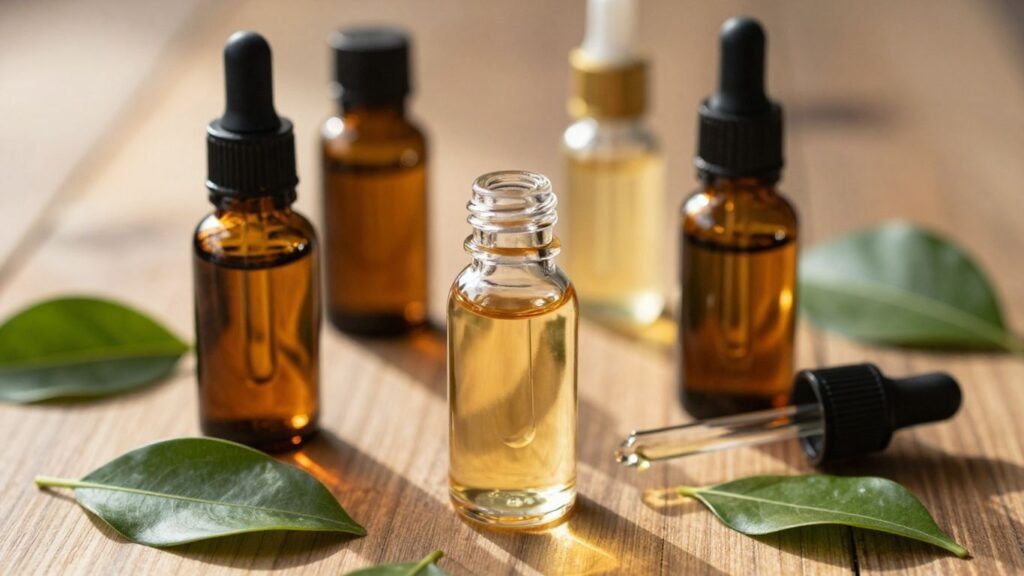
The Indonesian essential oil industry has many participants: farmers, distillers, manufacturers, traders, brokers, and export agents, and not all of them are transparent about which role they play. Many brokers actively present themselves as manufacturers. This distinction matters enormously for private label buyers.
| Criteria | True Manufacturer | Broker / Trader |
| Owns distillation / production facility | Yes | No, sources from third parties |
| Can customise formula or concentration | Yes | Limited, depends on their supplier |
| Issues batch-specific COA & GCMS | Yes, from own lab | May relay third-party docs |
| Can verify production capacity in real time | Yes | Difficult to verify |
| Pricing transparency | Direct factory pricing | Marked up from supplier price |
| Private label packaging capability | Full in-house or verified partners | Often outsourced, less control |
| Halal / ISO / DUNS certification | Own certifications | Certification belongs to actual manufacturer |
| Lead time reliability | Controls own production schedule | Dependent on third-party capacity |
The practical impact of choosing a broker over a manufacturer for private label:
- Quality inconsistency: A broker cannot guarantee batch consistency because they source from multiple third-party distillers whose production varies.
- Documentation gaps: The COA and GCMS issued by a broker belong to the actual manufacturer — they may be real documents, but they don't necessarily reflect what's in the specific batch you receive.
- Limited customisation: A broker has no ability to adjust a formula, change a concentration, or accommodate a specific packaging request — they can only pass on what their supplier offers.
- Price opacity: You'll pay an additional margin that reflects the broker's role, with no visibility into what the actual production cost is.
How to spot a broker posing as a manufacturer
- Cannot provide facility photos or video of production equipment
- Hesitates to do a video call factory tour
- Cannot discuss production capacity, harvest schedules, or raw material sourcing
- Certifications (Halal, ISO) are in a different company name
- Insists on very large MOQ before any sample can be provided
- Pricing seems too good relative to current commodity market conditions
Related Reading: Understanding COA & GCMS in Patchouli Oil Trading
What Essential Oils Can You Private Label from Indonesia?
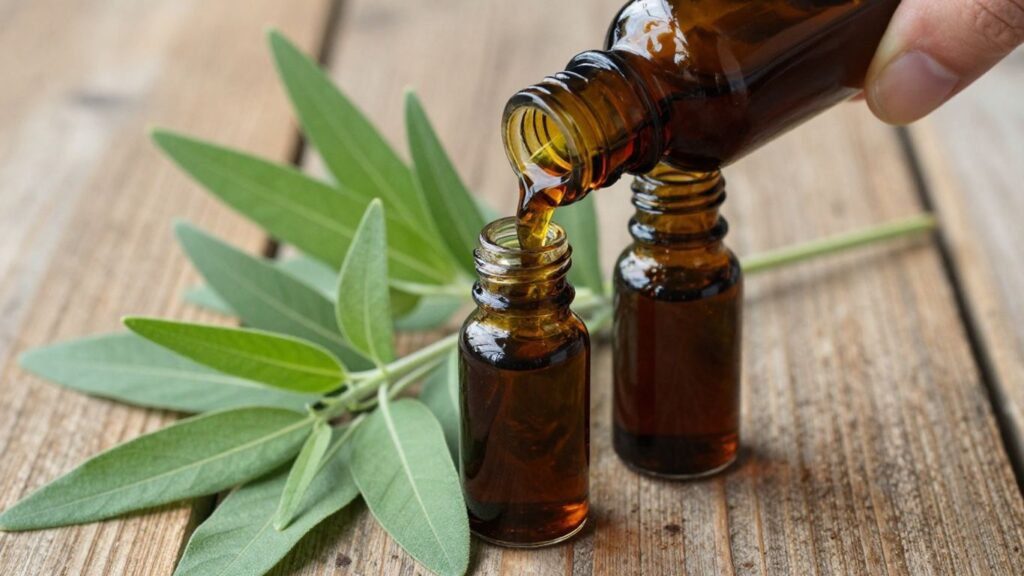
Indonesia's biodiversity gives private label buyers access to a wide range of botanically distinct, commercially valuable essential oils — many of which are either exclusively or primarily produced in Indonesia.
| Essential Oil | Primary Industries | Indonesian Origin Region | Available Certifications |
| Patchouli Oil (Dark / Light / MD) | Fragrance, cosmetics, incense | Sulawesi, Sumatra | Halal, ISO, DUNS |
| Clove Oil (Bud / Leaf / Stem) | Dental, pharma, flavouring, fragrance | Maluku, East Java | Halal, DUNS |
| Lemongrass Oil | Cosmetics, personal care, food | West Java, Sumatra | Halal, DUNS |
| Vetiver Oil | Fine fragrance, luxury cosmetics | Java | Halal |
| Nutmeg Oil | Fragrance, food & beverage, pharma | Maluku | Halal, DUNS |
| Citronella Oil | Insect repellent, personal care | Java, Sumatra | Halal |
| Cajuput Oil | Pharmaceutical, wellness, topical | Maluku, Java | Halal |
| Virgin Coconut Oil | Carrier oil, skincare, food | Sulawesi, Java | Halal, Organic option |
| Agarwood Oil (Aquilaria / Aetoxylon) | Luxury fragrance, spiritual, oud | Kalimantan, Sumatra | Halal |
| Eugenol USP | Dental, pharma, food flavouring | Maluku (from clove leaf) | USP grade, Halal |
Each of these oils can be offered under your brand in various grades, concentrations, and blends. Global Essential Oil can also produce signature blends combining multiple Indonesian oils — for example, a 'Tropical Wellness' blend of lemongrass, citronella, and vetiver for a spa brand, or a 'Deep Earth' perfumery accord combining patchouli dark and vetiver for a fragrance house.
Related Reading: Patchouli Oil Grades Explained: Dark, Light, Iron-Free & MD — Which One Does Your Business Need?
The Private Label Process: Step by Step
Here is the full journey from initial enquiry to first delivery — with realistic timeframes at each stage.
| # | Stage | What Happens | Typical Timeframe |
| 1 | Initial Enquiry & Briefing | Send product brief, target market, preferred oils, packaging concept | Day 1–3 |
| 2 | Quotation & Sample Request | Receive FOB/CIF quotation, MOQ confirmation, request sample oils | Day 3–7 |
| 3 | Sample Evaluation | Assess aroma, colour, COA/GCMS review, send to internal lab if needed | Day 7–21 |
| 4 | Sample Approval & PO | Approve sample, confirm customisation specs, sign purchase order | Day 21–28 |
| 5 | Label & Packaging Design | Submit artwork, review regulatory compliance per target market | Day 28–42 |
| 6 | Production Run | Manufacturer produces to approved spec, QC at every stage | Day 42–60 |
| 7 | Pre-Shipment Inspection | Final COA issued, optional third-party inspection, photos of goods | Day 60–65 |
| 8 | Shipment & Documentation | Goods shipped, full export doc set provided (MSDS, SKA, Halal, Invoice) | Day 65–80+ |
1. Define Your Product Brief
Before contacting any manufacturer, clarify these four things internally:
- Which essential oils do you want in your range?
- Who is your target customer and what market are you selling into?
- What is your approximate target retail price point?
- Do you have existing packaging concepts or are you open to manufacturer recommendations?
The more specific your brief, the faster and more accurately a manufacturer can respond with a realistic quotation and sample.
2. Request a Quotation & Sample
A credible private label manufacturer will provide a FOB/CIF quotation (per kg, based on your specified volume), confirmation of MOQ per product, and a sample kit of the oils you're considering. Always request samples before committing to production. Evaluate the oil against your brief, like aroma profile, colour, and technical specifications (COA/GCMS).
Realistic MOQs for private label from Indonesia:
- Single oil in standard bulk packaging: typically 25–50kg for a trial order
- Finished product (labelled, packaged): typically 500–1,000 units minimum depending on packaging complexity. Manufacturers with in-house filling and labelling capability will have more flexible minimums.
3. Customise Your Formula & Packaging
Formula Customisation Options:
- Single-origin neat oil: Pure, undiluted essential oil — your brand, your label, the manufacturer's oil. Simplest option.
- Diluted in carrier oil: Rolled into jojoba, fractionated coconut, or sweet almond oil at your specified concentration (e.g., 3%, 5%, 10%). Common for skin-safe retail products.
- Custom blend: Proprietary combination of multiple essential oils with or without carrier, to your approved formula.
- Grade specification: For oils like patchouli, specify Dark, Light, or MD grade. See: Patchouli Oil Grades Explained for guidance.
Packaging Customisation Options:
- Bottle type: Amber glass, cobalt blue glass, clear glass, roller bottle (10ml), dropper bottle (10–100ml), spray bottle
- Cap / closure: Euro dropper, pipette, roller ball, pump, fine mist spray
- Label: Full-colour custom print with your brand artwork. Confirm compliance with target market labelling regulations (EU cosmetics regulation EC 1223/2009, US FDA, etc.)
- Outer packaging: Kraft box, rigid gift box, biodegradable wrapping — depends on your brand positioning
- Batch coding: Expiry date, lot number — required for regulatory compliance in most markets
4. Approve Sample & Issue Purchase Order
Once you've approved the sample and finalised all specifications, issue a formal purchase order that explicitly states:
- Oil name, grade, concentration, and batch size
- Packaging specifications (bottle, cap, label artwork approved version reference)
- COA and GCMS required per batch
- Halal certification (or other certifications) required
- Incoterms (FOB Jakarta, CIF [destination port], etc.)
- Payment terms (standard: 30–50% DP, balance against Bill of Lading or pre-shipment)
- Delivery window and penalty/rework terms for non-conforming goods
5. Production, QC & Shipment
During production, a reputable manufacturer will conduct QC checks at multiple stages: raw material incoming inspection, in-process testing, and final batch COA before release. Request photos of your goods in production, this is standard practice and any hesitation to provide them is a red flag.
Pre-shipment, ensure you receive the full export documentation set: Commercial Invoice, Packing List, Bill of Lading, COA, GCMS, MSDS, Halal Certificate, and Certificate of Origin (SKA). These documents are required for customs clearance in virtually all major import markets.
Regulatory Essentials: Selling Essential Oils in Global Markets
The regulatory requirements for selling essential oils vary significantly by market. Here's a summary of the key requirements for the most common export destinations:
| Market / Regulation | Key Requirements for Essential Oil Brands |
| European Union (EC 1223/2009) | INCI labelling, EU Responsible Person, CPSR (Cosmetic Product Safety Report) if leave-on, allergen disclosure above threshold, REACH compliance for fragrance components |
| United Kingdom (post-Brexit) | UK Responsible Person required (separate from EU RP), UK CA marking, same ingredient disclosure principles as EU |
| United States (FDA) | Cosmetics: ingredient list (INCI), no drug claims without IND. Fragrance/aromatherapy: generally less regulated but state-specific rules apply. Food/flavour grade: FDA CFR 21 compliance |
| Middle East / GCC | Halal certification widely required — MUI Indonesia is accepted. Some GCC countries require local conformity assessment. Prohibited ingredients list per country |
| Indonesia (BPOM) | BPOM notification required for cosmetics sold in Indonesia. Different pathway for export-only products. Halal certification via BPJPH mandatory for domestic market |
| Australia / NZ | NICNAS/AICIS registration for industrial/cosmetic ingredients. TGA for therapeutic claims. INCI labelling |
| Japan | MHLW approval required for quasi-drugs. Cosmetics: manufacturer/importer registration. Japanese INCI labelling on domestic products |
A key advantage of working with an established Indonesian manufacturer is that they will already be familiar with the documentation requirements for major markets and can advise on what certifications and reports are needed for your specific destination. Always communicate your target market upfront so your manufacturer can flag any compliance requirements specific to that market.
Why Indonesia Is the Optimal Source for Private Label Essential Oils
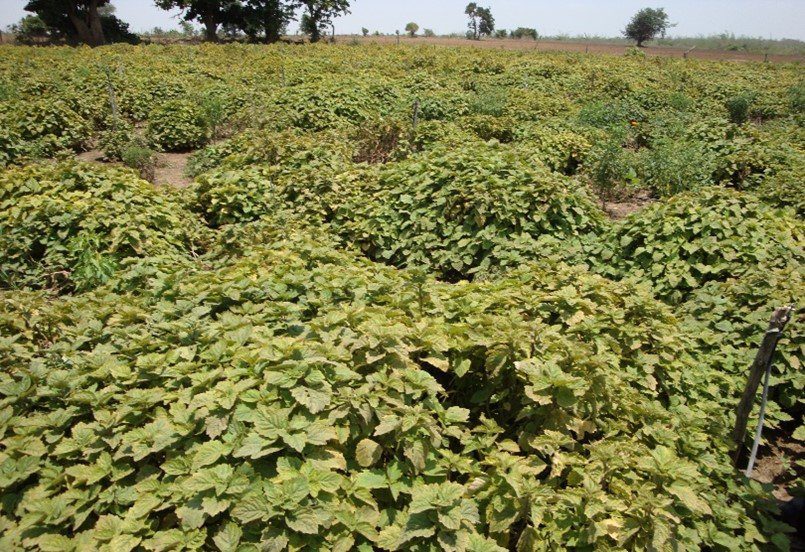
Beyond the obvious reasons of origin quality and supply volume, there are several structural advantages to sourcing private label from Indonesia:
- Biodiversity depth: No other single country offers the same concentration of commercially critical tropical essential oils, patchouli, clove, nutmeg, vetiver, lemongrass, agarwood, all in one supply relationship.
- Direct farm-to-manufacturer traceability: The best Indonesian manufacturers work directly with farmer networks and distillers, providing traceability documentation that supports 'clean supply chain' brand positioning increasingly demanded by European and US retailers.
- Halal-native supply chain: With Indonesia being the world's largest Muslim-majority country, Halal certification is structurally embedded in the manufacturing ecosystem, not an add-on.
- Competitive USD pricing: Indonesia's production cost base, combined with the IDR/USD exchange dynamic, keeps FOB pricing of bulk oils competitive relative to European or North American alternative sources.
- Export infrastructure: Major ports in Jakarta (Tanjung Priok), Surabaya, and Makassar have established container shipping lanes to all major global markets.
Related Reading: Bulk Clove Oil from Indonesia: What Importers Need to Know Before Ordering
Ready to Launch Your Essential Oil Brand? Here’s Your Next Step
Private label manufacturing from Indonesia gives you everything you need to build a credible, scalable, and differentiated essential oil brand: access to the world's finest tropical essential oils at origin pricing, full documentation for global regulatory compliance, flexible customisation from formula to packaging, and a manufacturer who understands the demands of export markets.
At Global Essential Oil, as a trusted private label essential oil manufacturer Indonesia, we work with brand owners, distributors, and cosmetics companies across Europe, Asia, and the Middle East on private label and OEM projects. Our team can guide you from product selection through to your first shipment, including sample kits, grade comparison, COA/GCMS documentation, Halal certification, and export paperwork.
The best way to start is a conversation. Tell us your product vision and target market, and we'll build a proposal around it.
| Start Your Private Label Project with Global Essential Oil Contact our team today with your product brief — which oils, what market, what packaging concept. We'll respond within 1 business day with a quotation and sample offer. No minimum commitment to get started. → Contact Global Essential Oil — Start Your Private Label Project Now |
Or explore our full product range first: View All Indonesian Essential Oils →