
Walk through any natural beauty brand's ingredient list today and there's a good chance you'll encounter lemongrass, whether declared as Cymbopogon citratus oil, citral, or simply 'lemongrass essential oil'.
What was once primarily an aromatherapy staple has become a serious functional ingredient.
When exploring lemongrass essential oil benefits for cosmetics, you will quickly find it is one of the most versatile and cost-effective botanical ingredients a formulator can work with.
It brings antibacterial activity, astringent properties, natural fragrance, and a host of application-specific benefits, all in a single ingredient sourced from one of the world's most biodiverse essential oil origins: Indonesia.
This guide covers everything a formulator, product developer, or cosmetic brand owner needs to know: the science behind lemongrass oil's key benefits, how to use it across different product categories, recommended usage rates, blending partners, safety considerations, and how to source high-quality bulk lemongrass oil directly from Indonesia.
If you're ready to see the full product specification first, you can jump there directly or read on for the complete guide.
Why Indonesian Lemongrass Oil Is Different

Indonesia is one of the world's largest producers of lemongrass essential oil, with major cultivation and distillation clusters in West Java, North Sumatra, and East Kalimantan.
The tropical climate, rich volcanic soil, and traditional distillation expertise in these regions produce a lemongrass oil with consistently high citral content, the primary active compound responsible for most of lemongrass oil's functional and aromatic properties.
Two lemongrass species are commercially significant: Cymbopogon citratus (West Indian lemongrass) and Cymbopogon flexuosus (East Indian lemongrass). Both are produced in Indonesia.
Cymbopogon citratus tends to have a rounder, slightly sweeter citrus aroma and is preferred in cosmetics and personal care.
Cymbopogon flexuosus has a sharper, more intensely citral-forward profile preferred in fragrance and flavouring applications.
At Global Essential Oil, we are one of Indonesia's largest lemongrass oil manufacturers, working directly with farmer networks across our production regions to ensure traceability, consistent citral content (70–85%), and full documentation including COA, GCMS report, Halal certification, and MSDS for every batch.
| Key Active Compound: Citral Citral is a naturally occurring mixture of two isomeric aldehydes, geranial (citral A) and neral (citral B). Together, they typically make up 70–85% of Indonesian lemongrass oil. Citral is responsible for the oil's sharp, lemon-like aroma and most of its antimicrobial, antifungal, and astringent properties. Citral content is the single most important quality parameter when evaluating lemongrass oil for cosmetic applications — higher citral = stronger functional performance. |
Science-Backed Lemongrass Essential Oil Benefits for Cosmetics

Here is a detailed breakdown of the primary functional benefits, what drives them chemically, and how they translate to cosmetic applications:
Benefit 1 — Antibacterial & Antimicrobial Activity
Citral has well-documented activity against a broad spectrum of bacteria, including Staphylococcus aureus and Propionibacterium acnes, the primary bacteria involved in acne formation.
This makes lemongrass oil a functional active ingredient in acne-targeting face washes, toners, and spot treatments.
At usage concentrations of 0.5–1.5%, it contributes meaningful antimicrobial activity without the harshness of synthetic alternatives such as benzoyl peroxide.
Benefit 2 — Astringent Properties for Pore Refinement
Lemongrass oil acts as a natural astringent, tightening skin tissue and reducing the appearance of enlarged pores.
This mechanism, driven by the tannin-like action of its phenolic constituents, makes it highly effective in toners, micellar water, mattifying primers, and facial mists.
Brands targeting oily or combination skin types will find lemongrass a compelling natural alternative to synthetic astringent agents.
Benefit 3 — Antifungal Activity for Scalp Health
Citral demonstrates inhibitory activity against Malassezia furfur, the fungus primarily responsible for dandruff.
This positions lemongrass oil as a scientifically supported active in anti-dandruff shampoos, scalp serums, and scalp treatment oils, particularly for brands seeking DEET-free, plant-derived alternatives in their hair care formulations.
Studies have shown 1% lemongrass oil in shampoo reduces dandruff symptoms measurably after 2 weeks of regular use.
Benefit 4 — Skin-Brightening & Tone-Evening
Citral inhibits tyrosinase, the enzyme responsible for melanin synthesis, which contributes to a mild skin-brightening effect with regular use.
While not a standalone whitening agent, lemongrass oil supports brightening formulations as part of a multi-ingredient approach, complementing actives like vitamin C, niacinamide, or alpha-arbutin. Ideal for brightening serums, spot correctors, and pigmentation-targeting moisturisers.
Benefit 5 — Natural Insect Repellent (DEET-Free)
Citral and other volatile monoterpenes in lemongrass oil are effective at repelling mosquitoes and other insects.
Lemongrass oil is one of the most widely used natural actives in DEET-free insect repellent formulations — body lotions, sprays, wristbands, and outdoor balms.
For cosmetic brands operating in tropical markets or positioning around 'clean outdoor' lifestyles, lemongrass is an obvious active to feature.
Benefit 6 — Sebum Regulation & Oil Control
As an astringent, lemongrass oil helps regulate excess sebum production on the skin surface.
This is particularly valuable in facial care formulations targeting oily or acne-prone skin: mattifying moisturisers, oil-control toners, and clay mask activations.
In hair care, the same sebum-regulating action addresses greasy scalp conditions, improving the feeling of clean and reducing wash frequency.
Benefit 7 — Natural Fragrance: Fresh Citrus Top Note
Beyond its functional benefits, lemongrass oil is one of the most commercially important natural fragrance ingredients in its category — a clean, bright, fresh lemon-grass top note that lifts any formulation.
As consumer demand for natural fragrance over synthetic continues to grow, lemongrass offers a cost-effective, high-performance alternative to synthetic citral or lemon fragrance oils. It blends exceptionally with floral, woody, and earthy base notes.
Benefit 8 — Analgesic & Anti-Inflammatory Properties
Lemongrass oil contains compounds with analgesic and anti-inflammatory properties — notably citronellal and myrcene.
These support its use in massage oils, muscle relief balms, post-workout recovery products, and warming body care formulations.
The combination of pleasant aroma, warming sensation, and anti-inflammatory activity makes lemongrass a functional choice for sports and wellness-oriented product lines.
Related Reading:
→ Citronella Essential Oil — Natural Insect Repellent & Aromatherapy
→ Patchouli Essential Oil — Complementary Base Note for Blending
Application Guide by Product Category
The table below provides recommended usage rates by product category — the most common formulator question when working with lemongrass oil for the first time.
These are practical starting points; actual optimum concentrations should be determined through stability testing and sensory evaluation in your specific base formula.
| Product Category | Application Examples | Recommended Usage % | Key Benefit |
| Facial Care | Toner, face wash, serum, spot treatment | 0.5 – 1.5% | Antibacterial, astringent, pore-tightening |
| Body Care | Lotion, scrub, deodorant, body wash | 1 – 2% | Odour control, skin-brightening, smoothing |
| Hair Care | Shampoo, scalp treatment, conditioner | 0.5 – 1% | Sebum control, antifungal (dandruff), shine |
| Candle / Reed Diffuser | Scented candles, room diffusers | 3 – 10% | Fresh citrus top note, mood-lifting |
| Natural Deodorant | Roll-on, stick, spray deodorant | 2 – 3% | Antibacterial, odour masking, natural fragrance |
| Insect Repellent | Body lotion, spray, balm | 2 – 5% | Citral repels mosquitoes (DEET-free) |
| Massage Oil | Blend with carrier oil | 1 – 3% | Analgesic, muscle-relaxing, energising scent |
| Soap | Cold-process, melt-and-pour, liquid soap | 1 – 2% | Fragrance, antimicrobial, skin-toning |
Dermal Sensitisation — IFRA Compliance Note
Citral is a known potential skin sensitiser at higher concentrations. IFRA (International Fragrance Association) sets maximum usage limits for lemongrass oil by product category.
Leave-on skin products (creams, lotions, serums) have stricter limits than rinse-off products (shampoo, face wash).
Always formulate within IFRA guidelines and conduct HRIPT (Human Repeat Insult Patch Test) or validated safety assessment before commercial launch, particularly for EU and UK markets where CPSR is required.
Technical Specifications: What to Check Before You Order

When sourcing lemongrass oil for cosmetic formulations, verifying the technical specification is essential.
Use the parameters below as your quality benchmark and always request a batch-specific COA (Certificate of Analysis) and GCMS report from your supplier before confirming a bulk order.
| Parameter | Specification |
| Botanical Name | Cymbopogon citratus (West Indian) / Cymbopogon flexuosus (East Indian) |
| Common Name | Lemongrass Essential Oil |
| Plant Part | Leaves (fresh or partly dried) |
| Extraction Method | Steam distillation |
| Citral Content (geranial + neral) | 70 – 85% (key quality marker) |
| Colour | Pale yellow to amber |
| Specific Gravity (20°C) | 0.869 – 0.894 |
| Refractive Index (20°C) | 1.483 – 1.489 |
| Optical Rotation | −3° to +1° |
| Flash Point | Approximately 71°C |
| Shelf Life | 24 months (stored correctly) |
| Storage | Cool, dark, sealed container — away from heat and light |
| CAS Number | 8007-02-1 (Cymbopogon citratus) |
| Main Origin (Indonesia) | West Java, North Sumatra, East Kalimantan |
| IFRA Status | Permitted — usage concentration limits apply per product category |
The two most critical parameters to verify for cosmetic applications are citral content (ensures functional performance) and specific gravity (a reliable indicator of purity and adulteration).
A lemongrass oil with citral below 65% or specific gravity outside the stated range should be questioned.
For detailed guidance on reading COA and GCMS documents, see: Understanding COA & GCMS Report in Essential Oil Trading.
Blending Guide: Lemongrass Oil with Other Indonesian Essential Oils

Lemongrass oil is an exceptional blending partner. It's bright, clean citrus top note lifts heavier base notes and adds modernity to traditional botanical accords.
Below are the most effective pairings using other oils produced by Global Essential Oil, creating synergistic blends for both fragrance and functional formulation:
| Blending Partner | Suggested Ratio | Best For |
| Citronella Oil | 1:1 with lemongrass | Insect repellent blends, outdoor candles, and fresh room sprays |
| Patchouli Oil (Light) | 1:4 (patchouli: lemongrass) | Grounding aromatherapy blend, men's grooming, wellness products |
| Vetiver Oil | 1:6 (vetiver: lemongrass) | Earthy-citrus perfumery accord, luxury spa products |
| Coconut Oil (VCO) | Carrier — 2–3% lemongrass | Skin-safe massage oil, body lotion base, hair serum |
| Ginger Oil | 1:2 (ginger: lemongrass) | Warming body oil, muscle relief balm, spa treatment products |
| Eucalyptus Oil | 1:1 | Respiratory wellness, gym & sports products, cooling post-workout |
| Cedarwood Oil | 1:3 (cedar: lemongrass) | Men's fragrance base, beard oil, forest-citrus candle blend |
Note that several of these blending partners, particularly Citronella, Patchouli (Light or MD grade), Vetiver, and Virgin Coconut Oil, are all produced by Global Essential Oil from Indonesian origins.
Sourcing your entire blend from a single manufacturer ensures batch consistency, unified documentation, and simplified export logistics.
Related Reading:
→ Citronella Oil — Ideal Blending Partner for Natural Repellent Formulations
→ Patchouli Oil Grades Explained — Dark, Light & MD for Blending
→ Vetiver Essential Oil — Deep Earthy Base Note
→ Virgin Coconut Oil — Carrier Oil for Skin & Hair Formulations
Formulating with Indonesian Lemongrass Oil: Practical Tips for Brand Owners
Start with a sample evaluation, not a specification sheet
Every batch of lemongrass oil has a slightly different aroma profile depending on harvest timing, distillation method, and storage.
Before locking in a formula, always evaluate the physical sample against your target aroma profile. Request at minimum a 50ml sample from your intended batch.
At Global Essential Oil, all sample requests come with the corresponding COA and GCMS report so you can correlate aroma evaluation with chemistry simultaneously.
Consider stability testing in your base formula
Citral, lemongrass oil's primary active, can interact with certain cosmetic bases.
Specifically, high pH formulations (above pH 8) can cause citral degradation over time, reducing both fragrance intensity and functional efficacy.
For leave-on products, ensure your base formula is within pH 4.5–7 for optimal lemongrass oil stability.
Conduct accelerated stability testing (40°C / 75% RH for 12 weeks) before commercial launch.
Private label lemongrass-based products — ready to launch
If you are building or expanding a natural cosmetics brand, private label manufacturing with Indonesian lemongrass oil is one of the fastest routes to market.
Global Essential Oil works with brands at every scale, from indie beauty startups to regional distributors, to produce lemongrass-based products under your brand name: blended oils, roll-on serum bases, skin care actives, and aromatherapy blends, with full label customisation and export documentation.
Sourcing in bulk — what to specify in your purchase order
When placing a bulk order for lemongrass oil, specify the following in writing:
• Species: Cymbopogon citratus or Cymbopogon flexuosus
• Citral content minimum: State the minimum % (e.g., 'citral ≥70%')
• Colour: Pale yellow to amber — flag if darker than expected
• Documentation required: COA (batch-specific), GCMS, MSDS, Halal certificate
• Packaging: Aluminium drum 180kg, jerrycan 25kg, or IBC tank — state preference
• Incoterms: FOB Tanjung Priok / CIF [destination port] — state your preference
Related Reading:
→ Private Label Essential Oil Manufacturing in Indonesia — Full Guide
→ Bulk Clove Oil Sourcing from Indonesia — What Importers Need to Know
→ Understanding COA & GCMS Report in Essential Oil Trading
Sourcing Bulk Lemongrass Oil from Global Essential Oil
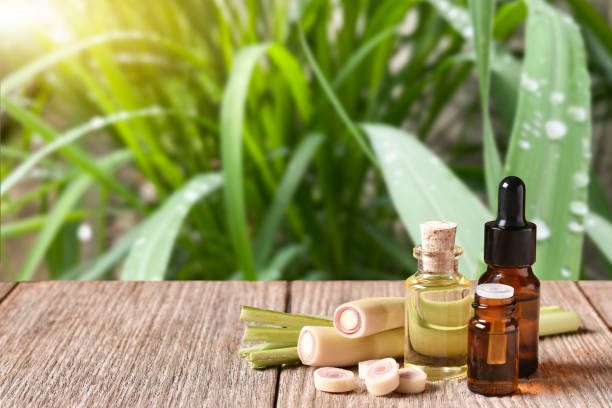
As one of Indonesia's largest lemongrass oil manufacturers, Global Essential Oil produces lemongrass oil from our farmer network across West Java, North Sumatra, and East Kalimantan. Here's what you receive when you source from us:
• Consistent citral content: Every batch is tested and documented — COA, GCMS, and physical parameters for your quality records
• Halal certified: MUI Halal certification available — essential for Middle East, Southeast Asia, and European markets requiring Halal-certified ingredients
• DUNS registered manufacturer: Verifiable business credentials — not a broker or trader
• Flexible volume: Sample quantities (50–200ml) through to bulk drum orders and full container loads
• Both species available: Cymbopogon citratus and Cymbopogon flexuosus — specify at time of order
• Full export documentation: COA, GCMS, MSDS, Halal cert, Certificate of Origin (SKA), commercial invoice and packing list
• Private label capability: We can produce lemongrass-based blended products, diluted roll-ons, and custom formulations under your brand
Final Thoughts
Lemongrass essential oil is one of those rare cosmetic ingredients that delivers across every dimension a formulator cares about: functional activity, natural fragrance, consumer appeal, cost-effectiveness, and regulatory manageability.
To truly maximize lemongrass essential oil benefits for cosmetics, it must be sourced from a verified Indonesian manufacturer with consistent citral content and full documentation.
Whether you're developing an acne-targeting face wash, a DEET-free insect repellent, a scalp treatment shampoo, or a signature aromatherapy blend, Indonesian lemongrass oil from Global Essential Oil is formulated, documented, and export-ready to support your brand.
| Request a Lemongrass Oil Sample + Full Specification Contact our sales team to request a complimentary lemongrass oil sample (Cymbopogon citratus or flexuosus, or both), complete with COA, GCMS report, and MSDS. Ready to discuss bulk pricing, private label, or custom blending? We respond within 1 business day. → Contact Global Essential Oil — Request Lemongrass Sample Now |
Or go directly to our Lemongrass Essential Oil product page for full specifications and ordering information.


