

Aceh and Sulawesi are both important Indonesian origins for patchouli oil, but a buyer should not treat either origin as a guaranteed commercial specification.
Geographic source can influence the raw material and the resulting oil, yet harvest conditions, drying, distillation, handling, storage, and later processing can all change the final batch.
For B2B procurement, the practical question is not simply "Which origin is better?" It is whether the actual Aceh or Sulawesi batch matches the aroma, physical parameters, analytical profile, documentation, consistency, and application requirements that your company has approved.
If you need the broader context first, see our Indonesian Patchouli Oil buyer guide. This page goes deeper on the origin decision specifically.
Aceh vs Sulawesi Patchouli Oil: Quick Comparison
| Factor | Aceh | Sulawesi |
| Geographic context | Sumatra; historically important patchouli-producing area | Major production areas across Sulawesi, including several commercial production zones |
| Commercial relevance | Often requested by buyers interested in origin-specific Indonesian material | Important source for current Indonesian patchouli supply |
| Aroma | Evaluate the actual batch; do not assume a fixed Aceh aroma | Evaluate the actual batch; do not assume a fixed Sulawesi aroma |
| Chemical profile | Batch-specific; origin alone does not guarantee patchoulol or other constituent levels | Batch-specific; meaningful variation can exist between Sulawesi production areas |
| Best buying approach | Approve a representative sample against specification and application | Approve a representative sample against specification and application |
Buyer takeaway: origin is useful context, but the commercial approval decision should be made on the offered batch rather than on the region name alone.
Where Aceh and Sulawesi Patchouli Oil Come From
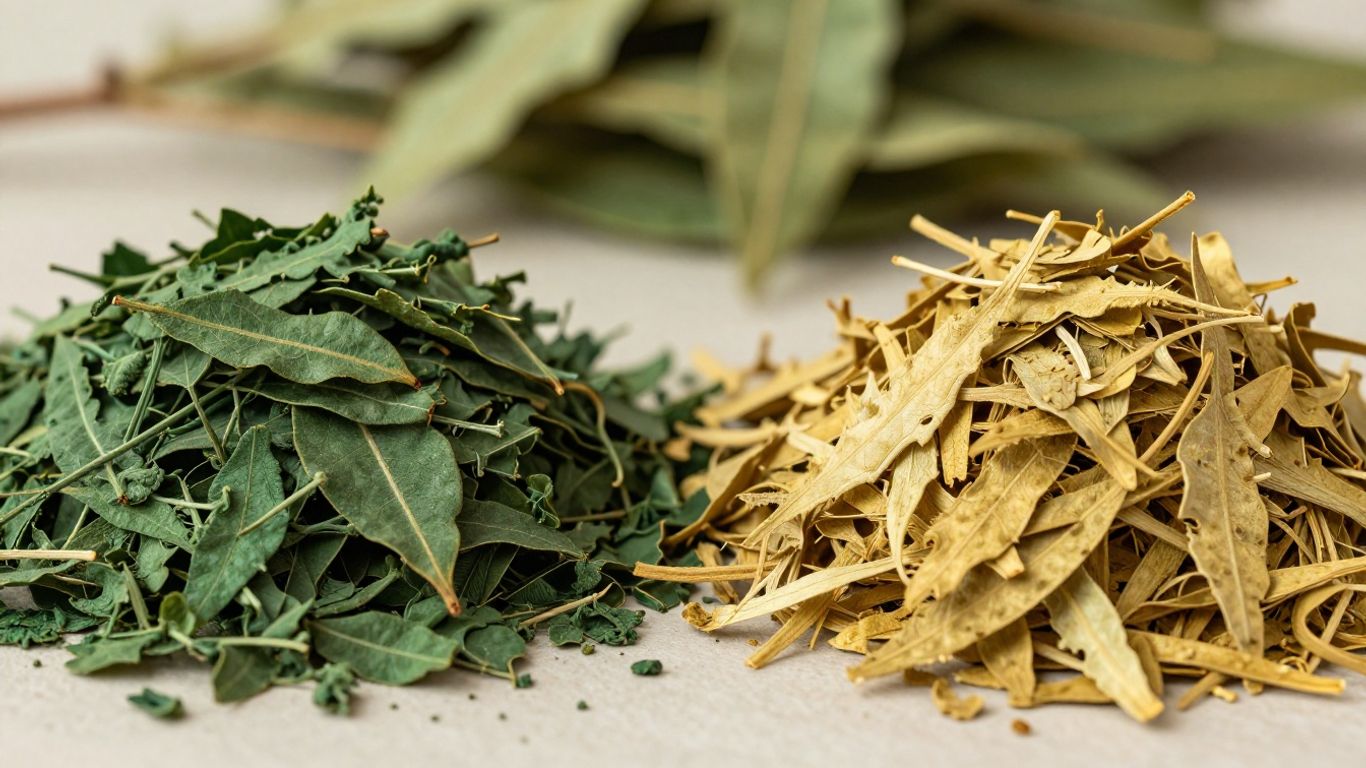
Aceh: A Historic Patchouli Origin in Sumatra
Aceh has a long history in Indonesia's patchouli industry.
Research from IPB University describes Aceh as a historically major patchouli-producing area and notes that commercial production later shifted strongly toward Sulawesi.
The same research also highlights continued buyer interest in Aceh material, which helps explain why the Aceh origin still carries commercial relevance in sourcing discussions.
Sulawesi: A Major Current Production Base
Sulawesi is now a major production base for Indonesian patchouli oil. However, 'Sulawesi' should not be treated as one chemically uniform source.
Commercial material can come from different production areas, and the resulting oils may differ depending on the local raw material, post-harvest handling, and distillation process.
This matters because a buyer comparing Aceh with Sulawesi is not really comparing two perfectly standardized products.
In practice, the buyer is comparing actual lots produced under different agricultural and processing conditions.
Does Geographic Origin Change Patchouli Oil?
Geographic origin can contribute to differences in patchouli oil, but it is only one part of the explanation.
Soil and climate can influence the plant, while harvest maturity, leaf drying, storage before distillation, distillation time, equipment, and post-distillation handling can also influence the final material.
A 2023 study in the Indonesian Journal of Biotechnology evaluated 84 Indonesian patchouli-oil samples from Aceh, Jambi, Bogor, Garut, Konawe, Kolaka, and Masamba.
The researchers found measurable differences in patchouli alcohol among the sampled locations and also emphasized that extraction method, harvest period, and oil handling can influence the chemical and physical characteristics of the oil.
| Research Example | Why It Matters |
| Aceh sample average patchouli alcohol: 29.49%. Sulawesi-area samples in the same study included Kolaka 27.18%, Konawe 29.81%, and Masamba 28.75%. | The numbers differed not only between Aceh and Sulawesi, but also within Sulawesi. These are research samples, not universal commercial specifications. |
This is why a procurement specification should not say that every Aceh or every Sulawesi oil must reproduce a number taken from one paper.
Research is useful for understanding variability; commercial acceptance still needs to be based on the agreed specification and the actual batch.
Aceh Patchouli Oil: What B2B Buyers Should Know

Aceh origin can be commercially meaningful for buyers who want origin traceability, continuity with an existing approved material, or a specific olfactory profile that their internal team has already associated with an Aceh reference batch.
The important word is reference. A buyer should avoid assuming that all Aceh oil will smell or analyze identically.
Even within Aceh, research using FT-IR and chemometric analysis has found differences among samples collected from different locations in West Aceh and Aceh Jaya.
That reinforces the need to approve actual commercial material rather than relying on the region name alone.
Sulawesi Patchouli Oil: What B2B Buyers Should Know
Sulawesi is highly relevant to present-day Indonesian patchouli sourcing because it includes important production areas and substantial commercial supply.
For buyers that need repeat volumes, this supply context can be an important part of the discussion.
At the same time, Sulawesi should not be reduced to one expected profile.
The research example above already shows different patchouli-alcohol averages among Kolaka, Konawe, and Masamba samples.
That does not mean one area is automatically better than another. It means the offered batch needs to be judged against the buyer's own requirements.
For fragrance and formulation teams, sensory acceptance can be just as important as a single headline compound.
For procurement and QC teams, physical parameters, analytical profile, traceability, documentation, and repeatability should be reviewed together.
Can Buyers Reliably Choose Patchouli Oil by Origin Alone?
No. Origin can help define a sourcing brief, but it cannot replace sample approval or a technical specification.
Two batches labelled with the same origin can still differ because the crop was harvested at a different stage, leaves were dried differently, distillation conditions changed, or the oil was stored and handled differently.
Conversely, oils from different Indonesian origins may both satisfy the same buyer specification.
For fragrance houses, this means the olfactory test should use the actual sample that is being considered for supply.
For manufacturers, the sample should also be evaluated in the intended formula or production system where practical.
Origin vs Grade: Do Not Confuse the Two
Aceh and Sulawesi describe geographic origin.
Dark, Light or Iron-Free, MD, and other commercial descriptions refer to grade, processing, or supplier-defined product characteristics.
These are different dimensions of the buying decision.
An Aceh-origin oil is not automatically Dark, Light, or MD. A Sulawesi-origin oil is not automatically a particular grade either.
A buyer therefore needs to specify both the desired origin, if origin matters, and the required grade or processing characteristics.
For a deeper explanation of Dark, Light/Iron-Free, MD, and other commercial forms, see our Patchouli Oil Grades guide.
What Should B2B Buyers Compare Beyond Origin?
- Botanical identity: confirm Pogostemon cablin and the relevant product description.
- Origin traceability: clarify what level of origin information is available and how it is documented.
- Grade or processing: define whether the requirement is standard, Dark, Light/Iron-Free, MD, aged, or another agreed commercial form.
- Aroma: compare the offered sample with an approved internal reference or fragrance brief.
- Physical parameters: review the parameters defined in the agreed product specification.
- Chemical profile: evaluate patchouli alcohol and the wider chromatographic profile where relevant to the application.
- Batch documentation: confirm that the COA and analytical documents correspond to the batch being offered.
- Application performance: test the material in the actual formulation or use case when performance matters.
- Repeatability: discuss how future lots will be compared with the originally approved material.
For specification-related parameters, use our Patchouli Oil Specification guide as a supporting reference, while keeping the commercial acceptance criteria specific to your own purchasing requirement.
COA and GC-MS: Can They Confirm Geographic Origin?
A COA and GC-MS report are important tools for evaluating the quality and identity of a patchouli-oil batch, but buyers should be careful about treating one chromatogram as automatic proof of geographic origin.
A COA can confirm the batch results for the parameters that are actually reported.
GC or GC-MS can show the chemical profile of the material and help a buyer compare the offered oil with an expected natural profile or an approved reference.
Those documents are highly useful for batch evaluation.
Geographic authentication is a different question.
Definitive origin verification generally requires a validated method, suitable reference data, and an analytical framework designed specifically for classification.
Research methods such as chemometrics can help distinguish groups of samples, but a standard supplier GC-MS report alone should not be presented as absolute proof that an oil came from Aceh or Sulawesi.
For a practical explanation of analytical documents, see our Essential Oil COA and GC-MS guide.
Which Origin Should a Buyer Choose?
There is no universal answer that Aceh is better than Sulawesi or Sulawesi is better than Aceh.
The correct decision depends on what the buyer is trying to achieve.
| Buyer Requirement | Decision Approach |
| Match an existing approved fragrance | Compare the offered Aceh or Sulawesi sample directly against the approved reference and test it in the intended accord. |
| Meet an internal technical specification | Choose the batch that meets the agreed physical and chemical acceptance criteria, regardless of origin reputation. |
| Maintain origin-specific sourcing | Request traceability information and define the required region clearly in the purchasing brief. |
| Secure repeat commercial supply | Evaluate consistency, current availability, future lot comparison, and supplier communication in addition to the first sample. |
| Develop a new formula | Evaluate both origins if available and let the actual sensory and formulation performance determine the choice. |
The practical rule: choose the origin whose actual commercial batch meets the approved specification, sensory target, application performance, and supply requirements.
How to Evaluate an Aceh or Sulawesi Patchouli Sample
- Confirm the product identity, claimed origin, grade, and batch reference.
- Review the product specification and batch-linked COA before sensory approval.
- Evaluate the aroma against the fragrance brief or approved reference under controlled conditions.
- Review GC or GC-MS data where relevant to your quality system.
- Test the sample in the intended formulation or manufacturing process where practical.
- Record the approved sample or reference so future commercial lots can be compared consistently.
If the sourcing question extends beyond origin - for example supplier verification, export documentation, or purchase-order preparation - use our How to Source Essential Oils from Indonesia guide.
How B2B Buyers Should Evaluate Patchouli Oil Origin
For a B2B buyer, the best sourcing enquiry is specific enough for the supplier to understand what needs to be matched.
State whether Aceh, Sulawesi, or either Indonesian origin is acceptable; identify the required grade; share the intended application; define the specification or reference sample; and list the documentation your quality team needs.
If origin is a mandatory requirement, make it part of the written purchase specification rather than leaving it as an informal preference. If performance matters more than region, say that too.
Clear acceptance criteria reduce the risk of approving a sample for one reason and later rejecting the commercial lot for another.
Global Essential Oil works with international B2B buyers evaluating Indonesian patchouli oil for fragrance, cosmetics, personal care, incense, and other manufacturing applications.
Current product specifications, sample availability, batch documentation, packaging, quantity, and quotation can be discussed through our Bulk Patchouli Essential Oil product page or by contacting our team.
Frequently Asked Questions
What is the main difference between Aceh and Sulawesi Patchouli Oil?
The clearest difference is geographic origin: Aceh is in Sumatra, while Sulawesi is a major current production base on Sulawesi island. Commercial batches can also differ in aroma and chemical profile, but those differences are not fixed enough to be treated as universal specifications for every oil from each region.
Is Aceh Patchouli Oil better than Sulawesi Patchouli Oil?
Not automatically. A buyer should compare the actual samples, specifications, analytical documents, formulation performance, consistency, and supply requirements. The better material is the batch that meets the approved purchasing and application criteria.
Does origin determine patchouli alcohol content?
Origin can contribute to variability, but it does not determine one guaranteed patchouli-alcohol value. Research samples from Aceh and different Sulawesi areas have shown different averages, and processing, harvest conditions, and handling can also affect the final oil.
Can GC-MS confirm whether Patchouli Oil is from Aceh or Sulawesi?
GC-MS can characterize the chemical profile of a batch, but a routine supplier GC-MS report should not be treated as definitive proof of geographic origin by itself. Robust origin authentication requires validated reference data and a method designed for geographic classification.
Are Aceh and Sulawesi the same as Dark, Light, or MD grades?
No. Aceh and Sulawesi are origins. Dark, Light/Iron-Free, MD, and similar terms describe commercial grades, processing, or product characteristics. A buyer may need to specify both origin and grade.
What should a buyer test before choosing a Patchouli Oil origin?
At minimum, review identity, origin information, specification, aroma, batch COA, analytical profile where relevant, and performance in the intended application. The final approval should be based on the actual offered batch rather than the origin name alone.