If you've sourced citronella essential oil for industrial use, you've encountered a fundamental question: Java type or Ceylon type?
These are not marketing labels — they refer to two botanically distinct species with significantly different chemical profiles, performance characteristics, and regulatory considerations.
Understanding the difference is not optional for a serious buyer. The wrong type can underperform in your repellent formulation, fail your cosmetic compliance requirements, or simply deliver an aroma profile that doesn't match your product specification.
Global Essential Oil produces and exports certified Java type citronella oil (Cymbopogon winterianus) from Indonesian farms — GC-MS tested, SNI compliant, and Halal certified. Here is everything you need to know about how it compares to Ceylon type.
| What Is the Difference Between Java Type and Ceylon Type Citronella Oil? Java type and Ceylon type citronella oil come from two different species of grass in the Cymbopogon genus: • Java Type (Cymbopogon winterianus): The premium standard. Produced mainly in Indonesia. — Citronellal: 35–45% (the primary repellent compound) — Geraniol: 21–24% — Citronellol: 11–15% — Methyl isoeugenol: trace (<1%) — Total Geraniol (quality metric): ≥ 85% (Indonesia SNI standard) • Ceylon Type (Cymbopogon nardus): Lower grade. Produced mainly in Sri Lanka, India. — Citronellal: 5–15% (far lower — less effective as repellent) — Geraniol: 18–20% — Citronellol: 6–8% — Methyl isoeugenol: 7–11% (significant — restricted in EU cosmetics) Key conclusion: Java type has 3–9× more citronellal than Ceylon type, making it significantly more effective as an insect repellent and more valuable as a source of fragrance derivatives. Ceylon type has higher methyl isoeugenol, which creates regulatory challenges in cosmetic applications. |
The Two Types of Citronella Oil: A Quick Overview
Citronella oil is classified in global trade into two distinct chemotypes, each from a different botanical species:
| Java Type | Ceylon Type | |
| Botanical species | Cymbopogon winterianus Jowitt | Cymbopogon nardus (L.) Rendle |
| Common names | Java citronella, Maha Pengiri grass | Ceylon citronella, Lenabatu |
| Primary origin | Indonesia (Java, Aceh, Central Java) | Sri Lanka, India, parts of Africa |
| CAS number | 91771-61-8 | 89998-15-2 / 8000-29-1 |
| FEMA number | 2308 | 2308 |
| EINECS | 294-954-7 | 289-753-6 |
| Market position | Premium — global industry standard | Budget — declining market share |
Both oils are used in the same industries — fragrance, personal care, insect repellent, cleaning products — but their chemical compositions make one significantly more suitable than the other for most high-value applications.
Java Type Citronella Oil (Cymbopogon winterianus)

Botanical Origin and Growing Regions in Indonesia
Java type citronella oil is extracted via steam distillation from the leaves of Cymbopogon winterianus Jowitt, a perennial aromatic grass that thrives in tropical climates.
Despite its name, Java type citronella is now grown across multiple regions of Indonesia — not just Java.
Major production areas in Indonesia include:
- West Java — the historical center of Java type citronella cultivation in Indonesia
- Aceh (Gayo Lues district) — growing importance as a production hub in Sumatra
- Central Java — significant volume, particularly around highland areas
- Smaller plantations: Bali, South Sulawesi, West Sumatra
| Indonesia's Position in Global Citronella Production Indonesia is the world's largest producer of Java type citronella oil. Together with China, Indonesia accounts for approximately 40% of global citronella oil production (approximately 4,000 tonnes/year globally). As the third-most-produced essential oil in Indonesia after clove and patchouli, citronella represents a strategically important export commodity. |
→ Learn about GEO's distillation process: Citronella Oil Distillation Process in Indonesia
GC Chemical Composition: What the Numbers Mean for Buyers
The chemical composition of Java type citronella oil is defined by three dominant compounds — citronellal, geraniol, and citronellol — that together determine its performance in every application:
| Compound | Java Type (%) | Function | Why It Matters to Buyers |
| Citronellal | 35–45% | Primary repellent compound; sharp lemon-like aldehyde | Higher = more effective mosquito repellent; drives premium pricing |
| Geraniol | 21–24% | Floral base; precursor for fragrance derivatives | Converted to geranyl esters (perfumery); antimicrobial properties |
| Citronellol | 11–15% | Fresh, slightly floral alcohol; stabilizes fragrance | Contributes to Total Geraniol metric; skin conditioning |
| Limonene | 1–4% | Bright citrus top note | Minor contribution; lower than Ceylon type |
| Geranyl acetate | 3–8% | Sweet, fruity ester | Adds complexity to aroma profile |
| Methyl isoeugenol | < 1% (trace) | Woody, smoky note | KEY ADVANTAGE: trace amounts satisfy EU cosmetic regulations |
| Citronellyl acetate | ~3% | Sweet, fruity modifier | Minor aroma contributor |
Aroma Profile of Java Type Citronella
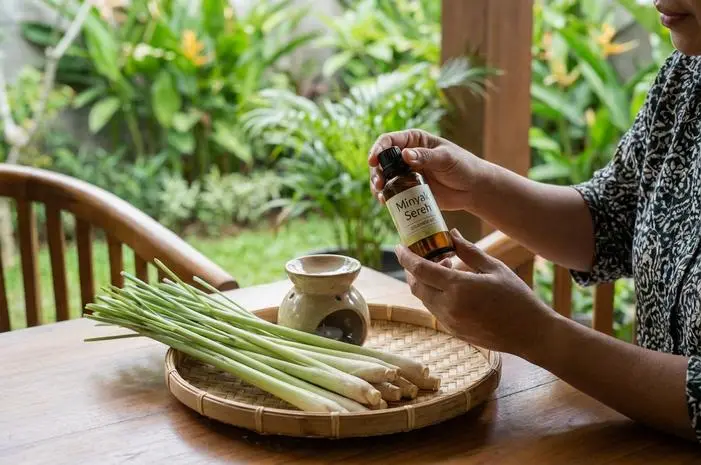
Java type citronella oil has a fresh, clean, intensely lemony-citrus aroma with a distinctly green, grassy undertone.
The high citronellal content (35–45%) creates a sharp, bright opening — almost like freshly crushed lemon zest with a herbal edge.
As the citronellal volatilizes, the geraniol and citronellol emerge as a softer, slightly floral middle note with a rosy undertone.
This two-phase character makes Java type citronella oil valuable both as a standalone fragrance ingredient and as a starting material for derivative production.
| For Fragrance Buyers: Aroma Comparison Java type: intense, clean, sharp lemon-citrus with green herbal top → soft floral middle. More refined than Ceylon. Ceylon type: similar opening but less intense (lower citronellal), followed by a distinct woody-smoky note from methyl isoeugenol (7–11%). Less clean in the drydown. For fine fragrance applications, Java type's cleaner profile is strongly preferred. |
The SNI Standard: Indonesia’s Mandatory Quality Benchmark
One of the most important — and least-known — facts about Java type citronella oil from Indonesia is that its quality is regulated by the Indonesian National Standard (Standar Nasional Indonesia / SNI):
| SNI 06-3953-1995: Java Type Citronella Oil Specifications The Indonesian government mandates the following minimum specifications for exported Java type citronella oil: • Citronellal content: minimum 35% • Total Geraniol content: minimum 85% • Specific gravity: 0.880–0.895 (at 20°C) • Refractive index: 1.466–1.476 • Optical rotation: -12° to -22° This government-regulated standard means that any Indonesian Java type citronella oil that meets export certification requirements is guaranteed to meet these minimum specifications — giving B2B buyers a level of quality assurance that non-standardized sources cannot match. |
Ceylon Type Citronella Oil (Cymbopogon nardus)
Origin and Global Production
Ceylon type citronella oil is extracted from Cymbopogon nardus (L.) Rendle, a different grass species that originated in Sri Lanka (historically called Ceylon — hence the name). It is now also cultivated in India, parts of Africa, and Latin America.
Sri Lanka was historically the dominant Ceylon type producer, but production has shifted significantly over decades.
Ceylon type currently commands a lower price than Java type and holds a declining share of global citronella oil trade as buyers increasingly prefer Java type's superior specifications.
GC Chemical Composition: Key Differences from Java Type
| Compound | Ceylon Type (%) | Java Type (%) | Implication for Buyers |
| Citronellal | 5–15% | 35–45% | MAJOR GAP — Ceylon type far less effective as repellent |
| Geraniol | 18–20% | 21–24% | Similar but slightly lower in Ceylon |
| Citronellol | 6–8% | 11–15% | Lower in Ceylon — affects Total Geraniol metric |
| Limonene | 9–11% | 1–4% | Higher in Ceylon — brighter but more volatile top note |
| Methyl isoeugenol | 7–11% | < 1% | CRITICAL DIFFERENCE — EU cosmetic restrictions apply to Ceylon |
| Geranyl acetate | ~2% | 3–8% | Lower ester content in Ceylon |
The Methyl Isoeugenol Issue: Why It Matters for Regulatory Compliance
Ceylon type citronella oil contains 7–11% methyl isoeugenol — a compound that is significantly restricted in cosmetic applications under EU Regulation and IFRA guidelines due to safety concerns (listed as a potential carcinogen in some animal studies).
| Methyl Isoeugenol Regulatory Status EU Cosmetic Regulation: Methyl isoeugenol must be declared in ingredient lists when present above 0.0001% (leave-on) or 0.0002% (rinse-off) in the final product. IFRA: Restricts or limits the use of materials with high methyl isoeugenol content in various product categories. Practical implication: Ceylon type citronella oil with 7–11% methyl isoeugenol creates significant compliance challenges for EU cosmetic manufacturers. Java type citronella oil with <1% methyl isoeugenol generally does not trigger these restrictions at typical use concentrations. |
Java Type vs Ceylon Type: Complete Side-by-Side Comparison
Use this table as your primary reference when evaluating citronella oil for sourcing:
| Factor | Java Type (C. winterianus) | Ceylon Type (C. nardus) |
| Citronellal content | 35–45% — HIGH | 5–15% — LOW |
| Geraniol content | 21–24% | 18–20% |
| Citronellol content | 11–15% | 6–8% |
| Methyl isoeugenol | < 1% (trace) — SAFE for EU cosmetics | 7–11% — RESTRICTED in EU cosmetics |
| Total Geraniol (Indonesia SNI) | ≥ 85% (government regulated) | No equivalent standard |
| Aroma character | Intense lemon-citrus, clean, refined drydown | Similar opening, woody-smoky drydown (methyl isoeugenol) |
| Repellent efficacy | HIGH — citronellal disrupts insect sensory receptors | LOW — insufficient citronellal for effective repellency |
| Suitability for EU cosmetics | GOOD — low methyl isoeugenol | CHALLENGING — high methyl isoeugenol |
| Quality standard | SNI 06-3953-1995 (Indonesian National Standard) | No major international standard |
| Primary producing countries | Indonesia (dominant), China | Sri Lanka, India, Africa |
| Market price | Higher (premium) | Lower (budget) |
| Global market share | Growing — preferred by most buyers | Declining |
| Available from GEO | ✓ Yes — GC-MS certified | ✗ No (GEO produces Java type only) |
Total Geraniol: The Most Important Quality Metric
When evaluating a citronella oil specification sheet, Total Geraniol is the single most important quality indicator you should look for. Understanding what it means is critical for any B2B buyer.
| What Is Total Geraniol? Total Geraniol is NOT just the percentage of geraniol in the oil. It refers to the combined content of the key alcohol compounds: Geraniol + Citronellol (+ geranyl acetate converted to alcohol equivalent). Why does this matter? Because these alcohol compounds are collectively responsible for: • The oil's antimicrobial and antifungal efficacy • Its value as a raw material for fragrance derivative production (geraniol → geranyl esters, hydroxycitronellal, etc.) • The overall quality grade of the oil Indonesia SNI standard requires Total Geraniol ≥ 85% for Java type export certification. Ceylon type has no equivalent requirement and typically falls below 85% Total Geraniol. |
For buyers, a Total Geraniol content of 85%+ is your minimum benchmark for premium Java type citronella. Always verify this on the supplier's GC-MS certificate of analysis — not just the citronellal content.
Which Citronella Oil Type Is Right for Your Application?
For Insect Repellent Formulations
Use Java type citronella oil without question. The 3–9× higher citronellal content (35–45% vs 5–15%) is the primary active compound that disrupts insect olfactory receptors.
Ceylon type's low citronellal makes it largely ineffective as a standalone repellent active.
Industry data confirms this: Indonesian Java type citronella oil is the global benchmark for natural insect repellent formulation. The EPA's registered citronella repellent specifications are based on Java type standards.
| Java Type Repellent Performance Studies have confirmed Java type citronella oil (C. winterianus) is effective against Aedes aegypti (dengue mosquito), body lice, head lice, and stable flies. Ceylon type (C. nardus) is generally considered ineffective as a primary repellent active due to insufficient citronellal content. |
For Fragrance and Perfumery
Both types can be used in fragrance, but Java type is strongly preferred for two reasons:
- Higher citronellal and geraniol content makes it a more valuable starting material for hydroxycitronellal, rhodinol, and geranyl acetate production
- Cleaner aroma drydown — the absence of significant methyl isoeugenol means the fragrance evolves more predictably without the woody-smoky interference present in Ceylon type
→ See also: Benefits and Applications of Citronella Oil for formulation inspiration.
For Personal Care and Cosmetics (EU/IFRA Compliant)
Use Java type exclusively for EU-market cosmetic formulations. Ceylon type's high methyl isoeugenol content (7–11%) requires declaration on EU cosmetic labels and may limit use concentration under IFRA guidelines. Java type's trace methyl isoeugenol (<1%) provides far more regulatory flexibility.
For ASEAN and US markets, both types may be technically acceptable, but Java type's superior specification continues to be the preferred choice.
For Food Flavoring (FEMA/GRAS)
Java type is preferred for food flavoring applications where citronellal's clean lemon character is desired.
FEMA GRAS status (FEMA 2308) applies to both types, but Java type's higher citronellal content delivers more consistent and powerful citrus flavor impact at lower usage rates.
Citronella Oil Fractions: The Value-Added Products
Beyond whole citronella oil, Java type's high citronellal and geraniol content makes it the preferred feedstock for producing valuable citronella fractions and derivatives:
| Fraction / Derivative | Source | Primary Application |
| Citronellal fraction (75–85%) | Concentrated from whole Java type | Repellent formulations, fragrance intermediate |
| Geraniol fraction / Rhodinol (60–80% geraniol) | Concentrated from whole Java type | Fine fragrance, rose-type perfume bases |
| Hydroxycitronellal | Chemical conversion from citronellal | IFRA-restricted but used in fine fragrance (muguet/lily of valley) |
| Citronellyl acetate | Esterification of citronellol | Fragrance ingredient — fruity-floral modifier |
| Geranyl acetate | Esterification of geraniol | Fragrance ingredient — fruity, rose-like modifier |
These fractions are only economically viable to produce from Java type oil. Ceylon type's low citronellal content makes citronellal fraction production impractical, and its lower Total Geraniol limits geraniol fraction yield.
Why Indonesian Java Type Sets the Global Standard
Indonesia's dominance in Java type citronella production is not accidental — it results from specific agricultural, regulatory, and historical factors:
- Optimal growing climate: Indonesia's equatorial humidity, volcanic soil, and consistent rainfall create ideal conditions for Cymbopogon winterianus with peak citronellal expression
- Government quality regulation: SNI 06-3953-1995 ensures exported Indonesian citronella consistently meets minimum specification standards — buyers can trust Indonesian-origin certification
- Scale and supply continuity: Java type citronella is a perennial grass harvested 3–4 times per year, allowing Indonesian producers to offer year-round supply
- Halal certification: Indonesian producers including Global Essential Oil hold Halal MUI certification — increasingly important for Middle Eastern and OIC-country buyers
- Integrated supply chain: proximity to downstream processors and fractionation plants means Indonesia can supply both whole oil and value-added fractions
Safety and Regulatory Considerations
| Key Regulatory Points for Both Types IFRA: Citronellal and citronellol are listed fragrance allergens that must be declared in EU cosmetic products above certain thresholds. EU Regulation: Geraniol and citronellol must be declared in leave-on products when present above 0.001% and in rinse-off products above 0.01%. Methyl isoeugenol (Ceylon type): Classified as a possible carcinogen in animal studies. EU cosmetic declaration required; IFRA category restrictions apply. EPA registration: Citronella oil is registered as a biopesticide insect repellent in the US since 1948. Java type specifications dominate EPA registration data. Always request GC-MS report from your supplier confirming actual compound percentages — particularly citronellal, methyl isoeugenol, and Total Geraniol. |
⚕️ Disclaimer: Regulatory requirements vary by market and application. Always verify compliance with your regional regulatory authority and qualified safety assessor before product launch.
| Java Type Citronella Oil: Quick Specification Reference for Buyers Java Type Citronella Oil (Cymbopogon winterianus) — Key Specs: Chemical composition (typical): Citronellal: 35–45% | Geraniol: 21–24% | Citronellol: 11–15% | Methyl isoeugenol: <1% Total Geraniol: ≥85% (Indonesia SNI minimum) Regulatory codes: CAS 91771-61-8 | EINECS 294-954-7 | FEMA 2308 Quality standard: SNI 06-3953-1995 (Indonesia) Specific gravity: 0.880–0.895 | Refractive index: 1.466–1.476 Best for: Insect repellent formulations, fragrance and perfumery, EU-compliant cosmetics, fragrance derivative production Not suitable: Applications requiring low citronellal or specific non-Java aroma profiles Source: Indonesia (Java, Aceh, Central Java) — world's largest Java type producer |
Source Certified Java Type Citronella Oil from Indonesia
Global Essential Oil produces and exports Java type citronella oil (Cymbopogon winterianus) meeting SNI 06-3953-1995 standards from our Indonesian farms. All products include:
- GC-MS certificate of analysis: citronellal %, Total Geraniol %, methyl isoeugenol % verified per batch
- SNI 06-3953-1995 compliance documentation for Indonesian export certification
- Halal MUI certified — suitable for pharmaceutical, personal care, and food-adjacent applications
- Full documentation: COA, MSDS, Phytosanitary Certificate, Certificate of Origin
- Flexible MOQ: from sample quantities to bulk container shipments
- Fractions available: citronellal fraction, geraniol/rhodinol fraction — on request
→ Contact our export team via our essential oil sourcing guide or request a sample directly from our citronella oil product page.
Frequently Asked Questions
What is the main difference between Java type and Ceylon type citronella oil?
The main difference is their chemical composition. Java type citronella oil contains much higher citronellal and total geraniol levels than Ceylon type, making it the preferred choice for insect repellents, fragrances, and industrial applications.
Why is Java type citronella oil more expensive than Ceylon type?
Java type generally costs more because of its higher citronellal content, stricter quality standards, and greater demand in fragrance, cosmetic, and insect repellent industries.
What does “Total Geraniol” mean in a citronella oil specification?
Total Geraniol refers to the combined amount of geraniol and related alcohol compounds in citronella oil. It is an important quality indicator, particularly for Java type citronella oil used in fragrance and industrial applications.
Can Ceylon type citronella replace Java type in insect repellent products?
Generally, no. Java type contains much higher citronellal levels, making it significantly more effective for insect repellent formulations than Ceylon type.
Is Java type citronella oil safe for cosmetic use in the EU?
Yes. Java type citronella oil is commonly used in cosmetic formulations, provided it complies with applicable EU regulations and allergen labeling requirements. Buyers should always request GC-MS documentation and conduct a cosmetic safety assessment.
What is the SNI standard for Java type citronella oil?
SNI 06-3953-1995 is the Indonesian National Standard for Java type citronella oil. It specifies key quality parameters such as citronellal content, total geraniol, specific gravity, refractive index, and optical rotation.
Does Global Essential Oil supply Java type or Ceylon type citronella oil?
We supply Java type citronella oil (Cymbopogon winterianus) sourced from Indonesia. Every batch is supported by COA, GC-MS reports, MSDS, and export documentation for international buyers.
What are citronella oil fractions?
Citronella oil fractions are purified concentrates of specific compounds, such as citronellal and geraniol, separated from whole citronella oil. These fractions are widely used in fragrance, flavor, and insect repellent manufacturing.