Ask ten different buyers for "patchouli oil" and there's a good chance at least three of them mean something different. One wants a dark, smoky base note for an oriental perfume. Another needs a pale, iron-free grade that won't stain a transparent soap.
A third is formulating a luxury niche fragrance and requires the highest patchoulol content available.
The confusion is understandable, which is why having patchouli oil grades explained is crucial. The difference between receiving the wrong grade and the right one can mean reformulating an entire product line
In this guide, we break down every commercially significant patchouli oil grade, Dark, Light (Iron-Free), Molecular Distilled (MD), and Aged/Heart, covering their chemical specifications, aroma profiles, colour characteristics, ideal applications, and pricing context.
By the end, you'll know exactly which grade to specify in your next purchase order.
Why Patchouli Oil Comes in Different Grades
Patchouli oil (Pogostemon cablin) is produced almost exclusively in Indonesia, specifically in Sulawesi, Sumatra, and parts of Java. Indonesia accounts for approximately 80–90% of global patchouli oil supply, and the oil is extracted via steam distillation of dried patchouli leaves.
Grades emerge from two primary sources of variation:
- Post-distillation processing: The material the oil contacts during distillation and storage (particularly iron equipment vs. stainless steel or aluminium) fundamentally changes the oil's colour and some chemical properties.
- Further refining steps: Processes like deironing (to remove iron traces) and molecular distillation (high-vacuum fractionation) create distinct sub-grades with different purity levels and aroma profiles.
Understanding this is important because grade is not the same as quality. Dark patchouli is not 'lower quality' than Light. Each grade is optimal for specific applications. Choosing the wrong grade for your product is a formulation problem, not a quality problem.
Key Compound to Understand: Patchoulol
Patchoulol (also written as patchouli alcohol) is the primary sesquiterpene alcohol responsible for patchouli's characteristic deep, earthy aroma and its long-lasting fixative properties in perfumery.
Patchoulol content, expressed as a percentage by GC analysis, is the main quality indicator across all grades. Higher patchoulol % generally means a richer, longer-lasting scent and a more sought-after oil. Read our detailed article on patchoulol content and what it means for your formulation →
The Four Main Patchouli Oil Grades Explained
To see how these grades compare at a glance, here is the master comparison table, followed by a detailed breakdown:
| Grade | Colour | Patchoulol % | Aroma Profile | Best For |
| Patchouli Dark | Deep amber–dark brown | 29 – 32% | Earthy, heavy, smoky | Fine fragrance, incense, perfumery base note |
| Patchouli Light (Iron-Free) | Pale yellow–light gold | 29 – 32% | Cleaner, slightly sweeter | Cosmetics, soap, skincare, transparent products |
| Patchouli MD (Molecular Distilled) | Near colourless–very pale | 32 – 35%+ | Refined, smooth, complex | Luxury fragrance, niche perfumery, premium skincare |
| Patchouli Heart / Aged | Dark amber (deepens w/ age) | 30 – 34% | Rich, rounded, velvety | Fine fragrance, high-end perfumery |
Grade 1: Patchouli Dark
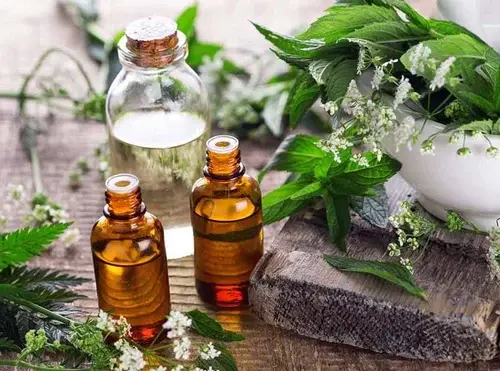
Patchouli Dark is the most common and most recognisable grade. It is produced through traditional steam distillation using iron distillation equipment, the standard in most Indonesian distilleries for decades. The contact with iron during distillation causes a natural chemical reaction that results in the oil's characteristic dark colour.
Colour & Appearance
Deep amber to dark brown. On older or more concentrated batches, the colour can approach dark reddish-brown. This dark pigmentation is one of the main reasons some industries prefer other grades, in product formulations where the final colour matters, Patchouli Dark can tint the product visibly.
Aroma Profile
Heavy, earthy, smoky, with classic musty-woody patchouli character. The aroma is deep and persistent, a true base note. Perfumers describe it as 'raw', 'intense', and 'tenacious'. Some batches carry a slightly fermented or hay-like undertone depending on the raw material age.
Technical Specifications
| Patchoulol Content | 29 – 32% (varies by origin and harvest) |
| Colour | Deep amber to dark brown |
| Specific Gravity (20°C) | 0.952 – 0.975 |
| Refractive Index (20°C) | 1.507 – 1.515 |
| Optical Rotation | (-) 48° to (-) 65° |
| CAS Number | 8014-09-3 |
| Extraction | Steam distillation from dried Pogostemon cablin leaves |
| Origin | Sulawesi, Sumatra (Indonesia) |
Best Applications
- Fine fragrance & perfumery: Classic base note in oriental, chypre, and fougère compositions. Used by major fragrance houses worldwide.
- Incense & ritual products: The heavy, smoky character is ideal for incense sticks, cones, and traditional aromatherapy products.
- Soap & personal care (opaque products): The dark colour is not an issue in opaque bars, shower gels, or body lotions where appearance of the final product is not affected.
- Aromatherapy: Diffusion, massage oil blends, and wellness products that aren't colour-sensitive.
Pricing Context
Patchouli Dark is generally the most affordable grade, making it the preferred choice for high-volume buyers and industrial fragrance manufacturers. Price fluctuates significantly with Indonesian harvest conditions.
Related Reading: Patchouli Oil Price Trends & What Affects Global Supply
Grade 2: Patchouli Light (Iron-Free)
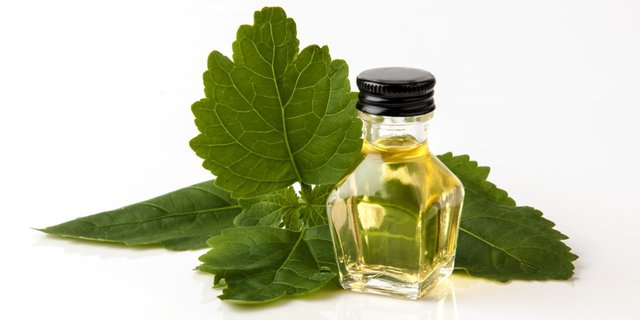
Patchouli Light, also marketed as Iron-Free Patchouli or Deironed Patchouli, is produced by taking standard Patchouli Dark through an additional purification step that removes the iron compounds responsible for the dark colour. The result is a significantly lighter-coloured oil with a subtly different aroma profile.
How Iron Removal Works
After primary steam distillation, the oil undergoes a chelation or washing process, typically using citric acid or other chelating agents, that binds and removes the iron ions. The oil is then filtered to produce a pale, cleaner-looking product. Some manufacturers use stainless steel or aluminium distillation equipment from the start to avoid iron contamination entirely.
Colour & Appearance
Pale yellow to light gold. Significantly lighter than Dark grade, making it suitable for transparent, light-coloured, or white formulations. The colour stability is also better over time compared to Dark.
Aroma Profile
Cleaner, slightly sweeter interpretation of classic patchouli. The heavy smoky quality of Dark is reduced, revealing more of the green, herbaceous facets of the oil. Still unmistakably patchouli, but more versatile for modern fragrance compositions.
Technical Specifications
| Patchoulol Content | 29 – 32% (comparable to Dark grade) |
| Colour | Pale yellow to light gold |
| Specific Gravity (20°C) | 0.950 – 0.972 |
| Refractive Index (20°C) | 1.506 – 1.514 |
| Iron Content | < 1 ppm (vs. 5–20+ ppm in Dark grade) |
| Origin | Sulawesi, Sumatra (Indonesia) |
| Processing | Steam distillation + deironing process |
Best Applications
- Transparent soaps & cleansers: The pale colour does not affect clarity in melt-and-pour or clear glycerin soap bases.
- Skincare (serums, creams, lotions): Formulators prefer Light for products where the end colour must be clean and consistent.
- Hair care: Shampoos, conditioners, and scalp treatments where a golden oil would be noticeable.
- Modern niche perfumery: Perfumers who want patchouli's longevity without the heavy dark undertone often specify Light.
- White-label & private label cosmetics: Brands that need supply consistency across batches often prefer Light for its better colour stability.
Pricing Context
Typically 15–25% more expensive than Dark grade, reflecting the additional processing step. For formulations where colour matters, the premium is almost always worth it.
Grade 3: Patchouli MD (Molecular Distilled)
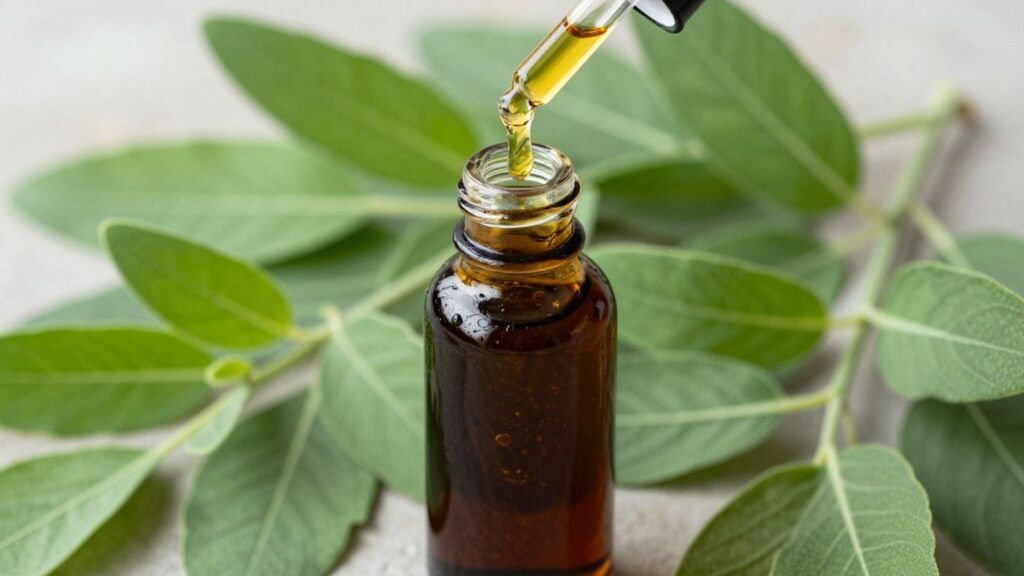
Patchouli Molecular Distilled (MD), sometimes called Patchouli Rectified or High Patchoulol Patchouli, is produced through a high-vacuum distillation process that separates and concentrates specific molecular fractions. The result is the highest-purity, highest-patchoulol product in the patchouli grade spectrum.
The Molecular Distillation Process
Molecular distillation (also called short-path distillation) operates under very high vacuum (typically < 0.001 mbar), which allows the separation of compounds at temperatures far below their normal boiling points. This minimises thermal degradation and selectively concentrates the heavier sesquiterpene alcohols, including patchoulol, while removing lighter, more volatile compounds.
The result is an oil that is simultaneously purer, lighter in colour, smoother in aroma, and higher in patchoulol than either Dark or Light grades.
Colour & Appearance
Near colourless to very pale yellow. The most visually clean of all grades, essentially water-white in some batches. This makes it ideal for the most colour-sensitive applications.
Aroma Profile
Refined, smooth, and complex. The harsh, smoky elements present in Dark grade are virtually absent. MD reveals patchouli's more elegant facets, a velvety, balsamic depth with subtle sweetness. Perfumers working in niche and luxury segments describe MD patchouli as the benchmark for high-performance patchouli in fine fragrance.
Technical Specifications
| Patchoulol Content | 32 – 35%+ (significantly higher than Dark or Light) |
| Colour | Near colourless to very pale yellow |
| Specific Gravity (20°C) | 0.948 – 0.968 |
| Refractive Index (20°C) | 1.504 – 1.512 |
| Processing | Steam distillation + molecular (short-path) distillation |
| Target Market | Luxury fragrance, premium skincare, niche perfumery |
Best Applications
- Luxury & niche fine fragrance: The preferred grade for high-end perfume houses requiring consistent, premium patchouli base notes.
- Premium skincare & serums: Colour-neutral and highest purity make it ideal for premium cosmetic formulations.
- Flavour & food-grade applications: In markets where food-grade essential oil purity is required.
- Japanese & Western European markets: These markets consistently demand the highest patchoulol content and cleanest aroma profile.
Pricing Context
MD is the most expensive patchouli grade, typically 40–80% above Dark grade pricing, depending on market conditions. For luxury product lines, the cost premium is justified by performance and consistency. For mass-market products, it would be over-specification.
Grade 4: Patchouli Aged / Patchouli Heart
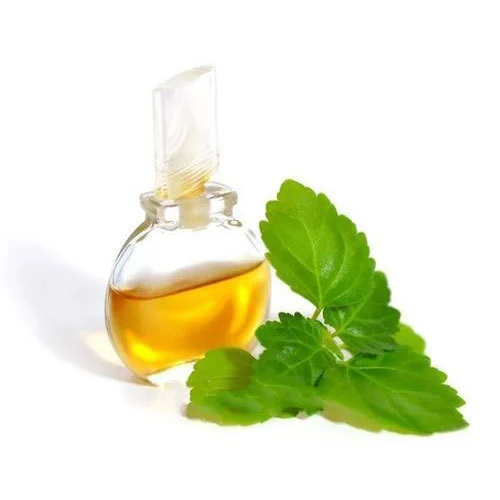
Patchouli Aged (also called Patchouli Heart) is not processed differently from Dark grade, it is aged differently. Fresh patchouli oil has a harsher, more raw aroma. Through intentional ageing in appropriate containers over months or years, the oil undergoes a natural esterification and molecular rearrangement that significantly mellows and deepens its character.
The Ageing Process
Traditional Indonesian producers have long known that patchouli improves with age, similar in concept to fine wine or whisky. Stored in stainless steel or dark glass containers away from direct light, the oil slowly transforms: harsh top notes dissipate, patchoulol content can gradually increase as other compounds oxidise, and the overall profile becomes rounder, richer, and more complex.
Aroma Profile
Velvety, deep, warm, and extraordinarily complex. The best aged patchouli has an almost wine-like richness, described by perfumers as 'round', 'soft', and 'multilayered'. It is highly prized and relatively rare, as genuine aged patchouli requires the supplier to hold stock for extended periods.
Best Applications
- Prestige fine fragrance: The most exclusive perfume compositions that demand uniqueness and complexity.
- High-value niche perfumery: Perfumers seeking signature ingredients that cannot be easily replicated or substituted.
- Collector/connoisseur market: Some buyers purchase aged patchouli as a commodity investment alongside use as a fragrance ingredient.
Origin Matters Too: Sulawesi vs. Sumatra
Beyond grade, the growing region adds another layer of variation. Sulawesi patchouli tends to be more intense and smoky, favoured by traditional perfumers. Sumatra patchouli is often described as slightly greener and fresher. At Global Essential Oil, we source from both regions and can specify origin upon request.
How to Choose the Right Grade for Your Business
Not sure which grade fits your needs? Use this decision framework:
| Your Product / Use Case | Recommended Grade |
| Fine fragrance / oriental perfume | Dark or Aged — for authentic, heavy base note character |
| Transparent soap / clear gel | Light (Iron-Free) — to avoid colour tinting the product |
| Luxury / niche perfume | MD or Aged — highest patchoulol, cleanest aroma |
| Skincare serum or cream (white/pale) | Light or MD — colour-neutral, no formulation interference |
| Incense / traditional products | Dark — the heavy aroma and lower price make it ideal |
| Mass-market body lotion (opaque) | Dark or Light — cost-effective; Light if colour consistency needed |
| Premium cosmetics in EU / Japan | MD — highest purity and patchoulol content typically required |
| Hair care (shampoo / conditioner) | Light — colour consistency in final product |
| Aromatherapy diffusion | Dark — most authentic, characteristic aroma |
| Private label brand — first launch | Light — best balance of versatility, cost, and consistency |
How to Verify the Grade You’re Receiving
When placing a bulk order, specifying a grade in your purchase order is not enough. You need documentation that confirms what you're actually receiving.
Certificate of Analysis (COA)
Every grade of patchouli oil should come with a batch-specific COA. The COA should explicitly state the patchoulol content percentage, colour description, specific gravity, and refractive index. These parameters together tell you which grade you have. A COA with patchoulol below 29% or colour noted as 'dark amber' on an order specified as MD grade would be an immediate red flag.
Related Reading: Understanding COA & GCMS Report in Essential Oil Trading
GCMS Report
The GCMS (Gas Chromatography–Mass Spectrometry) report provides the full chemical fingerprint of the oil, showing all compounds and their percentages. It allows you to verify patchoulol content independently of the COA, and to detect adulteration (e.g., addition of synthetic patchoulol or dilution with carrier oils).
Physical Inspection of Sample
Always request a sample before committing to a bulk order. A physical sample allows you to verify colour against the grade specification using a simple colour comparison, and to assess aroma profile against your formulation needs. Grade mismatches are far easier and cheaper to resolve at the sample stage than after a drum of oil arrives.
Pro Tip: Request a Grade Sample Kit
At Global Essential Oil, we offer grade sample kits, small samples of Dark, Light, and MD patchouli from the same harvest origin, provided together with COA and GCMS for each. This lets you assess all three grades side-by-side before making a purchasing decision. Contact our team to request one.
Grade Pricing: Relative Cost Comparison
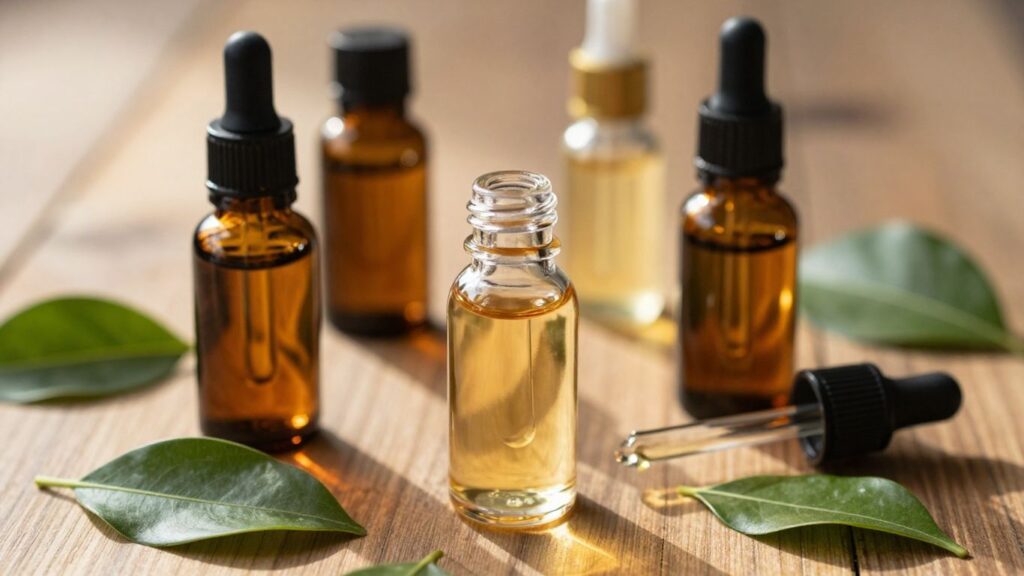
Patchouli oil pricing is highly sensitive to Indonesian harvest conditions, global fragrance demand, and currency fluctuations. However, the relative pricing relationship between grades is relatively consistent:
| Grade | Relative Price Index | vs. Dark Grade | Best Value For |
| Dark | Base (100%) | — | High-volume fragrance, incense |
| Light (Iron-Free) | 115 – 125% | +15–25% | Cosmetics, skincare, transparent products |
| MD (Molecular Distilled) | 140 – 180% | +40–80% | Luxury fragrance, niche perfumery |
| Aged / Heart | 150 – 200%+ | +50–100%+ | Prestige fragrance, collector use |
For up-to-date market pricing and harvest forecasts, see: Patchouli Oil Price Trends — What Affects Global Supply.
Final Thoughts: Grade Is a Business Decision, Not Just a Technical One
Choosing the right patchouli oil grade comes down to three things: your end product's colour requirements, your target market's aroma expectations, and your cost structure. Dark gives you authenticity and value. Light gives you versatility and colour neutrality. MD gives you purity and performance. Aged gives you rarity and complexity.
At Global Essential Oil, we supply all major patchouli grades, sourced from our network of trusted farmers and distilleries across Sulawesi and Sumatra. Every batch comes with full COA, GCMS documentation, and Halal certification. We also offer grade sample kits so you can compare Dark, Light, and MD side-by-side before committing to a bulk order.
Explore our full patchouli oil offering: Patchouli Essential Oil — Product Page
| Request a Patchouli Grade Sample Kit Not sure which grade is right for your formulation? Contact our team to receive a complimentary sample kit — Dark, Light, and MD patchouli from the same Indonesian harvest, with full COA and GCMS for each grade. → Contact Global Essential Oil — Request Grade Sample Kit Now |