| What are the benefits of agarwood (oud) essential oil? Agarwood essential oil — also known as oud oil — has the following evidence-supported and traditionally documented benefits: (1) anti-inflammatory (sesquiterpene fraction reduces inflammatory markers); (2) antimicrobial (active against P. acnes, S. aureus, and Candida); (3) antioxidant (chromone fraction neutralises free radicals); (4) anxiolytic/calming (agarospirol modulates GABAergic pathways); (5) anti-ageing for skin (antioxidant + cytophylactic activity); (6) sleep support (sedative-adjacent properties); (7) meditation and spiritual focus (cross-cultural documented use); (8) natural perfumery/fragrance (luxury base note); (9) mood enhancement (serotonin pathway modulation); (10) aphrodisiac (limbic system stimulation, cultural documentation). |
Agarwood essential oil — known as oud in Arabic, gaharu in Indonesian, and jinko in Japanese — is one of the most historically revered therapeutic and aromatic substances known to humanity.
Referenced in the Bible, the Quran, Sanskrit Vedic texts, and Chinese classical medicine, its benefits span from skin care and respiratory support to anxiety relief and spiritual practice across virtually every major civilisation for over 3,000 years.
Today, modern pharmacological research is increasingly validating the traditional uses of agarwood oil — with studies confirming anti-inflammatory, antimicrobial, antioxidant, and anxiolytic properties backed by identifiable chemical mechanisms.
This guide covers agarwood oil's 10 most well-supported benefits with practical application guidance, the chemistry behind each benefit, and safety information.
We write as Global Essential Oil, an Indonesian manufacturer of Aquilaria agarwood oil from Kalimantan.
The Chemistry Behind Agarwood Oil’s Benefits
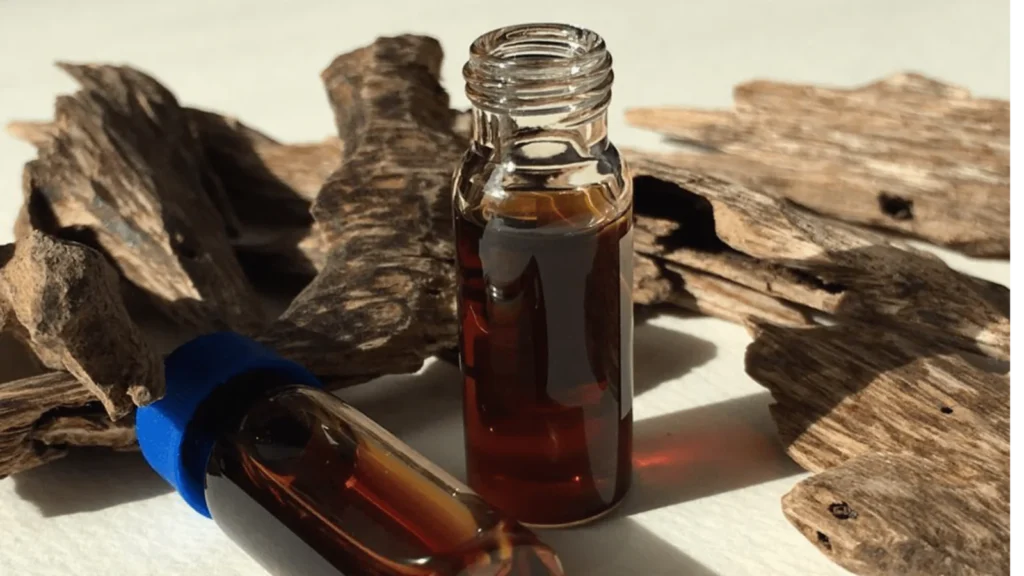
| What compounds in agarwood oil produce its benefits? Agarwood essential oil's benefits come from two primary compound classes: Chromones (2-phenylethylchromones): The signature compounds unique to Aquilaria-derived oil. Responsible for antioxidant activity, anti-inflammatory properties, and the complex resinous aroma. Their presence is also the definitive marker of genuine agarwood oil — synthetic oud does not contain chromones. Sesquiterpenes (agarospirol, α-guaiene, δ-guaiene, β-agarofuran): The therapeutic fraction — responsible for anxiolytic activity (agarospirol modulates GABA-A receptors), antimicrobial properties (β-agarofuran inhibits bacterial growth), and anti-inflammatory activity (α-guaiene inhibits COX-2 enzyme). The combination of these two compound classes creates agarwood oil's uniquely broad functional profile. |
This chemical foundation is important because it explains why synthetic oud — which contains none of these compounds — cannot replicate the genuine therapeutic properties of authentic steam-distilled agarwood oil.
Verifying your oil's compound profile via GCMS is the only way to confirm you are working with genuine therapeutic material. See: How to Read an Essential Oil COA Report — GCMS Section.
Agarwood Oil Benefits: Complete Overview
| Benefit | Active Compounds | Evidence Level | Application |
| Anti-inflammatory | α-Guaiene, δ-Guaiene, chromone fraction | Documented in pharmacological studies — COX-2 inhibition, NF-κB pathway | Topical (diluted); diffusion for systemic anti-inflammatory support |
| Antimicrobial | β-Agarofuran, sesquiterpene fraction | Laboratory studies confirm activity against P. acnes, S. aureus, Candida | Skincare formulations; topical antimicrobial applications |
| Antioxidant | Chromone fraction (2-phenylethylchromones) | Free radical scavenging documented in multiple studies | Anti-ageing skincare; facial oils; antioxidant body care |
| Anxiolytic / Calming | Agarospirol | 2022 PMC study confirmed anxiolytic effects; GABA-A receptor modulation | Cold diffusion; personal inhaler; pulse point topical |
| Anti-ageing (skin) | Chromone + sesquiterpene antioxidants; cytophylactic activity | Combined antioxidant + cell regeneration support | Night facial oil; luxury serum; anti-ageing body oil |
| Sleep support | Sesquiterpene sedative fraction | Traditional documented across Ayurveda, TCM, Islamic medicine; emerging pharmacological evidence | Pre-sleep diffusion; pillow mist; bedtime massage blend |
| Mood enhancement | Serotonin pathway modulation (sesquiterpene fraction) | Traditional 'spirit lifting' use; emerging neuropharmacological evidence | Daily diffusion; personal fragrance; workspace scenting |
| Meditation & spiritual focus | Olfactory-limbic pathway activation | Cross-cultural documented across Buddhism, Islam, Hinduism; modern neuroscience of conditioned olfactory response | Incense/diffusion before meditation; spiritual practice |
| Aphrodisiac | Limbic system stimulation; complex sensory aroma response | Cross-cultural documented; mechanism via emotional/arousal pathways | Personal fragrance; massage oil; bedroom diffusion |
| Natural luxury fragrance | Chromone + sesquiterpene base note complex | Documented in thousands of commercial perfume formulations | Fine fragrance; personal attar; natural perfume blending |
Agarwood Oil Benefits: Detailed Guide

Anti-Inflammatory Properties
Agarwood oil's anti-inflammatory activity is one of its most pharmacologically documented benefits.
The sesquiterpene fraction — particularly α-guaiene and related compounds — inhibits COX-2 enzyme (a key mediator of inflammatory response, the same target as ibuprofen) and suppresses NF-κB pathway activation.
In skin applications, this translates to reduction of redness, calming of reactive skin, and support for conditions characterised by chronic skin inflammation.
Practical application: 0.5–1% agarwood oil in Virgin Coconut Oil (VCO) as a calming facial or body oil for reactive, sensitive, or inflamed skin. Apply after cleansing to affected areas.
Antimicrobial Activity
Laboratory studies confirm agarwood oil's inhibitory activity against several medically relevant microorganisms — including Propionibacterium acnes (primary acne-causing bacteria), Staphylococcus aureus (secondary skin infection bacteria), and Candida albicans (fungal pathogen).
This antimicrobial profile supports the oil's use in acne-prone skin formulations, natural deodorant, and wound-support applications
Practical application: 0.5% in a lightweight facial serum for acne-prone skin. The deep, resinous character of agarwood makes it best suited for night-time application in richer carrier bases.
Antioxidant and Anti-Ageing
The chromone fraction of genuine agarwood oil — the compound class unique to Aquilaria-derived material — demonstrates significant free radical scavenging activity in pharmacological testing.
Free radicals are the primary driver of skin ageing: collagen degradation, uneven skin tone, and loss of elasticity.
By neutralising free radicals, the chromone fraction supports skin cell longevity and collagen preservation.
Practical application: 0.5–1% agarwood in a night facial oil blend. Its resinous heaviness pairs well with lighter carrier oils (argan, rosehip) for a luxurious anti-ageing treatment.
The dark colour of the oil means it is best used in products where colour neutrality is not required — alternatively, use with very light dilution in a pale formulation base.
Anxiety Relief and Emotional Calming
A 2022 PMC study confirmed that inhaled agarwood extract demonstrates measurable anxiolytic effects in animal models — with the sesquiterpene fraction, particularly agarospirol, proposed as the primary active compound acting on GABA-A receptors (the same mechanism as pharmaceutical benzodiazepines, at much lower potency).
The olfactory-limbic pathway — from nose directly to the brain's emotional processing centre — makes this one of the most rapid-acting benefits of agarwood oil aromatherapy.
Practical application: 1–2 drops in a cold diffuser for 20–30 minutes. Or 1 drop in 1 teaspoon VCO applied to inner wrists. For more on agarwood's anxiety-relieving benefits, see: Agarwood Oil Benefits for Aromatherapy — Complete Guide.
Sleep Support
Agarwood oil's sedative-adjacent properties — documented across Ayurveda, Traditional Chinese Medicine, Islamic medicine, and Tibetan medicine — are supported by emerging evidence of its effects on GABAergic and serotonergic pathways.
Unlike pharmaceutical sleep aids, it does not alter REM architecture; it works by reducing the pre-sleep mental activation that prevents natural sleep onset.
Practical application: 1–2 drops in a cold diffuser for 15–20 minutes before sleep. Or blend with lavender (2:5, agarwood:lavender) for a deeply grounding pre-sleep combination.
Skin Care Benefits
Beyond anti-inflammatory and antioxidant properties, agarwood oil supports skin health through:
- Cytophylactic activity: Supporting new skin cell growth — relevant for scar healing, post-inflammatory hyperpigmentation, and general skin renewal
- Sebum regulation: The sesquiterpene fraction's mild astringent properties help regulate excess sebum on oily and combination skin
- Penetration enhancement: Agarwood oil's lipophilic sesquiterpenes may enhance the penetration of other active ingredients in a formulation — useful in multi-ingredient serums
Fragrance and Perfumery
In fine fragrance, agarwood oil is the single most prestigious natural ingredient — forming the basis of the entire oud/oriental fragrance family and appearing in thousands of luxury commercial compositions (Tom Ford, Chanel, Dior, Amouage).
As a base note with extraordinary tenacity (12–24+ hours on skin), it anchors and extends lighter ingredients in any blend.
For blending guidance with other Indonesian oils such as patchouli and vetiver, see: Agarwood Oil vs Oud Oil — The Complete Guide.
How to Use Agarwood Oil: Practical Application Guide
For Skin and Body
- Facial oil (anti-ageing, luxury): 0.5–1% agarwood in rosehip or argan oil — apply 2–3 drops to face after cleansing at night
- Body oil: 1–2% in VCO or sweet almond oil — massage into skin for fragrance, anti-inflammatory benefit, and skin nourishment
- Luxury bath: 3–4 drops in 1 tablespoon bath dispersant — the warm water opens pores and enhances aromatic absorption
- Perfume oil: 2–5% in jojoba — applied to pulse points (wrists, neck, behind ears) as a natural, long-lasting personal fragrance
For Aromatherapy and Mood
- Cold diffuser: 1–2 drops — less is more with agarwood. Its heavy, complex aroma fills a room quickly and persists long after the diffuser stops
- Personal inhaler: 2–3 drops on an inhaler wick — for targeted anxiety relief or focus during the day without affecting others in the space
- Meditation: 1 drop diffused 10–15 minutes before meditation practice — creates a conditioned aromatic anchor that strengthens with consistent use
Dilution Guidelines
| Application | Dilution % | Carrier | Frequency |
| Leave-on facial oil | 0.5 – 1% | Rosehip, argan, jojoba | Daily (night preferred) |
| Body oil / massage | 1 – 2% | VCO, sweet almond, jojoba | Daily or as needed |
| Luxury bath | 5 – 8 drops total in dispersant | Bath dispersant or full-fat milk | Occasional |
| Personal fragrance | 2 – 5% | Jojoba oil | As desired |
| Cold diffusion | 1 – 2 drops per 100ml water | Water | 20–30 min sessions |
| Meditation incense/disk | 1 – 2 drops on charcoal disk | — | As needed |
Agarwood Oil in Traditional Medicine: Cross-Cultural Validation
The breadth of traditional medical systems that independently documented agarwood's benefits provides strong evidence for its therapeutic validity — multiple independent cultures arriving at the same applications suggest real, reproducible effects:
- Ayurveda (India): Classified as warming, grounding, and restorative. Used for digestive complaints, nervous system disorders, and mental clarity. Sanskrit name aguru
- Traditional Chinese Medicine (TCM): Used to regulate qi, relieve pain, calm shen (spirit), and address digestive and respiratory complaints. One of the most prized ingredients in the TCM aromatic formulary
- Islamic medicine (Unani): Strengthening heart and brain function, improving memory, purification. The Prophet Muhammad is recorded recommending burning agarwood for spiritual purification — establishing its place in Islamic cultural practice for 1,400+ years
- Tibetan medicine: Used for mental disorders, emotional imbalance, and 'wind' diseases (anxiety, tremors, insomnia)
- Japanese Kampo and kōdō: Sedative effects and digestive support; agarwood is the centrepiece of Japan's formal incense ceremony (kōdō) — a 500-year-old art form built around appreciating its aromatic properties
Safety and Usage Guidelines
- Always dilute: Maximum 1–2% for leave-on skin applications. Never apply undiluted agarwood oil directly to skin — can cause sensitisation at high concentration
- Patch test: Apply 1% dilution to inner arm; wait 24 hours before broader use. Agarwood allergies are uncommon but documented
- Pregnancy: As with all essential oils, consult a healthcare professional before use during pregnancy
- Verify authenticity: Because genuine agarwood oil is rare and expensive, adulteration (synthetic oud) is extremely common. Always request GCMS confirmation of chromone presence before paying premium prices. See: How to Detect Essential Oil Adulteration
- Sustainability: All Aquilaria species are CITES Appendix II listed — purchase only from suppliers who can provide CITES documentation confirming legal, cultivated origin. See: Sustainable Essential Oil Sourcing
Indonesian Agarwood Oil: Why Origin Matters for Benefits
Not all agarwood oil delivers equal therapeutic benefit — and origin plays a significant role.
Indonesian agarwood oil from Kalimantan (Borneo), produced from Aquilaria malaccensis and related species, is characterised by a high sesquiterpene complexity and distinctive chromone profile that reflects the specific ecology of the Kalimantan forest environment.
The deeper, smokier character of Indonesian oud — compared to the sweeter Cambodian profile — corresponds to a sesquiterpene profile that is often associated with greater therapeutic depth in aromatherapy use.
At Global Essential Oil, our Aquilaria agarwood oil and Aetoxylon agarwood oil are produced from legally cultivated Indonesian plantation sources with full CITES documentation, batch-specific COA, and GCMS confirmation of chromone presence — ensuring the oil you receive has the compound profile that drives the benefits described in this article.
Related Reading
→ Agarwood Oil Benefits for Aromatherapy — Anxiety, Sleep & Meditation Guide
→ What Is the Oudh Distillation Process — How Agarwood Oil Is Made
→ Agarwood Oil vs Oud Oil — Complete Explanation
| Request Indonesian Agarwood Oil Sample with GCMS Documentation Contact Global Essential Oil to request an Aquilaria or Aetoxylon agarwood oil sample with batch-specific COA (chromone content confirmed), GCMS report, CITES documentation, and MUI Halal certificate. We respond within 1 business day. → Contact Global Essential Oil — Request Agarwood Oil Sample |