No. Pure essential oils are generally not water soluble.
Most of their aromatic constituents mix poorly with water, so adding a few drops to a glass, spray bottle or bath usually creates separate oil droplets rather than a true solution.
Shaking may distribute the droplets temporarily, but it does not make the oil dissolve.
That does not mean essential oils cannot be used in water-based products. A suitable solubilizer, emulsification system or appropriate alcohol-based formula may help incorporate them, depending on the application.
This guide explains the difference, why common shortcuts fail, and what formulators should evaluate before making a finished product.
Why Are Essential Oils Not Water Soluble?
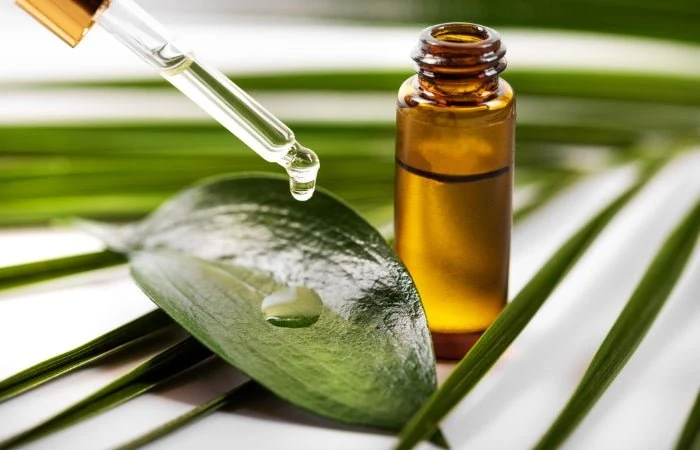
Water is a strongly polar liquid. Essential oils are complex mixtures of volatile compounds, many of which are relatively nonpolar or hydrophobic.
Because the two materials have different molecular characteristics, water cannot dissolve the whole essential oil in the way it dissolves salt or sugar.
Individual essential-oil constituents may have some limited solubility in water, but that does not make the complete oil water soluble.
What Happens When You Mix Essential Oils with Water?
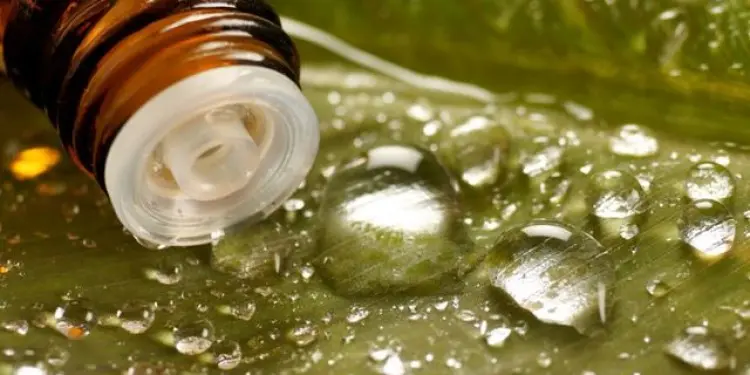
When an essential oil is added to plain water, the liquid often separates into visible layers or droplets.
Stirring or shaking can temporarily break the oil into smaller droplets; over time, these may merge and separate again.
A uniform-looking mixture immediately after shaking is not evidence of long-term stability.
This matters especially for products that touch skin. Concentrated droplets can contact one area even if the overall essential-oil percentage looks low.
The Tisserand Institute’s guidance on dispersing essential oils explains why simply adding drops to bathwater is not a reliable dilution method.
Why Do Some Essential Oils Float While Others Sink?
Density determines whether a separate oil phase tends to rise or settle. Many essential oils are less dense than water and float, whereas some denser materials may sink.
Floating or sinking describes density, not solubility: either way, the oil may remain a distinct phase.
What Is the Difference Between Dissolving, Dispersing and Emulsifying?
These terms describe different physical outcomes. Knowing which one a product needs prevents mistakes in fragrance performance, appearance and user safety.
| Process | What happens | What it means for a formula |
| Dissolving | A component becomes molecularly distributed in a compatible solvent. | A true solution does not depend on oil droplets remaining suspended. |
| Dispersing | Small oil droplets are distributed through a continuous phase. | Dispersion may be temporary unless the system is adequately stabilized. |
| Emulsifying | An emulsifier stabilizes droplets of one immiscible liquid within another. | Useful for lotions and other emulsion systems; clarity is not guaranteed. |
| Solubilizing | An appropriate surfactant system incorporates a small amount of oil, often in micelles. | Can support clear or translucent water-based products when tested. |
Dissolving vs. Dispersing vs. Emulsifying
A lotion can be a stable emulsion without being a clear solution. A freshly shaken room spray can be dispersed without being stable.
For product development, the required outcome should be specified: clarity, uniformity, long-term stability, or a particular sensory effect.
What Does Solubilizing Mean?
In water-based fragrance products, solubilization commonly uses an appropriately selected surfactant or solubilizer to incorporate relatively small amounts of fragrance material into the aqueous phase.
A clear appearance may be achievable, but it is not guaranteed for every essential oil or loading level. Clarity also does not replace preservative, safety or stability testing.
How Can You Mix Essential Oils with Water?
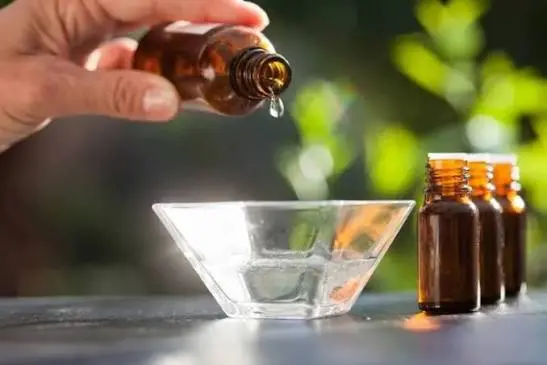
Start by deciding what product you are making. A room spray, skin mist, lotion and bath product do not necessarily use the same ingredients or processing method. T
here is no single universal method or solubilizer-to-oil ratio that works for all essential oils.
Using a Suitable Solubilizer
Formulators may evaluate solubilizing systems such as polysorbate-based ingredients or PEG-derived surfactants where permitted and suitable for the intended product.
Their effectiveness depends on the exact essential-oil composition, total fragrance load, water phase and other ingredients.
Follow the chosen ingredient supplier’s technical guidance and validate the finished formula rather than copying a ratio from an unrelated recipe.
Using an Emulsifier for Water-Based Products
Lotions, creams and certain milky sprays need an emulsion rather than a transparent liquid. An emulsifier can help stabilize oil droplets within water when combined with an appropriate formulation process.
Emulsion design also involves droplet size, viscosity, temperature, pH and compatibility with other ingredients; an emulsifier alone is not a guarantee against separation.
Can Alcohol Help Essential Oils Mix with Water?
Many essential oils dissolve more readily in sufficiently concentrated ethanol than in water. However, adding water to an alcoholic fragrance can reduce solvent strength and cause haze or separation.
The outcome depends on alcohol concentration, oil composition and all other ingredients.
See the Tisserand Institute’s explanation of alcohol in aromatic blending for the distinction between solvent performance and finished-product preservation.
What Does Not Work as a Universal Solubilizer?
Plain water, vigorous shaking, glycerin, witch hazel and salt are not reliable stand-alone solubilizers for neat essential oil. Mixing an essential oil into a carrier oil can dilute it in an oil-based product, but adding that blend to bathwater still does not make it water soluble.
Do not assume that a homemade mixture is skin-safe just because it looks evenly mixed immediately after preparation.
Essential Oil Solubility in Different Liquids
The right carrier or delivery system is determined by the finished application, not by the essential oil alone.
| Medium or system | Typical behavior | Practical consideration |
| Plain water | Oil usually remains as a separate phase. | Not a stable water-based fragrance solution on its own. |
| Suitable high-strength ethanol | Many essential oils can dissolve. | Dilution with water can change solubility; assess flammability and product suitability. |
| Compatible carrier oil | Essential oil often blends into the oil phase. | Useful for oil-based products; not water solubilization. |
| Water + appropriate solubilizer | A uniform and sometimes clear system may be achievable. | Ingredient type and amount require formulation testing. |
| Water + emulsion system | Stable suspended droplets may be achievable. | Often used in lotions; stability must be confirmed. |
| Hydrosol | An aromatic aqueous distillate, not neat essential oil. | Composition, microbial quality and storage requirements differ. |
Water vs. Alcohol vs. Carrier Oil
Water is not an effective solvent for the bulk of most neat essential oils. Ethanol can serve as a solvent in appropriately designed perfume or spray systems.
Carrier oils can dilute essential oils for oil-based applications but remain immiscible with water. None of these facts substitutes for an application-specific safety assessment.
Choosing the Right Base for Your Application
A transparent spray and a creamy lotion need different physical structures.
Define how the product should look, feel, spray and store; then screen compatible solubilizers or emulsifiers. If developing a fragrance spray, Global Essential Oil’s existing guide to making perfume with essential oils discusses the broader fragrance-making process separately.
Are Water-Soluble Essential Oils Really Essential Oils?
What Does Water-Soluble Essential Oil Mean on a Label?
The phrase “water-soluble essential oil” often describes a formulated product containing essential oil plus a solubilizer, carrier or other ingredients. It should not automatically be interpreted as pure, undiluted essential oil.
Buyers should request the complete ingredient description, intended-use information and applicable documentation before evaluating such a product.
Essential Oil vs. Hydrosol: Are They the Same?
No. A hydrosol is the aromatic water phase collected during certain distillation processes.
It contains water-soluble aromatic constituents in a composition very different from the separated essential oil. It is not created simply by shaking neat essential oil into water.
Our steam distillation process guide explains how the oil and aromatic water phases form during production; the Tisserand Institute’s hydrosol overview provides further context.
Using Essential Oils in Water-Based Products
Room Sprays and Water-Based Fragrances
A room spray may require an alcohol-based solvent system or a properly selected water-compatible fragrance system.
The chosen approach affects clarity, odor delivery, flammability, surface compatibility and storage.
A pleasant-smelling bottle test is not enough: evaluate separation, spray behavior and stability over time.
Cosmetic Toners, Mists and Lotions
Cosmetic products need a delivery system that achieves uniform essential-oil distribution at a concentration appropriate for their intended use. Lotions commonly use emulsions; clear facial mists may require different solubilization approaches.
The finished product needs skin-safety, preservation, packaging and stability assessments—not just a clear appearance.
Diffusers, Humidifiers and Aromatherapy Baths
Use an ultrasonic diffuser only as its manufacturer instructs. Some devices are designed to disperse oil from a water reservoir; that does not mean the oil has dissolved.
Do not add essential oils to an ordinary humidifier’s tank unless its manufacturer permits it. Similarly, dropping undiluted essential oil into bathwater can leave concentrated oil on the skin.
Follow application-specific safety guidance rather than relying on shaking or an arbitrary dilution number.
Commercial Cleaning and Other Formulations
For a water-based cleaning product, fragrance dispersion is only one part of the formulation. Material compatibility, labeling, preservation and any cleaning or antimicrobial performance claims need separate evidence.
For the application-specific topic, see Global Essential Oil’s citronella oil for cleaning products guide. The presence of essential oil does not, by itself, establish disinfectant performance.
Common Essential Oil Solubility Problems and How to Address Them
Before adjusting a formula, identify whether the problem is a physical separation, a change in appearance or a broader stability issue.
| Observed problem | Possible explanation | What to evaluate |
| Oil layer forms at top or bottom | Water and oil remain separate phases. | Whether the product needs solubilization or emulsification. |
| Mixture turns cloudy | Droplets, changing solvent strength or ingredient interactions. | Required clarity, alcohol/water balance and material compatibility. |
| Separation appears after storage | The formulation is not physically stable under the tested conditions. | Stability protocol, processing and system selection. |
| Fragrance varies between uses | Uneven ingredient distribution or formulation changes. | Uniformity, packaging, batch control and sampling method. |
| Odor or appearance changes over time | Chemical degradation, microbial issues or packaging interactions may contribute. | Preservative efficacy, storage conditions and analytical review. |
Safety and Stability Considerations
Skin Irritation and Uneven Essential Oil Distribution
Essential oils are concentrated raw materials. In a water-only preparation, a small oil droplet may contact skin at much higher local concentration than the label suggests.
The risk varies with the oil, composition and use conditions. Evaluate skin exposure and relevant ingredient restrictions for the finished product; water alone is not a safe universal diluent for skin application.
Microbial Preservation and Product Stability
Solubilization does not equal preservation. Water-containing cosmetic formulations can support microbial contamination if the preservation system is inadequate.
The U.S. FDA’s microbiological safety guidance for cosmetics identifies ineffective preservation as a potential contamination factor.
Manufacturers should assess preservative efficacy, physical stability and packaging compatibility under appropriate conditions.
Why There Is No Universal Solubilizer Ratio
The amount and type of solubilizer depend on the composition of the particular essential oil, the fragrance load, surfactant system, pH, electrolytes, alcohol content and the required appearance.
A formula that succeeds with one lavender oil may fail with a patchouli, nutmeg or citronella batch. Use supplier starting guidance only as a screening reference; confirm results in the actual formula.
What Should Manufacturers Check Before Using Essential Oils in Water-Based Formulations?
For procurement and R&D teams, water compatibility should be assessed alongside raw-material identity and quality. A suitable essential oil is not necessarily a suitable finished water-based formulation.
Essential Oil Specifications and Chemical Composition
Confirm the botanical identity, plant part, origin and grade. Review available batch documentation and any relevant safety data.
A COA or GC-MS profile may help characterize a raw material, but neither guarantees how it will behave with a particular solubilizer.
Global Essential Oil’s guide to reading an essential oil COA explains the role of quality parameters.
Solubilizer Compatibility and Stability Testing
Request a representative raw-material sample and test it in the actual formulation.
Record clarity or emulsion appearance, separation, odor, pH where relevant, packaging compatibility and performance through the intended storage period.
Changing essential-oil supplier, grade or batch can justify repeat testing, even when the product name is unchanged.
Documentation and Quality Control
For bulk sourcing, compare requested specifications, packaging needs, available SDS/COA documentation and batch consistency.
Global Essential Oil supplies Indonesian ingredients including patchouli essential oil, nutmeg essential oil and citronella essential oil for buyers evaluating fragrance, personal-care and other industrial applications.
The team can discuss product information, samples and the documentation available for a particular requirement; formulation suitability remains subject to the buyer’s testing.
Final Thoughts
Essential oils are generally not water soluble, but they can be incorporated into carefully designed water-based products.
The key is to distinguish a true solution from temporary dispersion or a stabilized emulsion, select an appropriate formulation system, and test the finished product for safety, stability and preservation where relevant.
For brands and manufacturers sourcing Indonesian aromatic ingredients, contact Global Essential Oil to discuss your intended application, required specifications, sample evaluation and bulk supply needs.
Our team can help clarify available raw-material information, while your formulator determines suitability in the finished product.
Frequently Asked Questions
Are pure essential oils soluble in water?
Generally, no. Individual constituents can have limited water solubility, but neat essential oil usually separates from plain water.
Can you dilute essential oils with water?
Water can change the overall concentration in a container without distributing the oil uniformly. It is not a reliable stand-alone diluent for skin-safe or stable water-based products.
How do you make essential oils mix with water?
Use a formulation system suited to the application, such as a compatible solubilizer or emulsion system. Test stability and safety rather than relying on shaking or a universal ratio.
What is the difference between an emulsifier and a solubilizer?
An emulsifier stabilizes droplets of one liquid in another; a solubilizer helps incorporate relatively small amounts of oil in an aqueous system, sometimes with a clear result.
Can alcohol dissolve essential oils?
Many essential oils dissolve in sufficiently concentrated ethanol, but adding water may cause cloudiness or separation. Verify the final composition and product safety.
Does shaking essential oils with water make them safe?
No. Shaking can create temporary dispersion, not reliable solubility, stability or safe skin exposure.
Can essential oils be added directly to an ultrasonic humidifier?
Only if the specific device manufacturer permits it. A diffuser designed for essential oils is not equivalent to a conventional humidifier.
Are water-soluble essential oils the same as hydrosols?
No. A water-compatible essential-oil product may contain added solubilizers; a hydrosol is an aromatic aqueous distillate with a different composition.