Making your own perfume with essential oils starts with a simple idea: choose a few scents you enjoy, test how they work together, and dilute the blend in a suitable base.
A small roll-on perfume can be an approachable first project, while an alcohol-based spray requires additional formulation considerations.
The goal is not to copy a commercial fragrance overnight. It is to create a balanced personal scent, record what you used, and learn how it changes over time—without overlooking skin safety.
What Do You Need to Make Perfume with Essential Oils?
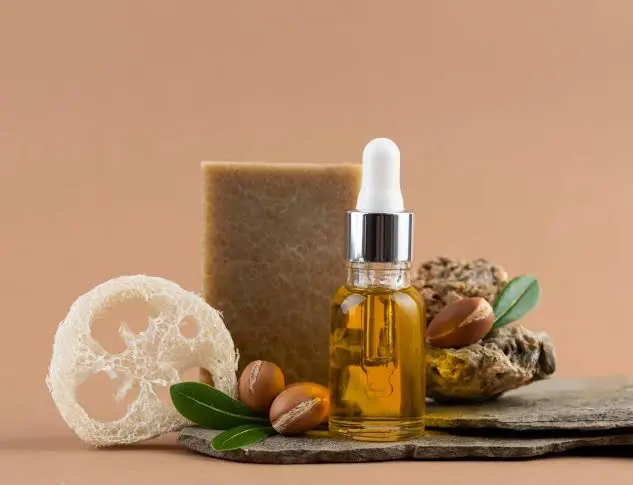
For a first batch, keep the ingredient list short and the equipment clean. Choose essential oils with known botanical identities, appropriate documentation, and use guidance for leave-on skin products.
- Two to four essential oils for an initial scent idea, preferably from clearly labeled suppliers.
- Jojoba oil or fractionated coconut oil for an oil-based roll-on; alternatively, cosmetic-grade perfumer’s alcohol for a spray formulation.
- A clean glass bottle, roll-on container or alcohol-compatible spray bottle; pipettes or transfer tools.
- Fragrance blotter strips, a notebook, and a precise scale capable of measuring small quantities by weight.
- Labels for the formula, dates, ingredients, and batch notes.
Avoid using rubbing alcohol, household cleaners, or unidentified alcohol as perfume solvents.
Alcohol-based perfumes are flammable, and any ingredient intended for skin use should be checked for suitability before mixing.
| Format | Common base | What beginners should know |
| Oil-based roll-on | Jojoba or other suitable carrier oil | Simple to prepare in a small batch; typically close to skin and may feel oily. |
| Alcohol-based spray | Suitable perfumer’s alcohol | Spreads and evaporates differently; demands solvent compatibility, fire safety, and proper formulation. |
| Water-based spray | Designed solubilizer/preservation system | Essential oils do not mix evenly with water alone; not a simple substitute for either format. |
How to Choose Essential Oils for Your Perfume
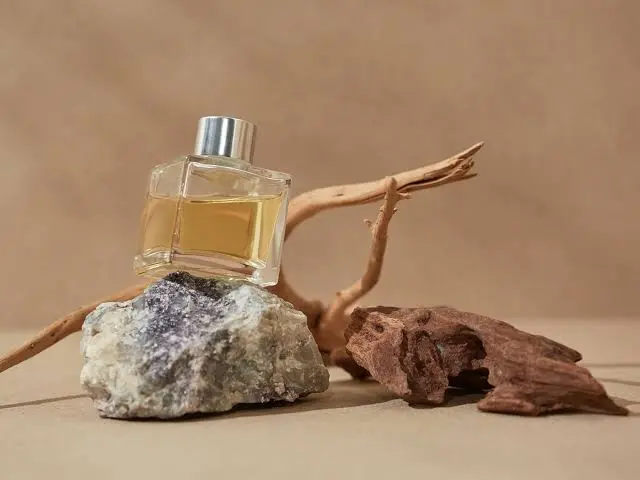
Start by imagining the scent you want: fresh, floral, woody, earthy, or warm.
Fragrance notes are a useful way to organize an experiment, but not every material fits neatly into one category, and the way a blend develops depends on the whole formula.
| Scent role | Examples | What they may contribute |
| Top notes | Sweet orange; appropriate bergamot materials | A brighter opening that often changes quickly. |
| Middle notes | Lavender; geranium | An herbal or floral heart that connects the opening and base. |
| Base notes | Patchouli; vetiver; cedarwood | Depth, woody character, and a slower-evolving dry-down. |
For example, lavender and patchouli can create a floral-woody direction. Patchouli has an earthy, woody profile that often remains noticeable as lighter elements fade. If you want to understand its character before blending, read our guide to patchouli in perfume.
Do not choose a skin-contact formula solely by smell. Check each essential oil’s exact type, extraction method, relevant constituents, phototoxicity concerns when applicable, and maximum recommended use in the intended product. Expressed bergamot is one example where the specific grade matters.
How to Make Perfume with Essential Oils: Step by Step
The following method is designed around a small oil-based trial because it needs fewer formulation components than a spray. You can still use the same scent-design steps to plan an alcohol-based fragrance, but the two formats do not have identical formula or safety requirements.
Step 1. Choose Your Perfume Style
Decide whether you want a quiet, skin-close roll-on or a more diffusive spray.
For a first experiment, a roll-on allows you to focus on the scent itself without troubleshooting alcohol strength, water addition, or a spray mechanism.
Make sure your container is clean, dry, and suitable for the ingredients.
Step 2. Select a Small Essential Oil Blend
Choose two or three materials that serve different aromatic roles. A familiar starting combination is lavender for a soft herbal-floral impression and patchouli for earthy depth.
You can later experiment with cedarwood or a suitable citrus material, but avoid adding many ingredients before you know what each one contributes.
Step 3. Test the Scent on Blotter Strips
Smell each oil separately on a blotter. Then bring the strips together without mixing the oils directly. Record your impressions immediately and after the aroma has developed. Is one oil overpowering? Does the woody base arrive too early? This dry-run is a practical way to adjust the concept before making a skin-contact product.
Step 4. Weigh and Record the Blend
A scale gives more reproducible results than counting drops, since drop size varies with the bottle and viscosity.
Write down the botanical names, product source, batch number if available, and mass of each ingredient. Keep all utensils and work surfaces clean, and do not make large batches while experimenting.
Here is an illustrative 10 g roll-on trial using lavender and patchouli, only after confirming that the exact oils and their combined constituents are appropriate at this use level for the intended user and product.
This is a formulation example, not a universal safety clearance or recommendation for sensitive users:
| Ingredient | Trial mass | Role |
| Jojoba carrier oil | 9.90 g | Oil-based carrier |
| Lavender essential oil | 0.07 g | Herbal-floral note |
| Patchouli essential oil | 0.03 g | Earthy base note |
| Total | 10.00 g | 1% total essential oils by mass |
If you cannot accurately measure such small masses or verify the ingredients’ leave-on limits, keep the experiment on blotter strips and seek appropriate formulation guidance rather than guessing with drop counts.
Step 5. Dilute the Blend in the Appropriate Base
For an oil-based version, weigh the carrier into a clean container, add the pre-measured essential oils, and mix gently until uniform. Transfer to a suitable roll-on bottle.
For an alcohol-based spray, use an established formula compatible with cosmetic-grade perfumer’s alcohol; do not simply replace the carrier oil with alcohol at the same proportions and assume the result is equivalent. Keep alcohol away from flames, heat, and sparks.
Step 6. Let the Fragrance Rest and Evaluate It Again
Close and label the bottle, then allow the fragrance to rest in a cool, dark place. Revisit the scent after a day or two and again later if desired.
Notes may seem more integrated after resting, but there is no fixed waiting period that guarantees a better perfume. Compare it with your original blotter notes and document any changes.
Step 7. Check the Finished Trial, Label It, and Store It
Inspect the formula for unexpected changes in appearance or odor, label its ingredients and date, and keep it away from children and pets. A trial that smells pleasant is not proof that it is safe for the skin.
If its ingredients and concentration have been screened for leave-on use, try only a cautious small-area test first and stop if irritation occurs; a patch test cannot rule out every allergy. Discard any mixture that develops an unusual smell or signs of deterioration.
Easy Essential Oil Perfume Blend Ideas for Beginners
You do not need a complex recipe to explore fragrance ideas. These are aromatic directions for blotter experiments, not prescriptive skin-use ratios:
- Floral and woody: lavender + patchouli + cedarwood, with the lavender providing a gentle opening and the woods adding depth.
- Fresh and earthy: a suitable sweet orange oil + lavender + patchouli, balancing a brighter first impression with a grounded dry-down.
- Warm and spicy: a trace impression of nutmeg with cedarwood and another compatible supporting note; nutmeg needs particular care in dermal safety assessment.
Before moving any combination into a wearable formula, review safety for the individual oils and their combined constituents.
Some aromatic materials are effective at very small amounts, and adding more does not automatically make a better fragrance.
How to Make Your Homemade Perfume Last Longer
Homemade perfume may change quickly because of the chosen materials, their volatility, the carrier, exposure to air, and the wearer’s skin.
Rather than chasing a fixed number of hours, compare the scent at several checkpoints.
- If the opening disappears quickly, try evaluating a more balanced composition rather than simply increasing the fragrance concentration.
- If the scent is too heavy, reduce the dominance of base notes in a blotter trial before creating another diluted batch.
- If an alcohol-based mix appears cloudy or separates, do not assume it is stable; the solvent system may need reformulation.
- Keep containers tightly closed and away from prolonged heat, direct sunlight, and moisture. Make only amounts you can use while the materials are in good condition.
Natural essential oils can oxidize or change with storage. Good records help you distinguish a successful blend from a batch that has changed unexpectedly.
Is It Safe to Make Perfume with Essential Oils?
“Natural” does not mean risk-free. Essential oils can irritate skin, trigger allergies, or have ingredient-specific restrictions, even when they smell familiar.
The U.S. Food and Drug Administration’s aromatherapy guidance explains why plant-derived ingredients are not automatically safe for cosmetic use.
For skin-applied perfume, review the appropriate IFRA Standards and the composition of your actual material.
IFRA places fine fragrances, including alcohol- and non-alcohol-based perfumes, in Category 4; a limit for one constituent or oil cannot be applied blindly to every essential oil.
See the IFRA guidance for use of its standards for the category framework.
Some expressed citrus oils, including certain bergamot materials, require particular attention to phototoxicity. Other oils, such as clove or cinnamon bark, can have greater skin-irritation concerns.
The Tisserand Institute’s safety guidelines offer practical general precautions, while individual material documentation remains essential.
Do not apply undiluted essential oils directly to skin, ingest them, or use unknown solvents. Essential oils do not disperse evenly in plain water, and adding water can introduce further formulation and preservation issues.
Keep spray formulations away from ignition sources. Anyone who is pregnant, has a significant skin condition or fragrance sensitivity, or is making a product for children should seek appropriate professional advice before use.
Choosing Quality Essential Oils for Perfume Formulation
A reliable perfume experiment starts with knowing what is in the bottle. Check botanical identity, plant part, extraction method, batch information, and the available safety documentation.
A quality supplier should also make it easy for business buyers to discuss scent profile and product specifications.
For professional product development, our Indonesian essential oils for perfumery guide focuses on ingredient evaluation, samples, and sourcing requirements. Companies interested in a woody base ingredient can also explore bulk Indonesian patchouli oil.
Global Essential Oil welcomes inquiries from perfume brands and manufacturers seeking ingredient information for commercial projects.
Final Thoughts
Learning how to make perfume with essential oils is a process of scent selection, careful measuring, dilution, and observation.
Begin with a simple concept, test the aroma before creating a wearable version, and take material-specific safety requirements seriously.
If you are developing a fragrance for a brand or larger production run, contact the Global Essential Oil team to discuss Indonesian aromatic ingredients, product specifications, and sourcing requirements.
Frequently Asked Questions
Can you apply essential oils directly as perfume?
No. Undiluted essential oils are not an appropriate shortcut for skin-applied perfume. They should be assessed for the intended cosmetic use and diluted in a compatible base within material-specific safety limits.
Is oil-based or alcohol-based perfume better for beginners?
A small oil-based roll-on is usually easier for learning basic blending and weighing. Alcohol-based spray perfume can be useful for different scent diffusion, but it adds solvent compatibility and flammability considerations.
How long should homemade essential oil perfume rest?
There is no universally required resting time. Check the blend after a day or two, compare it with your initial notes, and keep observing if you are refining a formulation. Resting is not a substitute for safety or stability testing.
Can you make perfume with essential oils and water?
Not by simply shaking essential oils into plain water. Oils are not water-soluble; water-based fragrance needs an appropriate solubilization system and may need preservation and stability testing.