

Two genuine essential oil batches do not need to be chemically identical to both be acceptable.
Essential oils are agricultural materials, so their composition and aroma can shift with growing region, weather, harvest timing, plant maturity, post-harvest handling, distillation, and storage.
The procurement challenge is therefore not to eliminate every difference. It is to determine whether a new commercial lot still falls within the quality range your business has approved.
For a B2B buyer, batch consistency should mean controlled natural variation within agreed analytical, sensory, physical, and application criteria—not a requirement for every chromatogram, aroma nuance, or marker-compound percentage to be an exact copy of the previous batch.
This distinction matters for fragrance houses, cosmetic manufacturers, home-care producers, importers, distributors, and procurement teams that place repeat orders.
A technically genuine oil can still create a formulation problem if the variation is outside the range your finished product can tolerate.
What Does Batch-to-Batch Variation Mean in Essential Oils?
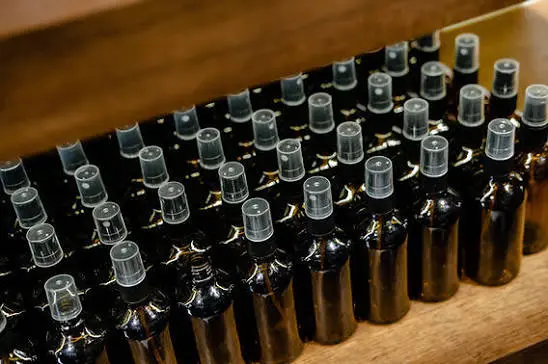
Batch-to-batch variation is the measurable or perceptible difference between production lots of the same declared essential oil.
The difference may appear in chemical composition, physical parameters, color, aroma, or real-world performance in a formulation.
Natural variation is not automatically a defect. Because essential oils are derived from agricultural raw materials, some variation between harvests and production lots is expected.
The practical objective is not chemical identity between batches, but a predictable aromatic and analytical profile that remains within the agreed quality criteria.
The more useful B2B question is therefore: what level of variation is normal for this material, and what evidence should trigger approval, investigation, or rejection?
Why Can Genuine Essential Oil Batches Be Different?
Botanical Genetics and Chemotype
The same broad plant species can include different chemotypes, cultivars, or populations with distinct chemical patterns.
Correct botanical identity remains essential, but identity alone does not guarantee that every production lot will have identical constituent percentages.
Geographic Origin, Soil and Climate
Growing region, soil, rainfall, temperature, altitude, and other environmental conditions can influence plant metabolism and therefore essential-oil composition.
A study of Indonesian nutmeg essential oils from Sulawesi and the Moluccas specifically investigated the effects of geographical origin and nut maturity on the chemical composition of the oil.
The study found meaningful compositional differences that were relevant to industrial quality evaluation.
Harvest Timing and Plant Maturity
A plant harvested at one stage of maturity can produce a different chemical balance from the same crop harvested later.
This is particularly important for crops that are harvested repeatedly or have a strong seasonal component.
For example, research on Cymbopogon winterianus (Java citronella) showed that harvest timing and weather conditions influenced oil composition, with measurable changes in compounds including limonene, citronellol, and geraniol as the plants matured.
Plant Part and Post-Harvest Handling
Leaf-to-stem ratio, drying, fermentation, storage before distillation, and other post-harvest practices can change the raw material entering the still. Those changes can carry through into the final oil.
Patchouli is a good example. A 2026 study comparing different Pogostemon cablin plant parts and essential-oil samples found significant compositional differences across leaves, stems, aerial parts, and essential-oil samples.
Earlier patchouli research also reported variation associated with cultivation region and harvest timing.
Distillation Conditions
Distillation duration, plant loading, steam or water conditions, equipment design, and operator practice can affect which volatile fractions are recovered and in what relative proportions.
A supplier that wants dependable repeat-order performance therefore needs process control as well as good raw material.
Storage and Age Before Shipment
Storage and natural maturation can change some oils after distillation. That does not mean every change is a quality improvement.
Buyers should evaluate storage-related differences against the agreed specification and approved sensory profile rather than assuming that an older batch is automatically better or worse.
Why Batch Consistency Matters to Manufacturers

Batch consistency matters because raw-material variation can become finished-product variation.
The impact may be small in one application and commercially significant in another.
- Finished-product consistency: aroma, color, or performance can shift between production runs.
- Formulation reproducibility: R&D teams may need to adjust a formula when a raw material moves too far from the approved reference.
- Production efficiency: unexpected variation can trigger additional testing, investigation, rework, or delayed release.
- Customer and brand consistency: a repeat customer expects the finished product to behave and smell substantially the same from batch to batch.
- Supplier management: stable repeat-lot performance is one of the practical signs of a controlled supply chain.
Natural Variation vs a Quality Problem: What Is the Difference?
The existence of variation does not tell you whether a batch should pass or fail.
The decision depends on whether the new lot remains consistent with the material identity, agreed specification, approved reference, and intended application.
| Observation | Could Be Normal Variation? | When to Investigate |
| Small shift in a marker compound | Yes, if still within the agreed range | Outside specification or inconsistent with expected profile |
| Slight aroma nuance | Possibly | Strong off-note, wrong character, or formulation impact |
| Color difference | Oil- and grade-dependent | Unexpected or outside agreed appearance criteria |
| Different GC / GC-MS percentages | Can be normal | Major unexplained profile change or missing expected markers |
| Different origin | Not automatically a failure | Review if origin was part of the approval basis |
| Different botanical species or plant part | No | Identity discrepancy |
| Physical parameter outside agreed range | No | Out-of-specification investigation |
| Finished-formula performance changes | Maybe | Technical review or new formulation trial required |
A useful rule is: normal variation is not automatically acceptable, and a visible difference is not automatically a defect. The acceptance decision should come from predefined criteria.
Define Acceptance Criteria Before the Repeat Order
The worst time to decide what “acceptable” means is after a new commercial batch has already arrived.
For repeat purchasing, acceptance criteria should be established during product qualification and sample approval.
Product Identity
Start with the identity that should not change without review: botanical name, plant part, extraction method, grade or type, and origin when origin is commercially relevant to the approved material.
Analytical Specification Range
Natural materials are usually managed with ranges or defined limits rather than one exact target number.
If patchoulol, myristicin, citronellal, geraniol, eugenol, citral, or another marker is important to your purchase, define the applicable acceptance range in the product specification rather than expecting the same percentage on every COA.
The same principle applies when reading a chromatogram. A recent buyer guide to GC-MS interpretation notes that repeat batches should be reasonably consistent but not mathematically identical, and that interpretation should be based on the applicable botanical identity and specification.
Physical Parameters
Depending on the oil, the acceptance specification may include specific gravity, refractive index, optical rotation, appearance, color, or other physical criteria.
Use the parameters that are relevant to the actual material and test method rather than copying a generic checklist for every essential oil.
Sensory / Organoleptic Criteria
For fragrance and aroma-sensitive applications, analytical conformity alone may not be enough.
Define the sensory character that matters to your formula and keep an approved or retained reference when practical.
Application Performance
The final question is whether the batch performs correctly in the buyer’s real use.
A fragrance house may compare an oil in an accord, a cosmetic manufacturer may test it in a base, and a home-care producer may review odor performance after processing.
The right application test depends on what can actually fail in the finished product.
Specification Range vs Approved Reference Sample
A written specification and an approved sample are not substitutes for each other. They solve different problems and are strongest when used together.
| Tool | What It Contributes to Batch Comparison |
| Product specification | Defines measurable acceptance limits, identity, grade, and required parameters |
| Approved sample | Provides a real sensory and application benchmark |
| Batch-specific COA | Shows reported results for the offered commercial lot |
| GC / GC-MS report | Provides chemical-profile evidence where required |
| Retained reference sample | Supports side-by-side comparison over future repeat orders |
| Formulation / application test | Confirms whether the new lot performs acceptably in the buyer’s process |
For a detailed explanation of batch-specific analytical documentation, use our Essential Oil COA & GC-MS Guide. This batch-consistency article is focused on the decision framework, not on re-explaining every COA parameter.
How to Compare a New Batch With the Approved Batch
A practical repeat-lot review can follow a simple sequence. The exact depth should match the risk of the material and application.
1. Confirm identity and lot information. Check botanical identity, grade/type, origin where relevant, and the batch or lot reference.
2. Review the batch-specific COA. Compare the offered lot against the specification used to approve the material.
3. Review GC / GC-MS where required. Look for a profile that remains consistent with the declared material and agreed limits rather than searching for an exact copy of the previous chromatogram.
4. Compare physical parameters. Review the parameters that are part of your specification.
5. Compare aroma against the approved reference. Use a controlled sensory method appropriate to your team.
6. Run an application trial where the risk justifies it. Confirm performance in the actual formulation or production process.
7. Record the disposition. Approve, conditionally approve under an authorized deviation, hold for investigation, or reject according to your quality system.
Is GC-MS Enough to Prove Batch Consistency?
No. GC-MS is a powerful tool for comparing chemical profiles, but batch consistency is a broader purchasing decision.
A new lot may show a chemical profile that is consistent with the declared oil while still presenting a sensory difference that matters to a fragrance formula.
The reverse can also happen: two samples may smell broadly similar while an analytical parameter has moved outside the specification.
For fragrance buyers, Global Essential Oil’s Nutmeg Essential Oil for Perfumery guide makes the same practical point: analytical review should be combined with olfactory acceptance and formulation testing where those factors are commercially important.
How Much Batch Variation Is Acceptable?
There is no universal percentage of acceptable batch-to-batch variation for all essential oils.
The allowable difference should come from the product specification, applicable standard or customer requirement, supplier-buyer agreement, analytical method, and the sensitivity of the intended application.
A tolerance that is acceptable for an industrial fragrance base may be too broad for a tightly controlled fine-fragrance formula or customer-specific cosmetic product.
This is why buyers should avoid generic rules such as “±5% is always acceptable.” The correct limit is product- and application-specific.
Approve, Conditionally Approve, Hold or Reject?
Once the comparison is complete, QA/QC needs a clear disposition. The categories below are examples of decision logic, not universal regulatory rules.
| Finding | Possible Disposition |
| Within specification + sensory / application acceptable | Approve |
| Small understood deviation that is technically acceptable and formally authorized | Conditional approval / deviation review |
| Incomplete data, unexplained discrepancy, or uncertain comparison | Hold / investigate |
| Identity or critical specification failure | Reject / supplier disposition |
| Analytically acceptable but unacceptable formulation performance | Technical review / alternative lot |
What Should Buyers Do When a New Batch Is Different?
Do not jump directly from “different” to “bad supplier.” First determine why the difference exists and whether it is technically meaningful.
- Check whether the growing region or raw-material source changed.
- Ask whether the batch came from a different harvest period or maturity stage.
- Confirm whether the distillation or post-processing method changed.
- Check whether the lot was blended from compatible production lots.
- Review storage age and handling history where relevant.
- Rule out analytical or sampling variability before concluding that the material changed.
- Compare the new lot with the retained or approved reference.
- Repeat the formulation test if the difference could affect the finished product.
- Request supplier clarification and supporting data for significant deviations.
The objective is to separate explainable natural variation from uncontrolled process change, incorrect identity, off-specification material, or commercially unacceptable performance.
How Suppliers Can Improve Repeat-Order Consistency
A supplier cannot eliminate agricultural variation, but a controlled supply chain can reduce unnecessary variation and make repeat orders more predictable.
- Use clearly defined botanical identity and sourcing requirements.
- Maintain visibility over growing region, harvest timing, and raw-material quality.
- Control distillation and post-processing parameters.
- Test each commercial batch against an established specification.
- Use controlled lot blending where technically appropriate and transparent.
- Maintain batch-specific documentation and lot traceability.
- Keep retained references where useful for quality comparison.
- Notify buyers when a relevant material basis, process, origin, or grade changes.
Should Suppliers Blend Production Lots for Consistency?
Controlled blending of compatible production lots can be a legitimate way to reduce normal seasonal variation and create a more homogeneous commercial batch.
Industry suppliers use this approach in some supply chains, particularly when the final blend remains authentic to the declared botanical material and meets the agreed specification.
However, lot blending should not be used to hide poor-quality, incorrectly identified, or non-conforming material.
Buyers still need final-lot traceability, batch-specific documentation, and confirmation that the blended commercial batch meets the agreed quality requirements.
Examples: Patchouli, Nutmeg and Citronella Oil
Patchouli Oil
Patchouli oil can vary with cultivation region, harvest timing, plant-part balance, post-harvest handling, distillation, and ageing.
Research has documented differences in patchouli volatile composition across regions and harvest periods, while more recent work has shown significant differences among plant parts and essential-oil samples.
For a repeat-order buyer, a new lot does not need the exact same patchoulol percentage as the previous lot.
It should remain consistent with the approved grade, agreed specification, sensory profile, and intended application.
If grade selection matters to your formula, review Patchouli Oil Grades Explained and the Bulk Patchouli Essential Oil product page for the current commercial product context.
Nutmeg Essential Oil
Indonesian nutmeg oil is a strong example of why natural variation should be managed rather than denied.
Research on oils from Sulawesi and the Moluccas found that geographical origin, nut maturity, and extraction conditions can influence chemical composition.
A repeat-order buyer should therefore review botanical identity, the agreed constituent ranges, physical parameters where relevant, sensory character, and application performance instead of expecting an identical chromatogram on every order.
For commercial product information, see the Nutmeg Oil product page.
Java Citronella Oil
Java citronella is also sensitive to agricultural and harvest variables.
Research on Cymbopogon winterianus showed measurable compositional changes across harvest timing and weather conditions, including shifts in citronellol and geraniol.
For procurement, this means the buyer should define the required oil type, key constituent ranges, physical criteria, and aroma/application expectations rather than treating every material sold as “citronella oil” as interchangeable.
For type differentiation, see Citronella Java Type vs Ceylon Type and the Citronella Essential Oil product page.
Essential Oil Batch Consistency Checklist for Repeat Orders
- Confirm the exact botanical identity and plant part.
- Confirm the same approved grade / type is being offered.
- Record the new batch or lot number.
- Use the current approved specification version.
- Review the batch-specific COA.
- Review GC / GC-MS where required by the specification or risk level.
- Compare relevant physical parameters.
- Compare aroma with the approved or retained reference where appropriate.
- Check whether origin, harvest, distillation, or processing changed.
- Run a formulation or application trial when variation could affect the finished product.
- Document any deviation and its technical justification.
- Record the final approval, hold, or rejection decision.
Build Batch Consistency Into the Supplier Agreement
Repeat-order consistency is easier to manage when buyer expectations are agreed before the next production lot is offered.
Procurement and QA/QC teams should clarify what must remain constant, what may vary within a range, and what changes require notification.
- The product specification and approved grade / type.
- Which parameters are reported on each batch COA.
- Whether GC or GC-MS is expected for each lot or on a risk-based schedule.
- Whether pre-shipment or representative samples are available.
- How sensory or retained-reference comparison will be handled.
- What origin or process changes require buyer notification.
- How deviations and out-of-specification results are communicated.
- How alternative or replacement lots are evaluated.
For broader supplier qualification and purchasing controls, see our How to Source Essential Oils from Indonesia guide.
Need a Current Batch Sample or Specification?
If your company is comparing a new Indonesian essential-oil lot with an approved reference, request the current product specification and the batch documents that apply to the material being offered.
Document availability, analytical parameters, sample options, and packaging can vary by product and batch.
To discuss patchouli, nutmeg, citronella, or another Indonesian essential oil for a repeat order, sample review, or specification requirement, contact the Global Essential Oil export team.
Frequently Asked Questions
Are essential oil batches supposed to be identical?
No. Genuine botanical oils can vary naturally, but commercial batches should remain within the agreed quality and performance criteria.
How much batch variation is acceptable?
There is no universal percentage. Acceptance depends on the product specification, application, relevant standards, and buyer requirements.
Is GC-MS enough to compare essential oil batches?
No. GC-MS is useful for chemical comparison, but sensory, physical, and application checks may also be important.
Should buyers test every repeat order?
Testing depth should follow the specification, supplier history, material risk, and sensitivity of the intended application.
Can two batches have different GC-MS profiles and both pass?
Yes, if both remain consistent with the declared material identity, agreed specification, and required application performance.