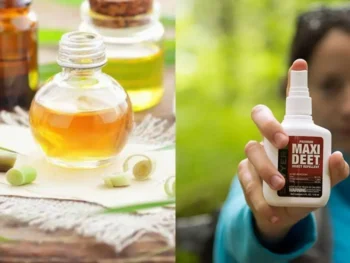
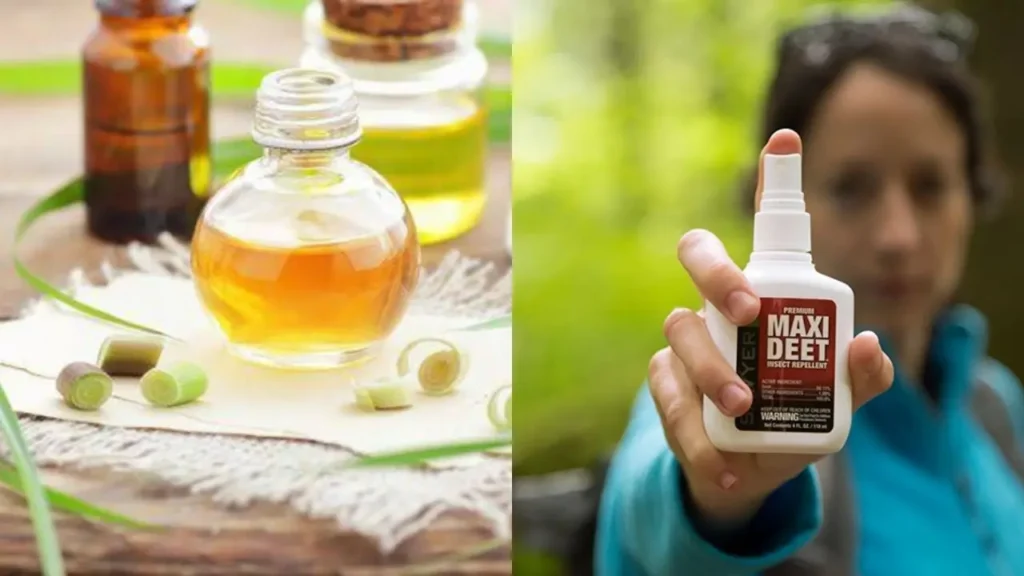
Citronella Oil vs DEET is one of the most common comparisons when choosing a mosquito repellent.
DEET is a synthetic active ingredient designed for longer-lasting protection, while citronella oil is a plant-based option widely used in natural repellent formulations.
The better choice depends on where you are going, how long you will be outdoors, and the level of mosquito-borne disease risk.
This guide compares effectiveness, protection time, safety, and the situations where each option makes the most sense.
| Is Citronella Oil as Effective as DEET? No — citronella oil is not as effective as DEET by the primary measure of Complete Protection Time (CPT). What the research shows (Trongtokit et al. 2005, Tropical Medicine & International Health, PMC4617422): • DEET 20–30%: provides approximately 4–6 hours of Complete Protection Time • Citronella essential oil: provides approximately 20–120 minutes of CPT, depending on concentration and formulation However, 'less effective' does not mean 'ineffective.' For low-risk outdoor activities lasting 1–2 hours, well-formulated citronella spray can provide meaningful protection — particularly Java type citronella oil with high citronellal content (35–45%). When citronella is appropriate: backyard activities, short outdoor time, low mosquito pressure environments, people who prefer natural products. When DEET is necessary: tropical travel, malaria or dengue-endemic regions, extended outdoor time, high mosquito pressure. |
How DEET Works as a Mosquito Repellent
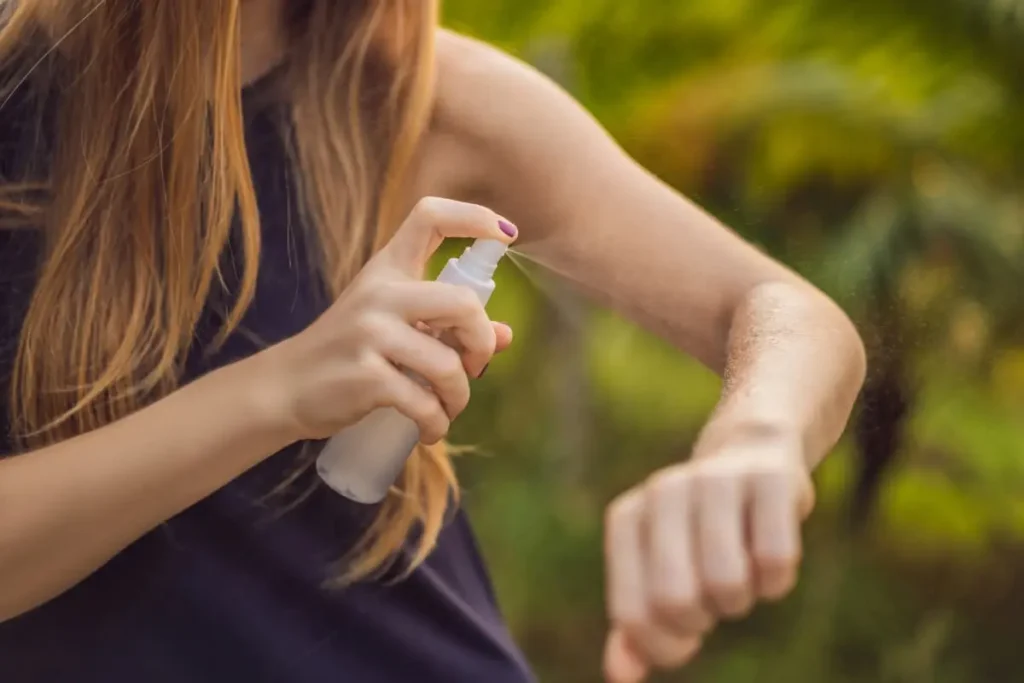
DEET (N,N-Diethyl-meta-toluamide) was developed by the U.S. Army in 1946 and made available for public use in 1957. It remains the most studied and most reliable mosquito repellent ingredient ever developed.
DEET doesn't kill mosquitoes or create a physical barrier. It works by binding to olfactory receptors in a mosquito's antennae, interfering with their ability to detect the carbon dioxide and lactic acid that human skin emits. The mosquito essentially cannot find you.
How Long DEET Lasts
The concentration of DEET determines duration, not potency. Higher concentration = longer protection, not stronger effect:
- DEET 10%: approximately 2 hours of protection
- DEET 20–30%: approximately 4–6 hours (most recommended for general use)
- DEET 40%+: extends duration further but with diminishing returns
Important: DEET is effective against not just mosquitoes, but also ticks, sandflies, midges, and leeches — making it particularly valuable in multi-insect environments.
DEET Safety: What the Research Says
DEET has been used by hundreds of millions of people over seven decades. When used as directed, it is considered safe by the WHO, CDC, and EPA for adults and children over 2 months old.
- Mild side effects: skin irritation, stinging near eyes, strong synthetic odor
- DEET is a solvent: it can damage synthetic fabrics, plastics, and painted surfaces
- Not recommended for: infants under 2 months, people with eczema or highly sensitive skin
- Trace amounts found in waterways — potential ecological concern with widespread use
How Citronella Oil Works as a Mosquito Repellent
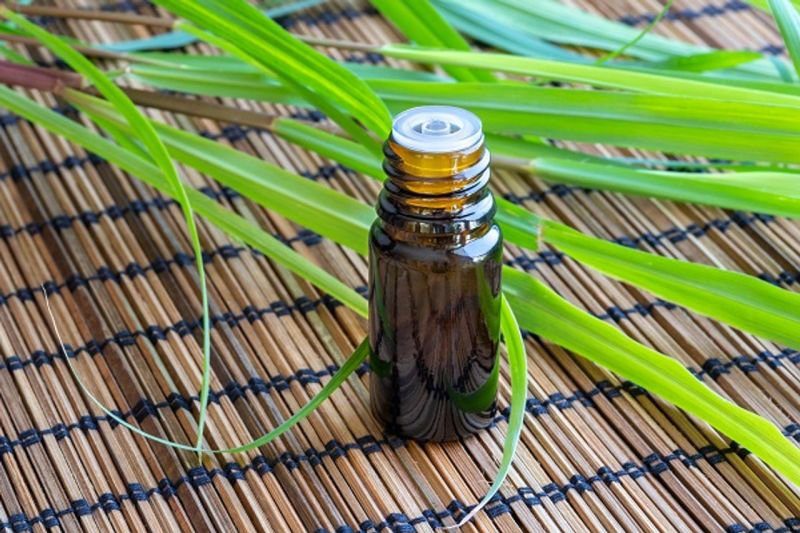
Citronella essential oil is steam-distilled from Cymbopogon winterianus (Java type) or Cymbopogon nardus (Ceylon type). It has been registered as a biopesticide insect repellent by the EPA since 1948 — making it one of the longest-registered natural repellents in the US.
The Active Compounds: Why Java Type Matters
Citronella's repellent effect comes from citronellal, geraniol, and citronellol — compounds that mask the human scent cues mosquitoes use to locate hosts. The key variable is citronellal concentration:
| Citronella Type | Citronellal Content | Geraniol Content | Repellent Efficacy |
| Java type (C. winterianus) | 35–45% | 21–24% | Higher — more citronellal = stronger and longer masking effect |
| Ceylon type (C. nardus) | 5–15% | 18–20% | Lower — insufficient citronellal for reliable protection |
This is why product labels matter. A citronella repellent made with Ceylon type may provide substantially less protection than one made with Java type, even at the same stated concentration.
→ Understanding citronella grades and types: citronella oil chemotypes and grades explained
How Long Citronella Lasts — What the Research Shows
| Key Study: Trongtokit et al. 2005 (PMC4617422) Published in Tropical Medicine & International Health, this study compared Complete Protection Time (CPT) of 38 different repellent preparations against Aedes aegypti mosquitoes. Citronella results: • 10% citronella oil: ~2 hours CPT in some formulations • 5% citronella oil: 20–45 minutes CPT in typical spray formulations • Formulation significantly affected results — cream-based and lotion-based formulas lasted longer than alcohol sprays DEET comparison from same study: • DEET 10–20%: approximately 4–5 hours CPT • DEET 50%: approximately 8–12 hours CPT Note: CPT testing is done under controlled lab conditions. Real-world protection may differ based on sweat, humidity, and application coverage. |
Citronella Oil vs DEET: Side-by-Side Comparison
| Factor | Citronella Oil (Java Type) | DEET (20–30%) |
| Active mechanism | Masks human scent (citronellal, geraniol) | Blocks mosquito olfactory receptors |
| Protection time | 20 min – 2 hours (formulation-dependent) | 4–6 hours |
| Spectrum of insects | Primarily mosquitoes | Mosquitoes, ticks, sandflies, midges, leeches |
| Safety profile | EPA minimum risk pesticide; low toxicity | Approved by WHO/CDC/EPA; follow directions |
| Skin feel | Light, natural — non-greasy | Can feel greasy; strong synthetic odor |
| Suitable for children | Yes (with appropriate dilution) | Yes (2+ months; not recommended for infants) |
| Pregnancy | Generally considered safer; consult doctor | Consult doctor; some authorities approve cautious use |
| Environment | Biodegradable; no waterway persistence | Trace amounts persist in waterways |
| Damages plastics/fabrics | No | Yes — DEET is a solvent |
| Best for | Low-risk outdoor activities, short duration | High-risk environments, tropical travel, long duration |
| Cost | Higher (pure essential oil) | Generally lower per application |
| Availability of Java type | Indonesian farms — GEO | N/A |
How to Make Citronella Oil More Effective
Citronella's reputation for short-lived protection often comes from poorly formulated products — low concentration, wrong oil type, or incompatible base. Here's what actually makes a difference.
1. Start with Java Type Citronella
Ceylon type citronella (5–15% citronellal) simply does not have enough active compound for meaningful protection. Java type (35–45% citronellal) is the only variety worth using in a repellent formulation.
When purchasing, look for Cymbopogon winterianus on the label, or ask your supplier for GC-MS documentation confirming citronellal percentage.
2. Concentration and Formulation Base Matter
A 2–3% dilution of Java type citronella in a cream or lotion base significantly outperforms a 1% dilution in an alcohol spray — even though the alcohol spray evaporates faster and might seem stronger initially.
- Cream or lotion base: slows evaporation of citronellal, extends contact time with skin surface
- Alcohol base: fast initial diffusion but rapid evaporation — practical for convenience, less effective for duration
- Minimum effective concentration: studies suggest 5–10% citronella in a well-formulated cream base for 1–2 hours protection
3. Blend with Geraniol or Oil of Lemon Eucalyptus
A 2009 study by Müller et al. (J Vector Ecol, PMID 20836800) found that geraniol diffusers reduced outdoor mosquito counts by 95.5% — outperforming citronella diffusers.
Geraniol is actually one of the components already present in Java type citronella oil (21–24%), but adding more directly boosts efficacy.
- Add geraniol essential oil to your citronella formulation (1–2% additional geraniol)
- Oil of lemon eucalyptus (OLE/PMD) is the strongest natural repellent with research backing comparable to low-concentration DEET — blending with citronella extends protection significantly
- Reapply every 60–90 minutes in warm, humid conditions regardless of formulation
→ DIY citronella spray recipe: easy DIY citronella spray recipe for mosquito repellent
Citronella Candles: A Separate Discussion
Citronella candles deserve a specific note because they are often conflated with citronella oil repellents — but they work very differently.
| What the Research Shows on Citronella Candles Müller et al. 2009 tested citronella candles alongside diffusers outdoors. Results: • Citronella diffusers (geraniol): reduced mosquito counts by 95.5% • Citronella candles: reduced counts, but performed worst among the botanical options tested • Key factor: outdoor wind disperses the citronellal before it can form an effective barrier Verdict: Citronella candles provide some benefit (better than nothing) but are far less effective than a topical spray or proximity diffuser. Best use: supplement to other methods, not a standalone repellent for serious mosquito exposure. |
→ How to formulate more effective citronella candles: how to make citronella candles with essential oil
→ Citronella as a cleaning and deodorizing agent: citronella oil for cleaning products
When to Choose Citronella vs When to Choose DEET
The clearest framework is to match the repellent to the level of risk and duration of exposure:
| Situation | Recommended Repellent | Why |
| Backyard BBQ or garden (1–2 hours) | Citronella oil (Java type) | Low risk, short duration — citronella is adequate and pleasant |
| Morning jog in a park | Citronella oil spray | Low-pressure environment, brief exposure |
| Camping in the US/EU (non-tropical) | Citronella (reapply every 60–90 min) OR low-concentration DEET | Moderate risk — citronella acceptable with diligent reapplication |
| Beach vacation (tropical, day) | DEET 20–30% OR OLE product | Higher mosquito pressure, longer exposure |
| Hiking in tropical Asia/Africa | DEET 30%+ | Malaria/dengue risk — do not rely on citronella alone |
| Children playing in garden (1 hour) | Citronella (appropriately diluted) | Safe option for low-risk, short-duration exposure |
| Pregnancy, outdoors in garden | Citronella (consult doctor) | Lower chemical exposure — adequate for low-risk situations |
| Mosquito-borne disease outbreak area | DEET (WHO-recommended concentration) | Citronella alone is insufficient protection in high-risk scenarios |
Safety Comparison: Citronella vs DEET
For Children and Babies
- DEET: not recommended for infants under 2 months. For children 2 months to 2 years, consult pediatrician. For children 2+, products up to 30% DEET are considered safe when used as directed (CDC guidance)
- Citronella: generally considered very safe for children when properly diluted. No age restrictions from EPA (EPA minimum risk classification). Use 0.5–1% dilution for children's skin
- Bottom line: for young children in low-risk settings, citronella is the lower-risk choice; for high-risk settings, follow CDC/WHO guidance which may recommend DEET
During Pregnancy
- DEET: EPA and CDC consider DEET safe during pregnancy when used as directed; some practitioners prefer avoiding it in first trimester as a precaution
- Citronella: classified as EPA minimum risk pesticide; generally considered the safer default for pregnant women in low-risk environments
- Always consult your OB-GYN in mosquito-borne disease risk areas — the risk of dengue or malaria to mother and fetus generally outweighs any risk from properly used DEET
Environmental Impact
This is where citronella has a clear advantage. DEET is chemically stable, meaning it persists in waterways after washing off. Research has detected DEET in river water samples across North America and Europe, with potential effects on aquatic organisms at higher concentrations.
Citronella oil is fully biodegradable. Its active compounds break down quickly in the environment, leaving no persistent chemical residue.
| Important Caveat Natural does not automatically mean safe for everyone. Citronella oil can cause skin irritation in some individuals at higher concentrations. Always do a patch test before first use. Some citronella products marketed as 'natural repellents' are heavily diluted and provide minimal protection — look for products with GC-MS documentation confirming active compound percentages. |
| When to Use Citronella vs DEET: Quick Decision Guide Choose CITRONELLA OIL when: • Activity: 1–2 hours outdoors in a low-risk environment (backyard, park) • Location: non-tropical region with low mosquito pressure • People: children in garden, pregnancy in low-risk areas, daily use preference • You prefer: natural, biodegradable, chemical-free options Choose DEET when: • Activity: extended outdoor time (3+ hours), camping, hiking • Location: tropical regions, malaria/dengue-endemic areas, high mosquito pressure • Protection needed against: ticks, sandflies, leeches in addition to mosquitoes • WHO/CDC recommend DEET for your destination Best of both approaches: use Java type citronella (with geraniol blend) for daytime low-pressure activities; switch to DEET for evenings, travel, or high-risk areas. |
Source High-Efficacy Java Type Citronella Oil
For repellent product manufacturers, personal care formulators, and cleaning product companies requiring consistent, high-citronellal citronella essential oil — Global Essential Oil supplies Java type citronella (Cymbopogon winterianus) from Indonesian farms:
- GC-MS verified: citronellal 35–45%, Total Geraniol ≥85% — documented per batch
- SNI 06-3953-1995 compliant — Indonesia's national quality standard
- Halal MUI certified — suitable for personal care and cosmetic applications
- Full export documentation: COA, MSDS, Phytosanitary Certificate
- Flexible MOQ: from sample quantities to bulk container shipments
→ Learn about our citronella oil production and quality standards: citronella aromatherapy and repellent properties.
Frequently Asked Questions
Is citronella oil as effective as DEET?
No. DEET generally provides longer-lasting mosquito protection than citronella oil. However, Java type citronella oil can be an effective natural option for short-term outdoor activities in low-risk environments.
How long does citronella oil repel mosquitoes?
Citronella oil typically provides protection for about 20–120 minutes, depending on the formulation, concentration, and environmental conditions. Reapplication is usually needed more frequently than with DEET-based repellents.
Can I use citronella oil instead of DEET?
Yes, for low-risk outdoor activities such as gardening or relaxing in the backyard. For travel to areas with a high risk of mosquito-borne diseases, public health authorities generally recommend DEET or other proven repellents.
Is citronella oil safer than DEET?
Both citronella oil and DEET are considered safe when used as directed. Citronella oil is a plant-based alternative, while DEET has been extensively evaluated and is recommended by public health organizations for protection against disease-carrying mosquitoes.
What is the best natural alternative to DEET?
Oil of Lemon Eucalyptus (OLE/PMD) has the strongest scientific evidence among plant-based mosquito repellents. Java type citronella oil is another popular natural option and is widely used in personal care and outdoor products.
Does DEET damage clothes and gear?
Yes. DEET can damage certain plastics, synthetic materials, and painted surfaces. Citronella oil does not have the same solvent properties, making it less likely to affect clothing or outdoor equipment.
What type of citronella oil is most effective as a repellent?
Java type citronella oil (Cymbopogon winterianus) is generally considered more effective than Ceylon type because it contains higher levels of citronellal, the compound primarily responsible for its mosquito-repellent properties.