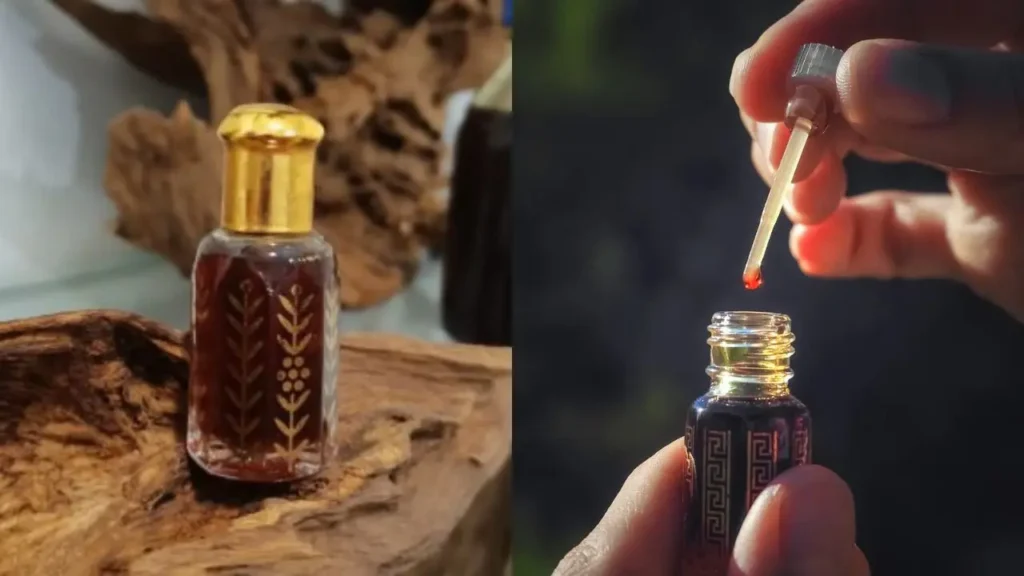
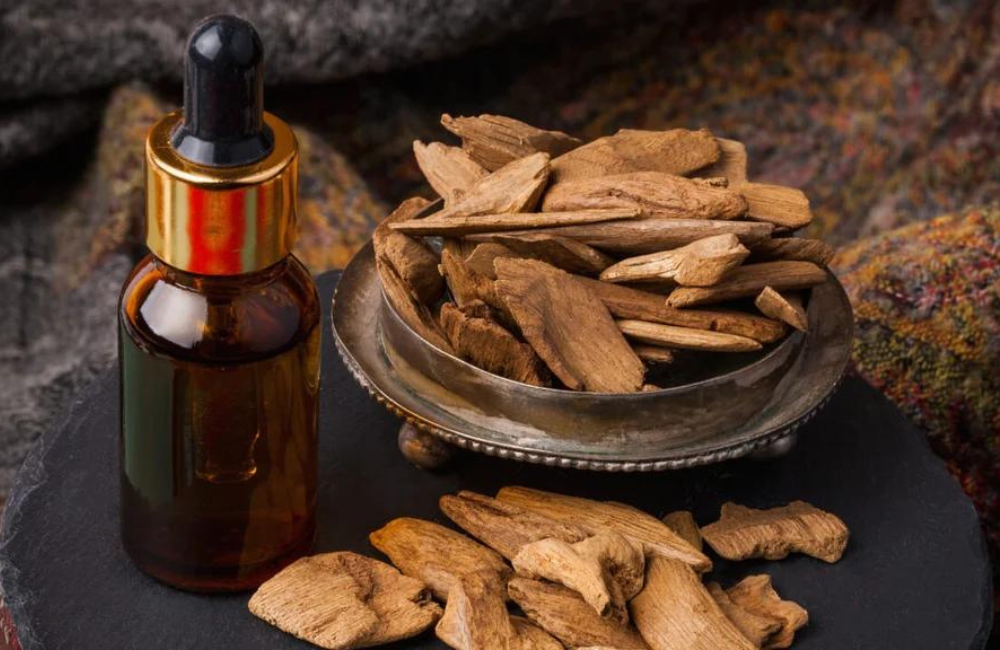
"Agarwood" and "oud" — are they the same thing? The short answer is: they come from the same source, but they are different products. Agarwood is the resinous wood; oud is the essential oil distilled from that wood.
But this simple answer barely scratches the surface of a topic that confuses even experienced fragrance buyers and essential oil professionals.
When developing a premium fragrance line, mastering the agarwood oil vs oud oil difference is the first critical step toward accurate formulation and cost-effective sourcing.
The full picture involves: the different names used across cultures (oud, oudh, agarwood, gaharu, jinko, chenxiang, aloes wood), the difference between raw agarwood chips and distilled oud oil, how grades work for both, why Indonesian oud differs from Cambodian or Indian oud, and what buyers need to know when purchasing either form.
This guide — written from the perspective of an Indonesian agarwood oil manufacturer — covers all of it.
| Quick Answer: Agarwood vs Oud Agarwood: The resin-saturated heartwood of Aquilaria trees — a solid material used as incense chips (bakhoor), in carved objects, and as raw material for distillation. Oud oil: The essential oil extracted by steam distillation of agarwood chips — a liquid used in fine fragrance, perfumery, and therapeutic aromatherapy. They come from the same tree and the same resin — but agarwood is the wood, oud is the oil. All oud oil is derived from agarwood, but not all agarwood is processed into oil. |
The Agarwood Oil vs Oud Oil Difference: Complete Comparison Table
This is the most comprehensive side-by-side comparison of agarwood (wood) and oud oil available — covering every dimension a buyer, perfumer, or formulator needs to understand:
| Parameter | Agarwood (Wood) | Oud Oil (Essential Oil) |
| What it is | Resin-saturated heartwood of Aquilaria trees | Essential oil steam-distilled from agarwood chips |
| Physical form | Solid wood chips, powder, or carved objects | Liquid — dark amber to dark brown, very viscous |
| Primary use | Incense burning (bakhoor), carved objects, traditional medicine, raw material | Fine fragrance, perfumery, aromatherapy, luxury skincare, attar base |
| Aroma release | Gradual release when heated on charcoal — aroma evolves over hours | Immediate on skin or in diffuser — then evolves over 12–24 hours |
| Key compounds | Chromones (2-phenylethylchromones), sesquiterpenes, resins | Same compounds in concentrated liquid form — chromones + sesquiterpenes |
| Chromone presence | Present in the wood resin — higher in heavily resin-saturated wood | Present in quality oud oil — GCMS confirmation required to verify |
| CITES status | CITES Appendix II — trade in Aquilaria wood requires permits | CITES Appendix II — trade in oud oil also requires CITES documentation |
| Grading system | Based on resin density, colour, origin, age — A, B, C or numerical grades | Based on origin, quality, distillation method, chromone content |
| Price range | Low-grade: $10–100/kg chips; Premium wild: $5,000–$100,000+/kg | $500–$5,000+/kg (quality oud oil); Industrial grade $100–500/kg |
| Indonesian name | Gaharu (kayu gaharu = agarwood) | Minyak gaharu (minyak = oil) |
| Arabic name | Aoud / Oud (wood) or Oudh | Oud oil / Dahn al-oud (oil of oud) |
| Japanese name | Jinko (神香 — divine incense) or Jinkoh | — |
| Chinese name | Chenxiang (沉香 — sinking fragrance) | — |
| Primary markets | Middle East (bakhoor culture), East Asia (kōdō incense), traditional medicine | Fine fragrance globally, niche/luxury perfumery, aromatherapy |
| Adulteration risk | Blending low-resin wood with high-resin appearance | Synthetic oud, dilution with carrier oils, mixing with cheaper species |
| Available from GEO | On request — Aquilaria spp., Kalimantan origin | ✓ Yes — Aquilaria and Aetoxylon types |
Related Reading
→ Agarwood (Aquilaria) Essential Oil — Product Page
→ Agarwood Oil Benefits for Aromatherapy — Complete Guide
What Is Agarwood? Formation, Species & Why It Is Rare
Agarwood is not a natural product of a healthy tree — it is the result of a remarkable biological defence response.
When Aquilaria or Gyrinops trees are injured or infected by a specific mould (Phialophora parasitica and related species), they produce a dense, dark aromatic resin in the heartwood as a pathological response.
This resin-saturated heartwood — which can take 5–50+ years to develop naturally — is agarwood.
The Aquilaria Tree
Aquilaria malaccensis, A. crassna, A. sinensis, and approximately 15–20 other Aquilaria species produce commercially traded agarwood.
The trees are evergreen, tropical, growing throughout Southeast Asia — Indonesia, Malaysia, Vietnam, Cambodia, Laos, and parts of India and China.
Indonesia's Kalimantan (Borneo) and Sumatra are among the world's most historically important agarwood regions.
Why Only Some Trees Produce Agarwood
Only approximately 7–10% of wild Aquilaria trees naturally develop the fungal infection that triggers resin production. This rarity is the primary reason for agarwood's extraordinary value.
Modern plantation cultivation uses artificial inoculation techniques — introducing fungal spores or other stressors — to trigger resin formation in cultivated trees at scale.
Inoculated plantation agarwood now represents the majority of legal commercial supply, and is the source of all CITES-compliant traded agarwood today.
CITES Status and Trade Documentation
All Aquilaria and Gyrinops species are listed under CITES Appendix II — meaning international trade in both the raw wood AND the distilled oil requires official CITES export permits.
Always verify CITES documentation when purchasing either agarwood wood or oud oil. See our sustainability guide: Sustainable Essential Oil Sourcing — CITES & Beyond.
What Is Oud Oil? Production, Chemistry & Quality Markers
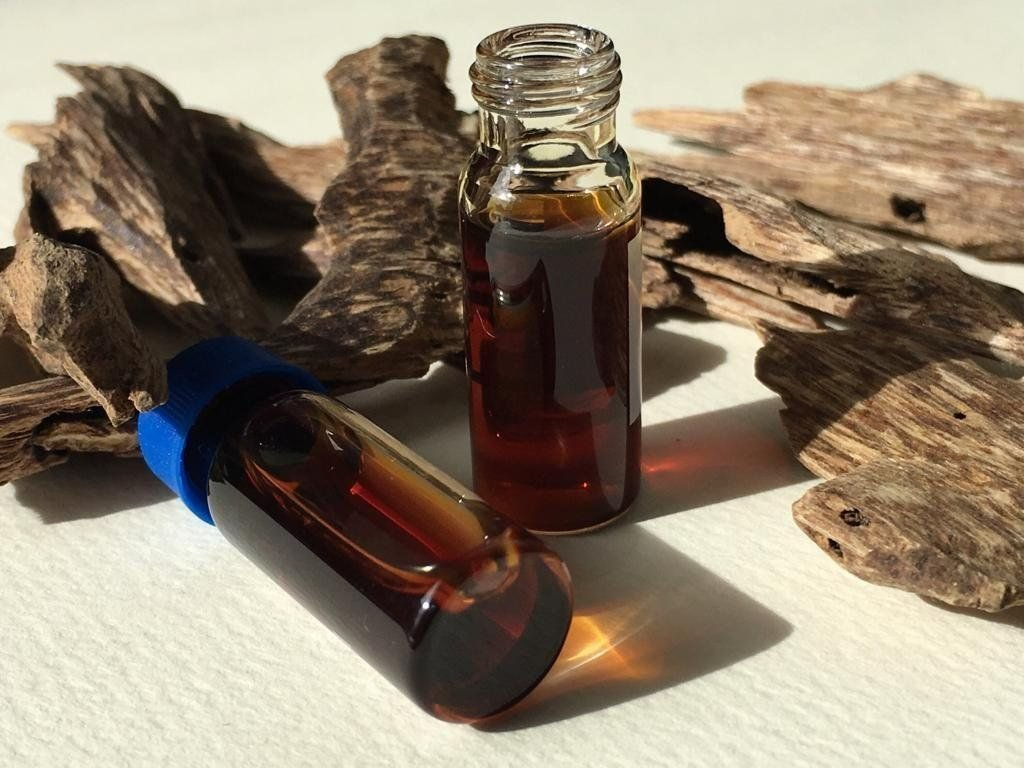
Oud oil (also called agarwood essential oil, dahn al-oud, or minyak gaharu) is the essential oil produced by steam distillation of agarwood chips.
It represents the most concentrated and commercially versatile form of agarwood's aromatic compounds — a liquid that captures the full chemical complexity of the resin in a form suitable for fine fragrance, perfumery, and therapeutic use.
How Oud Oil Is Produced
The production process:
- Agarwood chips (resin-rich heartwood) are soaked in water for 24–72 hours before distillation — this pre-soaking enhances the extraction of heavier aromatic compounds
- Steam distillation is conducted for 12–30 hours — significantly longer than most essential oils — to fully extract the complex sesquiterpene and chromone fractions
- The resulting oil is separated from the hydrosol and aged — quality oud oil improves significantly with time, similar to fine wine.
The efficiency is low: producing 1 kg of quality oud oil may require 20–100 kg of agarwood chips depending on resin density.
This production inefficiency, combined with the rarity and CITES-regulated trade of the raw material, explains oud oil's extraordinary price.
Key Chemical Compounds in Oud Oil
- Chromones (2-phenylethylchromones): The signature compounds of genuine agarwood-derived oud oil — these are formed specifically during the resin-production process of Aquilaria trees. Their presence in GCMS analysis confirms authentic oud oil versus synthetic blends. Higher chromone concentration generally indicates higher quality oil from more resin-saturated wood
- Sesquiterpenes (agarospirol, α-guaiene, δ-guaiene, β-agarofuran): The therapeutic fraction — responsible for oud oil's anxiolytic, anti-inflammatory, and antimicrobial properties. Also contribute to the woody, earthy, animalic facets of the aroma
- Sesquiterpene ketones (α-vetivone, β-vetivone): Present in some origins (particularly Java/Indonesian type) — contribute smoky, incense-like depth
Quality Verification for Oud Oil
For B2B buyers, the critical quality check is GCMS analysis confirming chromone presence.
Synthetic oud oil — increasingly common given the high price of genuine material — will show absence of chromones in GCMS and an atypical sesquiterpene profile.
Always request batch-specific GCMS alongside COA for any oud oil purchase. See: Understanding COA & GCMS Reports in Essential Oil Trading.
Indonesian Oud vs Other Origins: What Makes the Difference?
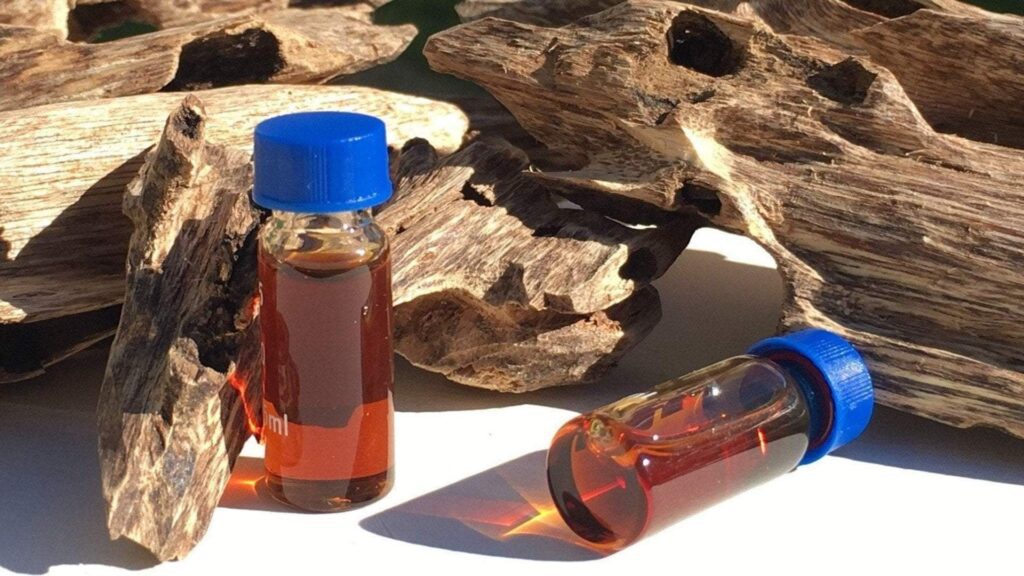
The regional origin of oud oil is not merely a provenance story — it has a direct, meaningful impact on the chemical profile and aroma character of the oil.
Experienced perfumers specify origin, not just 'oud oil', when sourcing for their compositions:
| Origin | Primary Species | Aroma Character | Key Buyers | Price Tier |
| Kalimantan, Indonesia | Aquilaria malaccensis, A. microcarpa | Deep, smoky, woody, animalic-leathery — the 'darkest' oud character. Volcanic soil intensity. | Niche Western perfumers, luxury Indonesian brands | Premium — $800–3,000+/kg |
| Cambodia | Aquilaria crassna | Sweet, creamy, almost balsamic — the most refined, 'clean' oud. Global benchmark for Middle East trading. | Middle East fragrance houses, mainstream luxury perfumery | Ultra-premium — $2,000–10,000+/kg |
| India (Assam) | Aquilaria khasiana, A. agallocha | Medicinal, earthy, slightly camphoraceous — traditional Ayurvedic character | Ayurvedic preparations, Indian traditional medicine, incense | Variable — $500–5,000+/kg |
| Vietnam | Aquilaria crassna | Floral-sweet, slightly fruity — delicate, nuanced. Highly prized in Japan for kōdō. | Japanese kōdō practitioners, East Asian collectors | High — $1,000–8,000+/kg |
| Malaysia | Aquilaria malaccensis | Similar to Kalimantan but often slightly lighter character | Regional fragrance industry, personal care | Mid-premium — $600–2,500+/kg |
| Aetoxylon (Indonesia) | Aetoxylon sympetalum | Green-woody, lighter, less resinous than Aquilaria — distinct character | Industrial fragrance, personal care, more accessible pricing | Mid-range — $200–800/kg |
| Why Indonesian Kalimantan Oud Is Prized by Niche Perfumers The volcanic mineral composition of Kalimantan's soils — and the specific Aquilaria species that thrive there — produce oud oil with a distinctly animalic, leathery, deeply resinous character that Western niche perfumers have increasingly sought as an alternative to the sweeter, more mainstream Cambodian oud profile. Indonesian oud's "raw" complexity is prized for Oriental and avant-garde compositions where genuine aromatic depth is more important than smooth approachability. Global Essential Oil supplies both Aquilaria agarwood oil and Aetoxylon agarwood oil from our Kalimantan sourcing networks. |
The Many Names of Agarwood: A Global Linguistic Guide

Part of the confusion around agarwood and oud stems from the extraordinary number of regional names for the same material. Here is a comprehensive guide to the names and what they typically refer to:
| Name | Language/Region | What It Refers To |
| Oud / Ud | Arabic | Both the wood and the oil — context determines which. 'Dahn al-oud' specifically means the oil. |
| Oudh | South Asian Arabic/Urdu | Same as oud — variant spelling used in India, Pakistan, and South Asian Muslim communities |
| Aoud | Transliteration variant | Same as oud — variant spelling seen in some Middle Eastern brand names |
| Agarwood | English | The wood specifically — derived from Portuguese 'aguila' (eagle wood) via Malay |
| Gaharu | Malay / Indonesian | The wood — standard term in Indonesia and Malaysia for traded agarwood |
| Minyak Gaharu | Indonesian | The oil — 'minyak' means oil in Indonesian |
| Jinko / Jinkoh | Japanese | The highest grade of agarwood — particularly Vietnam-origin material used in kōdō incense ceremony |
| Kyara | Japanese | Ultra-premium grade agarwood — extremely rare, commands the highest prices globally |
| Chenxiang (沉香) | Chinese | Literally 'sinking incense' — refers to the highest-density agarwood that sinks in water (indicating high resin content) |
| Aloes / Aloes wood | Biblical / Historical English | Old Testament references — believed to refer to agarwood. Not related to the aloe vera plant. |
| Aguru | Sanskrit | Ancient Indian name — referenced in Vedic texts and Ayurvedic literature |
| Eaglewood | Historical English | Alternative English name derived from 'aguila' root — mostly archaic |
Agarwood Wood vs Oud Oil: Which Form for Which Application?
When to Use Agarwood (Wood Form)
- Incense and bakhoor: The most traditional and still most widespread use — agarwood chips burned on charcoal provide a gradual, evolving aromatic experience that oud oil cannot replicate. The slow burning releases different compound fractions over time, creating an ever-changing aromatic experience
- Room fragrance and spiritual practice: Burning agarwood in a room, mosque, or home is deeply embedded in Middle Eastern, East Asian, and Southeast Asian cultural and religious practice
- Traditional medicine (decoctions): In Ayurvedic, TCM, and Islamic medicine, agarwood wood is boiled or decocted for internal preparations — the wood form is required for these traditional preparations
- Carved objects and mala beads: High-quality agarwood is carved into prayer beads, figurines, and decorative objects — its aroma slowly releases over years
When to Use Oud Oil (Liquid Form)
- Fine fragrance and perfumery: Oud oil is the form required for incorporating agarwood's character into liquid fragrance. Major fragrance houses — Tom Ford, Chanel, Dior, Amouage, Creed — use oud oil in their compositions
- Aromatherapy and personal fragrance: 2–3 drops in a diffuser; 1% dilution in carrier oil for skin application. See full guide: Agarwood Oil Benefits for Aromatherapy
- Luxury skincare: 0.5–1% in premium serums, body oils, and face treatments — combines antioxidant and antimicrobial activity with extraordinary natural fragrance
- Attar production: Traditional Indian perfumery uses oud oil as a component in attars (natural perfumes distilled or blended in sandalwood oil base)
Blending Partners for Indonesian Oud Oil
The following Indonesian essential oils pair exceptionally well with oud oil, creating purely Indonesian luxury base accords:
- Patchouli (Dark grade) at 3:1 (patchouli:oud) — the classic earthy-resinous Indonesian oriental accord. Both oils from the same volcanic archipelago.
- Vetiver (Garut, West Java) at 2:1 (vetiver:oud) — smoky depth doubled. Used in avant-garde niche compositions for maximum complexity. See: What Is Vetiver Oil Good For.
- Rose absolute at 5:1 (rose:oud) — the classic oud-rose accord that defines Middle Eastern luxury fragrance
Sourcing Oud Oil from Indonesia: What B2B Buyers Need to Know
For fragrance houses, cosmetic manufacturers, and product developers sourcing Indonesian oud oil:
- Specify species: Aquilaria malaccensis (traditional oud, deeper character) or Aetoxylon sympetalum (lighter, more accessible pricing)
- Request CITES documentation: Mandatory for legal international trade in both Aquilaria wood and oil
- Request GCMS confirming chromone presence: The definitive test for authentic oud oil
- Specify origin district: Kalimantan (Borneo) is Indonesia's primary oud region — specify for traceability
- MOQ: 50ml–500ml sample for evaluation; 500g–1kg small bulk; 5kg+ for fragrance house supply
For complete Indonesian sourcing guide, see: How to Source Essential Oils from Indonesia. Full range: Essential Oils from Indonesia — Complete List.
| Request Indonesian Agarwood Oil Sample Contact Global Essential Oil to request a Kalimantan Aquilaria agarwood oil or Aetoxylon agarwood oil sample with batch-specific COA, GCMS (chromone content verification), CITES documentation, and Halal certificate. We respond within 1 business day. → Contact Global Essential Oil — Request Agarwood / Oud Oil Sample |
Product pages: Aquilaria Agarwood Essential Oil · Aetoxylon Agarwood Essential Oil.