
Sustainable essential oil sourcing has become one of the most used — and most abused — phrases in the industry.
Few buyers know exactly what it means in practice, which certifications are meaningful versus cosmetic, or how to actually verify that the essential oils they purchase come from genuinely responsible supply chains.
This guide is written from the perspective of an Indonesian essential oil manufacturer — a position that gives us a different vantage point than Western wellness brands or retail bloggers who write about sustainability as consumers.
We see the supply chain from the inside: the smallholder farmer networks, the distillation infrastructure, the documentation processes, and the economic realities that determine whether sustainability is genuine or performative.
Whether you are a brand owner building a sustainable product line, a formulator evaluating new suppliers, or a procurement manager trying to satisfy your company's ESG requirements with verified sourcing claims — this guide gives you the practical framework, the key questions, and the verification tools to source essential oils responsibly.
For a complete guide to the sourcing mechanics of Indonesian essential oils specifically, see: How to Source Essential Oils from Indonesia.
| What This Guide Covers (1) What 'sustainable sourcing' actually means in the essential oil context (2) The three dimensions of sustainability: environmental, social, and economic (3) Which certifications are meaningful and what they actually verify (4) Species at risk: the essential oils that require the most careful sourcing (5) Indonesian essential oils and sustainability: the real picture (6) A practical buyer's verification framework (7) FAQ and frequently misunderstood claims |
What Does 'Sustainable Essential Oil Sourcing' Actually Mean?

Sustainability in essential oil sourcing is not a single concept — it is a three-dimensional framework that must be evaluated separately for each dimension.
An essential oil can score well on environmental sustainability and poorly on social sustainability, or vice versa.
Understanding all three dimensions prevents buyers from being misled by partial claims:
Environmental Sustainability
Environmental sustainability in essential oil production addresses: plant population health (are wild populations being depleted?), land use and deforestation (is cultivation displacing natural habitat?), distillation resource use (water and energy consumption per kg of oil), and chemical inputs (pesticide and fertiliser use in cultivation). The most critical environmental issues in the essential oil industry are:
- Wild harvesting of endangered species: Several commercially important essential oil plants — including agarwood (Aquilaria spp.), rosewood (Aniba rosaeodora), and Indian sandalwood (Santalum album) — have been significantly depleted by wild harvesting pressure. Sustainable sourcing from these species requires documentation that oil comes from cultivated, not wild-harvested, sources
- Monoculture cultivation: Industrial-scale monoculture farming of aromatic plants reduces biodiversity and soil health. Shade-grown, polyculture, and agroforestry approaches are more environmentally sound but less common
- Distillation fuel sources: Traditional wood-fired stills are still common in small-scale Indonesian distillation — an environmental concern being addressed by industry initiatives promoting cleaner energy alternatives
Social Sustainability
Social sustainability addresses the wellbeing of the farming communities, distillers, and workers who produce essential oils.
This is arguably more critical than environmental sustainability for most commercial essential oils — because most environmental harm is reversible, while economic exploitation of farming communities has generational consequences:
- Fair pricing to farmers: Commodity price cycles — particularly in patchouli, where prices can drop 40–60% in a bad year — can devastate smallholder farming communities who have invested in cultivation without price protection
- Direct trade vs intermediary chains: Multi-layer supply chains (farmer → collector → regional trader → exporter → importer → brand) compress farmer margins at every step. Direct manufacturer relationships with farmers are more economically equitable
- Child labour and labour rights: Harvesting of aromatic plants is often labour-intensive and in developing countries can involve exploitative practices without supply chain oversight
- Women's economic inclusion: In Indonesian essential oil production, women play critical roles in leaf harvesting and processing — supply chain visibility into gender equity practices is increasingly required by European brand buyers
Economic Sustainability
Economic sustainability means the supply chain is financially viable for all participants — particularly farmers.
An essential oil supply chain where farmers cannot earn a living wage is not sustainable regardless of its environmental credentials, because farmers will switch to more profitable crops — which is exactly what has happened in Indonesian patchouli farming during low-price cycles, driving supply shortages and price spikes that hurt buyers globally.
Essential Oil Sustainability Certifications: What They Actually Verify
Certifications are the most commonly cited proof of sustainable sourcing — but their relevance varies enormously by certification type and the specific essential oil in question.
Here is a practical guide to what each major certification actually verifies:
| Certification | What It Verifies | Limitations | Relevant For |
| USDA Organic / EU Organic | No synthetic pesticides or fertilisers in cultivation; annual third-party audit | Does NOT verify social conditions, fair pay, or wild harvesting status | Cultivated oils: lavender, lemongrass, patchouli, etc. |
| Rainforest Alliance / UTZ | Sustainable farming practices; some social standards; ecosystem protection | Variable standard depth; criticism of 'logo licensing' without deep audit | Coffee, cocoa, tea — limited application to EO industry |
| Fair Trade (FLO/IMO) | Minimum price guarantee to farmers; community development premium; no child labour | Few essential oil suppliers are certified; premium adds cost | Oils from smallholder farming: vanilla, patchouli |
| CITES permits | Legal, documented trade; confirms origin is not from banned wild harvest | Does NOT verify cultivation practices — only that trade is documented | Endangered species: agarwood (Aquilaria), sandalwood, rosewood |
| ISO 22000 | Food safety management system — not sustainability-specific | No environmental or social sustainability verification | Food-grade essential oils requiring safety system documentation |
| MUI Halal (Indonesia) | Halal-compliant production; facility audit; ingredient traceability | No environmental sustainability verification | All Indonesian oils for Muslim-market buyers |
| Internal supplier standards | Varies entirely by brand — can be rigorous or performative | No independent verification unless third-party audited | Common in brand storytelling — verify audit process |
| The Most Important Insight on Certifications No single certification covers all three dimensions of sustainability. A USDA Organic certified essential oil can still come from a supply chain that exploits farmers. A Fair Trade certified oil can still have environmental concerns. The most responsible sourcing uses multiple verification layers — certifications PLUS direct supplier relationships PLUS supply chain transparency PLUS traceability documentation. |
Essential Oils That Require the Most Careful Sourcing
Not all essential oils carry the same sustainability risk. The following oils have documented supply chain sustainability concerns that buyers should actively investigate before purchasing:
| Essential Oil | Primary Species | Key Risk | What to Verify |
| Agarwood / Oud | Aquilaria malaccensis, A. crassna | Wild tree depletion — CITES Appendix II listed; decades of illegal poaching | CITES permit; confirm cultivated not wild-harvested origin |
| Rosewood | Aniba rosaeodora | Near-threatened species; illegal deforestation in Amazon | CITES documentation; avoid unless certified sustainable plantation |
| Indian Sandalwood | Santalum album | Wild population depletion in India; government-controlled | Certificate of origin confirming plantation source; prefer Australian S. spicatum |
| Indian Spikenard | Nardostachys jatamansi | Overharvesting in Himalayan wild populations | Confirm cultivated source; difficult to verify at scale |
| Frankincense | Boswellia sacra and related spp. | Overharvesting pressure on Boswellia trees in East Africa | Support certified sustainable suppliers; buy quality over quantity |
| Atlas Cedarwood | Cedrus atlantica | Protected species in Morocco; strictly regulated harvest | Documentation of legal, licensed harvest |
| Patchouli (Indonesia) | Pogostemon cablin | NOT endangered — cultivated crop. But supply chain has social sustainability concerns during price crashes | Verify direct farmer relationships; understand pricing dynamics |
| Indonesian Vetiver | Chrysopogon zizanioides | NOT endangered — cultivated in Garut. Sustainable when well-managed | Garut cultivation is a conservation practice — vetiver roots prevent soil erosion |
Related Reading
→ Agarwood Oil — CITES-Compliant Indonesian Aquilaria
→ Vetiver Essential Oil — Garut Sustainable Cultivation
Indonesian Essential Oils and Sustainability: The Real Picture
Indonesia is the world's most important single-country essential oil producing nation — and the sustainability profile of Indonesian essential oils is more complex and more positive than Western media coverage typically suggests. Here is a balanced, honest assessment:
The Smallholder Farming Reality
The majority of Indonesian essential oil production — particularly patchouli, clove, lemongrass, and vetiver — begins with smallholder farmers on plots of 0.5–5 hectares.
An estimated 60,000–200,000 farming families across Indonesia's major producing regions depend on essential oil cultivation for part or all of their income.
This smallholder structure has both sustainability advantages and challenges:
- Advantage — biodiversity: Small-scale polyculture farming maintains higher biodiversity than industrial monoculture. Many Indonesian patchouli and lemongrass farmers intercrop with food crops, maintaining ecosystem variety
- Advantage — community economic resilience: When essential oil crops provide sustainable income, farming communities have less economic incentive to clear forest for other purposes
- Challenge — price vulnerability: Without price support mechanisms or futures contracts, smallholder farmers bear the full risk of commodity price volatility. The 2022–2024 patchouli price cycle saw farmers in Sulawesi and Sumatra switch to corn and palm oil after patchouli prices fell below production cost — creating the supply shortage and subsequent price spike that affected global buyers
- Challenge — traceability: Tracing oil from a specific farm through regional collectors, accumulators, and manufacturers to the final buyer is logistically complex in Indonesia's fragmented supply chain. Direct manufacturer-to-farmer relationships are the most effective traceability mechanism available
Vetiver: A Sustainability Success Story
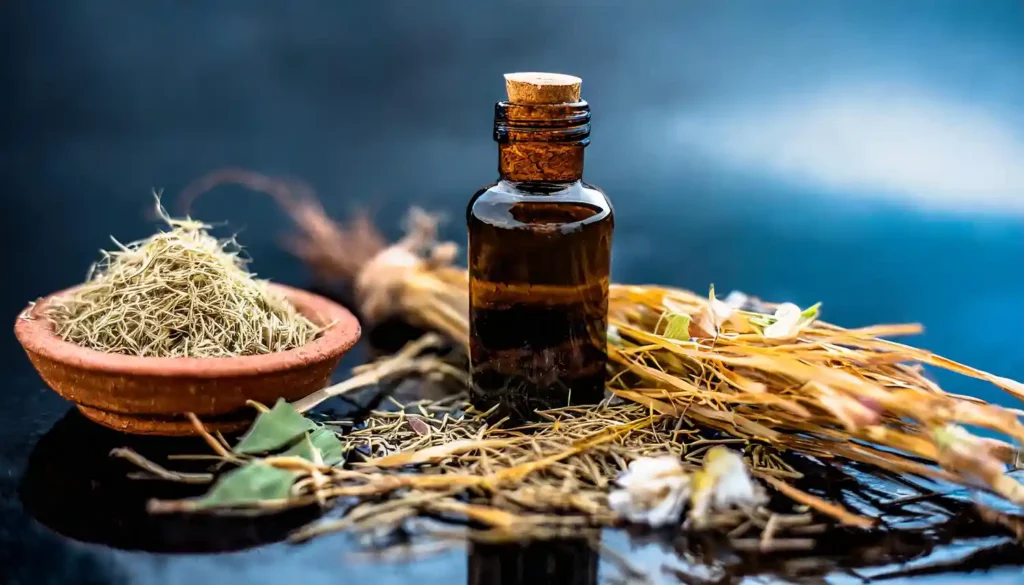
Indonesian vetiver cultivation in Garut, West Java is one of the essential oil industry's genuine sustainability success stories.
Chrysopogon zizanioides — vetiver grass — has deep root systems (up to 4 metres) that actively prevent soil erosion on the volcanic hillsides of Garut.
In a region prone to landslides during the rainy season, vetiver cultivation is simultaneously economically productive for farmers and environmentally beneficial for the community. It represents the rare case where commercial cultivation directly supports ecosystem services.
See our detailed Garut origin guide: Vetiver Oil Supplier Indonesia — Garut, West Java.
Patchouli: Cultivated, Not Wild — But Social Sustainability Matters

Patchouli (Pogostemon cablin) is not an endangered species — it is a cultivated crop that is fully legal to trade without CITES documentation.
Its sustainability challenges are primarily social and economic, not ecological: the welfare of the farming communities who grow it depends on stable pricing, direct market access, and fair compensation.
Manufacturers who maintain direct farmer relationships with transparent pricing contribute more meaningfully to patchouli sustainability than those who simply obtain an organic certificate. See: Indonesian Patchouli Oil — Origins & Farming Communities.
Agarwood: The Critical Sustainability Challenge
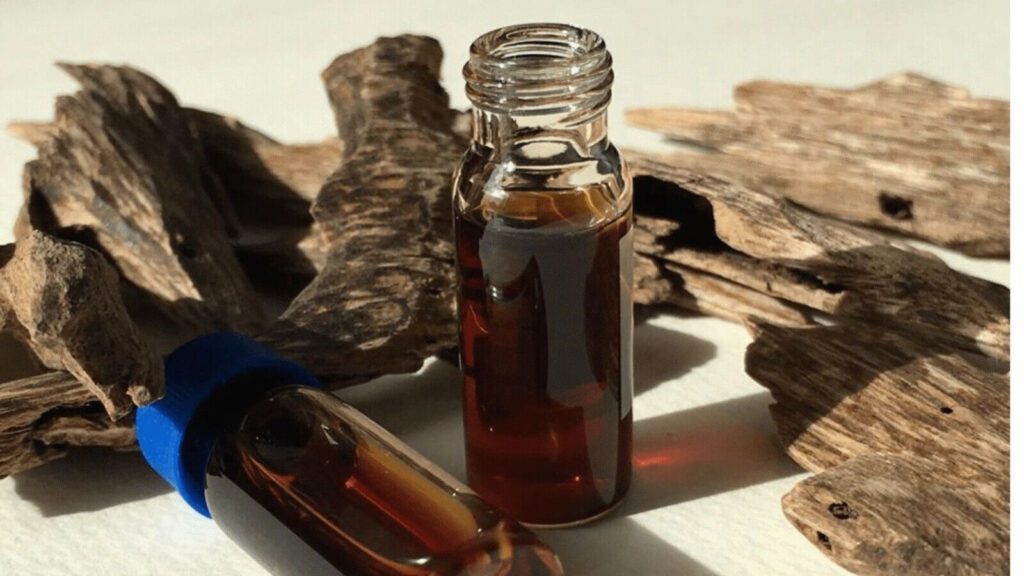
Indonesian agarwood (Aquilaria malaccensis and related species) represents the most serious sustainability challenge in the country's essential oil portfolio.
Wild Aquilaria trees have been severely depleted by decades of illegal harvesting, and all Aquilaria species are listed under CITES Appendix II.
Sustainable Indonesian agarwood today comes from legal, cultivated Aquilaria plantations that use inoculation techniques to trigger resin formation without depleting wild populations. Always verify CITES compliance for any agarwood purchase.
The Practical Buyer’s Verification Framework
This is the section that no other article ranking for this keyword provides. Here is a practical, step-by-step framework for verifying sustainable sourcing claims before committing to a supplier:
Tier 1 — Non-Negotiable Baseline Checks
- Can the supplier name the origin precisely? Country is insufficient. A sustainable supplier can name the specific district, island, or farming community. 'Indonesia' is not an answer; 'Sulawesi, Sidrap district' or 'Garut, West Java' is.
- Can they show a direct farmer relationship or cooperative membership? Direct manufacturer-to-farmer buying is the most meaningful sustainability signal. Ask: 'Do you buy directly from farmers or through traders?' A genuine answer will be specific about the structure.
- Is documentation in their own company name? MUI Halal, CITES permits, organic certificates — all must be in the supplier's own legal entity name. Third-party certificates relabelled are a red flag.
- Can they provide a factory video call showing production facilities? Genuine manufacturers have distillation equipment and production infrastructure. Traders cannot show you a distillation facility because they don't have one.
Tier 2 — Deeper Verification
- Request COA + GCMS for every batch: Batch traceability is the foundation of supply chain transparency. If every batch has its own COA with a unique batch number that matches the physical packaging, the supplier has a real quality and traceability system. See: Understanding COA & GCMS Reports
- Ask about pricing structures with farmers: Sustainable sourcing means farmers are paid fairly. Ask: 'How do you determine the price you pay farmers?' A supplier who explains their pricing methodology — including how they handle price volatility — is demonstrating genuine supply chain engagement
- For endangered species: request CITES documentation: For agarwood, sandalwood, or rosewood — CITES export permits are legally required and must accompany the shipment. Request these before placing any order
- Check DUNS registration and business registration: Verify at dnb.com and oss.go.id (Indonesia) — confirms established, registered business entity rather than ad-hoc trading operation
Tier 3 — Preferred But Not Always Available
- Third-party organic certification: Meaningful for cultivated oils where pesticide use is a concern. Not available or necessary for all oils
- Fair Trade or equivalent: Currently rare in the essential oil industry but growing. Supports farmer price floors during commodity downturns
- Published sustainability reports: Annual reports detailing environmental and social performance. More common in large companies
- Site visits: The gold standard — visiting production facilities and farming communities in person. Not always practical but provides the most complete picture
| The Most Honest Advice on Sustainable Essential Oil Claims Every essential oil brand claims to source sustainably. The question to ask is always: 'How do you know?' — and then ask for the specific documentation, relationship, or audit that backs the claim. Genuine sustainable sourcing has a paper trail. If a supplier cannot show you verifiable documentation — farm locations, batch COAs with origin, CITES permits for relevant species, certification body verification codes — their sustainability claims are marketing language, not operational reality. |
How Global Essential Oil Approaches Sustainable Sourcing
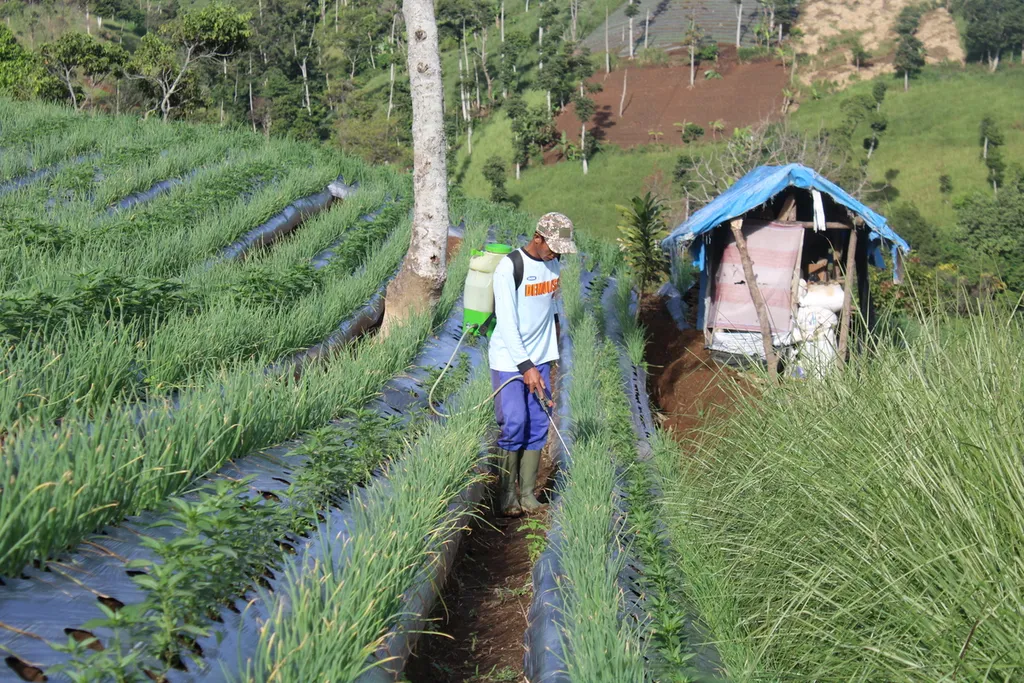
As an Indonesian essential oil manufacturer with production facilities in Sukabumi, West Java and sourcing networks across Sulawesi, Sumatra, Maluku, and West Java (Garut), our approach to sustainability is shaped by being part of the Indonesian essential oil ecosystem — not observing it from the outside.
- Direct farmer and distiller relationships: We maintain direct purchasing relationships with farmer cooperatives and distillers across our sourcing regions, reducing intermediary layers and improving price transparency
- Halal certification (MUI): Verifiable at halalmui.org — provides ingredient traceability and facility compliance documentation
- Batch-specific COA and GCMS: Every shipment has a unique batch number linked to specific production records — the foundation of supply chain traceability
- DUNS registration: Verified business credentials at dnb.com — confirming established manufacturer status, not a trading operation
- CITES-compliant agarwood: Our agarwood oil comes with full CITES documentation confirming legal cultivated origin
- Organic certification (in progress): We are currently working toward organic certification for selected oil categories to meet growing EU buyer requirements
- Vetiver cultivation in Garut: Our vetiver sourcing from Garut farmers directly supports the soil conservation ecosystem services that vetiver cultivation provides in the volcanic hillside communities
For the complete guide to sourcing and verifying Indonesian essential oils, see: How to Source Essential Oils from Indonesia — Complete Importer's Guide. For our complete product range, see: Essential Oils from Indonesia — Complete List.
Final Thoughts: Sustainable Sourcing Is a Practice, Not a Label
The most important insight this guide can offer is this: sustainable essential oil sourcing is a practice, not a label.
It is built from specific decisions — which farmers to work with, what price to pay, what documentation to require, which species to source carefully — made consistently over time.
It cannot be reduced to a single certification logo or a 'sustainably sourced' statement on a label without the supply chain practices that back it up.
For buyers, the practical implication is clear: ask specific questions, request specific documentation, and value suppliers who can answer concretely over those who speak in sustainability generalities.
The Indonesian essential oil industry — at its best — represents exactly the kind of supply chain that genuine sustainability describes: smallholder farming communities with multi-generational expertise, producing the world's most important essential oils from cultivated crops, with traceability mechanisms that connect each bottle of oil to the specific soil it came from.
| Source Verified, Traceable Indonesian Essential Oils Contact Global Essential Oil to discuss your sustainable sourcing requirements. We provide batch-specific COA and GCMS documentation, MUI Halal certification, DUNS-verified manufacturer credentials, and CITES documentation for agarwood. Tell us which oils you need and we will provide a complete documentation package for your evaluation. → Contact Global Essential Oil — Discuss Sustainable Sourcing Requirements |
Explore our verified Indonesian essential oil range: Complete Essential Oil List from Indonesia. Full sourcing guide: How to Source Essential Oils from Indonesia.