
Vetiver essential oil and vetiver fragrance oil may point in the same olfactory direction, but they are not the same raw material.
Natural vetiver essential oil is distilled from vetiver roots, while a vetiver fragrance oil is a formulated aromatic product that may contain synthetic aroma materials, natural ingredients, or a combination of both.
For fragrance houses, cosmetic manufacturers, importers, and procurement teams, the difference affects formulation, consistency, traceability, documentation, and sourcing decisions.
If your formulation specifically requires a natural botanical material, vetiver essential oil is the relevant category to evaluate.
If the priority is a designed vetiver accord with predictable scent performance, a fragrance oil may be more appropriate.
The best choice depends on the product brief, target market, desired aroma profile, regulatory requirements, and documentation expected by the buyer.
Vetiver Essential Oil vs Fragrance Oil: Quick Comparison
| Factor | Vetiver Essential Oil | Vetiver Fragrance Oil |
| Source | Distilled from vetiver roots. | Formulated aromatic mixture designed to create a vetiver scent profile. |
| Composition | Naturally occurring aromatic compounds from the plant. | May contain synthetic aroma materials, natural ingredients, isolates, carriers, or blends. |
| Aroma | Complex, earthy, woody, rooty, smoky, and batch-dependent. | Can be designed to be cleaner, sweeter, softer, or more uniform. |
| Consistency | Natural variation may occur by origin, crop, and distillation. | Can be formulated for repeatable olfactory performance. |
| Documentation | COA, GC-MS, SDS, origin, and batch information may be relevant to buyer verification. | Documentation depends on the fragrance supplier and intended application. |
| Traceability | Can be traced to botanical material, origin, and batch when supplier records are available. | Traceability focuses on the supplied fragrance formula and manufacturer documentation. |
| Typical B2B Role | Natural fragrance raw material for perfumery and suitable cosmetic or personal-care formulations. | Designed fragrance ingredient for fine fragrance, cosmetics, home fragrance, soaps, candles, and other scented products, depending on its formulation and intended use. |
What Is Vetiver Essential Oil?

Vetiver essential oil is a natural aromatic material produced from the roots of vetiver grass, commonly identified botanically as Chrysopogon zizanioides.
The roots are distilled to obtain a dense essential oil known for its deep, earthy, woody, rooty, smoky, and balsamic character. Its aroma can vary from batch to batch because agricultural origin, soil, root maturity, harvest conditions, and distillation all influence the finished oil.
For B2B buyers sourcing natural Indonesian material, our Vetiver Essential Oil product page is the appropriate next step for product-specific information and a sourcing discussion.
In perfumery, natural vetiver is valued as a substantive base-note material rather than simply a generic “vetiver scent.”
Its complexity can add depth, dryness, earthiness, smoke, wood, and persistence to a formula. In cosmetics or personal care, suitability depends on the final formulation, dosage, market, and applicable safety requirements.
What Is Vetiver Fragrance Oil?
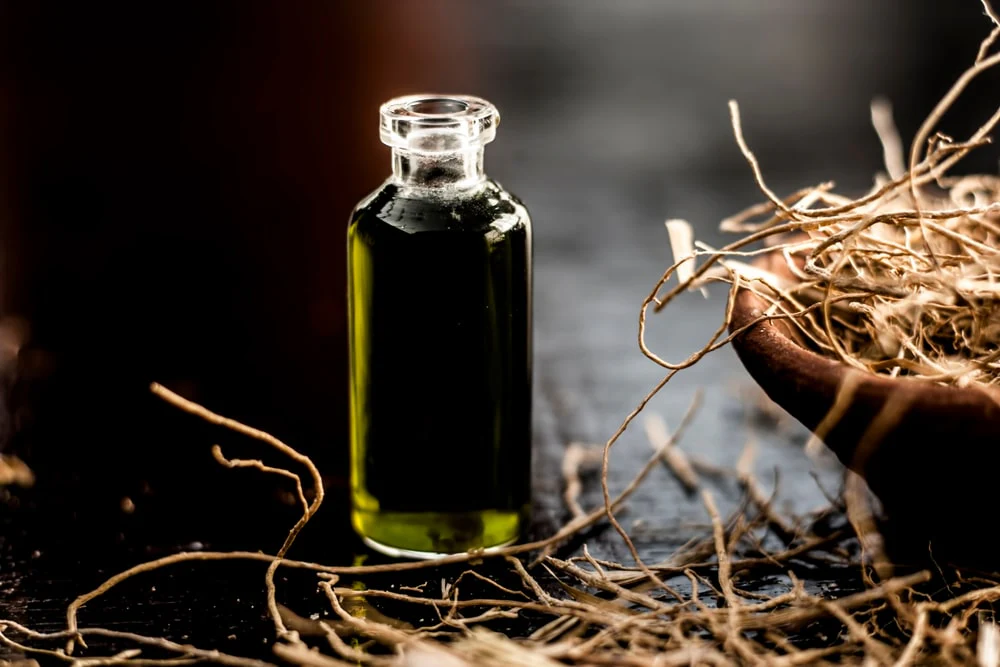
Vetiver fragrance oil is a broad commercial term for a formulated fragrance designed to deliver a vetiver-like olfactory profile. It is not automatically the same as distilled vetiver essential oil.
Depending on the supplier and formula, a fragrance oil may contain synthetic aroma chemicals, natural essential oils, natural isolates, solvents, carriers, or other fragrance ingredients.
The purpose of a fragrance oil is usually controlled scent performance.
A perfumer or fragrance manufacturer can build an accord that emphasizes selected facets of vetiver - for example dry wood, smoke, earth, amber, or a cleaner modern interpretation - while reducing some of the natural variability found in botanical materials.
Because “fragrance oil” does not describe one standardized composition, buyers should evaluate the actual supplier specification and intended application instead of assuming that every vetiver fragrance oil has the same ingredients, safety profile, or performance.
7 Key Differences Between Vetiver Essential Oil and Fragrance Oil
1. Source and Composition
Natural vetiver essential oil comes from botanical raw material. Its composition reflects the aromatic compounds produced by the plant and recovered during distillation.
A fragrance oil, by contrast, is a formulated product. It can be entirely synthetic, partly natural, or a complex combination of materials selected to create a target scent profile.
2. Aroma Complexity and Authenticity
Natural vetiver oil usually has a layered aroma that develops over time on a blotter or in a finished fragrance.
It may feel earthy, rooty, woody, smoky, dry, balsamic, leathery, or slightly sweet depending on origin and batch.
A fragrance oil can imitate those facets, but it can also be deliberately simplified or polished to create a more controlled commercial effect.
3. Batch-to-Batch Consistency
Natural raw materials are affected by agriculture and processing, so some variation is normal.
For buyers that require natural origin, this variation is often managed through specifications, batch evaluation, blending, and quality control.
Fragrance oils can be designed to keep the same olfactory target across repeated production, although consistency still depends on the fragrance manufacturer and raw-material availability.
4. Documentation and Analytical Verification
Documentation is one of the most important differences for procurement teams.
A natural vetiver essential oil can be evaluated through documents such as a Certificate of Analysis, GC-MS report, SDS, product specification, origin information, and batch identification when those records are available from the supplier.
For a practical explanation of how analytical documentation supports essential-oil quality checks, see our guide to COA and GC-MS reports for essential oils.
A vetiver fragrance oil requires a different documentation review because the product is a formulated fragrance.
Depending on the supplier and application, buyers may need an SDS, allergen information, usage guidance, or documentation related to fragrance standards.
The exact documents should be confirmed for the finished-product category and destination market.
5. Traceability and Origin
When a buyer is specifically sourcing natural vetiver essential oil, origin can be part of the product identity and purchasing specification.
A procurement team may want to know the botanical source, country or region of origin, plant part, extraction method, batch number, and other traceability information.
With fragrance oil, the relevant traceability is usually tied to the fragrance manufacturer, formula, batch, and supplied technical documentation rather than to one botanical crop.
6. Cost, Supply, and Purchasing Strategy
Natural vetiver oil pricing is influenced by agricultural supply, root quality, harvest cycles, distillation yield, origin, quality parameters, and market conditions.
Fragrance oils can be formulated to meet a target cost and scent brief, but they are not automatically cheaper in every case.
Formula complexity, performance requirements, dosage, intellectual property, and supplier positioning can all affect price.
For B2B sourcing, comparing only price per kilogram can be misleading.
Buyers should also compare dosage in the final formula, consistency requirements, documentation, minimum order quantity, lead time, and the value of natural-origin claims where relevant.
7. Formulation and Regulatory Fit
The two materials are not interchangeable simply because they share the word “vetiver.”
Natural essential oil and a designed fragrance oil may perform differently in alcohol perfume, soap, cream, candle wax, home fragrance, or other product bases.
The correct option depends on the technical brief and the final product category.
Formulators should evaluate the safety requirements that apply to the finished product rather than assuming either material is universally suitable.
The IFRA Standards Library provides current fragrance-safety standards, while the U.S. FDA guidance on fragrances in cosmetics explains how fragrance ingredients are treated in cosmetic products in the United States.
What Does Natural Vetiver Essential Oil Smell Like?
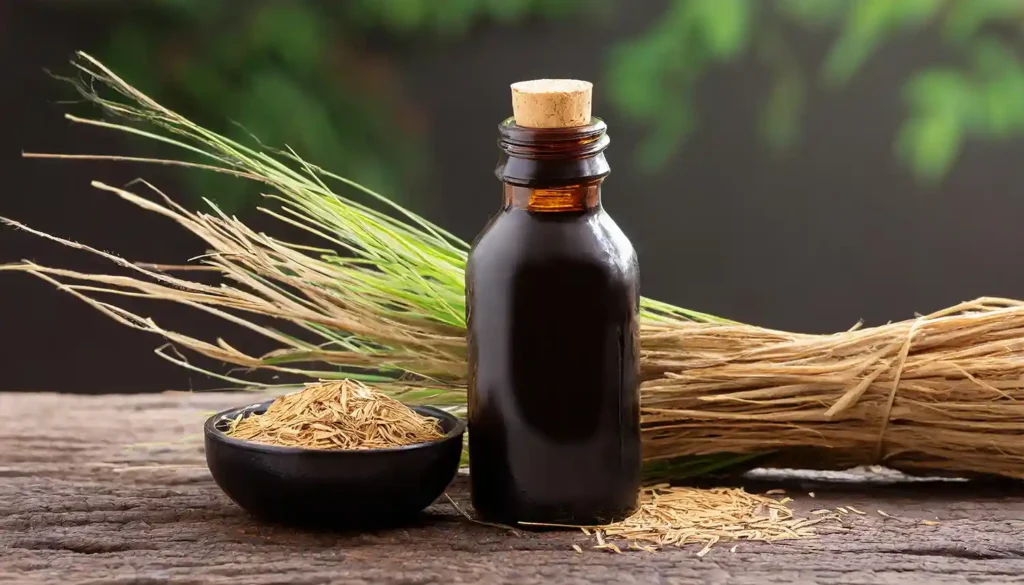
Natural vetiver essential oil is typically described as earthy, woody, rooty, dry, smoky, and balsamic, with a persistent base-note character.
Some batches can show leathery, nutty, amber-like, or slightly sweet nuances. The profile is not perfectly uniform because origin and distillation influence the balance of aromatic compounds.
A vetiver fragrance oil may be designed to emphasize only part of that profile.
For example, a fragrance can make vetiver cleaner, softer, sweeter, more transparent, or more “designer-like” than the raw botanical material.
This is why evaluating a sample is more reliable than choosing solely from the product name.
For formulators who want to understand how natural vetiver functions as a base note, our Vetiver Oil in Perfumery guide covers its role in fragrance structure and formulation in more detail.
How Buyers Can Verify Natural Vetiver Essential Oil
For procurement teams, visual appearance or aroma alone is not enough to verify a natural essential oil.
A stronger supplier review combines product identity, technical documentation, batch data, and a physical sample.
- Botanical identity: confirm the botanical name used for the supplied vetiver material.
- Plant part: vetiver essential oil is normally produced from the roots.
- Extraction method: confirm the distillation method stated by the supplier.
- Origin: verify the country or region of origin if it matters to the purchasing specification.
- Product specification or COA: review the quality parameters supplied for the relevant product or batch.
- GC-MS report: use the chromatographic profile as one part of identity and quality evaluation.
- SDS: review safety, handling, storage, and transport information relevant to the material.
- Batch or lot information: confirm that the documentation can be connected to the supplied material.
- Pre-shipment sample: where appropriate, evaluate the actual aroma and performance before committing to a larger order.
If you are comparing origins, grades, and quality parameters, see our article on vetiver oil quality, grades, and chemotypes.
Can Vetiver Fragrance Oil Replace Vetiver Essential Oil?
Not as a direct one-to-one raw-material substitute. A fragrance oil can reproduce or reinterpret a vetiver scent direction, but changing from natural vetiver essential oil to a fragrance oil changes the composition of the formula and may also affect labeling, natural-origin positioning, documentation, dosage, and performance.
For an existing formulation, replacement should be treated as a reformulation decision rather than a simple swap.
The formulator should evaluate odor, stability, compatibility, dosage, safety requirements, and the commercial claims intended for the finished product.
Which One Should Manufacturers Choose?
The right choice depends on what the finished product needs to achieve. Neither category is automatically better for every application.
- Choose natural vetiver essential oil when botanical origin, natural aromatic complexity, traceability, and a genuine essential-oil raw material are important to the formulation brief.
- Consider a vetiver fragrance oil when the project requires a specifically designed scent profile, repeatable olfactory character, or performance tailored to a particular product base.
- For fine fragrance, evaluate both olfactory quality and how the material behaves with the rest of the formula rather than comparing scent in isolation.
- For cosmetics and personal care, confirm the relevant safety and regulatory requirements for the final market and product category.
- For candles, soaps, and home fragrance, evaluate performance in the actual base because cold throw, hot throw, discoloration, stability, and dosage can differ significantly between materials.
Procurement teams should also consider supplier consistency, documentation readiness, MOQ, packaging, lead time, origin requirements, and whether the supplier can provide a representative sample for evaluation.
Sourcing Indonesian Vetiver Essential Oil for B2B Applications
For buyers who specifically need natural Indonesian vetiver essential oil, the sourcing process should focus on product identity, aroma profile, quality parameters, documentation, batch consistency, and commercial requirements - not just the words “vetiver oil” on a label.
You can review our Indonesian Vetiver Essential Oil product page and discuss your required specifications, application, sample needs, packaging, and available batch documentation with our team.
Need vetiver essential oil for perfumery, cosmetics, or another B2B formulation?
Contact our export team to discuss your sourcing requirements, request product information, or ask for a quotation.