Pure patchouli oil — steam-distilled from the dried leaves of Pogostemon cablin — has been used in skincare traditions across Southeast Asia, India, and the Middle East for centuries.
Today it is recognised by both consumers and the cosmetic industry as one of the most functionally versatile essential oils for skin applications: anti-inflammatory, antimicrobial, antioxidant, sebum-regulating, and deeply moisturising — all in a single ingredient that also delivers one of the most distinctive and tenacious natural fragrances available.
This guide serves two audiences. For consumers exploring patchouli oil as a natural skincare ingredient, the first half explains its scientifically-backed skin benefits, how to use it safely, and what the research actually supports.
For cosmetic formulators, skincare brand owners, and essential oil buyers, the second half provides the technical specification, grade selection guidance, usage rates, and sourcing information for incorporating Indonesian patchouli oil into commercial skincare formulations.
Indonesia — the world's dominant source of patchouli oil — is where Pogostemon cablin is cultivated at scale, in the volcanic highlands of Sulawesi and Sumatra, producing oil with the consistently high patchoulol content that defines premium quality.
For more on the origins and grades of Indonesian patchouli oil, see: Indonesian Patchouli Oil — Origins, Grades & Sourcing Guide.
Related Reading
→ Patchouli Essential Oil — Product Page & Specifications
→ Indonesian Patchouli Oil — Origins, Grades & Sourcing Guide
What Makes Pure Patchouli Oil Effective for Skin?
The skin benefits of patchouli oil are not arbitrary — they are directly linked to its chemical composition. The primary active compounds and their skin-relevant mechanisms:
- Patchoulol (29–35%): The dominant sesquiterpene alcohol — drives anti-inflammatory, antimicrobial, and wound-healing activity. The higher the patchoulol %, the more potent the therapeutic action. This is why batch-specific patchoulol verification matters for any cosmetic formulation.
- β-Caryophyllene (5–12%): A CB2 receptor agonist with well-documented anti-inflammatory properties. Reduces skin redness, calms reactive skin, and may support the healing environment for compromised skin barriers.
- α-Guaiene & β-Patchoulene: Sesquiterpene hydrocarbons that contribute to patchouli's skin-penetrating and conditioning properties — help the oil interact effectively with skin tissue rather than sitting on the surface.
- Norpatchoulenol: Trace compound responsible for the characteristic 'pure' patchouli top note — its presence or absence in GCMS reports can indicate oil quality and authenticity.
| Why 'Pure' Patchouli Oil Matters for Skin The word 'pure' in patchouli oil for skincare means unadulterated, undiluted, and verified via COA and GCMS — not blended with synthetic patchoulol, carrier oils, or cheaper essential oils. Adulterated patchouli oil has both reduced therapeutic efficacy and higher potential for skin sensitisation (synthetic additions often increase sensitisation risk). Always verify patchoulol % and GCMS compound profile before using any patchouli oil in skin formulations. See: Understanding COA & GCMS Reports. |
Patchouli Oil Benefits for Common Skin Conditions

Patchouli Oil for Acne-Prone Skin
Acne involves three primary mechanisms: excess sebum production, P. acnes bacterial colonisation, and inflammatory response. Patchouli oil addresses all three:
- Sebum regulation: Patchouli's astringent properties help regulate sebum secretion on oily and combination skin — reducing the excess oil that creates an environment favourable for comedone formation
- Antimicrobial activity against P. acnes: Patchoulol demonstrates inhibitory activity against Propionibacterium acnes (now reclassified as Cutibacterium acnes) — the primary bacterial driver of inflammatory acne lesions
- Anti-inflammatory: β-Caryophyllene reduces the inflammatory cascade that converts comedones into red, inflamed papules and pustules
Usage for acne: 1–2 drops in 1 teaspoon of a non-comedogenic carrier (jojoba oil or hemp seed oil preferred over coconut oil for acne-prone skin). Apply as spot treatment or diluted facial oil. Light (Iron-Free) grade preferred — does not leave amber tint on skin.
Patchouli Oil for Eczema and Sensitive Skin
Eczema (atopic dermatitis) is characterised by a compromised skin barrier, chronic inflammation, and immune dysregulation. Patchouli oil's anti-inflammatory and skin-regenerating properties address multiple aspects of eczema management:
- Skin barrier support: Patchoulol has demonstrated wound-healing and cell regeneration activity — supporting recovery of the compromised epidermal barrier that characterises eczema
- Anti-itch potential: Anti-inflammatory compounds reduce the inflammation-driven itch cycle that perpetuates eczema
- Antimicrobial: Eczema-affected skin is more susceptible to S. aureus colonisation — patchouli oil's antimicrobial activity may help reduce bacterial load on compromised skin
| ⚠️ Important note on eczema application Patchouli oil should be used on eczema at low concentrations (0.5–1% in a gentle carrier) and only on non-weeping, non-infected skin. On broken or acutely inflamed eczema, essential oils — including patchouli — can cause stinging and further irritation. Always perform a patch test and consult a dermatologist for moderate-to-severe eczema management. |
Patchouli Oil for Anti-Ageing and Wrinkles
Skin ageing involves collagen degradation, oxidative stress, and reduced cell turnover. Patchouli oil contributes to anti-ageing formulations through several mechanisms:
- Antioxidant activity: Patchoulol and β-caryophyllene have demonstrated free radical scavenging activity — neutralising oxidative stress that accelerates collagen breakdown and promotes the formation of fine lines
- Cell regeneration: Traditional use of patchouli oil for wound healing is supported by evidence of cytophylactic activity — stimulation of new cell growth that supports skin renewal
- Moisture retention: Patchouli oil's lipophilic character helps reinforce the skin's lipid barrier, reducing transepidermal water loss (TEWL) — a key factor in maintaining plump, youthful-looking skin
Usage for anti-ageing: 0.5–1.5% in a face oil or serum base. MD (Molecular Distilled) grade is preferred for premium anti-ageing formulations — highest patchoulol content, near-colourless, cleanest aroma for facial application.
Patchouli Oil for Scarring and Skin Regeneration
One of patchouli oil's most historically documented uses is in supporting the healing of wounds and reducing the appearance of scars. The active mechanism is cytophylaxis — the promotion of new cell growth in the epidermis and dermis:
- Post-acne scarring: Regular application supports the cell turnover that gradually reduces the appearance of post-inflammatory hyperpigmentation and superficial scarring
- Stretch marks: Consistent use in carrier oil may support skin elasticity and reduce the appearance of stretch marks — particularly effective when used preventively on skin under tension
- Surgical scars (post-healing): Once the wound is fully closed and healed, patchouli oil in a carrier may support the remodelling phase of scar tissue
Patchouli Oil for Dry and Dehydrated Skin
Beyond its therapeutic applications for specific conditions, patchouli oil is a valuable general moisturising and skin-conditioning ingredient.
Its ability to reduce transepidermal water loss and its lipid-enriching character make it particularly suitable for dry, mature, or dehydrated skin types — especially effective when blended with a nourishing carrier oil such as Virgin Coconut Oil (VCO).
How to Use Pure Patchouli Oil in Skincare
As a Facial Oil
Blend 2–3 drops of patchouli oil in 1 teaspoon (5ml) of carrier oil. Best carriers for facial use: Virgin Coconut Oil (VCO) for dry/mature skin; jojoba oil for oily/combination skin; rosehip oil for anti-ageing and scar applications. Apply 2–3 drops to clean, damp face and press gently into skin.
In Body Lotion or Moisturiser
Add 3–5 drops per 100ml of unscented body lotion or moisturiser. Stir well before each use. The patchouli will settle — an emulsifier is needed for stable formulation in a cosmetic base (see formulator section below).
As a Bath Oil
Add 5–8 drops to 1 tablespoon of bath oil dispersant (or VCO) before adding to a warm bath. Patchouli oil does not mix directly with water — always pre-dilute in a carrier or dispersant.
In a Face Mask
Add 1–2 drops to a clay or cream face mask base before application. For acne-prone skin, add to kaolin clay. For dry/mature skin, add to honey or cream base.
| ⚠️ Always dilute — never apply undiluted Patchouli oil at full strength can cause skin sensitisation, particularly on sensitive or reactive skin. The recommended maximum concentration for leave-on facial products is 0.5–1.5% — equivalent to 2–3 drops per teaspoon of carrier. Always perform a 24-hour patch test on inner arm before applying to face. Avoid contact with eyes and mucous membranes. |
For Skincare Formulators: Grade Selection & Technical Application Guide
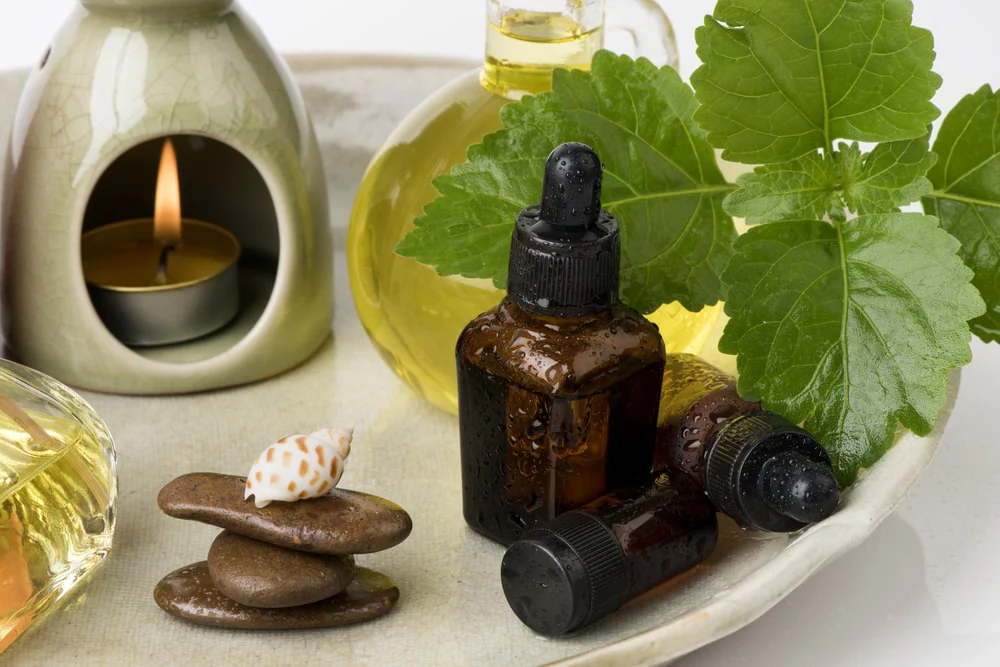
For cosmetic formulators and skincare brand owners incorporating Indonesian patchouli oil into commercial products, this section provides the technical framework for grade selection, usage rates, formulation compatibility, and sourcing specifications.
Grade Selection for Skincare Formulations
| Skincare Product | Recommended Grade | Reason | Max Usage Rate |
| Face serum / facial oil | Light (Iron-Free) or MD | Colour-neutral — no amber tint on skin or in white/pale base | 0.5 – 1.5% |
| Anti-ageing cream / moisturiser | MD | Highest patchoulol %, cleanest aroma, fully colour-neutral | 0.5 – 1.0% |
| Acne treatment oil | Light (Iron-Free) | Colour-neutral + validated antimicrobial activity | 0.5 – 1.5% |
| Body lotion (opaque/white) | Light or MD | Colour neutrality important for white base | 1.0 – 2.0% |
| Body lotion (natural/tinted) | Dark or Light | Dark acceptable in earth-toned or natural positioning | 1.0 – 2.0% |
| Eye cream | MD only | Strictest IFRA limits; MD for purity and minimal sensitisation risk | 0.1 – 0.25% |
| Lip balm / lip product | MD only | Mucous membrane contact — MD for highest purity | 0.05 – 0.1% |
| Body scrub | Dark or Light | Rinse-off — less strict colour requirement | 1.0 – 2.5% |
| Bath oil | Dark or Light | Leave-on equivalent; colour acceptable in bath format | 1.0 – 3.0% |
| Natural / organic skincare | Light or MD | IFRA-compliant; natural origin declaration; EU Ecocert compatible | 0.5 – 1.5% |
For complete technical specifications of all three grades (Dark, Light, MD) including patchoulol %, specific gravity, refractive index, optical rotation, and colour parameters, see: Patchouli Oil Grades Explained — Dark, Light & MD.
For application in cosmetics, perfumes, and soap manufacturing, see: Patchouli Oil in Cosmetics, Perfumes & Soaps.
IFRA Compliance for Skin Products
Under the IFRA 51st Amendment, patchouli oil usage limits for skin products are generous compared to high-sensitiser ingredients like clove or cinnamon — but limits still apply for leave-on products. Key limits for patchouli oil:
- Leave-on face products (Cat 2): Maximum 2.0% in finished product
- Leave-on body products (Cat 3): Maximum 5.0% in finished product
- Lip products (Cat 4): Maximum 0.5% — mucous membrane contact
- Baby products (Cat 5a): Maximum 0.5% — strictest limit
- Rinse-off (Cat 6/7/8): More permissive limits apply
For EU and UK commercial products, patchouli oil constituents do not require mandatory allergen declaration at typical usage concentrations — but always have your formulation reviewed as part of a CPSR (Cosmetic Product Safety Report) before commercial launch.
Formulation Compatibility
- Oil phase: Patchouli oil is fully oil-soluble — add to the oil phase of emulsions
- Water-based formulations: Requires solubiliser (Polysorbate 20 or Caprylyl/Capryl Glucoside) at 3–4× the patchouli oil quantity for clear water-based toners and serums
- pH stability: Stable across pH 4–8 — compatible with the full range of skincare formulation pH
- Heat: Add to cool-down phase below 40°C to preserve top aromatic notes — though base sesquiterpenes are thermally stable
- Preservative systems: Compatible with all standard cosmetic preservative systems
- Colour impact: Dark grade imparts amber colour — use Light or MD for white, pale, or transparent formulations
Blending Partners for Skincare
Patchouli blends exceptionally well with the following for skincare formulations — all available from Global Essential Oil:
- Lemongrass Oil at 3:1 (lemongrass:patchouli) — brightening + grounding combination for oily/acne-prone skin. See: Lemongrass Oil Benefits for Cosmetics.
- Virgin Coconut Oil (VCO) as carrier — 1–2% patchouli in VCO for facial or body oil. Lauric acid in VCO provides additional antimicrobial benefit for acne formulations.
- Rosehip seed oil as carrier — 1–1.5% patchouli in rosehip for anti-ageing and scar serums. Rosehip's trans-retinoic acid + patchouli's cytophylactic properties are complementary.
- Frankincense oil at 1:1 — skin regeneration and anti-ageing blend; frankincense α-pinene complements patchouli's cell-renewal activity.
Sourcing Pure Patchouli Oil for Skincare Manufacturing
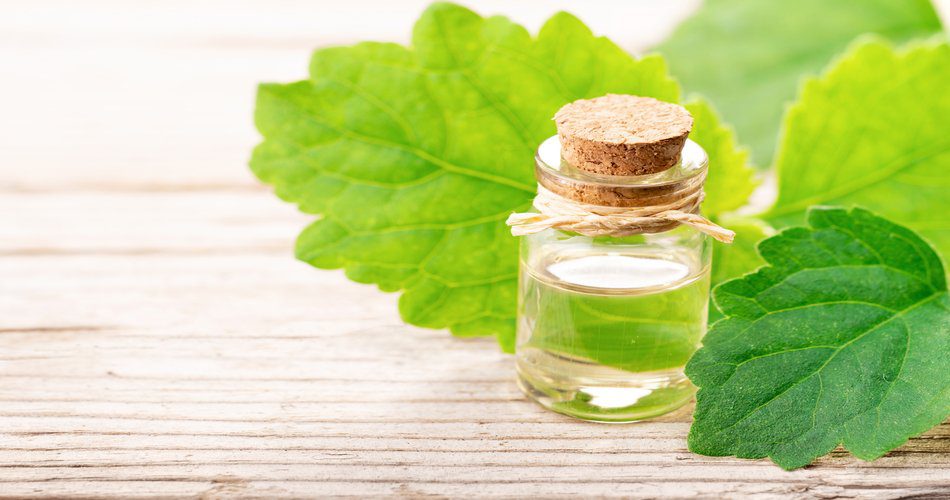
For cosmetic manufacturers and skincare brands sourcing bulk patchouli oil for skincare production, specify the following in your purchase order to ensure compliance and consistency:
- Grade: Light (Iron-Free) for most skincare; MD for premium facial and anti-ageing products
- Minimum patchoulol %: 'patchoulol ≥29%' (Light) or 'patchoulol ≥32%' (MD)
- COA — batch-specific: patchoulol %, specific gravity, refractive index, optical rotation, colour
- GCMS report: Compound fingerprint — confirms authentic Indonesian profile and detects adulteration
- IFRA compliance documentation: Usage limits per product category for your safety assessor
- Halal certificate (MUI): Required for Middle East and Muslim-market skincare products
- MSDS: Required for shipping, handling, and safety documentation
| Launching a Patchouli-Based Skincare Brand? If you are building a new skincare brand or adding a patchouli-focused line to an existing range, Global Essential Oil's Private Label service can produce finished formulations — facial oils, serums, body lotions, and bath oils — with patchouli oil at your specified grade and concentration, under your brand name. Contact our team to discuss your concept. |
Related Reading
→ How to Source Essential Oils from Indonesia — Complete Importer's Guide
→ Patchouli Oil for Hair Growth — Formulator's Guide (Companion Article)
→ Patchouli Oil in Cosmetics, Perfumes & Soaps — Full Application Guide
Sourcing Pure Indonesian Patchouli Oil from Global Essential Oil
As one of Indonesia's largest patchouli oil manufacturers, Global Essential Oil supplies skincare manufacturers, cosmetic formulators, and brand owners with all three grades of pure Indonesian patchouli oil — verified, documented, and export-ready.
- All grades available: Dark, Light (Iron-Free), MD — from Sulawesi and Sumatra origins
- Batch-specific COA + GCMS: Every order — patchoulol %, full compound profile, physical parameters
- Halal certified (MUI): Verifiable at halalmui.org
- DUNS registered: Verified manufacturer — not a broker or trader
- Grade sample kit: Dark + Light + MD samples with COA and GCMS — compare side-by-side before bulk commitment
- VCO available as companion product: Source patchouli + carrier oil from the same supplier — single documentation set
- Private label: Patchouli-based skincare formulations under your brand name
| Request a Patchouli Oil Sample Kit for Skincare Formulation Contact our team to request a grade sample kit — Light (Iron-Free) and MD patchouli oil from our current Indonesian stock — with batch-specific COA, GCMS report, and Halal certificate. Ideal for skincare formulation testing before bulk commitment. We respond within 1 business day. → Contact Global Essential Oil — Request Patchouli Skincare Sample Now |
Or visit our Patchouli Essential Oil product page for full specifications and ordering information.