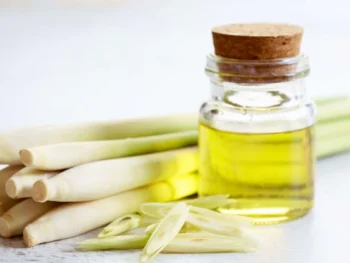

| Is clove oil anti-inflammatory? Yes — clove oil has well-documented anti-inflammatory properties, driven primarily by eugenol, which makes up 70–92% of the oil depending on the plant part distilled. Multiple peer-reviewed studies have identified specific mechanisms: eugenol inhibits the COX-2 enzyme and NF-κB signalling pathway — the same general targets as conventional NSAID pain relievers — while also reducing pro-inflammatory markers including TNF-α, IL-1β, IL-6, and prostaglandin E2 (PGE2). A 2020 computational study found eugenol's pharmacokinetic profile similar to diclofenac and aspirin, with the added benefit of less gastric irritation typically associated with NSAIDs. |
Clove has been used to relieve pain and swelling in traditional medicine for centuries — from dental discomfort to joint pain. But does modern science actually support this traditional use?
The answer, based on a substantial and growing body of peer-reviewed research, is yes — and the mechanisms are now reasonably well understood at the molecular level.
This article summarises what current research shows about clove oil's anti-inflammatory properties — the specific compound responsible, the cellular pathways involved, how it compares to conventional anti-inflammatory drugs, and what this means practically.
We write as Global Essential Oil, an Indonesian manufacturer of clove essential oil and eugenol.
Eugenol: The Compound Behind Clove Oil’s Anti-Inflammatory Activity

Clove oil's anti-inflammatory effects are attributed almost entirely to eugenol (4-allyl-2-methoxyphenol), the dominant compound in clove oil at 70–92% concentration depending on whether bud, leaf, or stem oil is distilled.
Research studies typically test eugenol in its pure isolated form, in clove essential oil (which also contains eugenol acetate and other minor compounds), and sometimes in bis-eugenol (a synthesised dimer) to compare relative effectiveness.
A 2025 in-vitro study published in ACS Omega directly compared pure eugenol, bis-eugenol, and whole clove essential oil — finding that clove oil's eugenol content (45–90% depending on the sample) combined with eugenol acetate gave it a distinct compound profile from pure eugenol alone, with all three forms showing measurable anti-inflammatory and antioxidant activity in macrophage cell studies.
How Eugenol Reduces Inflammation: The Cellular Mechanisms

Unlike many traditional remedies where the mechanism remains unclear, eugenol's anti-inflammatory action has been studied at the molecular level across multiple research groups.
The evidence points to several interconnected pathways:
| Pathway / Target | What Eugenol Does | Research Finding |
| COX-2 (cyclooxygenase-2) | Inhibits this enzyme, which produces prostaglandins that drive inflammation and pain | Eugenol reduces COX-2 expression; computational studies show binding affinity to COX-2 comparable to diclofenac |
| NF-κB (nuclear factor kappa B) | Inhibits this master transcription factor that switches on inflammatory genes | Multiple studies confirm eugenol suppresses NF-κB activation, reducing downstream inflammatory signalling |
| TNF-α (tumour necrosis factor alpha) | Reduces levels of this pro-inflammatory cytokine | Consistently reduced across multiple cell and animal studies, including in liver, lung, and joint tissue models |
| IL-1β and IL-6 | Reduces these inflammatory signalling proteins (interleukins) | Demonstrated in macrophage studies and in diabetic muscle inflammation models |
| Prostaglandin E2 (PGE2) | Reduces production of this inflammatory mediator | Linked to COX-2 inhibition — reduced PGE2 contributes to pain and swelling reduction |
| 5-LOX (5-lipoxygenase) | Non-competitively inhibits this enzyme, reducing leukotriene C4 production | Demonstrated in polymorphonuclear leukocyte studies — relevant to allergic and asthmatic inflammation |
| iNOS (inducible nitric oxide synthase) | Reduces expression, lowering nitric oxide-driven inflammation | Confirmed alongside COX-2 reduction in multiple animal pain/fever models |
| How does eugenol compare to NSAIDs like aspirin? A 2020 study published in Scientific Reports (Nature) conducted a computational (in-silico) analysis comparing eugenol's molecular interactions with COX-2 and 5-LOX enzymes against diclofenac and aspirin. The findings showed eugenol's pharmacokinetic profile was similar to these established NSAIDs, with binding capability to both COX-2 and 5-LOX enzymes. Notably, the literature suggests eugenol may offer anti-inflammatory activity with less gastric irritation, bleeding, and ulcerogenic side effects compared to conventional NSAIDs — though this requires further confirmation in human clinical trials before any therapeutic substitution claims can be made. |
Where Eugenol’s Anti-Inflammatory Activity Has Been Studied

Research on eugenol's anti-inflammatory effects spans a notably wide range of tissue types and conditions — supporting the broader plausibility of its mechanism rather than being limited to one narrow application:
Pain and Fever (Analgesic and Antipyretic Effects)
A 2025 study evaluating clove eugenol oil's antinociceptive (pain-reducing) and anti-inflammatory effects found that clove oil administration significantly ameliorated experimentally-induced pain, fever, and acute inflammation — comparing favourably in some measures to indomethacin, a conventional NSAID used as the study's positive control.
The researchers attributed this to suppression of NF-κB activation and reduced expression of COX-2 and iNOS.
Joint Inflammation (Rheumatoid Arthritis Models)
A study published in Biochemical and Biophysical Research Communications investigated eugenol's effects on fibroblast-like synoviocytes (cells implicated in rheumatoid arthritis joint inflammation), finding that eugenol inhibited TNF-α-induced cell proliferation, migration, invasion, and inflammatory response
Lung and Respiratory Inflammation
Animal model research has found that eugenol reduces inflammatory markers in acute lung injury models by down-regulating IL-6 and TNF-α while increasing antioxidant enzyme activity, and in allergic asthma models by inhibiting eosinophil infiltration and IL-4/IL-5 production — relevant to respiratory inflammation more broadly.
Metabolic Inflammation
In diabetic mouse models, eugenol has been shown to markedly reduce IL-1, IL-6, and TNF-α concentrations in skeletal muscle — relevant to chronic low-grade inflammation associated with metabolic conditions.
Dental and Oral Inflammation
This is clove oil's most historically established anti-inflammatory application — eugenol has been used in zinc oxide eugenol (ZOE) dental cement and pulp capping materials for over a century. For the complete explanation of eugenol's dental mechanism (including TRPV1 receptor action), see: Clove Oil for Toothache — How It Works.
What This Means Practically
| Important context on the evidence Much of the research described above comes from cell culture (in-vitro) and animal studies, not large-scale human clinical trials. This is genuinely strong preclinical evidence with a well-characterised, reproducible mechanism — which is scientifically meaningful — but it does not establish clove oil as a clinically validated treatment for any specific inflammatory condition in humans. Clove oil should be considered a complementary tool with documented biological activity, not a replacement for medical treatment of diagnosed inflammatory conditions. Always consult a healthcare professional for persistent or serious inflammatory symptoms. |
Topical Use for Localised Inflammation
Diluted clove oil (1:4 or more with a carrier oil) applied to localised areas of minor inflammation or discomfort — such as minor joint stiffness or muscle soreness — leverages the topical anti-inflammatory mechanisms described above.
Never apply undiluted. See dilution guidance: Clove Oil Safety — IFRA Limits & Formulation Guidelines.
Oral Care Applications
Clove oil's anti-inflammatory action combined with its antimicrobial properties supports its long-established role in dental and gum care formulations — see the complete mechanism explanation: Clove Oil for Toothache: How It Works.
Cosmetic and Personal Care Formulations
Formulators incorporating clove oil or eugenol for anti-inflammatory positioning in skincare (e.g., for reactive or blemish-prone skin) should reference the eugenol percentage on the COA — higher eugenol content (75–85% in bud oil) correlates with the compound concentration studied in the research described above.
For pharmaceutical-grade isolated eugenol, see: Eugenol USP from Indonesia.
Indonesian Clove Oil: Source of Research-Grade Eugenol
Indonesia — particularly the Maluku Islands, the historic origin of Syzygium aromaticum — produces the eugenol-rich clove oil that underlies the research described in this article.
As an Indonesian manufacturer, Global Essential Oil supplies both whole clove essential oil (bud, leaf, and stem) and pharmaceutical-grade Eugenol USP with batch-specific COA confirming eugenol content by GC analysis.
Related Reading
→ Clove Essential Oil — Bud, Leaf & Stem Specifications
→ Clove Oil for Toothache — Complete Mechanism Explanation
| Request Clove Oil or Eugenol USP Sample with Eugenol % COA Contact Global Essential Oil to request a clove essential oil sample (bud, leaf, or stem) or Eugenol USP sample with batch-specific COA confirming eugenol content. We respond within 1 business day. → Contact Global Essential Oil — Request Clove Oil Sample |
Frequently Asked Questions
Is clove oil anti-inflammatory?
Yes. Clove oil contains eugenol, a compound known for its anti-inflammatory properties. Research shows it may help reduce inflammatory responses by affecting several key inflammation pathways in the body.
How does eugenol reduce inflammation?
Eugenol helps reduce inflammation by inhibiting enzymes and signaling pathways linked to inflammatory processes, including COX-2 and NF-κB. It may also help lower pro-inflammatory markers such as TNF-α and IL-6.
Is clove oil as effective as NSAIDs?
Not necessarily. Some studies suggest eugenol shares similar anti-inflammatory mechanisms with certain NSAIDs, but current evidence is largely based on laboratory and animal research. Clove oil should not be considered a replacement for prescribed anti-inflammatory medication.
What is the difference between clove oil and pure eugenol?
Clove oil is a natural extract containing eugenol along with other compounds, while pure eugenol is an isolated ingredient. Both have anti-inflammatory properties, but pure eugenol provides a more concentrated and consistent eugenol content.
What conditions has clove oil been studied for?
Research has explored clove oil's anti-inflammatory effects in areas such as joint inflammation, respiratory inflammation, oral health, pain management, and metabolic inflammation. Most studies remain preclinical rather than large-scale human trials.
How should clove oil be used safely?
Clove oil should always be diluted before topical use. Avoid applying it directly to the skin, and use extra caution for children, pregnant women, and individuals with eugenol sensitivity.
Does eugenol content affect clove oil quality?
Yes. Higher eugenol content generally indicates stronger potency and is an important quality marker for clove oil. Always request a batch-specific COA to verify eugenol levels before purchasing bulk clove oil.