

Citronella oil production economics depend on more than whether the crop can be grown successfully.
Profitability is shaped by crop productivity, oil yield, distillation efficiency, labor and energy costs, product quality, selling price, and access to reliable markets.
Research from Indonesia shows that citronella farming and distillation can be economically viable under certain conditions, but the business is also vulnerable to price volatility, weak market access, inconsistent quality, and underused processing capacity.
For you as an international buyer, these production conditions matter because they can affect supply continuity, price stability, and batch consistency.
| Quick answer Citronella production can create income and local processing opportunities, but profitability is not automatic. The strongest projects connect productive farms with efficient distillation, measurable quality, stable market access, and repeat demand. |
What Does Citronella Oil Production Involve?
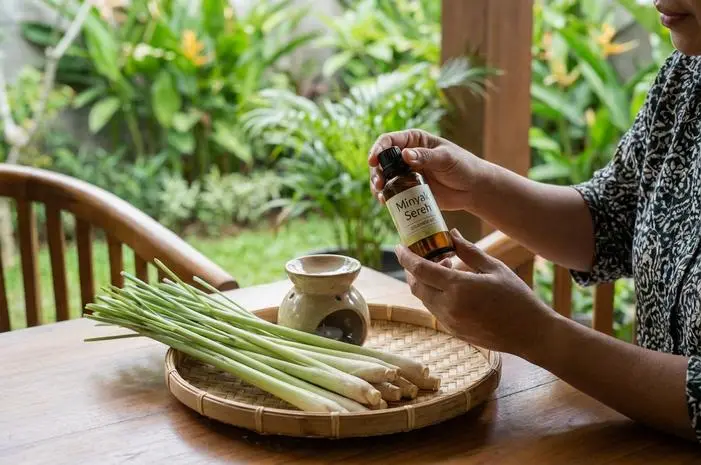
Citronella oil is distilled from aromatic Cymbopogon grasses. Commercial supply is commonly discussed as Java-type and Sri Lankan or Ceylon-type citronella, which differ in botanical source and expected chemical profile.
Citronella should not be treated as another name for lemongrass. Both belong to the Cymbopogon genus, but they are different commercial materials with different composition and application profiles.
The production chain generally includes cultivation, harvesting, transport of fresh biomass, distillation, oil separation, filtration, quality control, storage, packaging, and sales.
This article focuses on the economics of that chain rather than repeating the extraction process. For a technical overview, see our citronella oil processing plant and distillation guide.
Citronella Oil Production Economics: 7 Factors That Shape Profitability
1. Crop Productivity and Oil Yield
The first economic question is how much usable biomass a farm can produce and how much essential oil can be recovered from that biomass.
Low crop productivity or low oil yield increases the amount of land, harvesting, transport, and processing required for each kilogram of finished oil.
A 2025 study in the Gayo Highlands found that elevation, soil characteristics, and distillation method influenced citronella productivity and quality.
The study also found differences between electric and traditional distillation in the resulting chemical profile. The practical implication is that production economics and quality control are closely connected.
2. Distillation Efficiency
A distillation unit converts agricultural biomass into a higher-value oil, but it also introduces operating costs.
Fuel or electricity, water, processing time, equipment capacity, maintenance, labor, and recovery efficiency all affect the cost per kilogram of oil.
A larger still is not automatically more profitable. A unit that is underloaded because biomass is unavailable, or operated inefficiently because energy and process control are poor, can raise unit costs.
You need to look at the entire production system rather than equipment capacity alone.
For a broader explanation of the production method, our industrial essential oil steam distillation guide explains how steam, plant material, condensation, and separation work together.
3. Raw-Material and Labor Costs
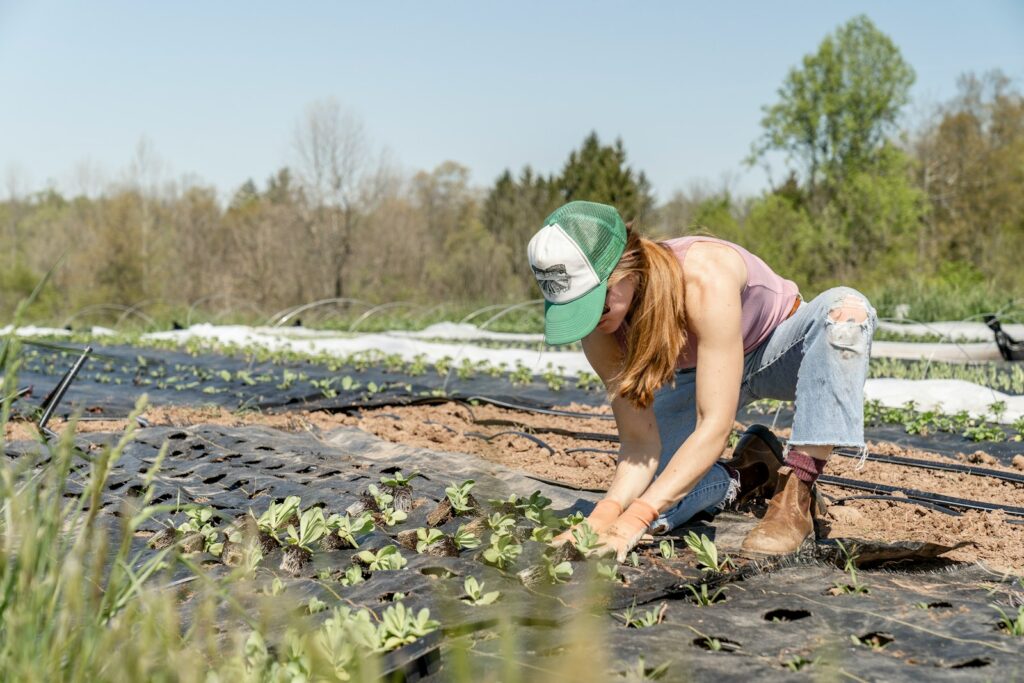
Citronella farming and harvesting remain labor-intensive in many producing areas.
The delivered cost of biomass depends on farm productivity, harvesting frequency, labor availability, transport distance, moisture condition, and the commercial arrangement between farmers and processors.
A 2020 Indonesian business-feasibility study modelled a citronella-oil operation with a production capacity of 2,400 kg per year.
The authors found that feasibility was sensitive to raw-material costs and selling prices, showing why a profitable model can change when input or market conditions move.
4. Oil Quality and Buyer Specifications
Oil availability has little commercial value if the batch does not meet the agreed specification.
Botanical identity, chemical composition, odor, relative density, refractive index, optical rotation, storage condition, and batch consistency can all affect acceptance.
This means quality has an economic value. Poor distillation, unsuitable storage, or inconsistent raw material can reduce the value of the oil even when the physical volume produced is high.
If you are comparing supplier batches, see our guide on how to evaluate citronella oil quality and our explanation of essential oil GC-MS reports.
5. Selling Price and Price Volatility
Citronella can be financially attractive at one selling price and unviable at another. Price volatility affects farmers, distillers, traders, and buyers across the supply chain.
A study of Indonesian non-timber forest-product community enterprises documented one citronella enterprise where the bulk selling price fell from about US$15.71/kg at the end of 2018 to about US$6.42/kg during the early pandemic period.
Production was later discontinued because the selling price no longer aligned with production costs and market access was limited.
That case is a useful warning against describing citronella as a guaranteed source of steady income.
A viable business needs enough margin to absorb changes in biomass cost, energy, labor, quality losses, and market prices.
6. Market Access
Producers can have land, grass, and distillation equipment but still struggle if they do not have access to buyers.
Market access affects how quickly oil can be sold, how much inventory must be held, the bargaining position of producers, and whether production continues during periods of weak demand.
A 2023 study of 40 citronella farmers in Banyumas found the farming activity feasible in the study location and described an operational partnership in which farmers supplied raw material while the processing partner supported production inputs such as seedlings.
The lesson is not that every partnership guarantees profitability. It is that production economics depend partly on how farmers, processors, and markets are connected.
7. Infrastructure, Financing, and Supply-Chain Coordination
Distillation infrastructure can add value locally, but equipment alone does not create a functioning essential-oil business.
A producer still needs biomass supply, working capital, energy, operators, quality control, storage, packaging, and a route to market.
A 2024 study on the post-pandemic phase of citronella farming in Indonesia interviewed nine of 120 farmers who were still cultivating citronella in the studied cluster after the pandemic.
The authors highlighted business challenges and proposed circular-economy and digital-marketing strategies to strengthen resilience.
The small sample means the findings should not be generalized to every producing region, but the study clearly illustrates why resilience depends on more than cultivation technique.
What Indonesian Research Shows
| Research | What It Suggests | Important Limitation |
| 2020 business-feasibility model | Profitability was possible in the model, but raw-material costs and selling prices were critical variables. | Model assumptions and prices should not be treated as current universal benchmarks. |
| 2023 Banyumas farmer study | The studied farms had an R/C ratio above 1, and a farmer-processor partnership supported the production model. | Forty farmers in one location; results do not represent all producing regions. |
| 2023 community-enterprise study | A sharp selling-price decline and limited market access contributed to production stopping in one enterprise. | Case-study evidence; not a global price series. |
| 2024 post-pandemic study | Farmer attrition and market problems highlighted the need for stronger business resilience and market strategies. | Only nine surviving farmers were interviewed. |
| 2025 Gayo study | Land characteristics and distillation methods affected productivity and quality. | Technical and regional findings do not define economics for every supply chain. |
Economic Opportunity vs Production Risk
| Factor | Economic Opportunity | Main Risk |
| Recurring harvests | Can support recurring biomass supply and processing activity. | Yield and harvest economics vary by site and management. |
| Local distillation | Adds value before the oil leaves the producing region. | Fuel, maintenance, water, labor, and low equipment utilization increase costs. |
| International demand | Creates access to broader markets and product applications. | Prices and buyer demand can change quickly. |
| Quality differentiation | Consistent oil can access buyers with defined specifications. | Poor processing or storage can reduce acceptance and price. |
| Farmer groups and partnerships | Can share infrastructure, inputs, and market access. | Governance, bargaining power, and dependency must be managed. |
| Long-term buyer relationships | Can improve demand visibility and repeat-order planning. | Overdependence on a small number of buyers creates concentration risk. |
Can Citronella Production Support Rural Economies?
Citronella production can create economic activity at several levels: farm labor, harvesting, transport, distillation, equipment maintenance, quality control, storage, trading, and export.
Local processing can also allow a producing area to sell essential oil rather than only unprocessed grass.
However, employment and income effects depend on whether the business remains economically sustainable.
If prices collapse, equipment is underused, or quality is inconsistent, the expected local benefits may not continue.
Farmer Partnerships and Cooperatives
Farmer groups, cooperatives, processors, and private partners can help organize inputs, distillation, quality control, and market access.
The right model depends on local conditions and should define responsibilities, pricing, quality requirements, and how value is shared.
Why Profitability Is Not Guaranteed
Statements such as “citronella guarantees steady cash flow” or “citronella has low entry barriers” are too broad.
A commercial operation requires agricultural inputs, labor, distillation equipment, energy, storage, quality testing, working capital, and access to buyers.
Is Building a Citronella Oil Processing Plant Economically Viable?
It can be, but there is no universal plant-cost number that determines feasibility.
The answer depends on production scale, still capacity, local equipment prices, energy source, water, biomass availability, labor, maintenance, quality-control requirements, and expected selling price.
If you are specifically evaluating equipment and processing setup, use our citronella oil processing plant and distillation guide rather than treating this economic overview as a plant-design cost estimate.
Why Quality Has an Economic Value
A producer may increase volume, but the commercial outcome still depends on whether the oil matches buyer requirements.
Inconsistent chemical composition, off-odor, unsuitable physical parameters, oxidation, or incomplete documentation can reduce acceptance and force discounting or reprocessing.
For repeat procurement, you should compare batch data rather than relying on a generic supplier claim.
Useful checks may include botanical identity, commercial type, GC profile, physical parameters, COA, SDS, storage, and traceability.
Why Production Economics Matter When You Source Citronella Oil
When you source citronella oil internationally, farm economics may seem distant from your procurement process. In practice, they directly affect supply reliability.
If grass prices rise while finished-oil prices remain weak, distillers may reduce production.
If processing efficiency is poor, cost and quality can become less predictable.
If producers cannot access stable markets, production may stop even when distillation equipment is available.
For this reason, you should evaluate more than the quoted price.
Review supply continuity, botanical identity, batch consistency, quality documentation, packaging, and the supplier's ability to maintain agreed specifications across repeat orders.
Sustainability and Circular-Economy Opportunities
Citronella production can support circular-economy approaches when biomass residues, land management, energy use, and local processing are managed effectively.
Residual biomass may have potential uses depending on local conditions, but environmental performance should be evaluated from the complete farming and distillation system rather than assumed from the crop alone.
The post-pandemic Indonesian study cited above proposed circular-economy strategies as one route to strengthen resilience.
That should be understood as a business-development direction, not proof that every citronella project is automatically sustainable.
What to Check Before Choosing a Citronella Supplier
- Botanical identity and declared commercial type.
- Origin and production region.
- Product specification and agreed quality parameters.
- Batch-specific COA and available GC-MS or GC-FID data.
- SDS or other handling documentation relevant to the product.
- Packaging options and storage requirements.
- Supply continuity and repeat-order consistency.
- Sample approval process before a larger order.
- Traceability and batch-number consistency across documents.
- Clear communication about what specifications and documents are actually available.
You can also review our Indonesian citronella oil page for current product information.
Confirm the required botanical identity, specification, and documentation with our team before approving a purchase.
Source Indonesian Citronella Oil
If you are evaluating Indonesian citronella oil for fragrance, repellent, personal-care, household, or other formulated products, you can discuss your required specification, order volume, packaging, and documentation with our team.
Available documentation may include product specifications, COA, GC analysis, and SDS depending on the product and order requirements. Contact us to discuss samples, bulk supply, or quotation requirements.