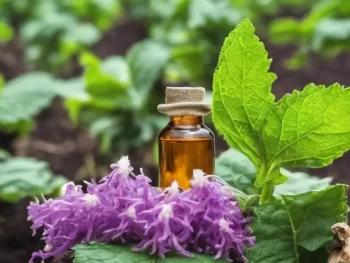

Patchouli oil production cost is determined by much more than the price of a distillation unit.
Raw-material availability, dried-leaf cost, oil yield, energy, labor, equipment efficiency, quality requirements, and selling price all affect whether a patchouli operation is economically viable.
Indonesia is especially important to this discussion because it is a major source of commercially traded patchouli oil and its supply chain can involve smallholder farmers, local distillers, collectors, processors, and exporters.
For you as an international buyer, these economics matter because they influence price volatility, supply continuity, batch consistency, and long-term supplier reliability.
| Quick answer There is no single universal cost for producing patchouli oil. A profitable operation depends on the full cost structure - farming and leaf purchasing, oil yield, distillation, labor, energy, quality control, storage, working capital, and market access - as well as the selling price achieved for the final oil. |
What Does Patchouli Oil Production Involve?
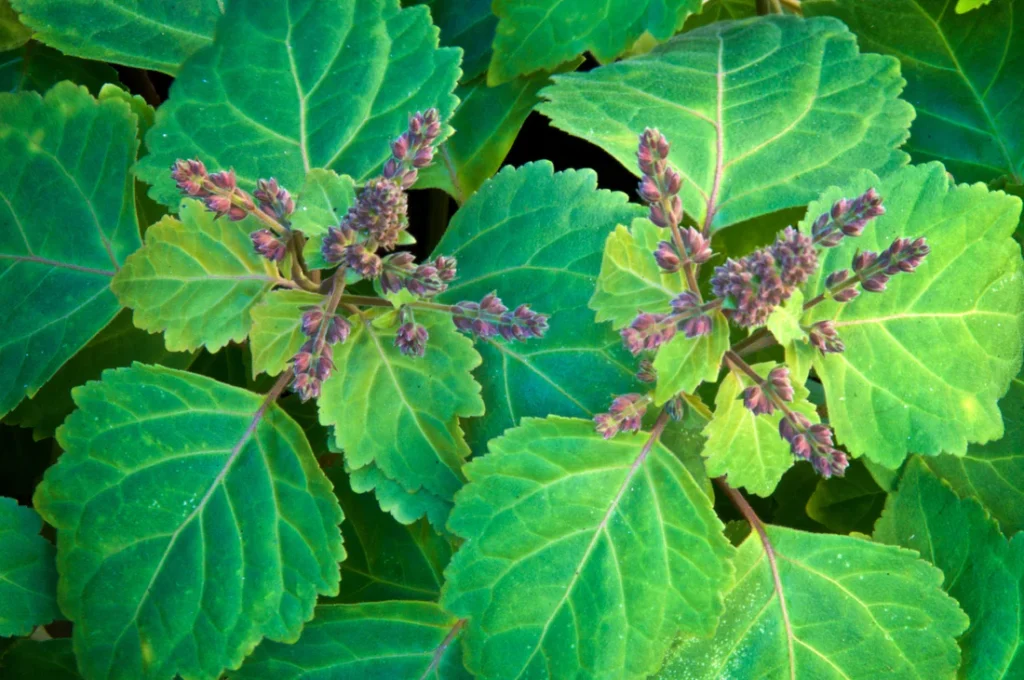
Patchouli oil is produced from Pogostemon cablin plant material, usually after the harvested leaves and stems have been dried before steam distillation.
The resulting essential oil is valued particularly in fragrance applications for its deep earthy character and long-lasting base-note role.
The economic chain starts before distillation. It includes cultivation or raw-material purchasing, harvesting, drying, transport, distillation, oil separation, filtration, quality testing, storage, packaging, and sales.
Each stage adds cost, and each stage can also affect the commercial quality of the final oil.
For the farming side, see our guide to patchouli cultivation in Indonesia. For the technical extraction process, our guide explains how patchouli oil is steam distilled in more detail.
Patchouli Oil Production Cost: 7 Factors That Shape Profitability
1. Patchouli Leaf and Farming Costs
Production economics begin with the raw material. Farmers or distillers need to account for planting material, land preparation, crop management, harvesting, drying, handling, and transport.
If a distiller purchases dried leaves rather than growing patchouli directly, the leaf purchase price becomes one of the most important operating-cost variables.
A low equipment cost cannot compensate for expensive or inconsistent raw material.
When leaf supply tightens, distillers may need to pay more to maintain throughput, which increases the production cost per kilogram of oil.
2. Oil Yield
Oil yield is one of the strongest links between farming and processing economics.
A higher usable oil yield generally reduces the amount of dried plant material, handling, and distillation time required for each kilogram of finished oil. A lower yield does the opposite.
Yield is not a fixed number for every farm or harvest. Plant condition, harvest timing, drying, storage before distillation, and the distillation process can all influence how much oil is recovered.
That is why a cost model based only on land area or still capacity can be misleading.
3. Distillation Equipment and Energy
A patchouli processing plant typically requires a distillation vessel or still, a steam or heat source, condenser, oil-water separator, water supply, piping, storage, and supporting equipment.
Depending on the design, costs may also include a boiler, generator, pumps, filtration, and basic quality-control equipment.
Operating cost is equally important. Fuel, electricity, water, processing time, maintenance, and equipment utilization all affect the cost per batch.
A large still that operates below capacity because leaf supply is inconsistent can be less economical than a smaller system that is used efficiently.
4. Labor and Post-Harvest Handling
Patchouli production includes labor before, during, and after distillation.
Harvesting, drying, turning or preparing plant material, loading the still, monitoring the run, unloading spent biomass, filtering the oil, transferring it to storage, and cleaning equipment all require time and labor.
Poor post-harvest handling can also create an indirect cost. If leaves are improperly dried or stored, the resulting batch may have lower yield or a less desirable aroma profile, reducing the value of the finished oil.
5. Quality and Patchouli Alcohol
Production cost does not end when oil leaves the separator. The batch still needs to meet the agreed commercial specification.
In patchouli trading, buyers commonly review botanical identity, odor, appearance, physical parameters, and chemical composition, including patchouli alcohol or patchoulol content.
If a batch is off-specification, the producer may face lower pricing, additional processing, blending, delayed approval, or rejection. Quality therefore has a direct economic value.
Our guide to patchouli oil grades explains how commercial grades differ, while our guide to essential oil COA and GC-MS reports covers the documentation used to verify a batch.
6. Selling Price and Price Volatility
A production model can be profitable at one selling price and unviable at another.
Patchouli oil prices respond to harvest conditions, leaf availability, quality, demand, inventories, logistics, and the balance between farmers, distillers, traders, and buyers.
This is why production cost and market price should not be treated as the same number.
Production cost is built from the resources used to make the oil; market price reflects both that cost structure and wider supply-and-demand conditions.
For broader pricing context, see our article on patchouli oil market and supply trends.
7. Market Access and Supply-Chain Structure
Patchouli oil does not always move directly from a farmer to an international manufacturer.
The supply chain can include farmers, distillers, intermediaries, collectors, processors, exporters, and industrial buyers. Each stage can add a service, cost, margin, or negotiation point.
A 2018 Indonesian patchouli supply-chain study examined farmers, refining SMEs, collectors, intermediaries, and exporters in West Pasaman.
The authors reported that high production costs combined with low selling prices weakened the position of farmers and that margins were not distributed evenly across the chain.
The exact margin figures from that study are specific to its location and period, but the broader lesson remains relevant: production economics depend not only on how efficiently oil is made, but also on who has access to buyers and who has bargaining power.
How Much Does a Patchouli Oil Processing Plant Cost?
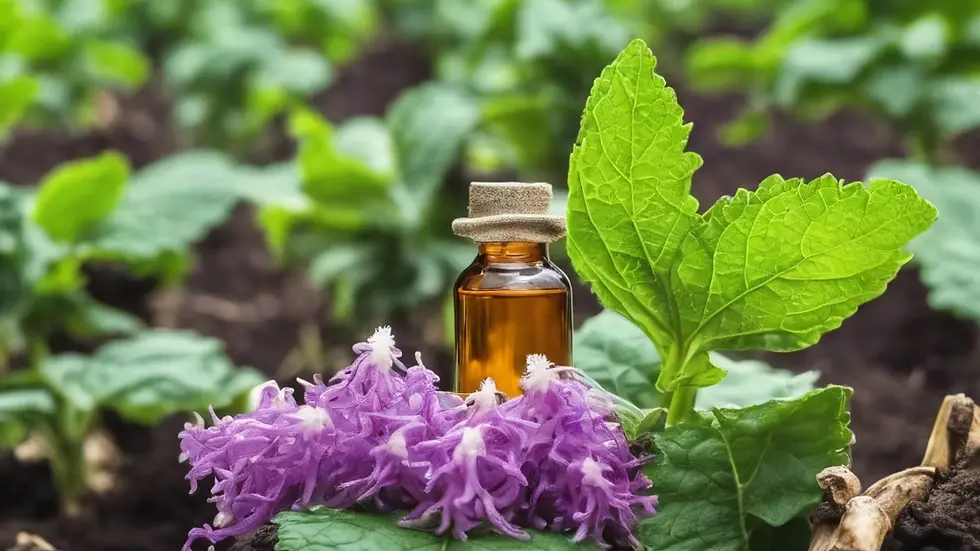
There is no single universal patchouli oil processing plant cost.
A useful feasibility estimate needs a defined location, production scale, still capacity, equipment specification, energy source, building requirement, labor model, raw-material supply, testing requirement, and expected utilization rate.
| Cost Category | Typical Items to Include |
| Site and buildings | Land or lease, access, drainage, production building, ventilation, storage area |
| Distillation equipment | Still, boiler or heat source, condenser, separator, piping, pumps, filtration |
| Utilities | Fuel, electricity, water, generator or backup power where needed |
| Raw material | Patchouli leaves, purchasing, collection, drying, transport |
| Labor | Operators, loading/unloading, handling, cleaning, supervision, quality control |
| Quality control | Basic physical testing, sampling, third-party GC or GC-MS when required |
| Storage and packaging | Tanks, drums, jerrycans, warehouse, labels, batch identification |
| Working capital | Leaf purchasing, wages, fuel, inventory, receivables, operating cash |
| Logistics and compliance | Inbound transport, outbound freight, permits, documentation, testing |
One public investment profile from Invest in Aceh gives a regional example of approximately IDR 2.9 billion for an economic-scale patchouli processing project linked to about 10 hectares of production, including supporting utility infrastructure.
| Important: do not treat IDR 2.9 billion as a universal quotation That figure is one regional investment example, not a current equipment price list. Actual plant cost can be materially higher or lower depending on location, capacity, building scope, equipment material, utilities, labor, and market conditions. |
What Indonesian Research Shows About Patchouli Economics
| Evidence | What It Shows | Important Limitation |
| Aceh Jaya farmer-income study | Patchouli farming contributed 59.07% of household income among the 23 farmers studied. | Small local sample; do not generalize the percentage to all Indonesian farmers. |
| West Pasaman supply-chain study | High production cost and low selling price weakened farmers, while margins differed substantially across supply-chain actors. | 2018 regional case study; current margins and prices will differ. |
| Sulawesi socioeconomic study | A 2026 study of 287 smallholder farmers across ten villages linked resilience with market access, household financial conditions, local institutions, and gender participation. | Socioeconomic study, not an engineering cost model. |
| West Sulawesi reporting | Recent reporting shows that income opportunity can coexist with land-clearing, firewood, and erosion concerns in some production areas. | Journalistic case evidence from specific communities, not a national environmental audit. |
Can Patchouli Farming Provide Meaningful Farmer Income?
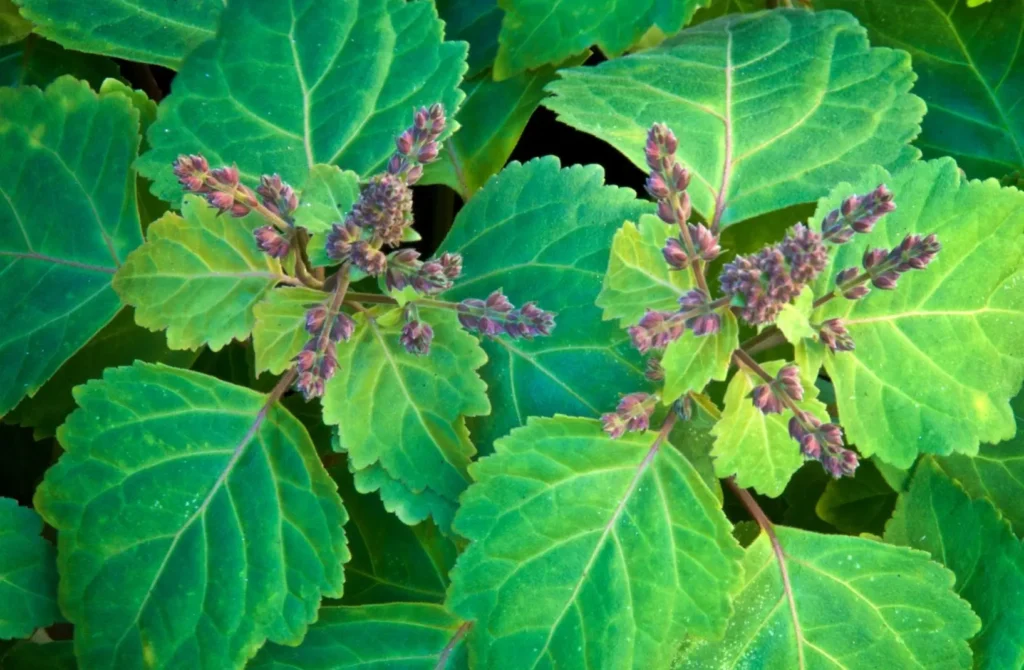
Yes, patchouli can be an economically important crop for some households, but the outcome is highly local.
A 2024 study of 23 farmers in Aceh Jaya reported that patchouli farming contributed 59.07% of household income in the studied group.
That figure should not be presented as a national average. Farmer income depends on land area, yield, harvest conditions, access to distillation, selling price, transport, market access, and whether the household sells leaves or participates further in the value chain.
A 2026 study of 287 smallholder patchouli farmers in Sulawesi also shows why the discussion needs to go beyond crop revenue alone.
Household resilience was connected with market access, financial conditions, local institutions, and gender participation within the value chain.
Why Production Cost Is Not the Same as Patchouli Oil Market Price
| Production Cost | Market Price |
| Leaf or farming cost | Current supply and demand |
| Labor | Harvest shortages or oversupply |
| Fuel, electricity, and water | Grade and origin |
| Equipment and maintenance | Buyer demand and inventories |
| Quality control and storage | Logistics and currency conditions |
| Working capital | Negotiation and supply-chain structure |
The two are connected, but they are not interchangeable. A producer can face rising costs even while the market price is weak, compressing margins. In another period, a supply shortage can push market prices up even if the physical production process has not changed.
Production Economics and Environmental Trade-Offs
Patchouli income should not automatically be described as sustainable income.
Environmental performance depends on how land is managed, how biomass is produced, what fuel is used for distillation, how residues are handled, and whether production expansion contributes to land degradation.
In 2025, Associated Press reporting from West Sulawesi documented communities where rising patchouli demand provided income but was also associated with forest clearing, use of firewood for distillation, and concern about slope stability and landslide risk.
This does not mean every Indonesian patchouli supply chain has the same environmental profile.
It does show why sustainability claims need to be tied to the actual farm, land-management system, energy source, and traceability evidence rather than assumed from the crop itself.
Why Patchouli Production Economics Matter When You Source the Oil
When you source patchouli oil, the economics upstream can become procurement risk downstream.
Rising leaf costs, poor yields, inefficient distillation, weak farmer participation, or sudden changes in market prices can reduce supply or make batch consistency harder to maintain.
You should therefore evaluate more than the current quotation.
Review where the oil comes from, the agreed grade and specification, the supplier's sourcing model, batch consistency, documentation, storage, packaging, and ability to maintain supply across repeat orders.
You can review our Indonesian patchouli oil specifications and discuss the current batch, origin, grade, and available documentation with our team before approving a purchase.
What to Check When Evaluating Patchouli Supply
- Botanical identity and declared origin.
- Commercial grade and agreed specification.
- Patchouli alcohol or patchoulol requirement where relevant.
- Batch-specific COA and available GC or GC-MS data.
- A representative pre-shipment or pre-order sample.
- Aroma consistency between approved sample and bulk batch.
- Packaging and storage conditions.
- Supply continuity for repeat orders.
- Traceability and batch-number consistency across documents.
- Quotation validity period, because patchouli pricing can change with supply conditions.
Source Indonesian Patchouli Oil
If you are sourcing Indonesian patchouli oil for fragrance, cosmetics, incense, personal care, or other formulated products, you can discuss your required origin, grade, specification, order volume, packaging, and quality documentation with our team.
Available documentation may include product specifications, COA, and GC or GC-MS data depending on the product and batch.
Contact us to discuss samples, current supply, or a bulk quotation.
Frequently Asked Questions
What is the main cost in patchouli oil production?
There is no single main cost in every operation. Raw material is often a major variable, but fuel, labor, equipment utilization, yield, quality control, storage, and working capital can all materially affect the final cost per kilogram.
How much does a patchouli oil processing plant cost?
It depends on plant capacity, equipment specification, buildings, utilities, location, labor, and supporting infrastructure. Invest in Aceh provides one regional example of about IDR 2.9 billion for a project linked to approximately 10 hectares, but that should not be used as a universal quotation.
Does higher patchouli oil production always mean higher profit?
No. Higher production can still produce weak margins if leaf costs, energy, labor, or financing are high, or if the selling price is low. Commercial quality also matters because off-specification oil may be discounted, reprocessed, or rejected.
Why does patchouli oil price change so much?
Price can change with harvest conditions, raw-material availability, oil quality, inventories, buyer demand, logistics, and the structure of the supply chain. Production cost is one input, but it is not the only driver of market price.
Why is patchouli alcohol important to the economics?
Patchouli alcohol is an important commercial quality parameter for many buyers. If a batch does not meet the agreed chemical specification or aroma profile, it can lose value even if the producer achieved a high physical oil yield.