
Essential oil vs fragrance oil: which one should you choose? The main difference is how they are made.
Essential oils are aromatic materials obtained from plants, while fragrance oils are formulated scent mixtures that may contain natural ingredients, synthetic aroma materials, or both.
Either can be useful in scented products—but neither is automatically safer, stronger, or better for every purpose.
Whether you are making candles at home or developing a soap, perfume, or skincare line, the right choice depends on your scent goals, finished-product performance, budget, and safety requirements.
Here is how to compare them without getting lost in marketing labels.
What Is the Difference Between Essential Oil and Fragrance Oil?
What Is an Essential Oil?
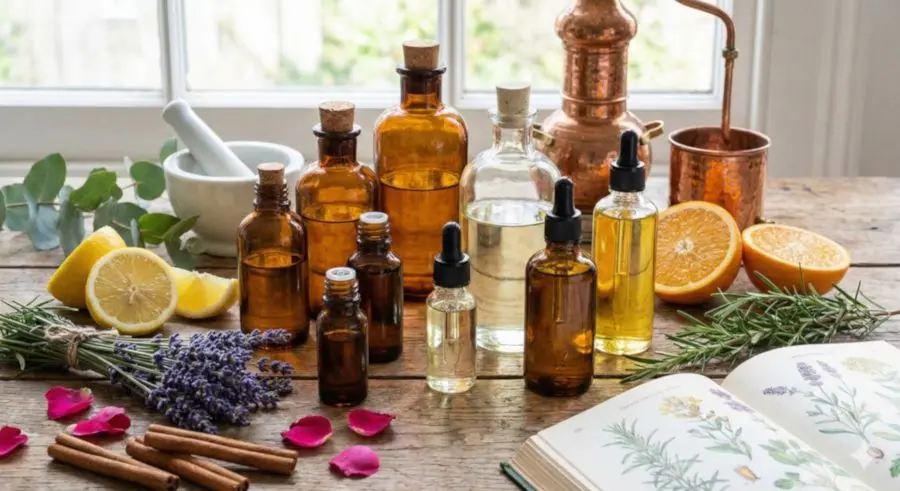
An essential oil is a concentrated aromatic material obtained from a specific plant or plant part, commonly through steam distillation or, in some citrus cases, mechanical expression.
Patchouli oil from Pogostemon cablin leaves, for example, has a naturally complex earthy-woody character; nutmeg oil from Myristica fragrans seed has a warm, spicy profile. The botanical source, extraction method, and batch can influence the final aroma.
“Essential oil” does not mean a carrier oil, a diluted perfume oil, or every scented oil sold under a botanical name. For product development, ask for the botanical identity and whether the material is pure or has been blended with anything else.
What Is a Fragrance Oil?
A fragrance oil is a prepared aromatic composition designed to deliver a particular scent. It may combine essential oils, natural isolates, synthetic aroma molecules, and other suitable components.
Some fragrance oils recreate a recognizable botanical note; others evoke scents such as fresh laundry, baked goods, or a complex perfume accord that does not occur in one plant.
The term “fragrance oil” alone does not identify its exact formula or prove it is suitable for skin, candles, soap, or any other application. Ask what the supplier recommends it for and what safety or technical documentation is available.
Essential Oil vs Fragrance Oil: Quick Comparison
| Factor | Essential oil | Fragrance oil |
| Source | Botanical aromatic material | Formulated aromatic composition |
| Ingredients | Naturally occurring volatile plant compounds | Natural and/or synthetic fragrance ingredients |
| Scent selection | Limited to botanical aroma profiles | Can be designed across a wider range |
| Batch variation | May vary by origin, harvest, and extraction | May be formulated for target consistency |
| Scent longevity | Depends on oil and application | Depends on formulation and application |
| Cost | Varies widely by plant and yield | Varies widely by formula and ingredients |
| Safety | Requires use-specific evaluation | Requires use-specific evaluation |
These are typical distinctions, not performance guarantees. The finished product—and the actual materials you buy—must be tested.
5 Key Differences Between Essential Oils and Fragrance Oils
1. Botanical Origin and Composition
A pure essential oil comes from a defined plant material and retains a mixture of that plant’s volatile components.
A fragrance oil is assembled for an aroma target and may contain both botanical and lab-created ingredients.
Neither category is chemically simple: one essential oil can contain many natural compounds, while one fragrance formula may contain numerous individual materials.
“Natural fragrance” also needs closer inspection. It is not automatically the same as a single, undiluted essential oil, and product labels do not always reveal the full scent formula.
2. Scent Variety and Aroma Character
Essential oils offer botanical character that can be difficult to imitate exactly: patchouli can be earthy and woody; citronella is green and lemony; nutmeg adds dry, spicy warmth. That natural complexity is valuable when an authentic plant-derived note fits the fragrance brief.
Fragrance oils give creators more options when the goal is a specific, reproducible accord. A bakery-style candle, for example, may call for a composed fragrance that a single essential oil cannot provide. One is not inherently more sophisticated than the other.
3. Scent Longevity and Stability
Some fragrance oils are designed for the heat of a candle or the alkaline conditions of soap, but that does not mean every fragrance oil lasts longer than every essential oil.
Some essential oils, such as patchouli, are valued for their persistent character; some light citrus notes can fade more quickly. Performance changes with the wax, soap base, packaging, storage, and formulation.
Compare candidates after the actual manufacturing process and aging period. A strong scent in the bottle tells you little about scent throw in a burning candle or odor retention after soap curing.
4. Price and Availability
The cost of essential oils depends on the botanical crop, extraction yield, region, grade, and supply conditions.
Fragrance oils may be economical for some scent concepts, but complex formulas with costly naturals or specialty aroma materials can also be expensive.
Compare cost at a usable, compliant level rather than relying on the purchase price per kilogram alone.
5. Batch Consistency and Finished-Product Performance
Botanical oils can vary with harvest and processing, which makes sensory and analytical evaluation important for repeat manufacturing.
Fragrance formulas may be designed to meet a consistent odor profile, although they still require batch quality checks.
For both categories, define what acceptable fragrance, color, clarity, and product performance look like before purchasing in volume.
Essential Oil vs Fragrance Oil: Which Is Better for Different Uses?
For Candle Making
Candle makers care about cold throw, hot throw, wax compatibility, wick performance, and safe burning.
A suitable fragrance oil may be developed and tested for a particular wax system, while an essential oil may be selected for a botanical scent concept.
Neither choice guarantees strong scent throw or a safe candle without proper testing.
For an example of how one botanical oil is used in this application, see our guide to citronella candles. Treat recipes as starting points for evaluation, not universal performance or safety guarantees.
For Soap Making
Cold-process soap can change fragrance character during saponification and curing.
Some essential oils lose brightness, while some formulated fragrance oils may discolor, accelerate trace, or behave unpredictably in a particular base.
The right decision comes from ingredient documentation, small test batches, and evaluating the cured soap.
Our guide to essential oils for soap making compares botanical options, scent profiles, and key formulation considerations.
That guide is about choosing individual essential oils; this article compares the two broad fragrance categories.
For Perfume Making
Natural essential oils can provide distinctive top, heart, or base-note facets in perfume.
Fragrance compositions may combine natural and synthetic materials to produce particular accords and maintain an intended scent profile.
A candle fragrance oil should not be assumed suitable for leave-on perfume: obtain use-category guidance and evaluate all constituents and exposure limits first.
Professional formulators selecting Indonesian naturals can explore our guide to essential oils for perfumery for ingredient assessment rather than DIY recipes.
For Skincare and Cosmetics
In lotions, creams, and other skin-contact products, the decision must begin with intended use and safety.
An essential oil can contain sensitizing constituents, while a suitable fragrance composition can also contain allergens that need assessment.
“Natural” and “synthetic” are descriptions of origin—not stand-alone safety ratings.
Manufacturers should consider the finished product type, intended audience, applicable ingredient restrictions, labeling obligations, and stability before choosing either material.
Are Essential Oils Safer Than Fragrance Oils?
Neither category is inherently safer. Concentrated essential oils can irritate skin, trigger sensitization, or cause other reactions when used improperly.
Some fragrance mixtures can also contain ingredients that require restrictions or allergen disclosure. An ingredient being plant-derived does not make it automatically gentle.
The U.S. Food and Drug Administration’s aromatherapy guidance specifically warns that natural or organic fragrance materials are not automatically safe.
The International Fragrance Association (IFRA) Standards also describe restrictions, prohibitions, and specifications for fragrance materials in different finished-product applications.
A few practical rules help avoid common mistakes:
- Do not apply an unknown or undiluted scented oil to skin simply because it smells pleasant.
- Do not assume a fragrance sold for candle use is suitable for lip care, perfume, or leave-on skincare.
- Do not use one blanket percentage for every essential oil or every fragrance mixture; the relevant restrictions depend on the material and end product.
- If you sell finished products, obtain appropriate technical information and conduct a suitable product safety and regulatory review.
Product claims such as “hypoallergenic,” “non-toxic,” or “therapeutic” need their own substantiation; they do not follow automatically from the label “essential oil.”
How to Choose Between Essential Oils and Fragrance Oils
Instead of asking which one is universally best, use the following selection framework:
- Define the finished product. A candle, rinse-off soap, fine fragrance, and body lotion each have different performance and safety needs.
- Write a scent brief. Decide whether you want a botanical note, a particular fragrance accord, or a very consistent branded scent.
- Check ingredient identity. For an essential oil, confirm the botanical name, plant part, and extraction method; for a fragrance oil, confirm the intended applications and available safety information.
- Review performance and cost in use. Consider fragrance strength after processing, appearance changes, repeatability, and the price of the tested formula.
- Test the real product. Run small trials and assess scent, stability, compatibility, and any applicable restrictions before scaling up.
You may ultimately use essential oils, fragrance oils, or a carefully evaluated combination. What matters is that the material suits the product and that its performance and safety have been assessed.
What Should Manufacturers Check Before Sourcing Fragrance Ingredients?
For soap brands, cosmetic manufacturers, and fragrance developers, ingredient selection is also a procurement decision.
Ask for the relevant product specification, batch traceability, Safety Data Sheet (SDS), and suitable quality documentation.
For essential oils, botanical identity, a Certificate of Analysis (COA), and GC or GC-MS information may support batch evaluation when available; they do not replace finished-product safety testing.
Global Essential Oil focuses on Indonesian essential oils rather than presenting every formulated fragrance type as part of our range.
Buyers exploring natural aromatic materials can review our bulk patchouli essential oil, nutmeg essential oil, and citronella essential oil information.
We welcome discussions about intended applications, target quantities, packaging, and document needs; availability and suitability should be confirmed for each inquiry.
For a focused comparison of one botanical aroma against a formulated scent, our vetiver essential oil vs fragrance oil article explores that example in more detail.
Final Thoughts
The essential oil vs fragrance oil choice depends on what you are creating.
Essential oils bring distinct botanical aroma profiles; fragrance oils offer formulated scent possibilities that can suit specific design and performance targets.
Neither category automatically wins on safety, cost, or longevity.
If your soap, cosmetics, or fragrance project calls for Indonesian natural aromatic ingredients, contact the Global Essential Oil team to discuss product specifications, sample or quotation requests, and your sourcing requirements.
Frequently Asked Questions
Is fragrance oil the same as essential oil?
No. An essential oil is a plant-derived aromatic material obtained through an appropriate extraction method. A fragrance oil is a prepared scent mixture and can include natural components, synthetic components, or both. Labels and documentation are needed to know what is actually supplied.
Are fragrance oils always synthetic?
No. Some are made primarily with synthetic aroma ingredients, while others contain natural aroma materials or a mixture of both. The term “fragrance oil” describes a type of product, not a fixed natural-versus-synthetic percentage.
Do fragrance oils last longer than essential oils?
Not necessarily. Longevity depends on the specific formula or oil, its concentration, the finished product, and storage conditions. Compare candidates in the same application rather than using a universal ranking.
Can I replace fragrance oil with essential oil in candles or soaps?
Sometimes, but not as a direct one-to-one substitution. The new material may behave differently in scent throw, color, stability, and safety limits. Recheck the intended usage and test the finished product before making that change.
Can essential oils and fragrance oils be blended together?
They can be combined in some formulated products, provided the materials are compatible, appropriate for the end use, and evaluated for total restricted constituents and finished-product safety. Mixing two individually acceptable materials does not automatically make the final blend compliant.