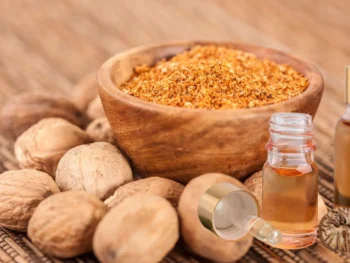
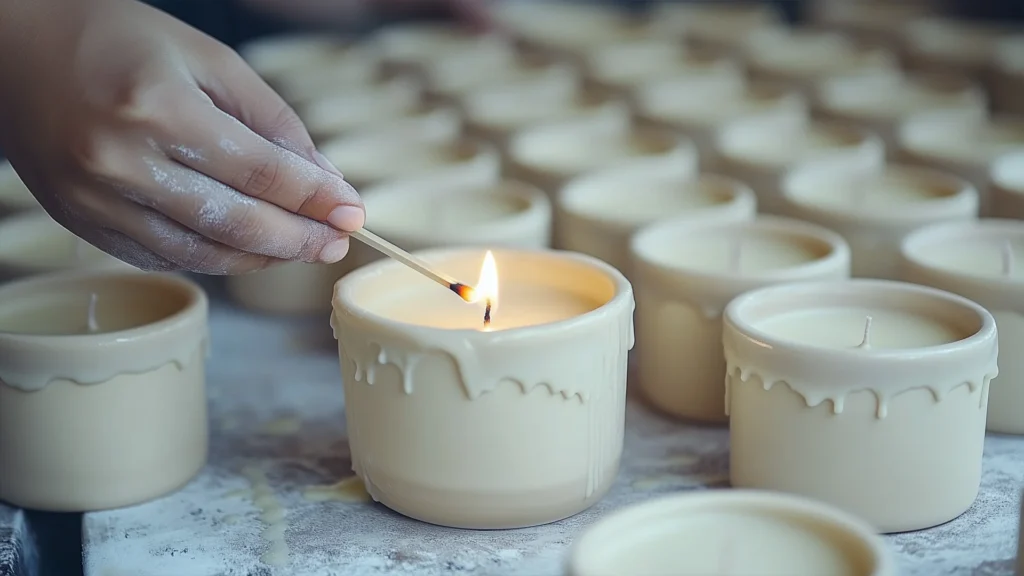
How to make citronella candles with essential oil is relatively simple, but the quality of the finished candle depends on the oil type, wax, fragrance load, and mixing temperature.
When formulated correctly, citronella candles provide a fresh lemon-citrus aroma and can help reduce mosquito activity around outdoor seating areas.
But here's what most DIY tutorials miss: the type of citronella oil you use makes a significant difference.
Pure citronella essential oil — particularly Java type (Cymbopogon winterianus) — performs very differently from the citronella fragrance oil sold by most craft supply stores.
This guide covers everything you need to know to make candles that actually smell good and actually work.
Global Essential Oil produces certified Java type citronella essential oil (Cymbopogon winterianus) from Indonesian farms — the highest-citronellal variety available globally.
Here is how to use it to make effective, great-smelling citronella candles.
| How Much Citronella Essential Oil Should I Add to a Candle? The recommended fragrance load for citronella ESSENTIAL OIL in candles is 6–10% of total wax weight. This is slightly lower than fragrance oils because essential oils are more volatile. Quick reference by wax type: • Soy wax (container): 6–8% — start at 6%, test before increasing • Soy wax (pillar/votive): 3–5% — harder wax holds less fragrance • Beeswax: 3–6% — dense wax; higher % risks seeping • Coconut wax: 8–10% — excellent fragrance retention, highest load • Paraffin: 6–9% — good hot throw; check flashpoint compatibility • Soy/beeswax blend (80:20): 6–7% — the most popular outdoor candle formula Formula: If you have 200g of wax and want 8% fragrance load → 200 × 0.08 = 16g of citronella essential oil. Important: Always add essential oil when wax has cooled to 10°C above the oil's flash point. Java type citronella EO flash point is approximately 65–70°C (149–158°F). Add oil at around 75–80°C and stir for 2 minutes. |
Essential Oil vs Fragrance Oil for Citronella Candles: What’s the Difference?
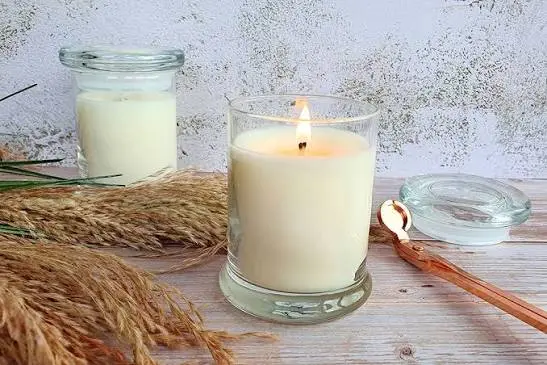
Most citronella candles sold commercially and most DIY recipes online use citronella fragrance oil — not citronella essential oil.
Understanding the difference is critical if your goal is a candle that both smells good and actually repels mosquitoes.
| Factor | Citronella Essential Oil | Citronella Fragrance Oil |
| Source | Steam-distilled from Cymbopogon winterianus (Java type) leaves | Synthetic blend designed to smell like citronella; may contain no actual citronella |
| Active compounds | Contains real citronellal (35–45%), geraniol, citronellol | No bioactive citronellal in most formulations |
| Repellency | Documented mosquito-repelling properties (EPA registered biopesticide) | No repellency — scent only |
| Aroma complexity | Multi-layered: fresh, lemony, green, with floral geraniol undertone | Often one-dimensional 'lemon' smell |
| Flash point | ~65–70°C — requires careful temperature management in candle making | Usually higher — more candle-maker-friendly |
| Fragrance load | 6–10% (more volatile, burns off faster) | Up to 12% (designed for candle applications) |
| Scent throw in candle | Good when formulated correctly; more subtle than FO | Often stronger hot throw due to synthetic boosters |
| Price | Higher — pure botanical extract | Lower — mostly synthetic |
| Best for | Outdoor candles where repellency matters; eco/natural product lines | Indoor decorative candles where scent is the only goal |
Bottom line: if you want a citronella candle that actually repels mosquitoes, you need pure citronella essential oil — specifically Java type.
A candle that only smells like citronella (using fragrance oil) will not provide meaningful repellency.
Why Java Type Citronella Essential Oil Works Best for Candles
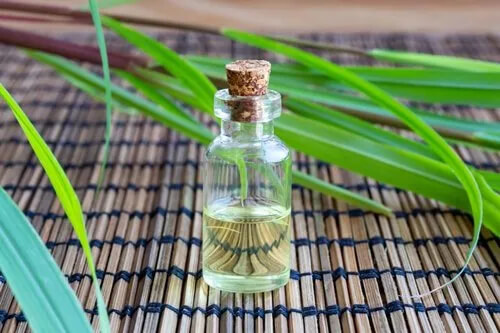
Not all citronella essential oils are equal. Java type citronella (Cymbopogon winterianus) is significantly more effective for candle making than Ceylon type (Cymbopogon nardus) for two key reasons:
- Citronellal content: Java type contains 35–45% citronellal — the primary mosquito-repelling compound. Ceylon type contains only 5–15%. More citronellal = more effective repellency when the candle burns.
- Aroma quality: Java type has a cleaner, fresher, more complex scent profile. Ceylon type contains higher methyl isoeugenol, which creates a woody-smoky undertone that many people find unpleasant in candles.
→ Full technical comparison: Java type vs Ceylon type citronella oil — includes GC composition data and buyer guide.
→ Understanding grades and purity: Citronella oil chemotypes and grades explained
Best Wax for Citronella Candles: Soy, Beeswax, Paraffin, or Coconut?
The wax you choose affects how well citronella essential oil is retained, how the candle smells while burning (hot throw), and how well it holds up in outdoor heat. Here is a comparison:
| Wax Type | Fragrance Retention | Heat Resistance | Best For | Notes for Citronella EO |
| Soy wax (container) | Good | Low-medium (melts in heat) | Indoor use; beginner-friendly | Most popular choice; golden 464 or 444 work well |
| Soy/beeswax blend (80:20) | Good | Medium-high | Outdoor container candles | Recommended for summer outdoor use — raised melting point |
| Beeswax (100%) | Moderate | High | Pillar candles; premium products | Natural honey scent may compete with citronella; lower FO load needed |
| Coconut wax | Excellent | Low | Indoor luxury candles | Best fragrance throw but melts quickly in heat — not ideal outdoors |
| Paraffin wax | Good-excellent | Medium | Commercial-style candles | Strongest hot throw; less eco-friendly |
| Recommended Formula for Outdoor Citronella Candles 80% soy wax + 20% beeswax is the most recommended formula for outdoor citronella candles. This blend: • Raises the melting point to withstand summer outdoor temperatures • Beeswax provides excellent fragrance retention • Soy base keeps the cost manageable and the burn clean • Soy/beeswax ratio: 80g soy wax + 20g yellow beeswax per 100g total wax |
How Much Citronella Essential Oil Per Candle? Fragrance Load Guide
This is the most frequently asked question in citronella candle making. The answer depends on your wax type, container size, and whether you're using pure essential oil or fragrance oil.
Fragrance Load by Wax Type
| Wax Type | Recommended EO Load | Max Load | Notes |
| Soy wax (container, e.g. 464/444) | 6–8% | 10% | Start at 6%, test cure time 48–72 hours before judging scent |
| Soy/beeswax blend 80:20 | 6–7% | 8% | Most reliable outdoor formula |
| 100% beeswax | 3–6% | 7% | Higher loads risk oil seeping; test carefully |
| Coconut wax | 8–10% | 12% | Excellent retention; highest load acceptable |
| Paraffin wax (container) | 6–9% | 10% | Strong hot throw; check flash point compatibility |
| Pillar/votive blends | 3–5% | 6% | Harder waxes hold less fragrance — don't exceed |
| How to Calculate Your Fragrance Amount Formula: Total wax weight × fragrance load % = grams of essential oil needed Example 1: 200g soy wax container candle at 7% load: 200 × 0.07 = 14g citronella essential oil Example 2: 500g soy/beeswax blend for 3 candle tins at 6% load: 500 × 0.06 = 30g citronella essential oil For reference: 1 mL of citronella essential oil weighs approximately 0.88–0.90g (slightly lighter than water). |
Understanding Flash Point: Why Temperature Matters
Flash point is the temperature at which an essential oil can ignite when exposed to an open flame. Java type citronella essential oil has a flash point of approximately 65–70°C (149–158°F).
| Critical Temperature Rule Always add your citronella essential oil when your melted wax has cooled to approximately 10–15°C ABOVE the oil's flash point. For Java type citronella EO (flash point ~65–70°C): add oil when wax is at 75–85°C (167–185°F). Adding EO to wax that is too hot causes the oil to flash off — evaporating before it can bind to the wax, resulting in weak or no scent in the finished candle. Adding EO to wax that is too cool causes uneven blending and potential seeping. |
How to Make Citronella Candles: Step-by-Step Instructions
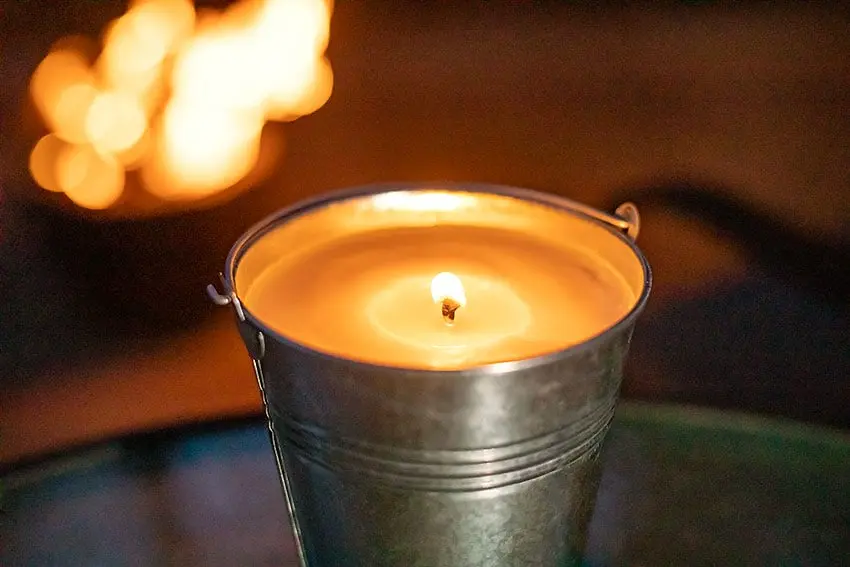
This recipe makes 3 container candles using 8 oz (227g) candle tins — the most popular outdoor citronella candle format.
What You Need
Equipment:
- Digital scale (essential — measure by weight, not volume)
- Double boiler or melting pitcher + pot with water
- Candy or candle thermometer
- 3 × 8 oz metal candle tins (metal preferred over glass for outdoor use — less heat risk)
- Candle wicks (ECO-14 or CD-18 for 8 oz tins) + wick stickers
- Wick centering bars or chopsticks
- Stirring spatula or spoon
Materials:
- 360g soy wax (e.g. Golden Brands 444 or 464)
- 90g yellow beeswax — creates an 80:20 soy/beeswax blend (total: 450g wax for 3 × 8 oz tins)
- 27–31g Java type citronella essential oil (6–7% of 450g wax)
- Optional: additional essential oils for blending (see blend section below)
Step-by-Step Instructions
- Prepare your containers. Clean and dry your candle tins with a small amount of isopropyl alcohol and a paper towel. Press a wick sticker to the bottom center of each tin and attach a pre-tabbed wick. Secure the wick upright using a wick bar or chopstick laid across the top of the tin.
- Weigh your waxes. Using your digital scale, weigh 360g of soy wax and 90g of beeswax separately into your melting pitcher. Measuring by weight (not volume) is essential for accurate fragrance load calculations.
- Melt the waxes. Combine the weighed waxes in your melting pitcher and melt using a double boiler method. Heat gently, stirring occasionally, until both waxes are fully liquid. Monitor temperature with your thermometer.
- Cool to the right temperature. Remove from heat. Allow the wax to cool from its melting temperature down to 80–85°C (176–185°F) — approximately 10–15°C above citronella's flash point. Patience here is crucial.
- Add citronella essential oil. When wax reaches 80–85°C, add your pre-weighed citronella essential oil (27–31g for 6–7% load). Add any additional blending oils at this stage as well. Stir gently but thoroughly for 2 full minutes to ensure complete incorporation.
- Pour into containers. When the wax cools slightly to around 70–75°C (158–167°F), carefully pour into your prepared tins, leaving approximately 1–1.5 cm of space at the top. Keep remaining wax in case of sinkholes.
- Cool slowly and re-pour if needed. Allow candles to cool at room temperature (ideally 20–24°C / 68–75°F). Avoid drafts or rapid cooling — these cause sinkholes and cracking. If sinkholes form after the first cooling, gently reheat remaining wax to 70°C and do a second top-up pour.
- Trim and cure. Once fully cooled (at least 24 hours), remove wick bars and trim wicks to 6mm (1/4 inch). For best scent throw, cure candles for 48–72 hours before first burn. The longer you cure soy candles, the stronger and more even the scent.
5 Citronella Essential Oil Blend Recipes for Better Repellency and Aroma
Pure citronella essential oil is effective, but blending with complementary essential oils can enhance both the repellency and the aroma profile.
Here are five tested blend recipes, all using Java type citronella as the base:
| Blend Name | Recipe (per 450g wax at ~7%) | Scent Profile | Added Benefit |
| Classic Outdoor | 25g citronella + 6g lemongrass | Bright, sharp, citrusy-green | Lemongrass adds citral for enhanced repellency |
| Tropical Garden | 20g citronella + 7g lemongrass + 5g lavender | Fresh citrus with soft floral base | Lavender has documented anti-mosquito properties |
| Forest Protection | 20g citronella + 8g eucalyptus + 4g cedarwood | Fresh, medicinal, woody | Eucalyptus enhances repellency; cedarwood repels moths |
| Herb Garden | 20g citronella + 6g peppermint + 5g rosemary | Sharp, invigorating, herbal | Peppermint and rosemary both have pest-repelling effects |
| Warm Evening | 22g citronella + 5g clove bud + 5g orange | Spicy-citrus, warm, inviting | Less intense citronella; prioritizes aroma over repellency |
| Blending Note When using multiple essential oils, calculate your total fragrance load across ALL oils combined — not per oil. Example: Classic Outdoor blend uses 25g + 6g = 31g total = 6.9% of 450g wax (within the 6–8% range for soy wax). |
Outdoor vs Indoor Citronella Candles: Different Formulas for Different Needs
The same recipe that works perfectly indoors may fail outdoors — and vice versa. Here is how to optimize your citronella candle formula based on where it will be used:
| Factor | Outdoor Citronella Candle | Indoor Citronella Candle |
| Wax recommendation | Soy/beeswax 80:20 blend (higher melt point) | 100% soy wax or coconut wax (better scent throw) |
| Container | Metal tins (safe for heat, wind-resistant) | Glass jars or ceramic (better aesthetics) |
| Fragrance load | 6–7% (repellency focus) | 7–10% (aroma focus) |
| EO choice | Pure Java type citronella EO + eucalyptus/lemongrass | Citronella EO blended with lavender or floral EO |
| Wick size | Larger wick — needs to burn through summer heat | Standard wick for diameter |
| Container size | Larger (8–16 oz) — bigger burn pool = more scent throw outdoor | Standard (4–8 oz) |
| Repellency priority | HIGH — use pure EO, not fragrance oil | LOW — fragrance oil acceptable |
How Long Does a Citronella Candle Actually Repel Mosquitoes?
Oil of citronella is recognized by the U.S. Environmental Protection Agency as an active ingredient used in insect-repellent products.
However, citronella candles provide limited and localized protection, with effectiveness influenced by factors such as formulation, airflow, distance, and outdoor conditions:
- Effective repellent radius: approximately 1–2 metres from the candle flame under calm conditions
- Effectiveness duration per burn: typically 60–120 minutes of meaningful repellency per session, as citronellal is highly volatile and diffuses quickly
- Wind effect: outdoor wind dramatically reduces effectiveness — candles placed upwind of seating areas perform better
- Heat amplification: a burning candle releases more citronellal than a cold throw — the heat vaporizes the citronellal from the wax pool
| Maximising Repellency For best outdoor results: place 2–3 citronella candles around your seating area rather than relying on one large candle. This creates overlapping repellent zones. Combine citronella candles with a citronella topical spray for people directly in the area — candles alone are insufficient as the sole repellent method. |
→ The science of citronella repellency: Citronella aromatherapy for mosquito repellent — active compounds and how they work.
Troubleshooting: Why Your Citronella Candle Doesn’t Smell Strong
The most common complaint about homemade citronella candles is weak scent. Here are the causes and fixes:
| Problem | Most Likely Cause | Fix |
| Weak or no scent when burning | EO added to wax that was too hot — flash off occurred | Ensure wax is at correct temperature before adding EO; use thermometer |
| Strong cold throw, weak hot throw | Fragrance load too low for your wax type | Increase to 8%; test with coconut wax blend for better hot throw |
| Scent fades after 30 minutes | Using fragrance oil with low retention, not EO | Switch to pure citronella EO; cure candles longer before first burn |
| Citronella smell too harsh or chemical-like | Using Ceylon type or low-quality EO | Use Java type citronella EO; add lavender or lemongrass to smooth scent |
| Oil pooling on top of candle | EO added too late (wax too cool) or not stirred enough | Add EO at 80–85°C and stir 2 full minutes; verify wax/EO compatibility |
| Candle smells when unlit but not when burning | Wick too small — insufficient heat to vaporize EO | Test larger wick size; ensure burn pool reaches full width of container |
| How to Make a Citronella Mosquito Repellent Candle: Quick Reference For a batch of 3 × 8 oz outdoor citronella candles (450g wax total): Wax: 360g soy wax + 90g yellow beeswax (80:20 blend) Essential oil: 27–31g Java type citronella EO (6–7% load) Optional blend: add 6g lemongrass EO for enhanced repellency Wick: ECO-14 or CD-18 for 8 oz metal tins Temperature guide: Melt waxes → cool to 80–85°C → add EO → stir 2 min → cool to 70–75°C → pour Cure 48–72 hours before first burn Repellency tip: Use PURE Java type citronella essential oil, not fragrance oil. Only real citronellal-rich EO provides mosquito-repelling effect. |
Source Pure Java Type Citronella Essential Oil for Candle Making
Global Essential Oil produces and exports Java type citronella essential oil (Cymbopogon winterianus) with the high citronellal content (35–45%) that makes it effective for both repellency and candle fragrance applications.
All products include:
- GC-MS certificate of analysis — citronellal %, Total Geraniol %, verified per batch
- SNI 06-3953-1995 compliant — Indonesia's national quality standard for Java citronella
- Halal MUI certified — suitable for cosmetic and personal care formulations
- Full documentation: COA, MSDS, Phytosanitary Certificate
- Flexible MOQ: from sample quantities to bulk for commercial candle manufacturers
→ View specifications and request a sample from our citronella essential oil product page.
Frequently Asked Questions
How much citronella essential oil should I add to a candle?
Most soy wax candles use a fragrance load of 6–8% by weight. For best results, add the citronella essential oil after the wax has cooled to the recommended pouring temperature to preserve its aroma and performance.
Can I use citronella essential oil instead of citronella fragrance oil in candles?
Yes. Citronella essential oil is preferred when you want both fragrance and natural mosquito-repellent properties, while fragrance oils are primarily used for scent and may not provide the same functional benefits.
Which wax is best for citronella candles outdoors?
Soy wax blended with beeswax is a popular choice for outdoor citronella candles because it offers good fragrance retention and improved heat resistance. The ideal wax depends on your climate and intended use.
How do I make citronella candles smell stronger?
Use the recommended fragrance load for your wax, add the oil at the correct pouring temperature, and allow the candle to cure before burning. Choosing high-quality Java type citronella oil can also improve scent performance.
Do citronella candles actually repel mosquitoes?
Yes, citronella candles can help repel mosquitoes within a limited area when made with genuine citronella essential oil. Their effectiveness depends on factors such as wind, placement, and the concentration of citronella oil.
Can I blend citronella with other essential oils in candles?
Yes. Citronella blends well with essential oils such as lemongrass, lavender, eucalyptus, and cedarwood. When blending, ensure the total fragrance load stays within the wax manufacturer's recommended limit.
What is the difference between Java type and Ceylon type citronella oil for candles?
Java type citronella oil contains significantly more citronellal than Ceylon type, making it the preferred choice for mosquito-repellent candles. It also offers a cleaner aroma and is widely used in commercial citronella candle production.