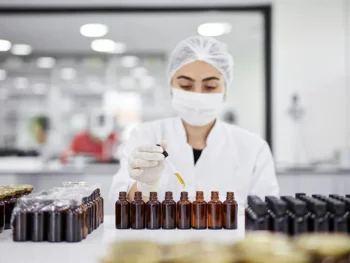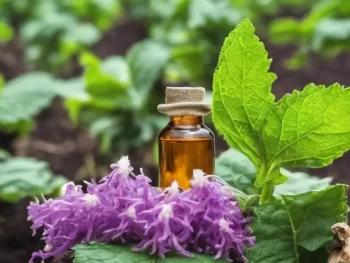
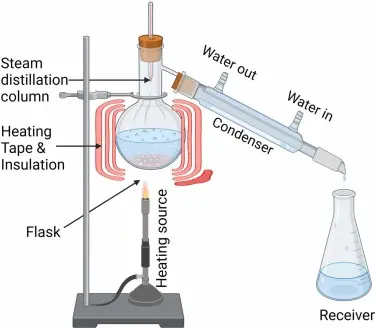
Steam distillation is the process that transforms an aromatic plant — a patchouli leaf, a clove bud, a vetiver root — into the essential oil you find in fragrance, cosmetics, and therapeutic products around the world.
It is one of the oldest separation techniques in chemistry, refined over centuries of perfumery and natural medicine practice, and still the dominant production method for over 90% of commercial essential oils today.
This guide explains how steam distillation works — from the physics of why it works to the step-by-step process used in commercial production — with real examples from Indonesian essential oil manufacturing.
As a manufacturer operating distillation facilities for patchouli, clove, lemongrass, vetiver, citronella, cajuput, and other Indonesian essential oils, we bring a perspective that academic articles and retail brand guides cannot: what it actually looks like to distill essential oil at scale.
| Quick Summary: What Is Steam Distillation? The essential oil steam distillation process is a method of extracting volatile aromatic compounds from plant material using water vapour. Steam passes through the plant material, vaporises the essential oil, carries it into a condenser where it cools back to liquid, and the oil — which does not mix with water — is separated from the water (called hydrosol or floral water). The result is pure essential oil — the concentrated aromatic compounds of the plant in liquid form. |
Why Steam Distillation Works: The Physics
To understand steam distillation, you need to understand one key principle: when two immiscible liquids are combined, each contributes to the total vapour pressure independently.
This is Dalton's Law of Partial Pressures, and it is the physics that makes steam distillation possible.
The Problem It Solves
Essential oil compounds — terpenes, sesquiterpenes, alcohols, esters, aldehydes — typically have boiling points well above 150°C.
At these temperatures, many of the most valuable aromatic compounds would be thermally degraded or chemically altered before they could be collected.
Direct distillation of essential oils without steam would destroy the very compounds you want to extract.
Steam distillation solves this problem by exploiting Dalton's Law. When you add water (steam) to the system, the total vapour pressure of the mixture reaches atmospheric pressure at a temperature below the boiling point of either component alone.
This means essential oil compounds can be distilled at temperatures of 60–100°C instead of 150–300°C — well below the temperature that would destroy them.
Why Oil and Water Separate
Essential oils are hydrophobic (they do not dissolve in water — they are immiscible with water).
This is why, after condensation, the essential oil and water naturally form two distinct layers.
The oil layer — typically lighter than water, though some oils are denser — is skimmed or drained off, leaving the water phase (hydrosol) behind.
This clean, natural separation is one of the great practical advantages of steam distillation over solvent extraction methods.
| Dalton's Law in Plain Language Imagine two friends pushing a door open together — one pushes with force X, the other with force Y. Together they push with force X+Y. Dalton's Law says the same thing about vapour pressures: when water vapour and essential oil vapour are both present, their combined push on the system reaches atmospheric pressure at a lower temperature than either would alone. This lower temperature is what allows steam distillation to extract fragile aromatic compounds without destroying them. |
The Steam Distillation Process: Step-by-Step
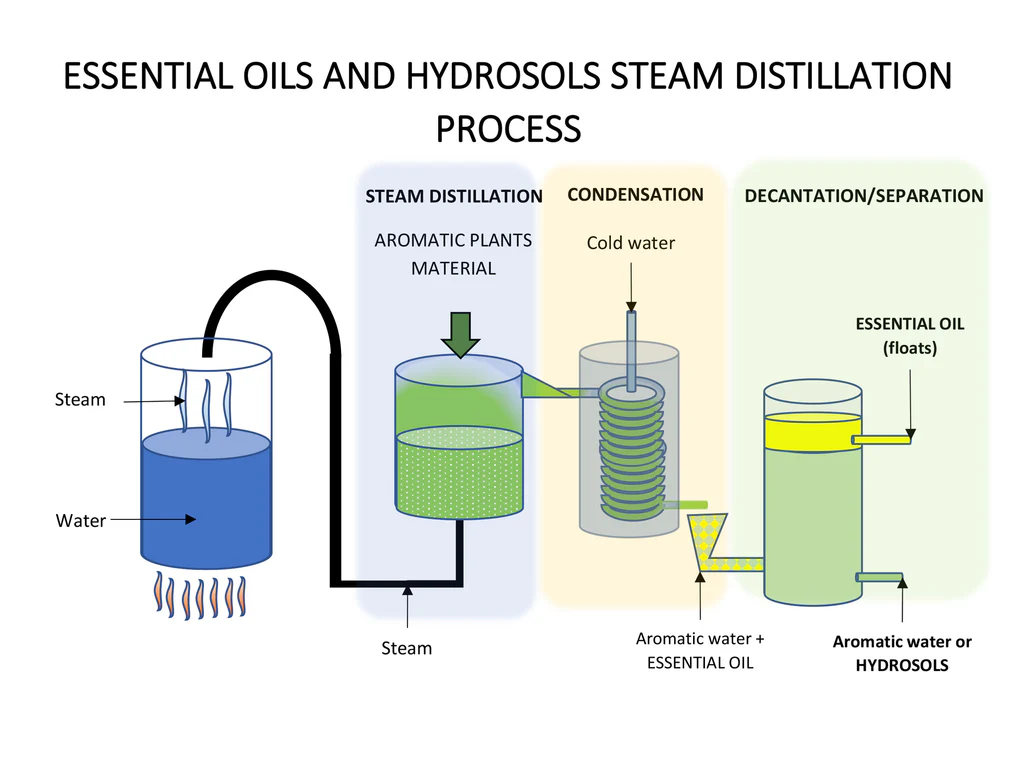
The following describes the standard commercial essential oil steam distillation process used in Indonesian production facilities, including our own:
Step 1 — Plant Material Preparation
The aromatic plant material is harvested, dried (or used fresh), and prepared for the still. The preparation varies significantly by plant:
- Patchouli leaves (Pogostemon cablin): Leaves are dried for 3–7 days in the shade before distillation. Drying is critical — undried leaves have cell walls intact that prevent oil release; over-dried leaves lose volatile compounds. The drying process also begins fermentation of the leaf material which modifies the patchoulol precursors, contributing to the characteristic 'aged earth' complexity of Indonesian patchouli oil
- Clove (Syzygium aromaticum): Bud, leaf, or stem each produce different oils with different eugenol content. Clove stems (80–92% eugenol) are most commonly used for eugenol-targeted distillation. Plant material is loaded directly — no pre-drying required for clove
- Vetiver roots (Chrysopogon zizanioides): Roots are washed, cut or shredded, and soaked in water for 24–72 hours before distillation — this pre-soaking is essential for vetiver. The soaking hydrates the root tissue and begins breaking down cell walls, dramatically improving oil yield. Vetiver roots without pre-soaking yield significantly less oil per kg
- Lemongrass (Cymbopogon citratus): Fresh or slightly wilted leaves — harvested at optimum growth stage (just before flowering) for maximum citral content. Lemongrass is often distilled immediately after harvest
Step 2 — Loading the Still
Plant material is packed into the distillation vessel (still) — typically a stainless steel tank in commercial production.
The loading density matters: packed too tightly, steam cannot permeate all the plant material; too loosely, steam channels form and most material is under-extracted.
Commercial stills range from 50 litres (small artisanal) to 5,000+ litres (industrial) in Indonesian essential oil production.
Step 3 — Steam Introduction
Steam is introduced into the still — either from an external boiler (direct steam distillation) or by heating water in the base of the still itself (hydrodistillation).
Commercial Indonesian distillation primarily uses direct steam from external boilers, which allows more precise control of steam pressure and temperature.
The steam passes through the plant material. The heat and moisture cause the essential oil glands (oil sacs or secretory structures) in the plant tissue to rupture, releasing the volatile aromatic compounds into the steam. The compounds vaporise and are carried upward with the steam.
Step 4 — Vapour Transport and Condensation
The steam carrying essential oil vapour travels through a connecting pipe to the condenser — a coiled pipe submerged in cold water.
The temperature drop in the condenser causes both the steam and essential oil vapour to condense back into liquid form.
The liquid then flows into a separator (Florentine flask) where the oil and water naturally separate into two distinct layers.
Step 5 — Oil-Water Separation
In the separator, the essential oil and water (hydrosol) separate due to their immiscibility.
Most essential oils are lighter than water and float on top, from where they can be decanted.
Some essential oils — notably clove (which contains heavy eugenol, specific gravity ~1.067) — are denser than water and sink to the bottom.
This is an important practical consideration in separator design.
Step 6 — Cohobation (Optional)
Cohobation is the practice of re-using the hydrosol water by feeding it back into the still for another distillation cycle.
This captures water-soluble aromatic compounds that dissolved in the hydrosol rather than separating as oil — improving overall oil yield.
Cohobation is particularly important for rose oil and ylang-ylang distillation, where significant aromatic material is lost to the hydrosol in a single pass.
Step 7 — Quality Testing
Freshly distilled essential oil is tested for key quality parameters: specific gravity, refractive index, optical rotation, colour, and aroma — and in commercial production, GC analysis to verify compound content (patchoulol %, citronellal %, eugenol %, etc.).
A batch that does not meet specification is either re-distilled, blended, or downgraded.
For the complete guide to reading these quality parameters, see: Understanding COA & GCMS Reports in Essential Oil Trading.
Related Reading
→ Patchouli Oil Grades Explained — How Distillation Creates Different Grades
→ COA & GCMS Reports — Reading Quality Data from Steam Distillation
The Critical Parameters: Temperature, Pressure, and Time
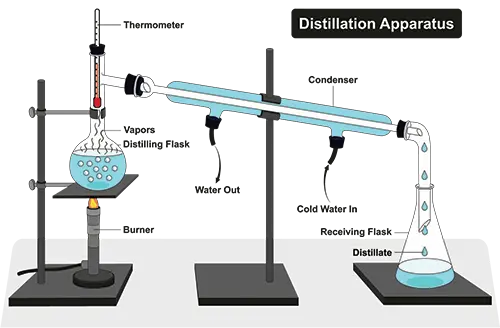
Three variables determine the quality and yield of steam-distilled essential oil. Getting these wrong is the primary cause of quality problems in essential oil production
Temperature
The optimal temperature range for steam distillation of most essential oils is 60°C to 100°C (140°F to 212°F) — well below the boiling point of the aromatic compounds being extracted. This range is maintained by controlling steam pressure.
- Too low: Insufficient energy to rupture oil cells and vaporise aromatic compounds → incomplete extraction, poor yield
- Too high: Thermal degradation of heat-sensitive compounds → loss of delicate top notes, altered aroma profile, potential formation of artefact compounds not present in the plant
- Precise control: Different plant species have different optimal temperature profiles. Patchouli can tolerate slightly higher temperatures than delicate floral oils. This is why experienced distillers develop specific protocols for each plant species — there is no universal temperature setting
Pressure
Steam pressure in commercial distillation typically runs between 15–20 PSI (1.0–1.4 bar) above atmospheric pressure. Higher pressure allows faster distillation — but also increases temperature, which can damage delicate compounds.
- Low pressure (near atmospheric): Slower distillation, more complete extraction of lighter volatile compounds, better preservation of top notes
- Higher pressure: Faster distillation cycle (important for commercial throughput), but may extract heavier compounds that add character at the cost of lighter, more delicate notes
Distillation Time
The distillation time required varies enormously between plant species — and getting this right requires experience:
| Essential Oil | Plant Part | Typical Distillation Time | Key Timing Note |
| Patchouli | Dried leaves | 4 – 8 hours | Most patchoulol extracted in first 4 hrs; longer distillation adds heavier sesquiterpenes that increase complexity |
| Clove Leaf | Fresh/dried leaves | 3 – 5 hours | Eugenol-dominant extraction relatively fast; stem oil takes longer due to denser material |
| Lemongrass | Fresh leaves | 1.5 – 3 hours | Citral compounds are relatively volatile — fast extraction; over-distillation loses top notes |
| Vetiver | Soaked roots | 15 – 30 hours | One of the longest distillation times in commercial production; heavy sesquiterpenes require extended extraction |
| Citronella | Fresh/wilted leaves | 2 – 4 hours | Citronellal is moderately volatile; standard steam conditions sufficient |
| Cajuput | Fresh leaves & twigs | 2 – 4 hours | 1,8-cineole is highly volatile — relatively fast extraction |
| Agarwood/Oud | Resin-saturated chips (pre-soaked) | 12 – 30 hours | Chromones and heavy sesquiterpenes require very extended distillation; quality oil cannot be rushed |
| The Distiller's Dilemma: Time vs Quality Longer distillation time generally extracts more total oil — but it is not always better. The first fraction of a distillation run typically contains the lighter, more volatile, highest-quality aromatic compounds. Later fractions contain heavier, less valuable material. In premium essential oil production — particularly for vetiver and patchouli — some distillers fractionate the distillation, collecting the early run ('first fraction' or 'heart oil') separately from the later run. This is the basis of Molecular Distilled (MD) and 'heart oil' grades in patchouli. |
Types of Steam Distillation: What’s the Difference?
Hydrodistillation (Water Distillation)
In hydrodistillation, the plant material is submerged directly in water in the still, and the water is heated to boiling.
This is the simplest and oldest form of distillation — the traditional alembic still used for centuries in perfumery uses this method. The advantage is simplicity and low equipment cost.
The disadvantage is that some water-soluble aromatic compounds dissolve in the boiling water rather than being carried in the steam, reducing yield and potentially altering the oil's composition.
Water and Steam Distillation
A hybrid approach: plant material rests on a grid above water in the still — it is not submerged, but the steam generated from the water below passes through it.
This prevents the 'scorching' that can occur when plant material sits in direct contact with very hot water, while still using water in the same vessel as the plant material. Used for some delicate floral materials.
Direct Steam Distillation
Steam is generated in a separate external boiler and piped into the bottom of the still, which contains only plant material — no water. This is the standard method in commercial essential oil production including all Indonesian commercial distillation at scale.
Advantages: more precise control over steam pressure and temperature (the boiler parameters are independent from the still), ability to run continuously, and better capacity control.
Cohobation Distillation
The hydrosol water from a distillation run is returned to the still for additional distillation cycles, capturing water-soluble aromatic compounds that would otherwise be lost.
Standard practice in rose oil and ylang-ylang distillation where significant aromatic material enters the hydrosol.
| Method | Water Used? | Separate Boiler? | Best For | Common Use In Indonesia |
| Hydrodistillation | Yes — plant submerged | No | Small-batch, simple plant material | Small artisanal distillers |
| Water & Steam | Yes — plant above water | No | Delicate floral material, some herbs | Limited — mostly small-scale |
| Direct Steam | No water in still | Yes — external boiler | Commercial production, all plant types | Standard at commercial scale (GEO) |
| Cohobation | Yes — recycled hydrosol | Optional | Rose, ylang-ylang, high-value oils | Ylang-ylang distillation |
Steam Distillation vs Other Extraction Methods
Steam distillation is not the only way to extract essential oils — and for some plant materials, it is not the best method. Here is how it compares to the main alternatives:
| Method | How It Works | Advantages | Disadvantages | Best For |
| Steam Distillation | Steam carries volatile compounds to condenser | Pure oil; no solvent residue; scalable; cost-effective | Destroys heat-sensitive compounds (some florals); hydrosol by-product | 90%+ of commercial oils: patchouli, clove, lemongrass, vetiver, eucalyptus, cajuput |
| Cold Pressing (Expression) | Mechanical pressing of peel/zest | Preserves all volatile compounds; no heat damage; fast | Only works for citrus peel; cannot use for most botanicals | Citrus oils: bergamot, lemon, orange, grapefruit |
| Solvent Extraction | Chemical solvent dissolves aromatic compounds | Extracts heat-sensitive compounds; high yield | Solvent residue risk; produces 'concrete' or 'absolute' (not pure EO) | Rose absolute, jasmine absolute, high-value florals |
| CO2 Supercritical Extraction | CO2 under high pressure acts as solvent | No solvent residue; full spectrum; room temperature | Very expensive equipment; high pressure requirements; niche use | Premium extraction of heat-sensitive or rare botanicals |
| Enfleurage (historical) | Fat absorbs aromatic compounds at room temperature | Preserves extremely delicate compounds | Extremely slow, labour-intensive, very expensive | Historical: jasmine, tuberose — rarely used commercially today |
For Indonesian essential oils — patchouli, clove, lemongrass, vetiver, citronella, cajuput, nutmeg — steam distillation is the universal production method.
The plant material, the aromatic compounds being extracted, and the economics of Indonesian production all align with steam distillation as the optimal approach.
How Distillation Decisions Affect the Final Oil Quality
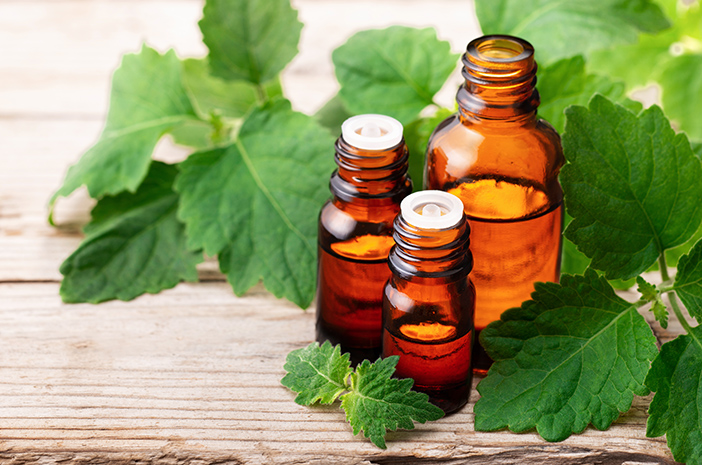
This is the section that only a practising distiller can write with authority. The decisions made during distillation — before, during, and after the still runs — directly determine the quality of the oil that ends up in your bottle.
Harvest Timing Affects What’s Available to Distill
Aromatic compound content in the plant is not constant — it peaks at specific growth stages.
Patchouli leaves harvested just before flowering have the highest patchoulol content.
Lemongrass harvested just before seed set has the highest citral content.
Distilling over-mature or early-harvested plant material simply produces less oil with different chemistry — no amount of distillation skill can recover compounds that are not in the plant.
Distillation Duration and Fraction Quality
As described in Section 3, different fractions of a distillation run have different composition. The practical implication for quality:
- Patchouli 'Dark grade': Full run distillation — the complete oil including heavier sesquiterpenes from longer distillation. The amber/dark colour comes partly from iron contact during distillation.
- Patchouli 'Light (Iron-Free) grade': Same plant material but distilled in stainless-only equipment and processed to remove iron compounds. The distillation process is the same; the difference is equipment and post-processing.
- Patchouli 'MD (Molecular Distilled) grade': The full distilled oil is then further processed by vacuum molecular distillation to isolate and concentrate the most valuable sesquiterpene fraction, particularly patchoulol. This post-distillation step, not the primary distillation itself, creates the MD grade. See: Patchouli Oil Grades Explained.
Why Indonesian Patchouli Distillation Has a Unique Step
One aspect of patchouli distillation that is specific to Indonesian practice: the dried patchouli leaves are sometimes lightly fermented before distillation — a step that breaks down patchoulol precursor compounds (patchouli pyridine and norpatchoulenol precursors) into patchoulol itself through enzymatic action.
This fermentation step is part of the generational expertise of Indonesian distillers and contributes to why Indonesian patchouli oil consistently shows higher patchoulol content than Indian patchouli oil distilled from similar plant material. See: Indonesian Patchouli vs Indian Patchouli Oil.
Oil Yield: What to Expect Per Plant
| Essential Oil | Plant Material | Typical Yield | What 1 kg of Oil Requires |
| Patchouli | Dried leaves | 1.5 – 3.5% | 30–65 kg of dried patchouli leaves |
| Clove Stem | Dried stems | 5 – 8% | 12–20 kg of clove stems |
| Clove Leaf | Dried leaves | 2 – 3.5% | 30–50 kg of clove leaves |
| Lemongrass | Fresh leaves | 0.2 – 0.4% | 250–500 kg of fresh lemongrass |
| Vetiver | Soaked roots | 1 – 2% | 50–100 kg of vetiver roots |
| Citronella | Fresh/wilted leaves | 0.5 – 1.2% | 80–200 kg of citronella grass |
| Cajuput | Fresh leaves & twigs | 0.5 – 1.5% | 65–200 kg of cajuput leaves |
| Agarwood (high quality) | Resin-rich chips | 0.5 – 2% | 50–200 kg of agarwood chips |
These yield figures explain why essential oils are expensive. Producing 1 kg of lemongrass oil may require 250–500 kg of fresh plant.
Processing this volume requires significant agricultural land, harvesting labour, and distillation energy.
The economics of Indonesian essential oil production are fundamentally shaped by these yield realities.
Steam Distillation in Indonesian Essential Oil Production
Indonesia's position as one of the world's most important essential oil producing countries is built on decades of accumulated distillation expertise — from the smallholder distillers of Sulawesi who have been producing patchouli oil for generations, to the commercial facilities that process clove and cajuput from Maluku, to the highland operations that distill vetiver from Garut's volcanic soils.
At Global Essential Oil, our production facilities in West Java incorporate both small-batch and large-scale steam distillation — producing multiple grades of patchouli (Dark, Light, MD), clove (Bud, Leaf, Stem), lemongrass, citronella, cajuput, vetiver, and other Indonesian essential oils.
Every batch is GC-tested for key compound content before release, and every shipment includes the batch-specific COA that documents the distillation outcomes.
For buyers who want to understand not just what they are buying but how it was made — from soil to still to bottle — we are happy to discuss the specifics of our production process for any oil in our range.
Related Reading
→ Essential Oils from Indonesia — Complete Product Range
→ How to Source Essential Oils from Indonesia — Complete Importer's Guide
| Request Steam-Distilled Indonesian Essential Oil Samples Contact Global Essential Oil to request samples of our steam-distilled Indonesian essential oils — patchouli (Dark, Light, or MD grade), clove, lemongrass, vetiver, citronella, cajuput, or others — with batch-specific COA showing GC analysis results from our in-house quality testing. We respond within 1 business day. → Contact Global Essential Oil — Request Indonesian Essential Oil Samples |
Frequently Asked Questions
What is steam distillation of essential oils?
Steam distillation is the process of extracting essential oils using water vapor. The steam passes through plant material, carries the aromatic compounds to a condenser, and separates into essential oil and hydrosol. It is the most widely used extraction method for commercial essential oil production.
What temperature is used in essential oil steam distillation?
Most steam distillation processes operate between 60°C and 100°C. This allows aromatic compounds to be extracted without exposing them to the much higher temperatures required by their individual boiling points.
How long does essential oil steam distillation take?
Distillation time depends on the plant material. Lemongrass may require 1–3 hours, patchouli 4–8 hours, while heavier oils such as vetiver or agarwood can take significantly longer. The duration is influenced by the oil composition and extraction conditions.
What is the difference between steam distillation and hydrodistillation?
In steam distillation, steam is generated separately and passed through the plant material. In hydrodistillation, the plant material is boiled directly in water. Steam distillation is the preferred method for large-scale commercial production because it offers greater process control.
What is hydrosol and how is it different from essential oil?
Hydrosol is the aromatic water produced during steam distillation after the essential oil has been separated. Unlike essential oils, hydrosols contain water-soluble compounds and are much less concentrated, making them suitable for applications such as skincare and personal care products.
Does steam distillation change the chemistry of essential oils?
Yes. Steam distillation selectively extracts volatile and heat-stable compounds, while some heat-sensitive components may be lost or altered during processing. However, the resulting oil generally retains the characteristic aroma and properties expected from the plant.
How does distillation affect patchouli oil quality and grades?
Distillation conditions can influence patchoulol content, color, and overall oil quality. Different processing methods are used to produce Dark, Light (Iron-Free), and Molecular Distilled (MD) patchouli oil grades, each designed for specific fragrance and cosmetic applications.
Why does essential oil production require so much plant material?
Essential oils occur in very small concentrations within plants, often less than a few percent of the total plant weight. As a result, large quantities of raw material are required to produce a relatively small amount of essential oil.