Vetiver oil is one of perfumery's most enigmatic ingredients — a deep, smoky, earthy base note that no synthetic has ever truly replicated. And while vetiver is cultivated in Haiti, India, Réunion, and Java, it is Indonesian vetiver from the Garut region of West Java that occupies a unique position: more affordable than Haitian vetiver, distinctly different in aroma profile from Indian vetiver, and carrying the unmistakable character of volcanic soil that gives it an almost oud-like smokiness that perfumers actively seek.
If you're a fragrance house, cosmetic manufacturer, or essential oil distributor looking for a reliable vetiver oil supplier Indonesia, this guide covers everything you need: why Garut vetiver is different, what specifications to request, how to distinguish a genuine manufacturer from a broker, and how to structure your first order. And if you'd like to go straight to our product page, Global Essential Oil's Indonesian Vetiver Oil is available here.
Related Reading
→ Vetiver Essential Oil — Product Specifications & Sample Request
→ How to Source Essential Oils from Indonesia — Complete Importer's Guide
Why Garut, West Java Produces Indonesia’s Best Vetiver

Vetiveria zizanoides (syn. Chrysopogon zizanioides) is a perennial tropical grass cultivated primarily for the essential oil distilled from its roots. Unlike most essential oils — which are extracted from flowers, leaves, or bark — vetiver oil comes from the roots that grow downward up to 4 metres into the soil. This unique characteristic makes vetiver a demanding crop: roots must develop for 15–18 months before harvest, and it takes approximately 800kg of dried vetiver roots to produce just 1kg of oil
In Indonesia, vetiver cultivation is concentrated almost exclusively in Garut Regency, West Java. The Garut region sits on volcanic highlands surrounded by mountains — including Papandayan and Guntur volcanoes. This geography creates two critical advantages for vetiver quality:
- Volcanic soil rich in sulfur and minerals: The high sulfur content from volcanic activity is absorbed directly into the vetiver roots during their long growing period. Sulfur compounds contribute to the distinctive smoky, almost oud-like character of Garut vetiver — a profile that Indonesian vetiver uniquely possesses and that perfumers increasingly specify by origin.
- Highland microclimate: Garut's altitude (400–1,200m above sea level) and consistent rainfall create optimal conditions for slow root development — which directly correlates with higher concentration of sesquiterpene compounds responsible for vetiver's fixative and aromatic properties.
Garut Vetiver vs Other Origins — Aroma Profile Comparison Indonesian/Garut vetiver has an earthier, smokier, more resinous profile compared to Haitian vetiver (cleaner, greener, more refined) and Indian vetiver (drier, woodier). This makes Garut vetiver particularly suited for oriental, woody, amber, and masculine fragrance compositions — and explains why Indonesian vetiver trades at a different price point than Haitian while still commanding strong demand from perfumers who specifically seek its character.
| Characteristic | Garut, Indonesia | Haiti | India (Rajasthan) |
| Aroma Profile | Smoky, earthy, resinous, slightly oud-like | Clean, green, refined, woody-rooty | Dry, woody, slightly harsh |
| Patchoulol Analogue (Khusimol %) | ~40–55% (varies by batch) | ~55–65% | ~35–50% |
| Price Relative (per kg) | Most affordable | Most expensive | Mid-range |
| Best For | Oriental, woody, amber, masculine fragrance | Fine fragrance, luxury perfumery | Industrial fragrance, personal care |
| Harvest Cycle | 15–18 months | 12–18 months | 12–15 months |
| Key Differentiator | Volcanic soil — sulfur character | Terroir refinement | High-volume availability |
Related Reading
→ Patchouli Essential Oil — Another Premium Indonesian Base Note
→ Patchouli Oil Grades Explained: Dark, Light & MD — Blending with Vetiver
Types of Indonesian Vetiver Oil: What’s Available in the Market

Indonesian vetiver oil is not a single homogeneous product. Several processing variants are commercially available, each with different characteristics and applications:
| Type | Processing | Aroma | Best Application | Price Tier |
| Standard Steam Distilled | Traditional steam distillation of dried roots | Deep smoky, earthy, heavy | Fragrance compounds, incense, aromatherapy | Base |
| Rectified / Deodorized | Additional processing to reduce burnt/smoky note from high-pressure distillation | Cleaner, smoother, more woody | Fine fragrance, premium cosmetics | Mid |
| CO₂ Extracted | Supercritical CO₂ extraction — preserves more aromatic complexity | Complex, multi-layered, closest to raw root | Niche perfumery, luxury fragrance, CO₂ specialty market | Premium |
| Molecular Distilled | High-vacuum fractionation for higher concentration of key compounds | Refined, concentrated, smooth | Ultra-premium fragrance, specialty applications | Highest |
| Vetiverol (Derivative) | Isolated vetiver alcohol fraction | Specific vetiver-character compounds | Aroma chemical use, specific fragrance formulations | Variable |
Important note on 'burnt odour': Traditional Indonesian vetiver distillation used very high pressure, which can introduce a burnt or smoky off-note that some buyers find undesirable. Reputable manufacturers like Global Essential Oil have invested in specific low-pressure distillation equipment and rectification processes to reduce this note — always ask about distillation method when requesting a sample.
Technical Specifications: What to Request Before You Order
When evaluating Indonesian vetiver oil suppliers, always request a batch-specific Certificate of Analysis (COA) and verify that the stated parameters fall within the accepted quality range. Here are the key specifications for Indonesian vetiver oil:
| Parameter | Specification (Indonesian Vetiver) | Why It Matters |
| Botanical Name | Vetiveria zizanoides (syn. Chrysopogon zizanioides) | Confirms correct species — no substitution |
| Plant Part | Roots (dried, washed) | Roots only — stems and leaves produce inferior oil |
| Extraction Method | Steam distillation (standard) / CO₂ (specialty) | Affects aroma profile and chemical composition |
| Colour | Dark amber to dark brown (steam distilled); amber (rectified) | Visual QC — should match specification for type ordered |
| Specific Gravity at 20°C | 0.988 – 1.025 | Key purity indicator — deviation signals adulteration |
| Refractive Index at 20°C | 1.519 – 1.530 | Optical property confirming genuine oil profile |
| Optical Rotation | (+) 15° to (+) 30° | Confirms chiral compound profile — detects synthetic blending |
| Khusimol (Vetiver Alcohol) % | Typically 40–55% (Indonesian origin) | Primary quality compound — higher = richer aroma |
| Solubility | Soluble in alcohol (1:1 in 80% ethanol) | Practical test easily performed by buyer |
| Flash Point | Approximately 100–110°C | Required for shipping safety classification |
| Shelf Life | 36–48 months (stored correctly) | Important for inventory planning |
| Storage | Cool, dark, sealed amber or aluminium container | Prevents oxidation and aroma degradation |
For detailed guidance on reading and interpreting COA documents, see: Understanding COA & GCMS Reports in Essential Oil Trading.
What the GCMS Report Should Show for Indonesian Vetiver
The key compounds to look for in a GCMS report for authentic Indonesian vetiver include: khusimol (vetiver alcohol), isovalencenol, vetiselinenol, β-vetivenene, and khusimene. The specific ratio of these compounds varies by origin and processing method. A GCMS showing high levels of synthetic patchouli alcohol or uncharacteristic synthetic sesquiterpenes is a red flag for adulteration. Always compare the supplier's GCMS to a reference standard for Indonesian vetiver.
How to Verify a Vetiver Oil Supplier Indonesia
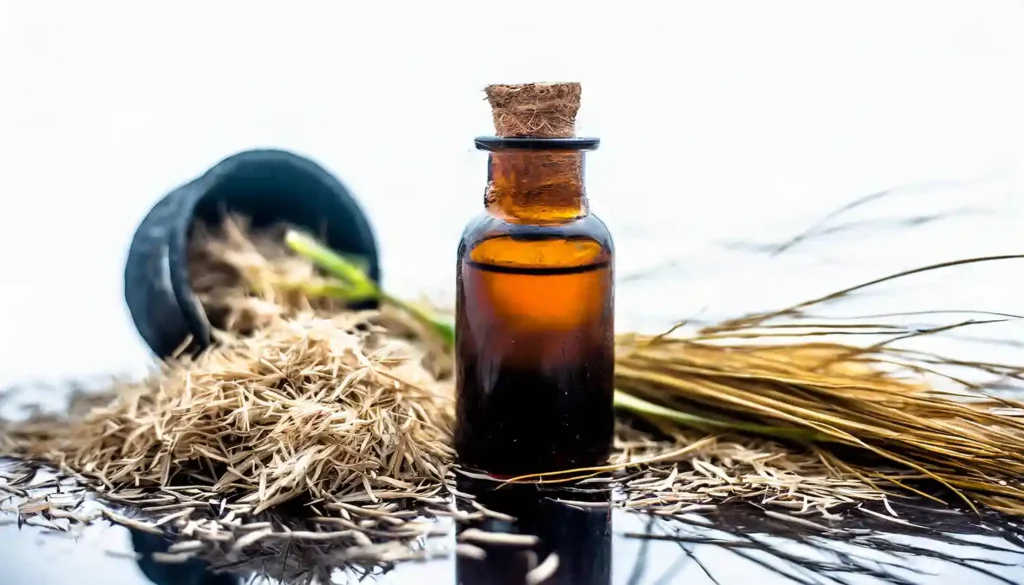
The Indonesian essential oil market includes genuine manufacturers, local distillers, brokers, and traders — not all of whom are transparent about their role. For vetiver specifically, the supply chain is more fragmented than for patchouli or clove, because vetiver distillation in Garut involves many small-scale local operators. Here is how to navigate this landscape:
Identify Whether You’re Dealing with a Manufacturer or a Broker
- A manufacturer: Owns or directly contracts distillation equipment. Can tell you specifically which village/sub-district in Garut their vetiver is sourced from. Can provide photos of roots, drying grounds, and distillation setup.
- A regional accumulator: Buys crude oil from multiple small distillers and blends/standardises to a consistent spec. Legitimate tier — often provides better consistency than single small distillers, but not the same as a manufacturer.
- A broker/trader: Buys from accumulators or manufacturers and resells. No production involvement — limited ability to guarantee spec, accommodate customisation, or provide traceability.
- An exporter/manufacturer: The ideal partner for B2B bulk orders — directly involved in production or accumulation, holds export license, provides full documentation set. Global Essential Oil operates at this level, working directly with Garut farmer networks.
The 6-Point Supplier Verification Checklist
| Verification Step | What to Ask or Check | Red Flag |
| Business registration | Request NIB (Nomor Induk Berusaha) and export license number | Cannot provide, delays, or numbers don't match |
| Halal certification | Request MUI Halal certificate — verify number at halalmui.org | Certificate in different company name, expired, or unavailable |
| DUNS Number | Ask for D&B DUNS number — verify independently at dnb.com | Cannot provide or number not verifiable |
| Video call factory/facility tour | Schedule a call showing roots, distillation area, storage tanks | Refuses or 'facility' is an office/home |
| Sample with batch-specific COA | Request 50–100ml sample with COA for that exact batch | Provides generic/undated COA or different batch number |
| Origin specificity | Can they name the specific sub-district in Garut? Who are the farmers? | Vague answers like 'from Java' without specifics |
Red flags specific to vetiver sourcing
- Price significantly below market — genuine Garut vetiver requires 800kg roots per 1kg oil and 15–18 months growing time; prices that seem too good usually indicate adulteration or substitution
- Cannot confirm Garut origin specifically
- Insists on very large MOQ before any sample
- GCMS shows compound profile inconsistent with Indonesian origin
- No evidence of relationship with local Garut farmer community
Related Reading
→ Complete Supplier Verification Guide — How to Source Essential Oils from Indonesia
→ Understanding COA & GCMS Reports in Essential Oil Trading
MOQ, Packaging & Pricing: What to Expect
Minimum Order Quantity
Indonesian vetiver oil is typically traded in the following volume tiers:
- Sample: 50–200ml — for quality evaluation before bulk commitment. Comes with COA, GCMS, and MSDS.
- Trial order: 1–5kg in jerrycan — suitable for formulation testing at scale.
- Small bulk: 25kg (1 jerrycan) — common for specialty perfumers and small cosmetic brands.
- Standard bulk: 50–100kg — multiple jerrycans or small drum; standard for mid-size buyers.
- Large bulk: 180kg (1 aluminium drum) or multiple drums — for fragrance houses and industrial buyers.
Unlike high-volume oils like patchouli (where drums of 180kg are standard), vetiver is typically traded in smaller quantities because global production volume is significantly more limited. Be realistic about availability — a credible supplier will communicate stock constraints honestly rather than overpromising.
Packaging
- Aluminium jerrycans (1–25kg): Standard for vetiver due to its dark colour and viscosity — aluminium prevents contamination and light degradation.
- Aluminium drums (180kg): For large bulk orders — sealed, IATA/IMDG-compliant for international shipping.
- Amber glass (sample quantities): Used for samples — protects from UV degradation during transit.
Pricing Context
Indonesian vetiver oil is typically significantly less expensive than Haitian vetiver — making it the preferred choice for cost-sensitive applications where the specific Haitian profile is not required. Pricing fluctuates based on:
- Harvest yield: Garut vetiver harvest typically peaks between June and September. Post-harvest pricing is most stable; off-season can see 15–30% price increases.
- Processing type: Standard steam distilled < rectified < CO₂ extracted < molecular distilled, in order of increasing price.
- Volume: Larger orders receive better per-kg pricing — typically 10–20% discount from 25kg to 180kg volume.
- Global fragrance market demand: Indonesian vetiver demand tracks global fragrance industry activity — demand spikes from major fragrance houses affect pricing for all buyers downstream.
Applications: Where Indonesian Vetiver Oil Is Used
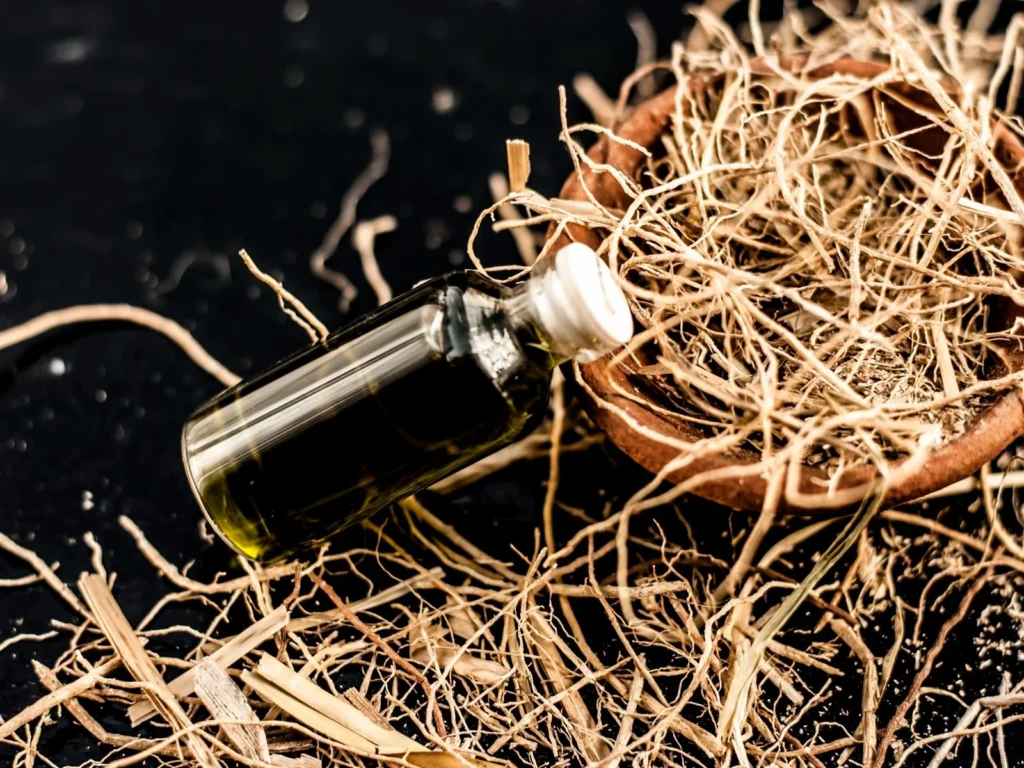
Fine Fragrance & Perfumery (Primary Market)
Vetiver is one of perfumery's most versatile base notes — a fixative that simultaneously anchors and enriches a composition. Indonesian vetiver's smoky, resinous character makes it especially effective in:
- Oriental and amber fragrances: The sulfurous smokiness adds depth to amber accords that Haitian vetiver cannot replicate in the same way
- Masculine woody compositions: Notable in fragrance types like fougère, chypre, and woody aromatic — Dior's Eau Sauvage uses vetiver as a key ingredient
- Oud accords: The oud-like opening note of Garut vetiver makes it a natural partner in Middle Eastern fragrance compositions and western oud-inspired perfumery
- Natural perfumery: IFRA-compliant natural fragrance formulations where genuine fixatives are required to replace synthetic alternatives
For perfumers working with Indonesian vetiver, the ideal blending partners include: Patchouli Oil (Dark or Light grade), agarwood, sandalwood, cedarwood, and Lemongrass Oil as a citrus top note to lift the heaviness of the accord.
Luxury Cosmetics & Skincare
Beyond fragrance, vetiver oil has documented cosmetic properties that make it valuable in premium formulations:
- Sebum-regulating: Vetiver's astringent action helps balance oily skin — used in facial oils, toners, and acne treatments for mature formulations
- Anti-inflammatory: Compounds including khusimol have shown anti-inflammatory activity, supporting use in soothing serums and after-sun products
- Natural fragrance in cosmetics: The IFRA-approved usage levels allow vetiver as a natural fragrance component in leave-on products — a premium alternative to synthetic woody notes
- Men's grooming: Beard oils, aftershave balms, and men's skincare lines frequently feature vetiver for its masculine aroma character
Derivatives: Vetiverol and Vetiveryl Acetate
Indonesian vetiver is also used as feedstock for aroma chemical derivatives. Vetiverol (an isolated vetiver alcohol fraction) and Vetiveryl Acetate (the acetate ester of vetiverol) are produced from Indonesian vetiver and used by aroma chemical companies as raw materials for synthetic fragrance production. These derivatives represent a significant portion of Indonesian vetiver oil exports to industrial buyers.
Vetiver's IFRA Status
Vetiver oil is an IFRA-approved ingredient with specific usage limits by product category under the IFRA 51st Amendment. Leave-on skin products have stricter concentration limits than rinse-off products or fine fragrance applications. Always confirm current IFRA compliance requirements for your specific product category and market before finalising formulations containing vetiver oil.
Blending Guide: Indonesian Vetiver with Other GEO Oils

One of the most practical advantages of sourcing from a multi-product manufacturer like Global Essential Oil is the ability to source complementary Indonesian essential oils from a single supplier — ensuring batch consistency, unified documentation, and simplified export logistics. Here are the most effective vetiver blending pairings using GEO's portfolio:
| Blending Partner | Suggested Ratio (Vetiver:Partner) | Application | Effect |
| Patchouli Dark | 1:2 | Oriental & amber fragrance, incense | Deepens earthiness, extends base note longevity |
| Patchouli Light (Iron-Free) | 1:3 | Premium cosmetics, clean fragrance | Softens vetiver's smokiness, adds green-earthy nuance |
| Lemongrass Oil | 1:8 | Fresh-earthy accord, spa products | Citrus brightness lifts heavy vetiver base |
| Citronella Oil | 1:6 | Natural repellent + fragrance blend | Adds fresh top note to repellent formulations with vetiver as fixative |
| VCO (Virgin Coconut Oil) | 5% vetiver in VCO | Massage oil, beard oil, scalp treatment | Perfect carrier — moisturising base for vetiver-forward body care |
| Agarwood Oil | 1:4 (Vetiver:Agarwood) | Luxury oud-woody accord | Creates ultra-premium Indonesian oud-inspired base |
Related Reading
→ Patchouli Oil Grades Explained — Choosing the Right Grade for Blending
→ Lemongrass Essential Oil for Cosmetics — Formulator's Guide
→ Virgin Coconut Oil — Carrier Oil for Luxury Formulations
Sourcing Indonesian Vetiver Oil from Global Essential Oil
As one of Indonesia's largest multi-product essential oil manufacturers, Global Essential Oil sources Garut vetiver oil through a network of farmer partnerships and accumulators across the Garut Regency. Here is what differentiates our vetiver offering:
| What We Offer | Details |
| Origin specificity | Garut, West Java — we can specify sub-district origin upon request |
| Processing options | Standard steam distilled and rectified (reduced burnt note) — CO₂ and MD available on inquiry |
| Documentation | Batch-specific COA, GCMS report, MSDS, Halal certificate, Certificate of Origin (SKA) |
| Halal certification | MUI certified — verifiable at halalmui.org |
| DUNS registration | Verified business credentials — not a broker or trader |
| Sample availability | 50–200ml sample with full documentation — no bulk commitment required |
| MOQ flexibility | From 25kg trial orders to full drum (180kg) and multi-drum shipments |
| Blending service | Can supply vetiver alongside patchouli, lemongrass, citronella, VCO — single documentation set |
| Private label | Vetiver-based blended products available under your brand name |
| Export experience | Active exporter to Europe, Middle East, and Asia — familiar with all major market documentation requirements |
We also supply a broad range of complementary Indonesian essential oils — explore our full range at: Global Essential Oil — Full Indonesian Essential Oil Portfolio.
Related Reading
→ Private Label Essential Oil Manufacturing — Launch Your Own Vetiver-Based Brand
→ Bulk Clove Oil from Indonesia — Another Premium GEO Product
Pre-Order Checklist for Bulk Indonesian Vetiver Oil
Use this checklist before confirming any order with an Indonesian vetiver supplier:
| Action | What to Verify |
| ☑ Define your specification | Processing type (standard / rectified / CO₂), target khusimol %, colour range, intended application |
| ☑ Request sample + batch COA | Sample must come from the same batch as the COA — verify batch number match |
| ☑ Verify GCMS report | Confirm compound profile matches Indonesian vetiver standard — check for adulteration markers |
| ☑ Check supplier credentials | NIB, export license, Halal cert (verify at halalmui.org), DUNS number (verify at dnb.com) |
| ☑ Request facility video tour | Confirm you're dealing with manufacturer or accumulator — not a broker |
| ☑ Confirm origin specificity | Supplier should be able to name the Garut sub-district — not just 'from Java' |
| ☑ Clarify distillation method | Ask specifically about pressure used and whether rectification step is included |
| ☑ Agree on packaging | Aluminium jerrycan (25kg) or drum (180kg) — avoid non-aluminium containers |
| ☑ Confirm Incoterms | FOB Tanjung Priok recommended for first orders — confirm with your freight forwarder |
| ☑ Structure payment | 30–50% DP, balance against Bill of Lading — never 100% upfront to a new supplier |
Final Thoughts
Indonesian vetiver from Garut is not just a cheaper alternative to Haitian vetiver — it is a distinct aromatic ingredient with its own identity, shaped by the volcanic terroir of West Java and the patient craft of Garut's farming community. For fragrance houses seeking smoky, resinous base notes with oud-like complexity, for cosmetic brands building premium men's grooming lines, and for aroma chemical producers requiring consistent feedstock, Garut vetiver delivers a profile that no other origin can replicate.
The key to successful sourcing is choosing the right partner: a manufacturer or verified vetiver oil supplier Indonesia with genuine Garut farmer relationships, full documentation capability, and the transparency to tell you honestly what they have and what they don't. At Global Essential Oil, that is how we approach every vetiver inquiry — with origin transparency, batch-specific documentation, and a genuine commitment to long-term supply relationships.
| Request a Garut Vetiver Oil Sample + COA Contact our team to request a vetiver oil sample from our current Garut stock — available in standard steam distilled and rectified. Every sample comes with batch-specific COA, GCMS report, MSDS, and Halal certificate. Tell us your intended application and we'll recommend the most suitable processing type. We respond within 1 business day. → Contact Global Essential Oil — Request Vetiver Sample Now |
Or go directly to our Vetiver Essential Oil product page for full specifications and ordering information.