Indonesia is, by nearly every measure, the most important essential oil producing country in the world.
It accounts for approximately 90% of global patchouli oil supply, is the world's largest producer of clove oil, and is a primary source for vetiver, lemongrass, nutmeg, cajuput, agarwood, and citronella.
For any importer, fragrance house, cosmetic manufacturer, or pharmaceutical company that works with essential oils, Indonesia is not an optional consideration. It is a central one.
Yet for many buyers, figuring out exactly how to source essential oils from Indonesia safely and efficiently feels opaque. How do you tell a genuine manufacturer from a broker? How do you verify quality without visiting a facility? What documents protect you when a shipment arrives at customs? What are realistic MOQs, and how should you negotiate?
This guide answers all of those questions. Written from the perspective of Global Essential Oil, one of Indonesia's largest multi-facility essential oil manufacturers with export experience across Europe, Asia, and the Middle East, it is the most complete, honest, and practical sourcing guide available.
Whether you're placing your first trial order or reviewing and improving an existing supply chain, this guide is your reference document.
Related Reading
→ About Global Essential Oil — Our Facilities, Products & Certifications
→ Browse Our Full Indonesian Essential Oil Range
Why Indonesia? The Case for Sourcing Essential Oils at Origin

What Indonesia Produces and Why It Matters
No single country on Earth offers the combination of botanical diversity, production volume, and quality heritage that Indonesia does in the essential oil category. Here is a snapshot of Indonesia's position in global essential oil supply:
| Essential Oil | Indonesia's Global Role | Primary Producing Region | Key Industries |
| Patchouli Oil | ~90% of global supply | Sulawesi, Sumatra | Fragrance, cosmetics, incense |
| Clove Oil (Bud/Leaf/Stem) | Largest global producer | Maluku, East Java | Dental, pharma, fragrance, flavour |
| Lemongrass Oil | Top 3 global producer | West Java, Sumatra | Cosmetics, personal care, food |
| Vetiver Oil | Significant supplier | Java (Garut region) | Luxury fragrance, cosmetics |
| Nutmeg Oil | Largest global producer | Maluku (Banda Islands) | Pharma, food, fragrance |
| Cajuput Oil | Primary global source | Maluku, Java | Pharmaceutical, wellness |
| Agarwood / Oud Oil | Major premium supplier | Kalimantan, Sumatra | Luxury fragrance, spiritual |
| Citronella Oil | Top 3 global producer | Java, Sumatra | Insect repellent, personal care |
The Structural Advantages of Buying at Origin
- Price competitiveness: Eliminating the European or US distributor margin can reduce your landed cost by 20–40% on commonly traded oils like patchouli and lemongrass.
- Provenance transparency: Indonesian manufacturers can issue Certificate of Origin documents that allow you to market authentic geographic provenance — Maluku clove, Sulawesi patchouli, Garut vetiver.
- Direct quality control: Working directly with the manufacturer gives you access to batch-specific COA and GCMS documentation, not relayed documentation from a middleman.
- Supply chain resilience: Direct relationships with Indonesian manufacturers give you earlier visibility into crop conditions, harvest delays, and price movements.
- Halal-native ecosystem: Indonesia's Islamic-majority manufacturing culture means Halal certification is standard rather than exceptional — critical for Middle East and Southeast Asian markets.
Related Reading
→ Patchouli Essential Oil — Indonesia's Signature Export
→ Clove Essential Oil — Bud, Leaf & Stem from Maluku
→ Lemongrass Essential Oil — Formulator's Guide
Understanding the Indonesian Essential Oil Supply Chain
Before sourcing from Indonesia, it's important to understand who the players are, because not everyone in this market is who they present themselves to be.
The Indonesian essential oil industry has multiple tiers, and your experience as a buyer varies enormously depending on which tier you're working with.
The Five Tiers of the Supply Chain
| Tier | Who They Are & What They Do |
| 1 — Farmer / Grower | Cultivates the raw plant material. Sells raw leaves, bark, or seeds to local distillers. Not an export partner — they don't produce oil. |
| 2 — Small Distiller (Penyuling) | Steam-distills raw material into crude essential oil. Sells to traders or manufacturers. Often informal — limited documentation capability, no export license. |
| 3 — Manufacturer / Exporter | Buys crude oil from distillers, refines and standardises to specification, handles QC, documentation, and export logistics. The correct tier to partner with for bulk B2B sourcing. |
| 4 — Trader / Broker | Buys from manufacturers and resells with markup. Often presents as manufacturer. Has limited ability to customise, guarantee spec, or provide traceability. Price is higher, transparency is lower. |
| 5 — International Distributor | European or North American re-seller who sources from Indonesian manufacturers and distributes locally. Highest price tier, but useful if small volumes and local service are priorities. |
The optimal tier for B2B bulk sourcing is Tier 3 — the manufacturer/exporter. This is the tier that can provide full traceability documentation, batch-specific COA and GCMS, export licenses, Halal certification, and genuine supply chain transparency. The challenge is that many Tier 4 brokers actively present themselves as Tier 3 manufacturers. Section 4 of this guide shows you how to tell the difference.
Key Producing Regions and Their Specialties
- Sulawesi & Sumatra: Patchouli heartland. Aceh patchouli (Sumatra) is considered the benchmark for quality. Sulawesi produces high-volume dark grade. Both regions accessible via major export hubs in Makassar and Medan.
- Maluku (Moluccas): Clove and nutmeg country. The 'Spice Islands' produce the highest-quality clove bud, stem, and leaf oils. Also primary source for cajuput oil. Export via Ambon.
- West Java (Garut, Sukabumi): Vetiver and lemongrass production. Garut vetiver oil is one of the most prized in global perfumery. West Java is also location of Global Essential Oil's main facility in Sukabumi.
- Kalimantan & Sumatra: Agarwood (oud) oil — one of the world's most valuable essential oils. Sourcing is subject to CITES convention regulations for wild Aquilaria species.
Indonesia's geography is your quality lever
Because Indonesia spans thousands of islands and distinct microclimates, the same essential oil from different regions can have meaningfully different aroma profiles and chemical compositions. When sourcing, always specify origin region — not just 'Indonesian patchouli'. Ask your supplier to indicate whether the oil is from Sulawesi, Aceh, or North Sumatra. This is standard information a genuine manufacturer can provide.
Indonesian Essential Oils by Product Category: What to Source and Why
Before reaching out to a supplier, it helps to have a clear product brief. This section maps Indonesian essential oils to the industries and applications they serve, so you can build a focused initial inquiry.
For Fragrance Houses & Perfumers
- Patchouli Oil (Dark, Light, MD grades) — The backbone of oriental, chypre, and fougère compositions. Indonesia is irreplaceable for this category. Specify your grade (Dark/Light/MD) and minimum patchoulol %. See our Patchouli Oil Grades Explained guide.
- Vetiver Oil — Garut, West Java vetiver is among the finest in the world: deep, smoky, earthy-woody base note. Highly prized in niche perfumery.
- Agarwood (Oud) Oil — Ultra-premium base note. Indonesian oud has a distinct profile compared to Middle Eastern oud. Verify CITES compliance for wild species — farmed Aquilaria is the safest commercial source.
For Cosmetic & Personal Care Manufacturers
- Lemongrass Oil — Antibacterial, astringent, natural citrus fragrance. Ideal for acne care, toners, deodorants, hair care. Full formulator's guide: Lemongrass Oil Benefits for Cosmetics.
- Patchouli Light (Iron-Free) — Colour-neutral patchouli for transparent soaps, serums, and skincare where aesthetics matter.
- Citronella Oil — Natural insect repellent active and fresh fragrance note. DEET-free formulations, outdoor body care.
For Pharmaceutical & Nutraceutical Manufacturers
- Clove Oil / Eugenol USP — High eugenol content clove oil and isolated eugenol for dental formulations, topical analgesics, and pharmaceutical applications. Full clove oil sourcing guide.
- Cajuput Oil — 1,8-cineole rich oil used in chest rubs, expectorants, and topical analgesics across Southeast Asian and European markets.
- Nutmeg Oil — Used in pharmaceutical topicals, food flavouring, and fragrance. Maluku nutmeg oil is the global benchmark.
For Food & Beverage and Flavour Houses
- Clove Bud Oil (food grade) — Key flavour compound in spice preparations, baked goods, dental care products.
- Lemongrass Oil (food grade, Cymbopogon flexuosus) — Lemon-forward flavour note used in beverages, confectionery, and food seasonings.
- Nutmeg Oil (food grade) — Warm spice flavour in processed foods, beverages, and culinary preparations.
Related Reading
→ Browse All Indonesian Essential Oils from Global Essential Oil
→ Private Label Manufacturing — Launch Your Own Brand
How to Verify an Indonesian Essential Oil Supplier
This is the most critical section of this guide. The difference between a smooth, long-term supply relationship and a costly disappointment almost always comes down to how thoroughly you verified your supplier before placing a bulk order. Here is a systematic process for separating genuine manufacturers from brokers and traders.
If you are still building your initial supplier shortlist, you can also review our guide to the top essential oil suppliers in Indonesia before applying the verification checklist below.
Check Legal Business Registration
- NIB (Nomor Induk Berusaha): Indonesia's unified business registration number, issued via the OSS (Online Single Submission) system. Every legally operating Indonesian business has one. Ask your supplier for their NIB and verify it at oss.go.id.
- SIUP (Surat Izin Usaha Perdagangan): Business trading license — confirms the company is legally permitted to trade. For exporters, this should be paired with an export-specific authorization.
- Export registration / Angka Pengenal Ekspor: Indonesian exporters of essential oils are required to have an export registration number. A company that cannot provide this is either not a manufacturer or is not export-ready.
Red flag:
If a supplier hesitates, delays, or provides inconsistent business registration information, this is a strong signal that they are a broker operating under a company name that does not hold the relevant export licenses.
Request and Verify Quality Certifications
- Halal Certification (MUI): Issued by Majelis Ulama Indonesia, the world's most widely recognized Halal certifying body. A requirement for Middle East, Malaysian, and many European Muslim-market products. Verify the certificate number directly at halalmui.org.
- DUNS Number (Dun & Bradstreet): A 9-digit identifier issued by D&B that serves as a globally-recognized business verification credential. You can independently verify a supplier's DUNS number at dnb.com. Global Essential Oil is DUNS registered — confirming our status as a verified, established business entity.
- ISO Certification: ISO 9001 (quality management) is the most relevant for essential oil manufacturing. Not universal among Indonesian producers, but a strong differentiator when present.
- FDA Registration (for US market): If you're importing into the US market for food, cosmetic, or pharmaceutical applications, ask whether the supplier's facility is FDA-registered. This is increasingly expected by US importers.
Request a Facility Video Tour
In a post-pandemic world, remote supplier verification via video call is standard practice, and any serious manufacturer will accommodate it without hesitation. What to look for in a facility tour:
- Distillation equipment: Visible stills, condensers, and separator tanks — evidence that production happens on-site, not at a third party's facility.
- Storage tanks and drums: Appropriate storage infrastructure (stainless steel tanks, sealed aluminium drums) for bulk essential oil — not a warehouse of unlabelled jerry cans.
- QC laboratory: A refractometer, polarimeter, and access to GCMS testing (whether in-house or through a certified external lab) are indicators of a quality-focused operation.
- Company branding on-site: Signage, vehicles, or equipment bearing the company name — confirms you're seeing the actual company's facility, not a rented space for a video call.
Red flag:
A supplier who declines a video call factory tour, cannot schedule it within a reasonable window, or whose 'facility' appears to be a small office or residential space should be treated with significant scepticism.
Request Sample with Full Documentation
Always order a sample before a bulk commitment. A responsible manufacturer will provide a 50–200ml sample of your target oil, together with the COA and GCMS report for the specific batch from which the sample was drawn.
For B2B buyers who are still comparing Indonesian essential oil suppliers, the sample request stage should be treated as a technical screening process, not only a product preview.
Before requesting a sample, prepare your target oil type, botanical name if required, intended application, destination country, estimated order volume, and document requirements.
This helps the supplier confirm whether the available batch, packaging, COA, GC-MS report, and MSDS are suitable for your sourcing needs.
When your sample arrives, do the following:
- Visual check: Confirm the colour matches the COA specification. Dark amber when you ordered Light/Iron-Free is a mismatch.
- Organoleptic evaluation: Assess the aroma against your product brief. Is it consistent with what you need? Have your internal perfumer or formulator evaluate it.
- COA parameter check: Verify that the specific gravity and refractive index of the sample match the COA figures. These are measurable with basic lab equipment.
- GCMS analysis: If you have access to in-house GCMS or a contract lab, run the sample. Compare the result to the supplier's GCMS report. If the patchoulol % or eugenol % is materially different, the documentation may not correspond to the actual oil. Full guidance: Understanding COA & GCMS Reports.
- Send sample to third-party lab: For high-value or large-volume sourcing, consider sending a portion of the sample to an independent analytical lab (SGS, Eurofins, Intertek) for verification. This is industry standard practice and no credible supplier will object.
If you are preparing a sample request for patchouli oil, nutmeg oil, citronella oil, or other Indonesian essential oils, Global Essential Oil can help you review product availability, packaging options, COA, GC-MS, MSDS, and quotation details before moving into a trial or bulk order discussion.
Related Reading
→ Understanding COA & GCMS Reports in Essential Oil Trading
→ Patchouli Oil Grades Explained — Dark, Light & MD: How to Read Your COA
Quality Standards: What Parameters to Specify in Your Purchase Order

Ordering 'Indonesian patchouli oil' is not a specification. It is a starting point for a specification.
A professional purchase order for essential oil specifies measurable quality parameters that the supplier must meet and document in the batch COA.
Here is how to build that specification for the most commonly sourced Indonesian oils:
| Essential Oil | Key Parameter | Spec to Request | Why It Matters |
| Patchouli Dark | Patchoulol content | ≥29% (min) | Core quality indicator; lower = weaker aroma and fixation |
| Patchouli Light (Iron-Free) | Iron content + patchoulol | Fe <1ppm; patchoulol ≥29% | Fe content is what differentiates Light from Dark |
| Patchouli MD | Patchoulol content | ≥32% (min) | Higher PA% is the entire purpose of MD processing |
| Clove Bud Oil | Eugenol content | ≥75% | Eugenol is the primary active and aroma compound |
| Clove Leaf Oil | Eugenol content | ≥70% | Lower than bud; verify actual % before use |
| Lemongrass Oil | Citral content | ≥70% (citratus) / ≥75% (flexuosus) | Citral = functional activity + aroma potency |
| Vetiver Oil | Specific gravity | 0.980 – 1.010 (Garut origin) | Density indicates quality and origin authenticity |
| Cajuput Oil | 1,8-Cineole content | ≥50% | Cineole is the therapeutic active compound |
| Nutmeg Oil | Myristicin content | ≤10% (cosmetic/food safety) | High myristicin = toxicity risk in some applications |
| Citronella Oil | Geraniol + Citronellol | ≥85% combined | Key repellent and fragrance compounds |
Beyond specific compounds, always specify the following universal parameters in every purchase order:
- Specific gravity at 20°C: A proxy for density and purity. Deviation from the COA figure is a quality alert.
- Refractive index at 20°C: Optical property that confirms the oil's chemical profile. Measurable with a handheld refractometer.
- Optical rotation: Confirms the oil's chiral compound profile — relevant for detecting adulteration with synthetic components.
- Colour and appearance: State the expected colour range explicitly (e.g., 'pale yellow to amber') and flag any deviation.
- Batch number on COA: Ensure the COA batch number matches the batch number on the physical packaging. Mismatches are a serious red flag.
Essential Export & Import Documentation: The Complete Checklist
Indonesian essential oil exports require a specific set of documents for legal export from Indonesia and smooth customs clearance at your destination.
Insist on receiving all of the following before or with shipment: A supplier who is unfamiliar with any of these documents, or who cannot provide them promptly, is not export-ready.
Documents Provided by the Indonesian Manufacturer
| Document | What It Confirms | Who Needs It |
| Certificate of Analysis (COA) | Physical and chemical parameters of the specific batch. Batch-specific — not generic. | All buyers — mandatory |
| GCMS Report | Full chemical fingerprint of the oil. Verifies authenticity and detects adulteration. | All buyers — strongly recommended |
| MSDS / SDS | Safety, handling, and transportation information. Classifies the oil for DG shipping purposes. | Required by freight forwarder and customs |
| Halal Certificate (MUI) | Confirms product and process meet Islamic Halal requirements. | Required for Middle East, SE Asia, Muslim-market products |
| Certificate of Origin (SKA) | Confirms the product was manufactured in Indonesia. Issued by Trade Ministry or Chamber of Commerce. | Required for customs; affects import duty rates under trade agreements |
| Phytosanitary Certificate | Confirms absence of pests and plant diseases. Required for some markets (US, EU) for botanical origin products. | Required by some import markets |
| ISO / FDA Certificate (if applicable) | Manufacturer quality management or facility registration credentials. | Value-add for regulated markets |
HS Codes for Indonesian Essential Oils
The correct HS (Harmonized System) code is essential for accurate customs classification, duty calculation, and compliance. The primary HS chapter for essential oils is Chapter 33. Key codes for Indonesian essential oils:
| Essential Oil | HS Code (Chapter 33) |
| Patchouli Oil | 3301.29.32 (Indonesia-specific classification) |
| Clove Oil (Bud / Leaf / Stem) | 3301.29.10 |
| Lemongrass Oil | 3301.29.49 |
| Vetiver Oil | 3301.29.49 |
| Cajuput Oil / Cajuput-type | 3301.29.20 |
| Nutmeg Oil | 3301.29.49 |
| Citronella Oil | 3301.29.49 |
| Eugenol USP (isolated) | 2909.50.00 (phenols) |
Note: HS codes at 8–10 digit level vary by importing country. Always confirm the correct code with your customs broker at the destination. See our detailed guide on Essential Oil HS Codes & Export Documents.
Market-Specific Regulatory Requirements
| Import Market | Key Regulatory Requirement |
| European Union | REACH registration for fragrance components above threshold. IFRA compliance documentation. EU Responsible Person if selling as cosmetic ingredient. Possible CITES certificate for agarwood. |
| United States | No mandatory pre-market registration for essential oils as raw materials. FDA facility registration if for food/pharma use. State-by-state SDS requirements. TSCA compliance for some compounds. |
| United Kingdom (post-Brexit) | Separate UK REACH notification from EU REACH. UK Responsible Person (different from EU RP). Same SDS and IFRA expectations as EU. |
| Middle East / GCC | Halal certification (MUI Indonesia widely accepted). Some GCC countries require SASO (Saudi) or ESMA (UAE) conformity assessment for consumer-facing products. |
| Japan | MHLW approval required if classified as quasi-drug. Japanese INCI labelling on domestic products. Import permit may be required for some botanical origin oils. |
| Australia / New Zealand | AICIS (previously NICNAS) notification for industrial/cosmetic ingredients. TGA if therapeutic claims are made. INCI labelling. |
Related Reading
→ Export Documents for Indonesian Essential Oils — Full Guide
→ HS Code Guide for Patchouli Oil and Indonesian Essential Oils
→ Understanding COA & GCMS Reports — What Every Buyer Must Know
Logistics, Incoterms & Payment: Structuring Your First Order
Incoterms: Choosing the Right Trade Terms
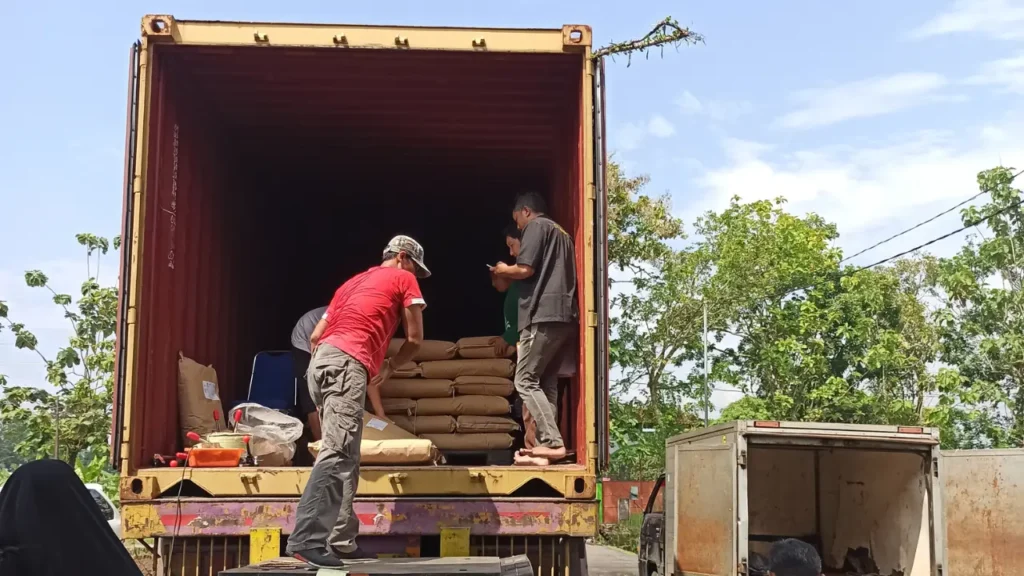
Incoterms define who is responsible for freight, insurance, and risk at each stage of shipment. For first-time buyers from Indonesia, the choice of Incoterms has significant cost and risk implications:
| Incoterm | What It Means | Best For | Risk Level for Buyer |
| EXW (Ex Works) | Buyer collects from supplier's facility. All costs and risk from that point. | Experienced importers with freight forwarder in Indonesia | HIGH — buyer controls all logistics |
| FOB (Free on Board) | Supplier delivers to port of export and loads onto vessel. Buyer's risk starts once on board. | Most common for first-time importers — balanced risk split | MEDIUM — recommended starting point |
| CIF (Cost, Insurance, Freight) | Supplier arranges and pays freight and insurance to destination port. | Buyers who want simplicity; supplier manages shipping | LOW risk, but higher overall cost |
| DAP (Delivered at Place) | Supplier delivers to named destination. Buyer handles import customs only. | Premium service; suitable for smaller trial orders | VERY LOW risk for buyer |
Our recommendation for first-time orders: Start with FOB Tanjung Priok (Jakarta's main container port) or FOB Surabaya / FOB Makassar depending on the oil's origin region. This gives you control over your freight costs while ensuring the supplier takes responsibility for everything up to loading.
Packaging for Bulk Shipment
| Packaging Option | Typical Capacity | Best For |
| Aluminium drum (standard) | 180 kg | Standard bulk shipment — non-reactive with essential oils, IATA/IMDG compliant |
| Jerrycan (aluminium or HDPE) | 5 – 25 kg | Smaller trial orders; multiple products in one shipment |
| IBC (Intermediate Bulk Container) | 1,000 kg | High-volume buyers; most cost-effective per-kg for single-product orders |
| Flexi bag (in container) | 10,000 – 20,000 kg | Very large volume; full container loads of single oil type |
Always use aluminium or stainless steel for essential oil shipment
Many essential oils, particularly those with high eugenol content (clove) or citral (lemongrass), react with iron and galvanized containers, causing discolouration, off-notes, and chemical degradation. Insist on aluminium drums or stainless steel containers. This is standard for professional essential oil manufacturers — if a supplier ships in galvanized or plain steel, it is a quality control failure.
Payment Terms and Risk Management
- T/T (Telegraphic Transfer) — most common: Standard structure is 30–50% deposit before production, balance before shipment or against shipping documents. For first orders with a new supplier, consider 30% DP and 70% against copy of Bill of Lading.
- Letter of Credit (LC): Provides maximum buyer protection — payment is released only when specified documents are presented to the bank. Recommended for large orders with new suppliers. Note that LC administration adds cost and lead time.
- Escrow (for smaller orders): Platforms like Alibaba Trade Assurance provide escrow-like protection. Suitable for smaller trial orders from suppliers you haven't met physically.
Never pay 100% upfront to a new supplier
Regardless of how credible a supplier appears, never transfer full payment to a new supplier before shipment. The standard in the industry is split payment — deposit + balance against documents. Any supplier who insists on 100% upfront before a sample has been evaluated and approved should be approached with extreme caution.
Lead Times: What to Expect
- Sample request to delivery: 7–21 days depending on shipping method (air vs. sea) and supplier's stock.
- Production run (bulk order): 15–30 days from deposit payment, depending on volume and whether the oil is in stock or requires distillation.
- Sea freight (Indonesia to Europe): 25–35 days transit time. Add 5–7 days for port handling and customs at destination.
- Sea freight (Indonesia to Middle East / India): 10–18 days transit time.
- Sea freight (Indonesia to East Asia): 7–14 days transit time.
- Air freight (any destination): 3–5 days — substantially higher cost, but used for urgent small orders or samples.
Seven Common Mistakes First-Time Buyers Make (And How to Avoid Them)
| Mistake | What Happens | How to Avoid It |
| 1. Not ordering a sample | Receive 180kg drum of oil that doesn't match your formulation brief | Always order 50–200ml sample first. Evaluate aroma, colour, and COA before bulk commitment. |
| 2. Working with a broker thinking it's a manufacturer | Pay higher price, receive generic COA, no batch traceability or customisation possible | Verify with facility tour, check that Halal/ISO certs are in the same company name, ask about production capacity |
| 3. Not specifying quality parameters in PO | Receive oil 'within spec' but doesn't match your formulation because your PO didn't define what spec means | Always include minimum patchoulol %, eugenol %, citral %, etc. in your written purchase order |
| 4. Choosing Incoterms without understanding risk allocation | Unexpected freight costs, insurance gaps, or liability confusion at customs | Discuss Incoterms with your freight forwarder before finalising the order. Start with FOB. |
| 5. Ignoring GCMS report | Accept a COA without chemical fingerprint — cannot detect adulteration | Always request GCMS for every bulk order. Consider independent third-party verification for high-value oils. |
| 6. Scaling too fast on first order | Large sunk cost if the oil doesn't perform in formulation or your market | First order: sample + one drum. Scale only after validating the full supply chain. |
| 7. Not building a direct, long-term relationship | Pricing volatility, quality inconsistency, supply gaps during harvest shortfalls | Communicate directly with manufacturer, share demand forecasts, build a relationship based on mutual transparency |
Why Source from Global Essential Oil?
We've spent this entire guide explaining how to verify and evaluate a supplier. It's only right that we submit Global Essential Oil to the same scrutiny.
Our credentials against the framework in this guide:
| Criterion | Global Essential Oil |
| Legal registration | Fully registered Indonesian company with NIB, SIUP, and active export license |
| Production facilities | Multiple distillation and processing facilities across West Java, Central Java, Sumatra, and Sulawesi — not a single-site operation |
| Halal certification | MUI Halal certified — verifiable at halalmui.org |
| DUNS Number | Registered and verifiable via Dun & Bradstreet (dnb.com) |
| Export track record | Active exporter to Europe, Middle East, South Asia, and Southeast Asia |
| COA & GCMS | Batch-specific COA and GCMS provided for every order — from our own QC process |
| Product range | Patchouli (Dark/Light/MD), Clove (Bud/Leaf/Stem/Eugenol), Lemongrass, Vetiver, Cajuput, Nutmeg, Citronella, Agarwood, VCO — all from Indonesian origin |
| Private label | Available — custom blends, dilutions, and packaged products under your brand |
| Trade exhibition presence | Trade Expo Indonesia 2023 and 2024 participant — verifiable public record |
| Video tour availability | Yes — we welcome video call facility tours. Contact us to schedule. |
We also acknowledge what we don't do: we are not a distributor, we don't carry stock of every oil at all times, and we will tell you honestly if we cannot supply a specific oil or grade.
That transparency is what distinguishes a manufacturer-partner from a broker who will promise anything to close a transaction.
Related Reading
→ Patchouli Oil — Full Product Range & Grade Options
→ Lemongrass Oil — Specifications & Sourcing
→ Vetiver Oil — Premium West Java Origin
→ Cajuput Oil — Indonesia's Therapeutic Essential Oil
→ Private Label Essential Oil Manufacturing in Indonesia
Summary: How to Source Essential Oils from Indonesia Successfully
Use this master checklist before confirming any bulk order with an Indonesian essential oil supplier:
| Stage | Action | Status |
| Product brief | Define target oil, grade, minimum spec parameters, and end application | ☐ Complete |
| Supplier identification | Identify 2–3 potential manufacturers (not brokers) via trade directories, exhibitions, or referrals | ☐ Complete |
| Legal verification | Request and verify NIB, SIUP, export license, and DUNS number | ☐ Complete |
| Certification check | Confirm Halal cert is in the same company name; verify at halalmui.org | ☐ Complete |
| Facility verification | Complete a video call factory tour | ☐ Complete |
| Sample request | Order 50–200ml sample with batch-specific COA and GCMS | ☐ Complete |
| Sample evaluation | Aroma, colour, specific gravity, refractive index check; GCMS verification | ☐ Complete |
| Third-party testing | Send sample to independent lab for high-value or large-volume orders | ☐ Optional |
| Purchase order | Issue written PO with all quality parameters, certifications required, packaging, Incoterms | ☐ Complete |
| Payment structure | Agree split payment terms — never 100% upfront | ☐ Complete |
| Documentation checklist | Confirm you will receive: COA, GCMS, MSDS, Halal cert, SKA, packing list, invoice | ☐ Complete |
| Logistics | Confirm HS code, engage freight forwarder, confirm customs requirements at destination | ☐ Complete |
| Pre-shipment inspection | Request photos of goods and final COA before release | ☐ Complete |
| Arrival inspection | Physical check on arrival — verify weight, packaging integrity, colour, aroma | ☐ Complete |
Final Thoughts: Build a Supply Chain, Not Just a Transaction
The best sourcing relationships in the Indonesian essential oil industry are not transactional.
They are long-term partnerships built on shared transparency, honest communication, and mutual understanding of the constraints and opportunities in this market.
For buyers, that means being clear about your quality requirements, sharing demand forecasts, and giving your supplier enough lead time to plan production.
For Indonesian manufacturers, it means being honest about stock availability, communicating harvest conditions early, and never shipping product that doesn't meet the agreed specification.
At Global Essential Oil, we work with buyers across every stage — from first sample request to multi-year supply agreements. If this guide has been useful and you're ready to take the next step, we'd welcome a conversation about your specific requirements.
| Ready to Source Indonesian Essential Oils? Start Here. Tell us which oils you need, your target application, approximate volume, and destination market. We'll respond within 1 business day with a quotation, sample offer, and any documentation relevant to your market. No minimum commitment to get started. → Contact Global Essential Oil — Start Your Sourcing Conversation Now |
Or browse our full product range first: Indonesian Essential Oils — Full Product Catalogue