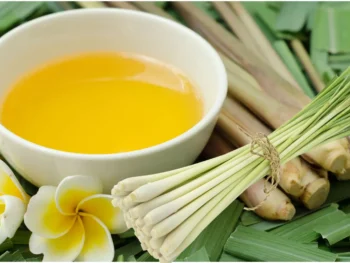

Citronella oil quality cannot be evaluated from a label such as “pure,” “premium,” or “Grade A” alone.
A B2B buyer should verify botanical identity, commercial type, batch-specific chemical composition, physicochemical parameters, analytical documentation, storage condition, and traceability before approving a supplier or shipment.
Java-type and Sri Lankan-type citronella oils are covered by different ISO standards. Supplier-defined grade terminology can also vary between markets.
The safest procurement approach is therefore to compare measurable batch results against the applicable standard, the buyer’s agreed specification, and the requirements of the intended formulation.
| Quick answer A reliable citronella evaluation combines identity, analytical data, physical testing, documentation, and a representative sample. No single number, aroma impression, or supplier grade label proves authenticity or suitability. |
Citronella Oil Quality: 7 Checks Before Buying
1. Confirm the Botanical Identity and Commercial Type
The name “citronella oil” is not a complete product identity. A buyer should request the botanical name, plant part, country or region of origin, extraction method, and declared commercial type.
The two widely traded commercial types are Java-type citronella oil and Sri Lankan or Ceylon-type citronella oil. They come from different botanical sources and have different compositional expectations.
For a focused comparison, review our guide to Java type vs Sri Lankan type citronella oil.
- Botanical name and variety, where applicable.
- Plant part used for distillation.
- Java type, Sri Lankan type, or another clearly defined material.
- Origin and production region.
- Steam distillation, hydrodistillation, or another declared process.
- Whether the material is whole oil, rectified oil, fraction, or a blend.
Botanical identity matters because the expected chromatographic profile and applicable standard depend on the declared material.
A generic name without supporting documents leaves too much room for misclassification.
2. Compare the Oil Against the Applicable Standard and Purchase Specification
ISO 3848:2016 specifies characteristics for essential oil of citronella, Java type, to facilitate quality assessment.
ISO 3849:2003 covers oil of citronella, Sri Lankan type.
ISO confirms that ISO 3848:2016 remains current after its 2022 review, while ISO 3849:2003 was confirmed again in 2025.
A standard is a reference point, not a substitute for the buyer’s own specification.
The purchase specification should also reflect the finished application, target market, regulatory requirements, sensory profile, and acceptable batch variation.
- Use the standard that matches the declared type.
- Define measurable acceptance ranges in the purchase order.
- Specify the test method and test temperature where relevant.
- State whether the supplier result, independent laboratory result, or both will determine acceptance.
- Confirm the document version instead of relying on an old copied specification.
| Important Do not copy a random constituent range from a supplier brochure and call it an ISO specification. Use the current official standard and the agreed buyer specification. |
3. Review the GC-MS or GC-FID Chemical Profile
Gas chromatography is central to citronella oil evaluation because the material is a complex mixture of volatile compounds.
GC-MS helps identify constituents, while GC-FID is commonly used for quantitative profile comparison when validated methods and reference data are available.
A 2023 peer-reviewed study analysed ten commercial Java- and Ceylon-type citronella products using GC-MS and GC-FID.
The authors noted that component ratios vary with origin and manufacturing process, which can complicate identification and content analysis.
This is one reason buyers should evaluate the complete chromatographic pattern rather than one headline constituent alone.
A buyer who is unfamiliar with chromatograms can use our guide on how to read an essential-oil GC-MS report as a starting point.
- Check whether the major constituents support the declared botanical type.
- Look for unexpected peaks, unusual ratios, or missing expected markers.
- Confirm the report carries a batch or lot number.
- Confirm the sample date, test date, and laboratory identity.
- Compare several approved batches to understand normal variation.
- Do not treat one generic historical chromatogram as proof for every shipment.
4. Check the Physicochemical Quality Parameters
Chromatography should be supported by physical and chemical measurements.
Common parameters include appearance, odor, relative density, refractive index, optical rotation, and solubility in ethanol.
The exact acceptance criteria depend on the declared type, standard, and buyer specification.
| Parameter | What It Helps Evaluate | Important Limitation |
| Appearance and odor | Initial check for clarity, color, sediment, and abnormal aroma. | Sensory review is subjective and cannot prove purity. |
| Relative density | Supports comparison with the expected physical profile. | A conforming density does not prove botanical type or authenticity. |
| Refractive index | Helps assess consistency and possible compositional changes. | Temperature and instrument calibration affect the result. |
| Optical rotation | Can support identity and consistency assessment. | It must be interpreted with the declared type and method. |
| Solubility in ethanol | Provides additional information about physical behavior and consistency. | One passing solubility test cannot exclude adulteration. |
A 2026 study combined GC-MS with specific gravity, refractive index, optical rotation, and flash-point testing.
Its sample met several general physical criteria while its chemical profile did not match Java-type compositional expectations.
The practical lesson is clear: passing physical tests does not by itself prove the declared type or complete quality profile.
5. Verify the COA, Specification Sheet, GC Report, and SDS
Procurement teams should understand what each document proves and what it does not prove.
Asking for “full documentation” is not enough unless the buyer checks the document type, batch number, issuing party, test date, and scope.
| Document | What It Shows | What It Does Not Automatically Prove |
| Product specification | Target identity, parameters, and acceptable ranges. | The actual results of the shipment batch. |
| Certificate of Analysis | Quality-control results for a stated batch or lot. | A complete chromatogram or independent authenticity assessment. |
| GC-MS or GC-FID report | Chemical profile and constituent information for the tested sample. | Regulatory suitability of the buyer’s finished product. |
| SDS or MSDS | Hazards, handling, storage, and transport information. | Purity, premium quality, or batch conformity. |
| Certificate of Origin | Declared country of origin for trade documentation. | Botanical identity or chemical composition. |
| Third-party laboratory report | Independent test results for the submitted sample. | That the tested sample and delivered shipment are the same unless traceability is controlled. |
For broader procurement planning, see our guide to essential oil export and procurement documents.
6. Screen for Adulteration and Batch Inconsistency
Adulteration can involve dilution, blending with a lower-cost oil, addition of synthetic or isolated constituents, or substitution with a different botanical material.
A 2020 study demonstrated that gas chromatography and proton nuclear magnetic resonance could detect adulteration in commercial essential oils, including citronella-related samples.
No single red flag proves fraud, but several inconsistencies together should trigger additional testing or supplier clarification.
- The botanical identity is vague or changes between documents.
- The supplier provides a GC report without a batch number.
- The COA has no test date, lot number, or issuing laboratory.
- The aroma, color, or chromatographic pattern changes sharply without explanation.
- The price is significantly below comparable offers without a credible commercial reason.
- The supplier refuses to provide a representative sample or basic analytical documentation.
- Physical parameters fit the expected range, but the chemical profile does not support the declared type.
- The report contains unexpected peaks or ratios that require investigation.
For a broader laboratory and supplier-verification framework, review our guide on how to detect essential oil adulteration.
7. Review Packaging, Storage, and Traceability
Quality can change after distillation. Light, heat, air exposure, moisture, inappropriate packaging, contamination, and repeated opening can affect aroma and analytical consistency.
The incoming-goods review should therefore include the packaging and storage history, not only the laboratory numbers.
- Container material and compatibility with essential oil.
- Drum, jerrycan, bottle, seal, and closure condition.
- Batch number and production or packing date.
- Storage instructions and protection from heat and direct light.
- Evidence of leakage, corrosion, contamination, or excessive headspace.
- Traceability from batch documents to the delivered containers.
- Recommended retest date or shelf-life information, where available.
- Origin and production records appropriate to the buyer’s traceability needs.
Buyers establishing a new Indonesian supply chain can combine this checklist with our guide to sourcing essential oils from Indonesia.
Are Citronella Oil Grades Standardized?
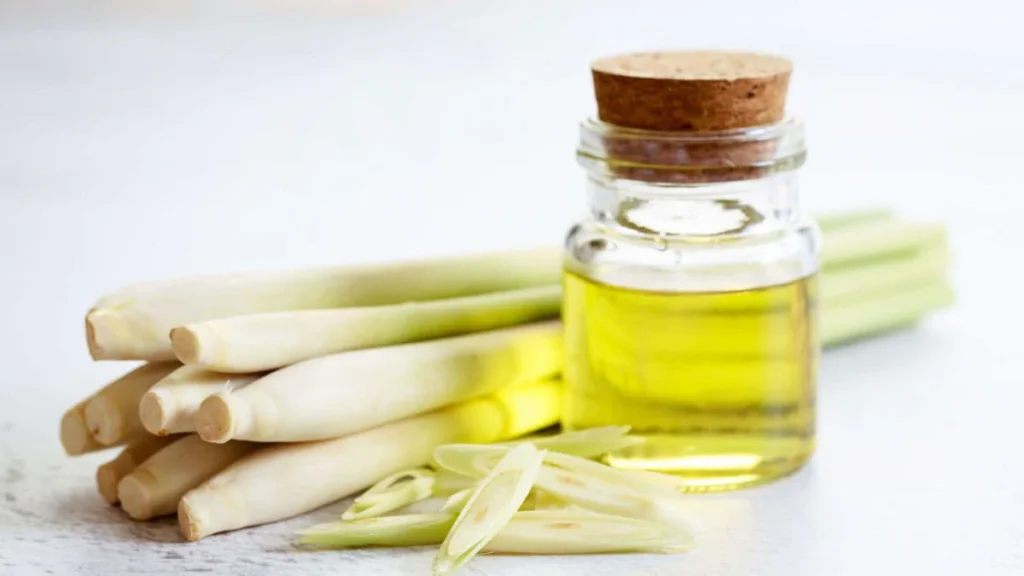
There is no single universal Grade A, Grade B, premium-grade, therapeutic-grade, or industrial-grade system used consistently across every citronella market.
A supplier may use one of these terms as an internal commercial category, while another supplier may use the same term for a different specification.
Grade language is useful only when it is tied to measurable acceptance criteria.
A buyer should ask what the grade means in terms of botanical identity, chemical composition, physical parameters, documentation, processing, intended application, and permitted variation.
| Buyer rule Treat a grade label as the beginning of a specification discussion, not the final proof of quality. |
Java Type vs Sri Lankan Type: Why the Difference Matters
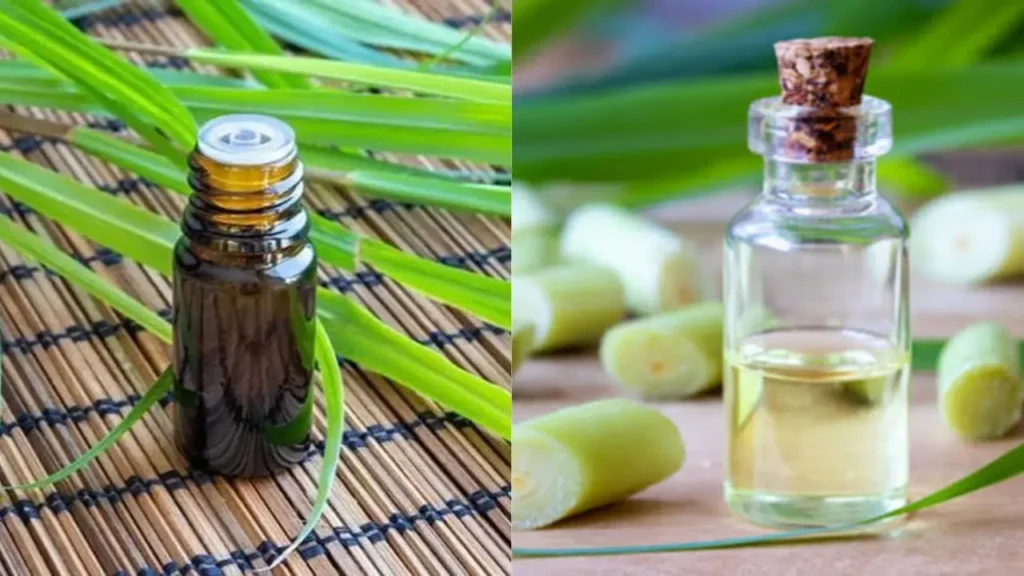
Java-type and Sri Lankan-type citronella oils should not be treated as interchangeable simply because both are sold as citronella.
Their botanical sources and expected chemical profiles differ, and they are covered by different ISO references.
This article does not repeat the complete comparison because we already have a dedicated Java type vs Sri Lankan type buyer guide.
For quality approval, confirm that the supplier’s declared type, botanical identity, GC profile, physical results, and documentation are internally consistent.
What Should a Citronella Oil GC-MS Report Show?
Major Constituents and Overall Pattern
The report should identify the major volatile constituents and show an overall pattern consistent with the declared material. However, the highest peak alone is not a complete quality judgment.
Unexpected Peaks and Missing Markers
Unexpected components, unusually high isolated constituents, or missing expected markers may reflect natural variation, processing, fractionation, blending, degradation, or adulteration. These findings require interpretation rather than an automatic pass or fail.
Batch Identification
A useful report should be traceable to a batch or sample. Generic marketing chromatograms without lot identification do not prove the composition of the shipment being approved.
Method and Laboratory Information
The buyer should know who conducted the test, when it was conducted, and whether the method is suitable for the intended comparison. GC-MS identification and GC-FID quantification serve related but different purposes.
COA vs GC-MS vs SDS: Which Documents Should Buyers Request?
For most bulk evaluations, the core document set includes a product specification, batch-specific COA, chromatographic report, and SDS.
Depending on the destination market and application, additional documents may include a certificate of origin, regulatory declarations, allergen information, certification evidence, or third-party testing.
The buyer should confirm the scope and availability of every document before relying on it in a purchase order or product claim.
A document title alone is not enough; the contents, batch reference, issuer, and validity matter.
Common Citronella Oil Adulteration Red Flags
| Red Flag | Recommended Buyer Response |
| Generic GC report used for every lot | Request a batch-specific report or test the approval sample independently. |
| COA and GC report use different batch numbers | Pause approval until traceability is corrected. |
| Declared type conflicts with the botanical name | Request clarification and supporting identity documents. |
| Very large composition change between lots | Ask for production, origin, blending, or processing explanation. |
| Unusually low price | Compare origin, type, concentration, documentation, and supply conditions before concluding. |
| Supplier avoids sample approval | Do not approve a large order without representative sampling and documentation. |
Application-Specific Quality Requirements
Insect-Repellent Formulations
Repellent-product developers should evaluate the declared type, constituent profile, concentration, complete formulation, product stability, labeling, and applicable regulatory requirements. Raw-material composition alone does not establish finished-product efficacy or safety.
Fragrance and Perfumery
Fragrance buyers may place greater emphasis on odor profile, consistency, color, compatibility, oxidation condition, and the contribution of citronellal, citronellol, geraniol, and other aromatic constituents. Sensory approval should be supported by analytical data.
Personal Care and Cosmetics
Personal-care formulators should consider the complete fragrance system, intended concentration, allergen and sensitization assessment, target market, and finished-product testing. A supplier’s “cosmetic grade” label does not replace the formulator’s safety assessment.
Household and Cleaning Products
Household-product buyers may prioritize aroma consistency, cost-in-use, solubility or dispersion behavior in the formulation, packaging compatibility, and stability.
Acceptance criteria should be based on the final product design rather than a generic low-cost or industrial-grade label.
A Practical Sample-Approval Workflow
| Step | Action | Purpose |
| 1 | Define the material | State botanical identity, commercial type, intended application, target market, and required documents. |
| 2 | Request a representative sample | Ensure the sample is linked to a batch or pilot lot and supplied with the relevant documentation. |
| 3 | Conduct organoleptic review | Check appearance, odor, clarity, and obvious abnormalities. |
| 4 | Review COA and chromatographic data | Compare the results with the applicable standard and purchase specification. |
| 5 | Perform independent testing when justified | Use a qualified laboratory for higher-risk, high-value, or large-volume purchases. |
| 6 | Run formulation testing | Evaluate aroma, compatibility, stability, and performance in the buyer’s actual product system. |
| 7 | Approve the reference sample | Retain an approved sample and define how future batches will be compared. |
| 8 | Confirm shipment traceability | Make sure batch numbers on containers, COA, GC report, invoice, and packing documents match. |
Questions to Ask a Citronella Oil Supplier
- What is the full botanical identity and declared commercial type?
- Which plant part and extraction method were used?
- Which standard or internal specification applies to this material?
- Can you provide a batch-specific COA and GC-MS or GC-FID report?
- Are the specification sheet and COA using the same test methods and units?
- Can you provide an SDS and the documents required for the destination market?
- How do you control variation between harvests and production batches?
- What packaging formats are available, and how should the oil be stored?
- Can you provide a representative sample before a bulk order?
- How are the sample, analytical documents, and delivered shipment linked by batch number?
- What traceability information is available for origin and processing?
- Which claims or certifications are supported by current documents?
Source Indonesian Citronella Oil for Bulk Applications
Global Essential Oil works with B2B buyers evaluating Indonesian citronella oil for fragrance, repellent, personal-care, and household applications.
Buyers can review the citronella essential oil product page and discuss the required identity, specification, sample, available analytical documents, packaging, and bulk supply needs with the export team.
Contact Global Essential Oil to request product information or discuss a quotation.
Final acceptance criteria should be based on the agreed specification, intended application, target market, and batch-specific analytical results.
Frequently Asked Questions
What determines citronella oil quality?
Quality is determined by the consistency between botanical identity, commercial type, chemical profile, physicochemical results, sensory condition, documentation, storage, traceability, and the buyer’s intended application.
Is Grade A citronella oil an official universal grade?
No universal Grade A system is applied consistently across all markets. Ask the supplier to define the grade through measurable specifications and documents.
Can GC-MS prove citronella oil is pure?
GC-MS is a valuable identification tool, but purity evaluation requires interpretation, suitable reference data, batch traceability, and often supporting physical tests or additional analytical methods.
What is the difference between a COA and a GC-MS report?
A COA summarises quality-control results for a stated batch. A GC-MS report provides a chromatographic chemical profile. The documents are complementary and should refer to the same batch.
Should buyers test every citronella shipment?
The testing plan depends on supplier history, volume, value, risk, regulatory requirements, and the buyer’s quality system. New suppliers and significant batch changes generally justify closer verification.
Does steam distillation guarantee high-quality citronella oil?
No. Steam distillation is a common production method, but final quality also depends on botanical identity, raw-material condition, process control, separation, storage, and batch composition.