
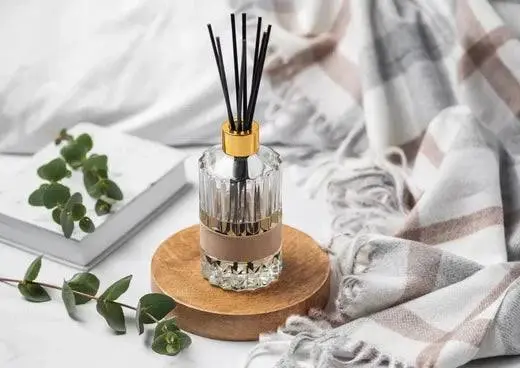
You can use essential oils in a reed diffuser to add fragrance to a room without heat or electricity.
The key is to pair a suitable essential oil with a compatible reed diffuser base and reeds that can draw the mixture upward.
Simply pouring concentrated oil into a decorative bottle may produce little scent or clog the sticks.
This guide explains the setup, how to choose ingredients, and what to do when your reed diffuser is not working as expected.
Can You Put Essential Oils Directly in a Reed Diffuser?
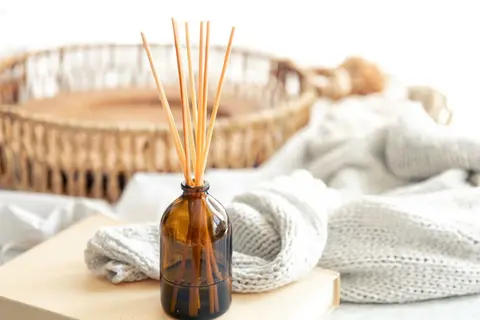
Not reliably. Pure essential oils vary in thickness and composition, so many will not travel efficiently through reed sticks on their own.
A purpose-made reed diffuser base can help carry the aromatic ingredients through the reeds and release them into the air.
Some products are sold as ready-to-use refills and should not be diluted further; always follow the instructions for the particular system.
As explained in CandleScience’s reed diffuser guide, the choice of diffuser base and reed material affects liquid flow and scent release.
A stronger-smelling oil is not necessarily a better-performing reed diffuser ingredient.
Test the complete mixture rather than judging the essential oil from the bottle alone.
How Does a Reed Diffuser Work?
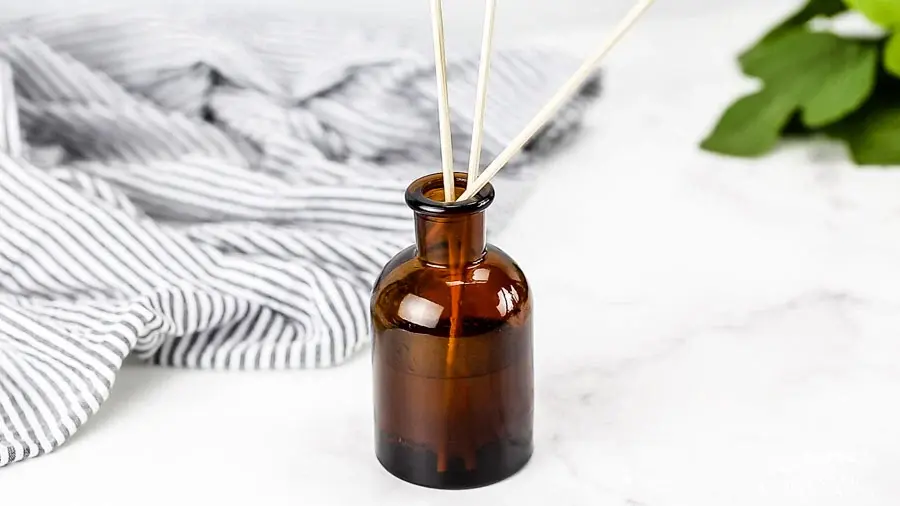
A reed diffuser works through capillary action. The porous sticks absorb scented liquid from the bottle, move it upward, and expose it to room air, where volatile fragrance molecules evaporate.
It is a passive home-fragrance system: there is no fan, water tank, or heating element.
This is different from an ultrasonic diffuser, which typically uses water and vibration to disperse a fine mist.
Water intended for an ultrasonic device should not be treated as a substitute for reed diffuser base. Oil, reeds, bottle opening, airflow, and room size all affect how noticeable the fragrance becomes.
What Do You Need to Make an Essential Oil Reed Diffuser?
Before mixing anything, check that the materials are intended to work together. For a simple setup, prepare:
- A suitable essential oil or a tested aromatic blend, with clear ingredient identity.
- A reed diffuser base designed for the specific oil or fragrance material.
- A clean, stable glass diffuser bottle with a reasonably narrow opening.
- Rattan or fiber diffuser reeds recommended for that base.
- A small funnel, accurate scale, and label for recording ingredients and date.
Choosing the Right Reed Diffuser Base
Dedicated reed diffuser bases are formulated to support wicking and fragrance release. A common skincare carrier oil may be too viscous and leave an oily mixture that climbs reeds slowly.
Ordinary tap water will not dissolve essential oil; a water-based diffuser product needs its own suitable solubilization and preservation system.
Check the base manufacturer’s compatibility list, maximum suggested fragrance loading, handling precautions, and any application-specific restrictions.
There is no one mixing percentage that works for every base and essential oil.
If the manufacturer does not provide guidance for your chosen oil, make a small compatibility test before scaling up.
How to Use Essential Oils in a Reed Diffuser: Step by Step
1. Choose Your Essential Oils
Decide whether you want a fresh, floral, green, woody, or earthy room scent. Start with one oil or a simple blend rather than many competing aromas.
Review the identity and safety information of each ingredient, including any restrictions for home-fragrance use.
Do not assume an oil suitable for a skin product or ultrasonic diffuser is automatically suitable for reed diffusers.
2. Select a Compatible Diffuser Base
Use a base specifically described as suitable for reed diffusers and the fragrance ingredients you plan to use.
Follow its supplier’s instructions rather than substituting cooking oil, water, or an improvised solvent.
If the chosen oil is not on the supplier’s compatibility list, evaluate a small sample for clarity, separation, and wicking performance.
3. Measure and Mix the Ingredients
Work in a well-ventilated area and protect the work surface. Weigh ingredients with a scale, using the allowed ratio specified for your exact base and oil, and stir gently in a clean container.
Avoid guessing concentrations by counting drops. Record ingredient names, batch quantities, and mixing date so you can repeat or adjust a successful trial.
4. Pour the Mixture into a Glass Bottle
Use a funnel to transfer the mixed solution into a dry, compatible diffuser bottle.
Leave enough headspace to insert reeds without overflowing. Wipe away any drips immediately and protect painted, lacquered, or porous furniture from contact with concentrated diffuser liquid.
5. Insert the Reed Sticks
Place the recommended number of clean rattan or fiber reeds into the bottle. Allow time for the solution to rise through the sticks.
The more reeds you use, the greater the potential evaporation surface, but the liquid may also be consumed faster.
Adjust reed quantity in line with the bottle and base instructions rather than adding extra essential oil to force a stronger scent.
6. Position the Diffuser Properly
Set the bottle upright on a stable, protected surface away from children, pets, open flames, direct sunlight, and heat sources.
Air movement can help distribute aroma, but strong drafts or direct heat may empty the bottle faster.
Choose a location that suits the size of the room and does not place concentrated liquid where it can easily be knocked over.
7. Maintain and Refresh the Diffuser
Check the liquid level and scent strength periodically. Some reed systems recommend occasionally flipping the sticks; others may not need it.
Follow the manufacturer’s instructions and protect your hands and surfaces when handling saturated reeds.
If the fragrance becomes weak, test fresh reeds or a fresh batch before simply increasing the oil concentration. Do not pour unknown leftovers into a new formula.
Which Essential Oils Work Well in Reed Diffusers?
The following oils can provide appealing fragrance directions for a reed diffuser project.
These are aroma examples, not claims that every batch has passed diffuser-base compatibility, stability, or indoor-air testing.
| Essential oil | Typical aroma | What to evaluate |
|---|---|---|
| Lavender | Floral, herbal | Balance in light floral blends; performance in base |
| Lemongrass | Fresh, grassy, citrus-like | Strong character and possible aroma change over time |
| Patchouli | Earthy, woody, rich | Blending balance, clarity, and reed wicking |
| Sweet orange | Bright, sweet citrus | Oxidation, scent fading, and storage |
| Cedarwood | Soft, warm, woody | Scent strength and dispersion in chosen base |
| Citronella | Green, lemon-like | Fresh scent profile and full-formulation suitability |
For Indonesian botanical options, explore lemongrass essential oil, citronella essential oil, or our bulk patchouli essential oil information.
These links describe the raw materials; any reed diffuser formulation still needs its own performance and safety assessment.
Why Is My Essential Oil Reed Diffuser Not Smelling Strong?
The Reeds Are Not Absorbing the Liquid
The base may be too thick for the reeds, the reed channels may be blocked, or the sticks may not suit the blend.
Check the base specification, then compare a fresh set of appropriate reeds.
If the solution is unusually viscous, do not thin it with an unapproved solvent.
The Fragrance Is Too Weak
Passive diffusion is usually subtler than an electric diffuser.
The room may be large, airflow may be limited, or the selected oil may have a low perceived intensity in the finished base.
Evaluate bottle placement, reed type, and a small sample of an approved blend before changing concentration.
The Mixture Separates or Turns Cloudy
Cloudiness or layers may indicate poor ingredient compatibility, contamination, or a change during storage.
Stop using a separated experimental batch and check the technical guidance for the base.
Additional stirring may temporarily hide the problem rather than solve it.
The Scent Fades Too Quickly
Faster evaporation can result from heat, excessive airflow, a wide bottle opening, or a high number of reeds.
The aromatic composition can also change as volatile ingredients evaporate at different rates.
A dated test log helps distinguish evaporation from formula instability.
Are Essential Oil Reed Diffusers Safe to Use at Home?
A reed diffuser is heatless, but that does not make its contents harmless.
Essential oils and diffuser solvents can irritate skin and eyes; ingestion can be dangerous, especially for children.
Store ingredients securely, prevent spills, and follow the safety data for the base and each aromatic ingredient.
Poison Control warns about the risks of swallowing reed diffuser liquid, while Pet Poison Helpline advises caution with essential oils around cats and other household animals.
Keep diffusers out of reach and avoid using products that cause discomfort or respiratory irritation in occupants.
Some bases are flammable, so keep them away from heat and ignition sources.
For a finished product sold commercially, the manufacturer must also review applicable labeling, chemical and fragrance requirements, including any relevant IFRA restrictions.
“Natural” should not be used as a substitute for safety testing or appropriate documentation.
Choosing Essential Oils for Commercial Reed Diffuser Products
For a home-fragrance brand, ingredient selection goes beyond fragrance preference.
Specify the botanical name and plant part, review batch-level quality information and available COA or GC-MS data, and test aroma consistency across batches. Separately, confirm compatibility with the chosen diffuser base, reeds, packaging, and intended market.
Under IFRA’s fragrance standards guidance, reed diffusers are generally treated as Category 10A; relevant material restrictions and the final formulation still require review.
Essential oil supplier documents do not replace finished-product testing.
Global Essential Oil can discuss Indonesian aromatic raw materials, product specifications, sample options, and sourcing requirements.
For a detailed look at one ingredient, see our patchouli oil application guide.
Final Thoughts
Using essential oils in a reed diffuser is straightforward once the ingredients are compatible: select an oil, follow the diffuser-base instructions, measure and mix carefully, insert suitable reeds, and monitor the result.
Scent strength depends on the complete system, not just the concentration of essential oil.
A small, documented test is the best starting point for a predictable room-fragrance experience.
If your business is developing home-fragrance products with Indonesian botanical ingredients, contact our team at Global Essential Oil to discuss essential oil specifications, sample requirements, available documentation, and sourcing options.
Frequently Asked Questions
Can I use pure essential oils directly in a reed diffuser?
Usually, a compatible diffuser base is needed to improve wicking and fragrance release. Always follow the instructions for your particular diffuser and ingredient system.
Can I use water instead of reed diffuser base?
Not in a conventional oil-based reed diffuser. Essential oils do not dissolve evenly in plain water; a properly designed water-based system requires additional formulation considerations.
How often should I flip reed diffuser sticks?
There is no universal schedule. Follow the directions for your reed and base, and avoid handling saturated sticks near delicate surfaces or without suitable precautions.
How long does an essential oil reed diffuser last?
It depends on bottle size and opening, reed count, room conditions, base, and aromatic materials. A small trial provides a more useful estimate than a generic claim about the number of weeks.
Can I reuse reed diffuser sticks?
Reeds can become saturated or clogged with old fragrance. Replacing them is often more reliable, particularly when switching to a different scent or correcting a weak-performing mixture.