

If you are looking for the best essential oils for mosquito repellent, you will often see citronella, lemongrass, clove, peppermint, lavender, and geranium on recommendation lists.
Some of these oils have shown mosquito-repelling activity in research, but that does not mean every essential oil—or every homemade blend—provides reliable protection from bites.
The main difference is formulation. An oil tested in a laboratory lotion may perform very differently in a candle, diffuser, or homemade spray.
Below, we compare six commonly discussed oils, explain what the evidence can and cannot tell us, and outline safer ways to think about mosquito protection.
Which Essential Oils May Help Repel Mosquitoes?

There is no single essential oil that performs best in every setting. The following comparison is a practical starting point, not a ranking of products with proven protection times.
| Essential oil | What research suggests | Important limitation |
| Citronella | Evidence of repellent activity in certain tested formulations | Protection can be brief; results vary widely by formulation |
| Lemongrass | Laboratory studies have reported mosquito-repelling effects | A promising ingredient is not automatically an effective DIY spray |
| Clove | Among the stronger performers in one controlled lotion study | Can irritate skin; research formula is not a home-use recipe |
| Peppermint | Some positive results in laboratory tests | Not reliable proof that scent alone prevents bites |
| Geranium | Some activity in a controlled lotion study | Performance depends on the oil and finished product |
| Lavender | Mixed findings across studies | Insufficient basis to rely on lavender alone for protection |
For context, a 2023 study in Scientific Reports tested 20 ingredients against Aedes aegypti mosquitoes. Clove and cinnamon oil emulsions performed particularly well under its specific laboratory conditions.
The results cannot be generalized to undiluted oils, DIY recipes, or every mosquito species.
6 Essential Oils Commonly Studied or Discussed for Mosquito Repellency
1. Citronella Essential Oil
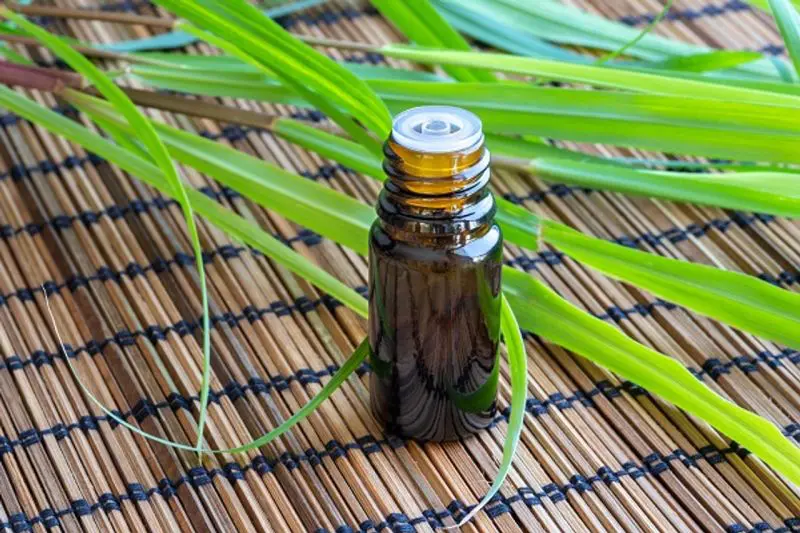
Citronella is one of the most familiar plant-derived ingredients associated with mosquito repellents. It comes from aromatic Cymbopogon grasses and is widely used in fragranced household products. Its fresh, citrus-like scent is recognizable, but fragrance alone is not a measure of mosquito protection.
In the 2023 lotion study, a 10% citronella formulation provided about 30 minutes of complete protection under the test conditions. Other studies have reported different results, illustrating how much the finished formula matters.
For a deeper explanation of the ingredient itself, see our citronella essential oil product overview.
2. Lemongrass Essential Oil
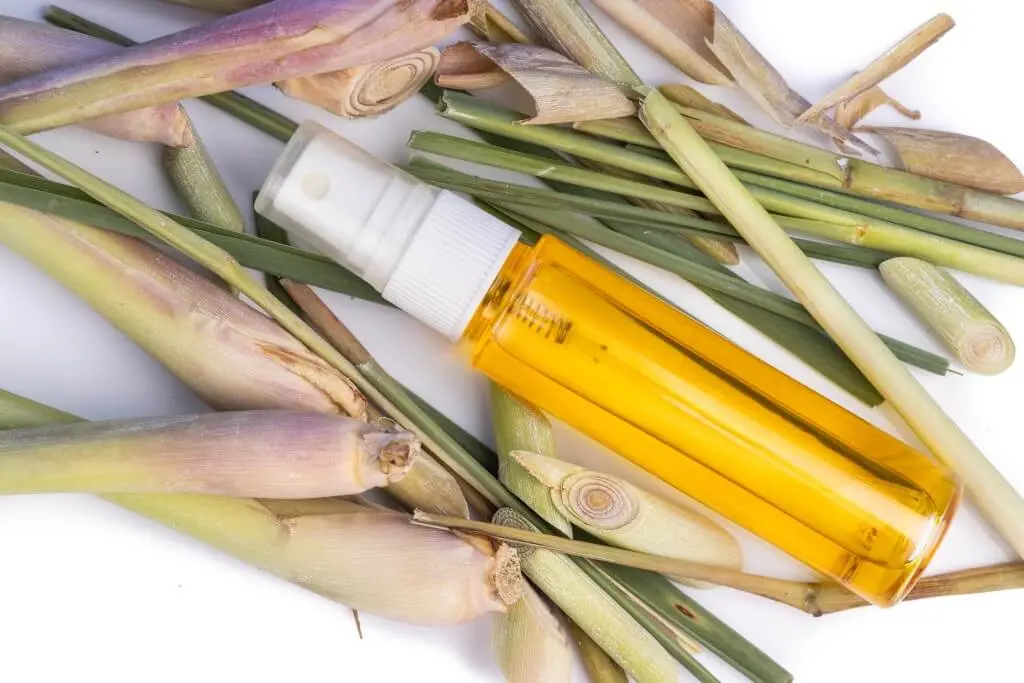
Lemongrass oil is obtained from Cymbopogon citratus and is commonly associated with a sharp, lemon-like aroma.
It is chemically different from citronella oil, even though the plants belong to the same genus. Lemongrass has shown repellent activity in several controlled tests, including results reported in the 2023 study.
That makes it a relevant ingredient to investigate for formulated products, not proof that placing a few drops in a room will keep mosquitoes away.
If you are comparing the two grasses, our citronella-versus-lemongrass guide explains their different characteristics. You can also explore our lemongrass essential oil page.
3. Clove Essential Oil
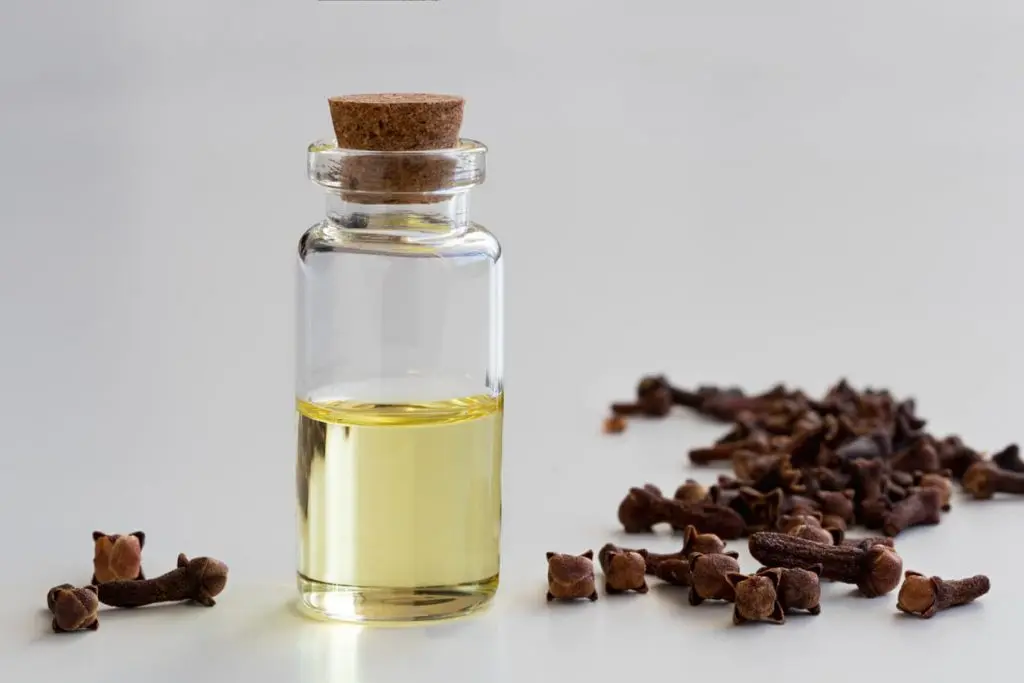
Clove oil deserves attention because it produced one of the strongest outcomes in the 2023 contact-repellency tests.
The researchers reported more than 100 minutes of complete protection for a lotion containing 10% clove oil in their controlled mosquito assay.
That result is specific to their prepared emulsion, test species, and test conditions.
Clove oil is also concentrated and can be irritating or sensitizing. The study is not an instruction to make a 10% clove oil mixture at home or apply clove oil directly to skin.
For product development and sourcing inquiries, see the Global Essential Oil clove oil product page.
4. Peppermint Essential Oil
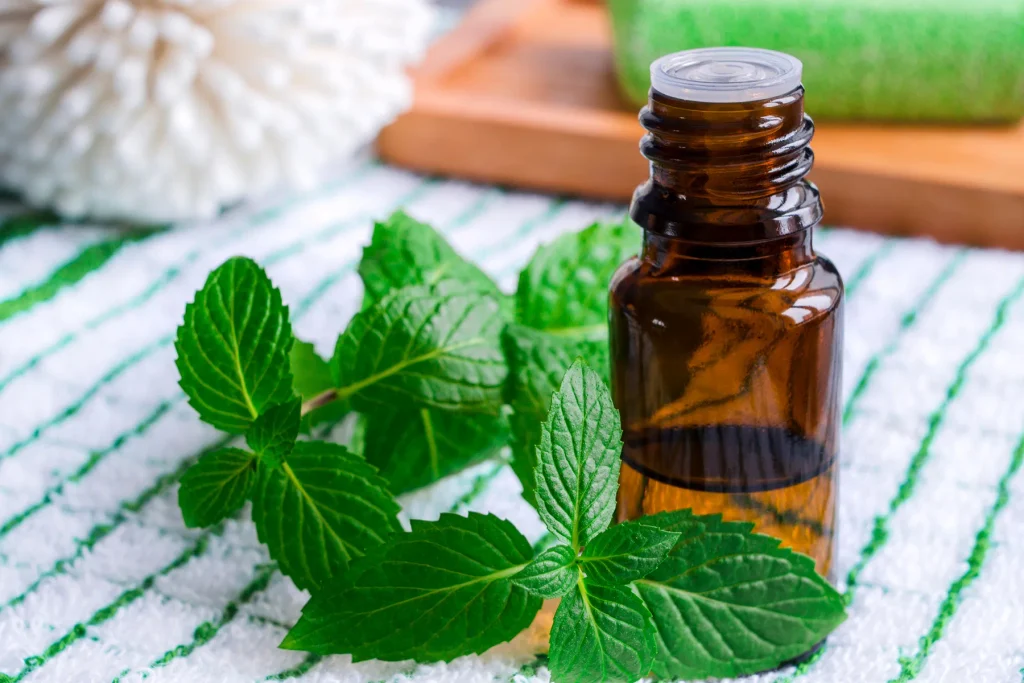
Peppermint has a strong minty aroma and appears in research on plant-derived mosquito repellents.
The 2023 study found that its tested lotion emulsion offered more than 30 minutes of complete protection, although it did not perform as strongly as clove or cinnamon in that experiment.
Peppermint is therefore worth discussing as a potential formulation ingredient.
However, using peppermint oil in a diffuser, on clothing, or in an improvised spray should not be assumed to provide equivalent protection.
5. Geranium Essential Oil
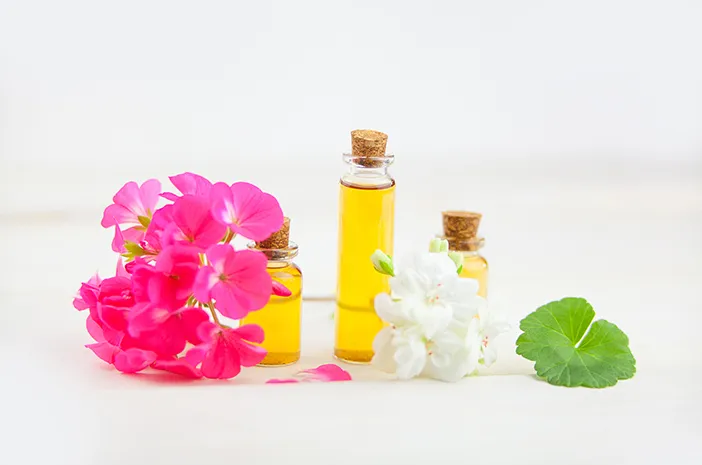
Geranium essential oil is used in fragrance and personal care applications. Some controlled research has also reported mosquito-repelling effects from geranium-containing formulations.
In the 2023 study, the tested geranium oil lotion reached more than 30 minutes of complete protection against mosquitoes.
That finding supports further product-specific evaluation rather than a broad promise about all geranium oils. Botanical identity, chemistry, concentration, and delivery method all influence the results.
6. Lavender Essential Oil
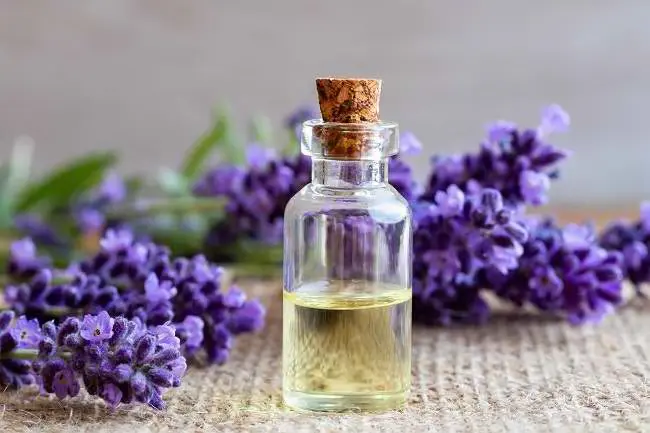
Lavender is frequently mentioned in natural mosquito-repellent articles because of its recognizable floral aroma. Yet popularity should not be confused with dependable bite prevention.
In the 2023 contact-repellency study, the lavender formulation did not show a statistically significant improvement over the controls.
Other experimental conditions may produce different findings, but lavender should not be presented as a proven stand-alone substitute for a tested skin-applied repellent.
Do Essential Oils Really Work Against Mosquitoes?
Some do, under particular conditions. Researchers measure different outcomes: whether a scent discourages mosquitoes from approaching, whether a mosquito lands, or how long a treated person remains free of bites. Those measurements are not interchangeable.
For example, the 2023 Scientific Reports research observed relatively long protection from clove and cinnamon oil in prepared lotion emulsions.
Its authors also noted that oils can behave differently depending on their chemical profile and the carrier used.
A 2026 systematic review found promising results in experimental studies of essential oils, while acknowledging that most evidence comes from controlled conditions rather than real-world field trials.
The practical takeaway is simple: an essential oil can be a promising ingredient without being a validated finished mosquito repellent.
When preventing bites matters—especially where mosquito-borne illnesses are a concern—follow CDC guidance on proven insect repellents and use a suitably registered product as directed.
Oil of Lemon Eucalyptus Is Not the Same as Lemon Eucalyptus Essential Oil
This distinction is easy to miss. Oil of lemon eucalyptus (OLE) is a processed, plant-derived repellent ingredient used in certain EPA-registered products. It is not the same as pure lemon eucalyptus essential oil.
The CDC does not recommend the pure essential oil as a substitute for an evaluated repellent; products containing OLE or PMD should not be used on children under three years old.
How Are Essential Oils Used in Mosquito Repellent Products?
Formulated Skin-Applied Repellents
Lotions, creams, and other skin-applied products can be designed to distribute an active ingredient and manage how quickly it evaporates.
But efficacy and skin compatibility must be evaluated on the finished formulation. Do not apply undiluted essential oils directly to skin or assume an experimental concentration is safe for personal use.
Mosquito Repellent Sprays
Sprays are popular because they seem convenient. However, a homemade mixture that smells strong is not automatically a tested mosquito repellent.
Sprays intended for skin require appropriate formulation, safety assessment, directions, and compliance with applicable local regulations. For reliable bite prevention, choose a product evaluated and labeled for that purpose.
Candles and Diffusers
Citronella candles and diffusers may be useful for scenting a space, but their ability to protect a person from bites can be inconsistent.
Airflow, room size, placement, and the distance between the fragrance source and the person all matter. They should not replace proven personal protection, screens, or mosquito-source reduction.
Are Essential Oils Safe to Use as Mosquito Repellents?
“Natural” does not mean irritation-free. Concentrated essential oils may trigger skin reactions, particularly when applied undiluted or used at unsuitable concentrations.
Avoid the eyes, mouth, damaged skin, and unverified formulations for children. Follow the label of any finished product and consult qualified professionals when formulating products for skin contact.
For protection outdoors, the US Environmental Protection Agency advises consumers to read and follow repellent labels, including directions for application and reapplication.
Protective clothing, window screens, and removal of standing water are also valuable ways to reduce mosquito exposure.
Choosing Essential Oils for Repellent Product Formulation
If you are developing an insect-repellent product, the most useful question is not simply which oil has the strongest smell.
It is whether the raw material can be identified, characterized, supplied consistently, and evaluated in the intended finished product.
Formulators and sourcing teams should review the botanical name and plant part, batch-to-batch specifications, chemical composition or GC-MS information where available, product handling documents, and the stability of the finished formulation.
Any mosquito-repellent efficacy claims must be supported by appropriate product testing and relevant regulatory requirements in the target market.
Global Essential Oil supplies Indonesian essential oils for business sourcing. If your project involves citronella, lemongrass, or clove oil, you can contact our team to discuss product specifications, quantities, and documentation relevant to your sourcing needs.
We do not suggest that purchasing an essential oil alone creates a validated mosquito-repellent product.
Final Thoughts
The best essential oils for mosquito repellent are not necessarily the ones with the most appealing scent or the longest list of traditional uses.
Citronella, lemongrass, clove, peppermint, and geranium have shown varying activity in controlled research, while evidence for lavender is less convincing in some tests. The essential lesson is that formulation and verification matter.
For consumers, choose proven repellents when avoiding mosquito bites is the priority. For manufacturers exploring plant-derived ingredients, Global Essential Oil welcomes conversations about essential oil sourcing and product requirements.
Frequently Asked Questions
What essential oil works best for mosquitoes?
There is no universally best oil. Clove and cinnamon stood out in one controlled lotion study, while citronella, lemongrass, peppermint, and geranium also showed activity in certain tests. Real-world protection depends on the finished product, testing method, and intended use.
Is citronella or lemongrass better for mosquito repellents?
Both have evidence of repellent activity, but neither is automatically superior in all formulations. Their chemical profiles differ, and performance varies with concentration, carrier, and test conditions. Compare product-specific evidence rather than scent alone.
How long do essential oil mosquito repellents last?
There is no reliable single duration for all essential oils. Laboratory results range substantially across ingredients and formulas. Refer to the tested protection time and label directions of an evaluated finished product instead of assuming that a DIY mixture lasts a set number of hours.
Can essential oil diffusers keep mosquitoes away?
A diffuser may release aromatic compounds into a room, but there is not enough consistent evidence to treat an ordinary diffuser as dependable protection against mosquito bites. Use more reliable measures when protection is important.