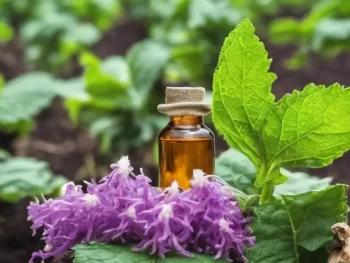
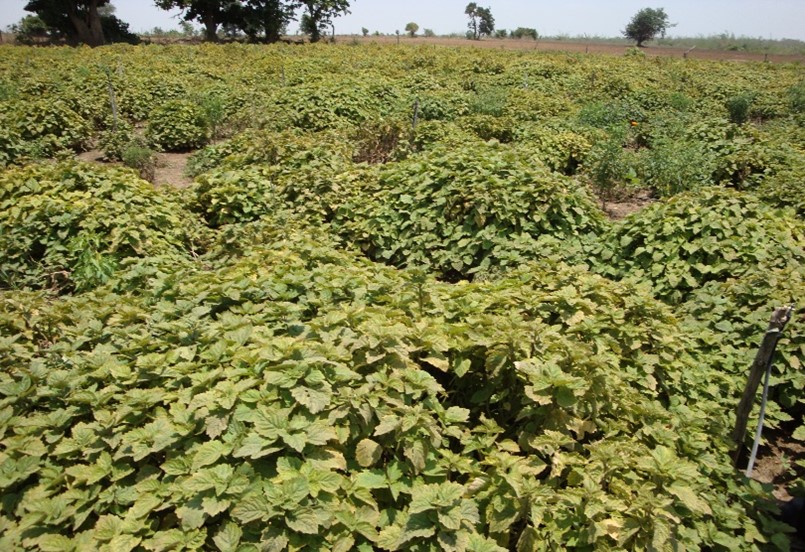
| When is patchouli oil harvest season in Indonesia? Indonesian patchouli oil has two main harvest seasons per year in the primary producing regions: Main harvest (peak season): November – February — coincides with the post-rainy-season dry period in Sulawesi and Aceh. This is when oil supply is highest, prices typically decline, and quality is at its best from well-timed harvests. Secondary harvest: May – August — a smaller second harvest cycle from re-growth after the main harvest. Lower volume but consistent quality from the same well-managed farms. Patchouli can be harvested every 4–6 months per plant — meaning a well-managed farm produces 2–3 harvests per year. The specific timing varies between Sulawesi (South Indonesia) and Aceh/Sumatra (northern Indonesia) due to different regional climate patterns. |
For anyone buying patchouli oil in bulk — whether you are a fragrance house, cosmetic manufacturer, or essential oil distributor — harvest season is one of the most important factors in sourcing strategy.
The time of year you place your order directly affects the price you pay, the quality of the oil you receive, and the reliability of your supply timeline.
This guide answers the questions that buyers consistently ask but that no published article fully addresses: exactly when does patchouli harvest happen in Indonesia, how does it vary by region, how does harvest timing affect patchoulol content, and — most practically — when is the best time of year to place a bulk patchouli order?
We write as Global Essential Oil, an Indonesian patchouli manufacturer with direct farmer networks in Sulawesi and Aceh.
Indonesia Patchouli Harvest Calendar: Month-by-Month
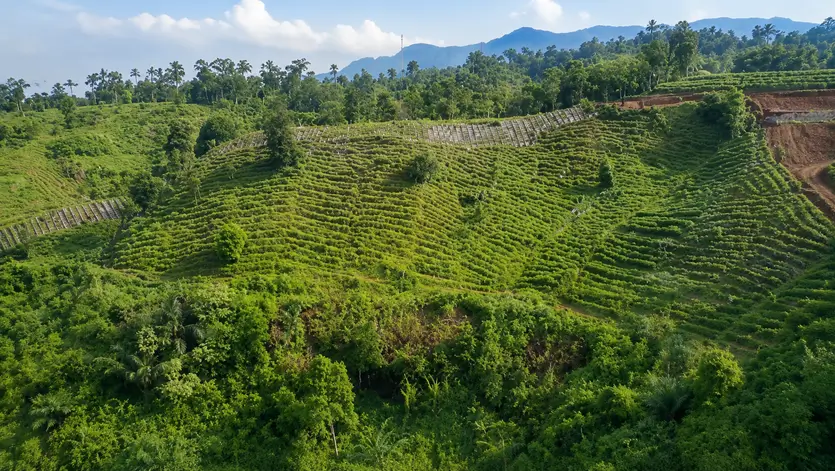
Patchouli cultivation in Indonesia follows the country's seasonal rainfall patterns — the dry season and rainy season calendar that varies between Indonesia's main producing islands.
Understanding this seasonal rhythm is the foundation of strategic patchouli procurement.
| Month | Sulawesi (South/Central) | Aceh (North Sumatra) | Supply Level | Price Trend | Quality Note |
| January | Main harvest — active | Secondary harvest | HIGH | Declining from peak | Good — well-timed harvest |
| February | Late main harvest | Secondary harvest winding down | HIGH→ MODERATE | Stabilising | Good |
| March | Post-harvest recovery | Off-season | MODERATE | Stable | Limited new stock — previous harvest |
| April | Plant regrowth | Off-season | LOW | Firm/rising | Old stock; potentially aged |
| May | Secondary harvest begins | Main harvest begins (Aceh) | LOW→ MODERATE | Peak / highest | Premium from Aceh; limited Sulawesi |
| June | Secondary harvest | Main Aceh harvest — active | MODERATE | Declining (Aceh supply) | Good Aceh quality; Sulawesi still limited |
| July | Secondary harvest — peak | Main Aceh harvest — active | MODERATE | Stable | Dual-region supply |
| August | Late secondary harvest | Late Aceh harvest | MODERATE | Stable to slight increase | Good |
| September | Off-season | Post-harvest recovery | LOW→ MODERATE | Firm/rising | Limited fresh stock |
| October | Pre-harvest — plant maturation | Off-season | LOW | Highest point — pre-harvest | Lowest supply period |
| November | Main harvest begins | Secondary harvest begins | MODERATE→ HIGH | Declining as harvest arrives | Fresh new-season stock |
| December | Main harvest — active | Secondary harvest | HIGH | Declining | Best quality new season |
| Key Insight: Indonesia Has Year-Round Patchouli Supply — But Quality Peaks Twice Unlike crops that produce once per year, patchouli's 4–6 month regrowth cycle means Indonesian supply is available throughout the year. However, quality peaks after each main harvest — October–January (Sulawesi main) and May–July (Aceh main) — when fresh, well-timed oil enters the market. The two-region supply structure (Sulawesi and Aceh on different climate cycles) means Indonesia has a natural supply cushion that prevents the severe seasonal shortages seen in single-origin commodity crops. |
Why Harvest Timing Directly Affects Patchoulol Content
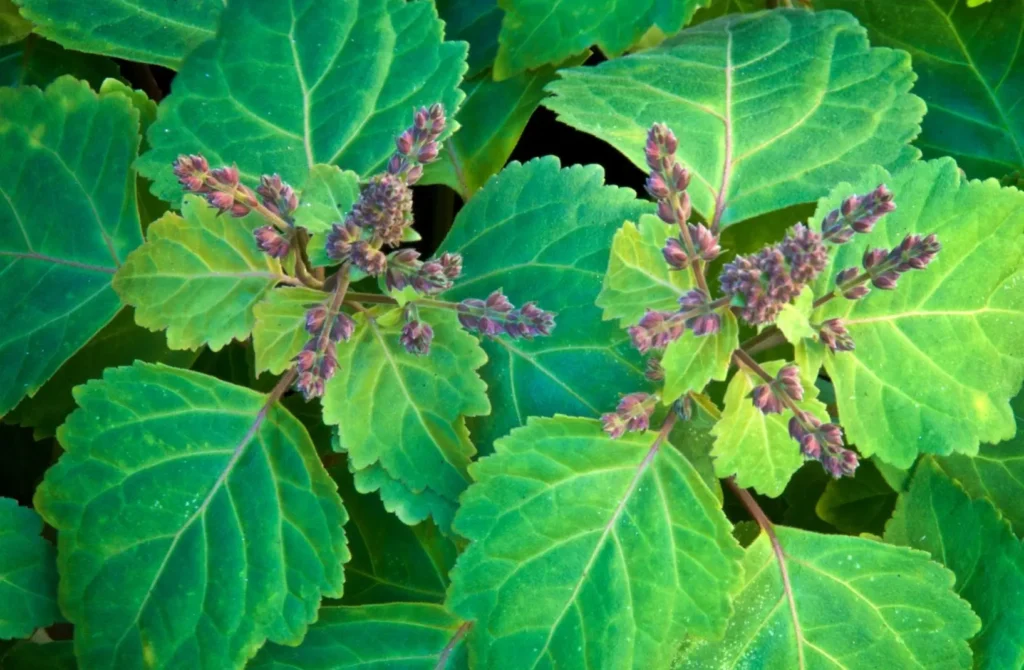
The most consequential connection between harvest season and oil quality is its impact on patchoulol (patchouli alcohol) content — the primary active compound and the key quality indicator in patchouli oil.
This relationship is not widely understood outside of production communities, but it is critical for buyers who specify minimum patchoulol %
The Early Harvest Problem
When patchouli oil prices rise significantly — typically in October–November as the supply trough before the main harvest — some farmers face strong economic pressure to harvest early, before the plant reaches its optimal patchoulol accumulation.
This premature harvesting produces oil with significantly lower patchoulol content — sometimes 25–27% vs the 30–35% achievable from properly timed harvest.
This dynamic was explicitly documented in the Indonesian market in late 2024: Mazanotech reported that rising prices in October–November 2024 triggered early harvesting in some Sulawesi regions, reducing the patchouli alcohol (PA) content of the oil entering the market — and its competitiveness for quality-focused European buyers.
European importers responded by shifting from sea freight to air freight for faster delivery, further increasing logistics costs.
The Mechanism: Why Patchoulol Accumulates Over Time
Patchoulol accumulates in the plant's leaf glands as a metabolic end product of sesquiterpene biosynthesis — a process that takes time and is driven by leaf maturity.
The key principle: patchoulol content increases as the plant approaches the pre-flowering stage, peaking just before flowering begins.
An early-harvested plant that has not yet reached this stage contains patchoulol precursor compounds that have not yet fully converted to patchoulol itself.
Additionally, post-harvest drying and mild fermentation of the leaves — the traditional Indonesian practice before distillation — further converts patchoulol precursors to patchoulol.
Rushed processing that skips adequate drying compounds the quality loss from early harvesting.
For the full explanation of the cultivation-to-quality relationship, see: Patchouli Plant Cultivation Indonesia — Complete Growing Guide.
Harvest Timing vs Patchoulol Content: What the Data Shows
| Harvest Timing | Patchoulol % Range | Quality Classification | Buyer Implication |
| Optimal — pre-flowering, 5–6 months growth | 30 – 35% | Premium grade | Highest quality; specify minimum 30% on COA |
| Slightly early — 4–5 months growth | 27 – 30% | Standard grade | Acceptable for most personal care; verify COA |
| Early harvest — 3–4 months (price-driven) | 24 – 27% | Below-standard | May not meet specification; check COA carefully |
| Post-flowering — too late | 28 – 32% (but volatile top notes lost) | Degraded character | Lower quality even at adequate patchoulol — aroma profile altered |
| ⚠️ What This Means for Your COA Verification During high-price periods (September–November), be extra vigilant about patchoulol % on incoming COAs. Batches arriving in October–December may include oil from early-harvested material — with patchoulol below your specification minimum. Always require batch-specific COA with GC analysis confirming patchoulol %, not a generic document. See: How to Read an Essential Oil COA Report. |
Patchouli Oil Price Cycle: How Harvest Season Drives Price

How does patchouli harvest season affect price?
Patchouli oil prices follow a predictable seasonal cycle driven by harvest supply. Prices typically peak in September–October — the lowest supply period before the main Sulawesi harvest — and decline from November through February as the main harvest brings new supply to market. A secondary price peak often occurs in April–May before the Aceh harvest arrives. Understanding this cycle allows buyers to plan procurement timing strategically.
| Period | Price Trend | Reason | Buyer Action |
| January – February | Declining → Stable | Main harvest supply arriving | Good buying window — quality fresh stock at reasonable price |
| March – April | Stable → Rising | Harvest winding down; old stock only | Consider forward orders before April peak |
| May – June | Declining | Aceh main harvest arriving | Second buying window — especially for Aceh-origin specification |
| July – August | Stable | Dual-region supply balanced | Stable period — neither peak nor trough |
| September – October | PEAK — highest prices | Pre-harvest supply trough — lowest stock levels | Strategic forward buying or patience to wait for November drop |
| November – December | Declining rapidly | Main Sulawesi harvest arrives in volume | Optimal buying window — fresh new-season stock, declining prices |
Multi-Year Price Cycles: Beyond Seasonal
Beyond seasonal cycles, patchouli oil has documented multi-year price cycles driven by farmer planting decisions.
When prices are high for 1–2 years, more farmers plant patchouli — and 2–3 years later, oversupply drives prices down.
When prices collapse, farmers abandon patchouli for corn, cassava, or palm oil — reducing supply until prices recover again. This cycle typically runs 3–5 years peak-to-trough:
- Price boom phase (farmer expansion): High prices → more farmers plant → expanding supply over 2–3 years
- Oversupply trough: Excess supply → price collapse → farmers abandon crop
- Recovery phase: Reduced supply → prices recover → farmers replant
The 2022–2024 period saw exactly this pattern: the post-pandemic demand surge drove prices to multi-year highs, encouraging expansion — but climate disruption in 2023–2024 delayed the supply response, contributing to the tight market that persisted into late 2024.
For more context on this supply chain dynamic, see: Sustainable Essential Oil Sourcing — A Practical Buyer's Guide.
Regional Harvest Timing: Sulawesi vs Aceh vs Java
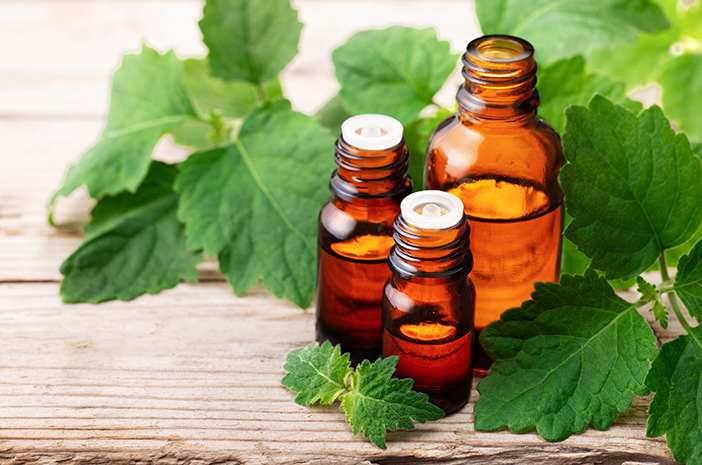
Understanding the regional differences in harvest timing is important for buyers who specify origin — and for understanding why Indonesia's overall supply is more consistent than single-origin producing countries:
| Region | Main Harvest | Secondary Harvest | Climate Driver | Oil Character |
| South Sulawesi (Sidrap, Enrekang) | November – February | May – August | Post-rainy-season dry period; equatorial climate | Deepest, most complex — global benchmark. Patchoulol 30–35% |
| Aceh / North Sumatra (Gayo Highland) | May – July | November – January | Monsoonal rainfall pattern (inverted vs Sulawesi) | Slightly fresher, cleaner profile. Patchoulol 29–34% |
| West Java (Sukabumi, Purbalingga) | Distributed — less seasonal | Distributed | More consistent rainfall — less distinct harvest seasons | Lighter character. Patchoulol 28–32% |
| The Two-Region Advantage for Indonesian Buyers Indonesia's two-region supply structure — Sulawesi and Aceh on offset climate cycles — is a significant advantage over single-origin suppliers. When Sulawesi is in its off-season supply trough (March–October), Aceh provides a secondary supply with its own harvest. A manufacturer with sourcing networks in both regions can offer more consistent supply and pricing than one dependent on a single region's harvest timing. |
Practical Buyer’s Guide: When and How to Order Patchouli Oil

The Best Time of Year to Place a Bulk Patchouli Order
When is the best time to buy patchouli oil from Indonesia? The two optimal buying windows for Indonesian patchouli oil are:
- Window 1: November – January — fresh Sulawesi main harvest stock arriving. Prices declining from September–October peak. Best quality new-season oil from optimal harvest timing. Recommended for buyers who prioritise quality and supply security.
- Window 2: May – June — fresh Aceh main harvest stock arriving. Good quality, stable pricing, second buying opportunity of the year.
- Worst time to buy: September – October — supply trough, highest prices, risk of early-harvest material from price-pressured farmers. If you must buy during this window, be extra vigilant about patchoulol % on COA.
Forward Buying Strategy
For buyers who consume patchouli oil consistently — fragrance houses, cosmetic manufacturers — a forward buying strategy aligned with harvest cycles reduces both cost and supply risk:
- Order 3–4 months of inventory in November–January: Buy fresh new-season stock at declining post-harvest prices. This covers your consumption through March–April as the next trough approaches
- Top up in May–June with Aceh stock: The secondary buying window replenishes inventory at reasonable prices before the September–October peak
- Maintain 1–2 months buffer stock: This prevents panic buying in September–October when prices are highest and quality risk is elevated
- Specify quality in advance: State minimum patchoulol % in your PO (e.g., 'minimum 29% patchoulol by GC analysis') — this protects against early-harvest oil being shipped against your order during price-spike periods
Lead Time Considerations
- Sea freight to Europe: 30–45 days transit time. Order during November–December for January–February arrival — fresh new-season stock at declining prices
- Sea freight to Middle East/South Asia: 15–25 days transit. More flexibility — shorter planning horizon required
- Sea freight to North America: 25–35 days transit. Factor in customs clearance time
- Air freight: 5–7 days — significantly higher cost but available for urgent requirements. Note: air freight demand from Europe during shortage periods (as in late 2024) competes for capacity and drives air freight prices up during tight market conditions
Related Reading
→ How to Source Essential Oils from Indonesia — Complete Importer's Guide
→ How to Read an Essential Oil COA Report — Verify Patchoulol % Before Accepting
Climate Variability: How Weather Affects Indonesian Patchouli Supply
Indonesia's patchouli harvest calendar is based on typical seasonal patterns — but climate variability is increasingly disrupting these patterns, and buyers need to understand the key risks:
El Niño and La Niña Effects
- El Niño years (drier than normal): Extended dry season in Sulawesi can reduce plant growth and leaf biomass — lower yield per hectare despite good timing. Also stresses plants, which can actually increase patchoulol accumulation in leaves (stress response) — quality may improve even as volume declines
- La Niña years (wetter than normal): Excess rainfall extends the effective growing season but can delay harvest and increase fungal disease pressure. May shift the main harvest 4–6 weeks later than typical — affecting supply timing expectations
The 2023–2024 Climate Impact
Indonesia experienced significant climate disruption in 2023–2024 associated with a strong El Niño cycle — extended dry conditions in Sulawesi reduced harvest volumes below typical levels.
This contributed to the supply tightness and elevated prices observed in late 2024, and was a key factor driving the early harvesting problem that Mazanotech documented in December 2024.
Supply volumes began recovering through the November 2024 – February 2025 main harvest, but were not fully back to historical norms.
How to Monitor Indonesian Patchouli Market Conditions
- Maintain regular supplier communication: A genuine manufacturer with direct farmer relationships can give you advance notice of harvest conditions — volume expectations, quality outlook, pricing trajectory — 4–6 weeks before the harvest begins
- Track Indonesian weather forecasts: BMKG (Badan Meteorologi, Klimatologi, dan Geofisika) publishes Indonesian seasonal forecasts — monitoring these provides early warning of potential disruptions to harvest timing
- Monitor BPPT/BPS commodity data: Indonesian government statistical agencies publish commodity export data that can confirm supply trend direction
What This Means for Your Patchouli Procurement Strategy
The key takeaways from this guide for B2B patchouli buyers:
- Align major orders with harvest seasons: November–January (Sulawesi) and May–June (Aceh) offer the best combination of quality, price, and supply availability
- Maintain buffer stock through the trough: September–October is not the time to run low. A 1–2 month inventory buffer prevents forced buying at peak prices
- Specify patchoulol % on every PO: This contractually protects you against early-harvest oil being shipped against your order during high-price periods
- Establish a direct manufacturer relationship: Only a manufacturer with direct farmer relationships can give you advance harvest condition intelligence — volume outlook, quality forecast, and price trajectory — before the market moves
At Global Essential Oil, we source from farmer networks in both Sulawesi and Aceh — which means we can supply fresh, specification-compliant patchouli oil in both main harvest windows, and maintain inventory continuity between seasons.
We provide advance harvest intelligence to established buyer relationships and respond to market condition enquiries as part of our standard service.
Related Reading
→ Patchouli Plant Cultivation Indonesia — How Growing Decisions Affect Oil Quality
→ Patchouli Oil Grades Explained — Dark, Light & MD
→ What Is Patchouli Oil Used For — Complete Application Guide
| Ask About Current Harvest Conditions & Patchouli Oil Availability Contact Global Essential Oil to request current harvest condition intelligence — Sulawesi and Aceh supply outlook, available grades (Dark/Light/MD), patchoulol % from current batches, and pricing. We respond within 1 business day and can provide batch COA documentation before any bulk commitment. → Contact Global Essential Oil — Ask About Current Patchouli Harvest Season |
Or visit our Patchouli Essential Oil product page for full specifications, or explore the complete Indonesian essential oil range.