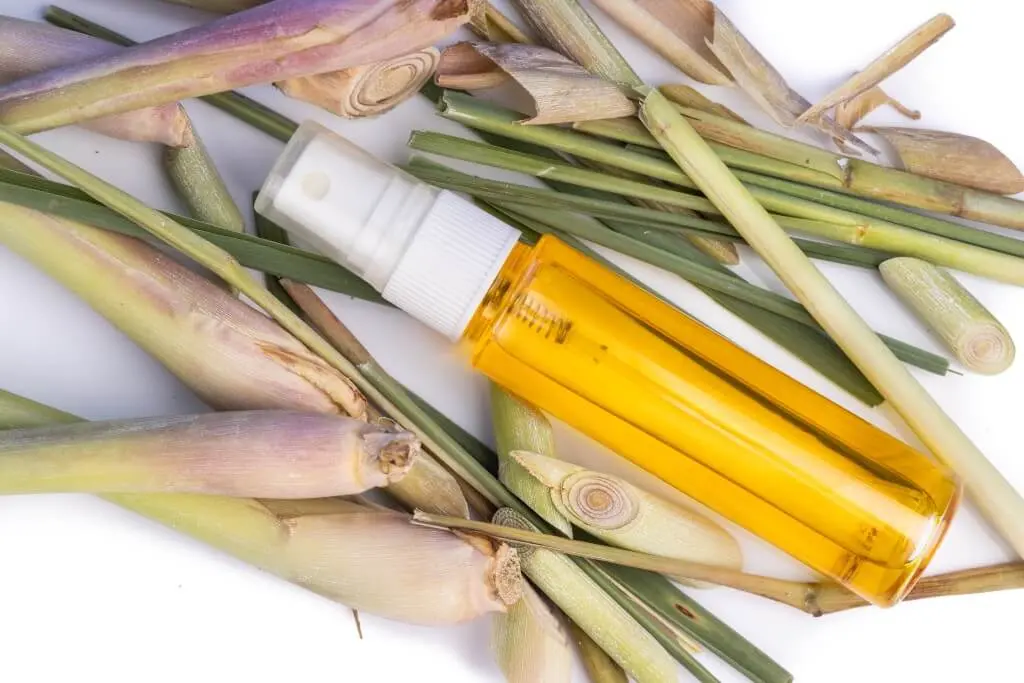
Lemongrass oil serves several industrial markets at once, from fragrance and personal care to food, wellness, pharmaceutical, and household applications.
For a B2B buyer, however, understanding the lemongrass oil market requires more than reading a global growth forecast.
Availability, botanical identity, citral profile, harvest conditions, distillation efficiency, batch consistency, and buyer specifications can all affect the commercial value of the material being offered.
That is especially relevant when evaluating Indonesian supply. Indonesia has a documented cultivation and processing base for lemongrass, but commercial oils are not automatically interchangeable.
A buyer still needs to understand which botanical material is being supplied, how quality is defined, and what is included in the quotation.
This guide looks at the market from that procurement perspective: what drives demand, where Indonesia fits into supply, why citral matters commercially, what moves prices, and what industrial buyers should verify before approving a source.
What Is Driving the Global Lemongrass Oil Market?
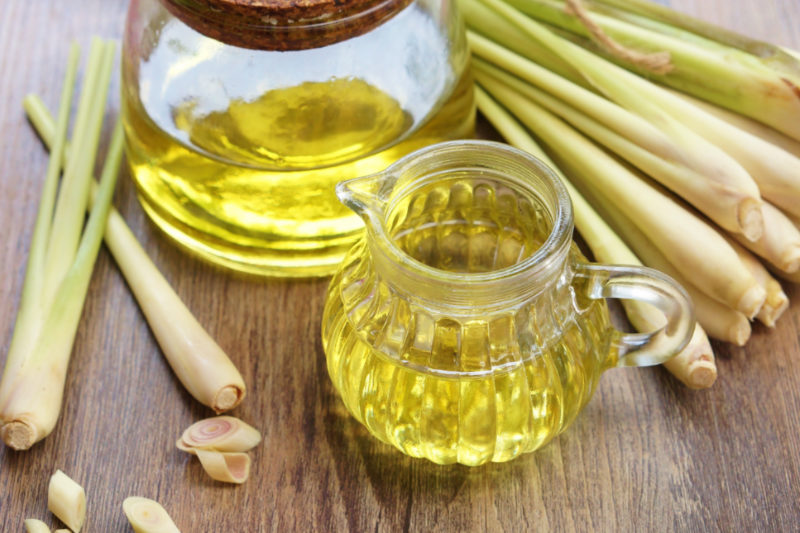
The lemongrass oil market is supported by demand from several downstream industries rather than one single end use.
A recent peer-reviewed review of lemongrass essential oil describes applications across food, cosmetics, pharmaceuticals, and related industrial uses.
For procurement teams, that diversification matters because different sectors can compete for the same natural raw material while asking for different specifications.
Fragrance, Personal Care and Cosmetics
Lemongrass oil is valued for its strong lemon-like aromatic profile and its usefulness in fragranced personal-care systems.
Cosmetic and fragrance buyers typically care about odor character, citral profile, consistency, documentation, and how the oil behaves in the final formulation.
Formulators who need application-specific guidance should use the Global Essential Oil lemongrass cosmetics guide rather than treating a market article as a formulation manual.
Food and Flavor Applications
Citral is one of the best-known natural lemon-flavor compounds and is used in food and beverage systems.
Research on citral also notes its importance as a flavoring material, while highlighting that its stability can become a formulation issue in some aqueous products.
Food buyers therefore need both suitable material identity and the documentation required for their intended market.
Pharmaceutical and Wellness Products
Lemongrass oil and citral-rich materials also appear in pharmaceutical, wellness, and traditional-product supply chains.
From a market perspective, the key point is not to make therapeutic claims, but to recognize that these buyers may apply tighter specifications, quality-system requirements, and documentation checks than a general aromatherapy buyer.
Aromatherapy and Wellness
Aromatherapy remains an important commercial channel because lemongrass has a familiar fresh citrus profile and broad consumer recognition.
For bulk buyers, the commercial question is still the same: whether the offered batch matches the approved identity, sensory profile, and quality range.
Household and Cleaning Products
Home-care products such as cleaners, soaps, and fragranced household products create another demand channel.
These applications may place strong emphasis on cost-performance, odor impact, batch consistency, and compatibility with the finished product rather than on a single constituent percentage alone.
Where Does Indonesia Fit in the Lemongrass Oil Supply Chain?
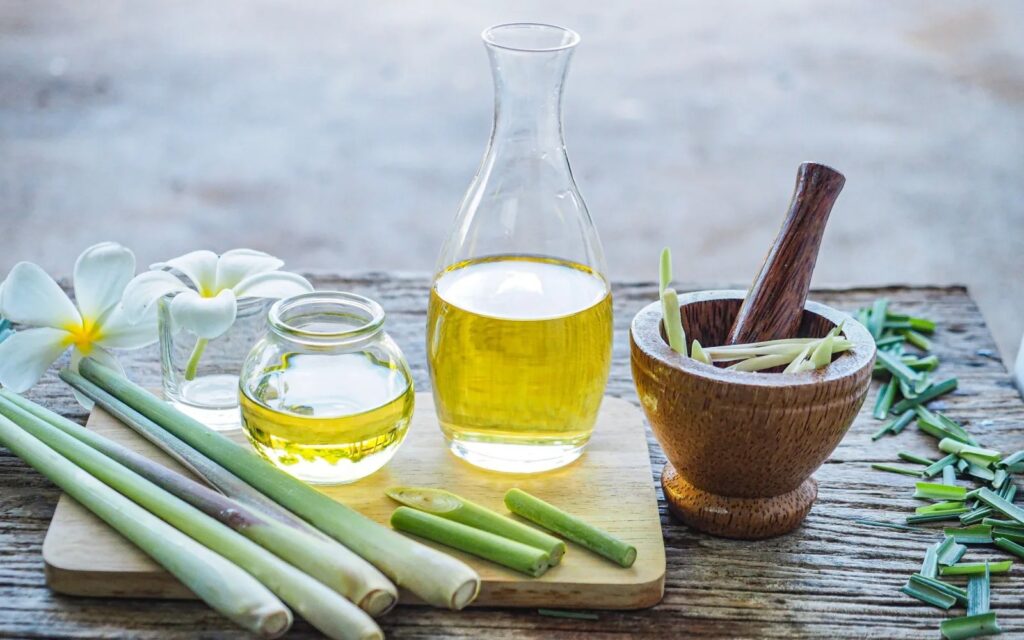
Indonesia Has a Meaningful Lemongrass Biomass Base
Indonesia has a documented agricultural base for Cymbopogon citratus.
A 2025 Universitas Gadjah Mada study, citing Indonesia’s Central Statistics Agency, reported 36,422 tons of lemongrass production in 2021.
That figure refers to agricultural lemongrass production, not essential-oil output, but it helps show that the country has a meaningful raw-material base that can support value-added processing.
Cultivation, Distillation and Downstream Processing
The supply chain starts with agricultural biomass, but the commercial product is shaped by what happens next: harvest condition, handling, pretreatment, distillation, storage, testing, and batch release.
A 2025 study in the Journal of Agriculture and Food Research found that raw-material pretreatment and distillation method significantly affected citral yield in Cymbopogon citratus leaf material.
Buyers who want the production mechanics can read the Lemongrass Oil Extraction Process guide. This market article focuses on what those production variables mean commercially.
Indonesian Supply Is Not One Uniform Commodity
A quotation described only as “lemongrass oil” is not enough for a technical purchase.
Botanical identity, chemical profile, production method, physical parameters, sensory character, and the buyer’s intended application can all influence whether two offers are actually comparable.
Indonesia also recognizes separate national standards for lemongrass essential oils.
The Indonesian National Standardization Agency (BSN) lists standards for both Cymbopogon citratus and Cymbopogon flexuosus essential oils.
For buyers, that is a reminder to verify the botanical identity and applicable specification rather than relying on the generic trade name alone.
Citral: The Commercial Quality Marker Buyers Watch
Citral is one of the most important quality markers in lemongrass oil. It is primarily a mixture of two geometric isomers: geranial (citral A) and neral (citral B). These compounds are responsible for much of the characteristic lemon-like aroma associated with the oil.
Peer-reviewed chemical studies consistently identify geranial and neral as major constituents of Cymbopogon citratus oil.
One GC-MS study indexed by PubMed reported geranial and neral as the dominant constituents of the C. citratus sample it analyzed.
For B2B purchasing, citral should be treated as part of the specification, not as a marketing number. A higher or lower value is not automatically “better” for every application.
What matters is whether the material matches the botanical identity, agreed quality range, sensory expectation, and finished-product requirement.
Why Citral and Chemical Profiles Can Vary Between Batches
Lemongrass oil is an agricultural material, so some chemical variation between legitimate batches is expected.
Research reviews note that both genetic factors and external growing conditions can influence the composition of Cymbopogon oils.
Botanical Species and Chemotype
Cymbopogon citratus and Cymbopogon flexuosus are both traded as lemongrass essential oil in international markets, but they should not be treated as automatically identical materials. Buyers should identify the exact botanical source in the specification and purchase documentation.
Growing Region, Climate and Plant Maturity
Temperature, rainfall, soil conditions, plant genetics, and maturity can affect plant metabolism and the eventual volatile profile.
These variables help explain why a natural oil should be managed with defined ranges rather than an expectation that every chromatogram will be identical.
Raw-Material Handling and Distillation
Cutting, wilting or drying, storage before distillation, and the distillation process can influence oil yield and the balance of recovered compounds.
Experimental studies have shown that extraction conditions can change both yield and the measured composition of lemongrass essential oil.
Batch Consistency
The purchasing objective is controlled variation within agreed criteria. For a broader framework on comparing repeat lots, use the Essential Oil Batch Consistency guide.
What Drives Lemongrass Oil Prices?
Bulk lemongrass oil pricing is shaped by more than the spot cost of distilled oil. The quotation reflects the quality being supplied, the cost of producing and documenting it, the order structure, and the logistics needed to deliver it.
Citral content and buyer specification: A defined chemical range can change how a supplier selects, blends, tests, or releases material.
Botanical identity and origin: Different botanical materials or origins should not be compared as if they were automatically equivalent.
Harvest yield and raw-material availability: Agricultural supply can change with weather, crop condition, harvest timing, and biomass availability.
Distillation yield and processing efficiency: Low oil yield, inefficient processing, or additional processing steps can raise the production cost per kilogram of finished oil.
Batch consistency and purity: More controlled sourcing, testing, traceability, and consistent repeat-lot performance add value for industrial buyers.
Order volume and packaging: Sample orders, jerrycans, drums, and larger bulk programs have different handling and packaging economics.
Testing and documentation: COA, GC-MS, SDS and customer-specific documentation require quality-control work and should be clarified in the quotation.
Incoterm, freight and destination: FOB, CIF, air freight, sea freight, destination charges, and special handling can materially change the landed cost.
Why Buyers Should Not Compare Lemongrass Oil by Price per Kg Alone
The lowest USD/kg offer is not necessarily the lowest-cost raw material once quality risk is included.
Two suppliers may quote the same trade name while offering different botanical identities, citral ranges, documentation, packaging, or repeat-lot consistency.
| Comparison Point | Offer A | Offer B |
| Price/kg | Lower | Higher |
| Botanical identity | Unclear | Defined in specification |
| Citral requirement | Not stated | Agreed range |
| Batch documentation | Limited | Batch-specific documents available as agreed |
| Sample approval | Not completed | Approved before bulk order |
| Repeat-lot consistency | Unknown | Monitored against acceptance criteria |
The better commercial comparison is therefore price-to-specification and price-to-risk rather than price-to-weight alone.
Supply Risks in the Lemongrass Oil Market
Agricultural variability: Weather, crop condition, harvest timing, and plant maturity can influence yield and composition.
Batch-to-batch chemical variation: Normal variation is expected, but the material still needs to remain within the buyer’s accepted quality range.
Adulteration or substitution: Citral-rich materials can be vulnerable to substitution or undeclared blending, especially when purchasing decisions are based only on price.
Botanical-name confusion: “Lemongrass” is used broadly in trade, so the declared botanical identity should be checked before technical approval.
Documentation gaps: A supplier may be able to ship product but still be unprepared for the buyer’s COA, SDS, GC-MS, origin, or customer-specific documentation requirements.
Logistics and lead-time variability: Freight capacity, destination requirements, and shipment mode can change landed cost and replenishment timing.
For a dedicated authenticity discussion, see Investigating Lemongrass Oil Adulteration and Quality Control Issues.
Natural Lemongrass Oil vs Synthetic Citral: Why the Difference Matters
Natural lemongrass oil is a complex botanical mixture in which citral is a major component, while synthetic citral is an isolated chemical ingredient produced through industrial synthesis.
They may compete in some applications where a buyer mainly needs lemon-like odor or citral functionality, but they are not automatically interchangeable.
A buyer that requires a natural essential-oil identity, full aromatic profile, botanical declaration, or natural-origin positioning is making a different purchasing decision from a buyer sourcing isolated citral.
A recent radiocarbon study demonstrated that plant-derived and fossil-derived citral can be analytically distinguished, reinforcing the importance of declared material origin when authenticity matters.
How Industrial Applications Shape Lemongrass Oil Specifications
The same batch may be suitable for one application and unsuitable for another. Industrial demand therefore shapes what buyers ask suppliers to control.
| Industry | Typical Buyer Priorities |
| Fragrance | Aroma profile, citral profile, sensory consistency, repeat-lot performance |
| Cosmetics / Personal Care | Identity, purity, sensory profile, safety and regulatory documentation |
| Food / Flavor | Suitable grade, identity, compositional quality, destination-specific documentation |
| Pharmaceutical / Wellness | Defined specification, purity, traceability and quality-system documentation |
| Household / Cleaning | Aroma impact, consistency, stability in application and cost-performance |
| Important: the exact grade and regulatory documentation required depend on the buyer, application, destination market and company quality system. Do not assume one lemongrass oil specification is suitable for every industry. |
What B2B Buyers Should Check Before Purchasing Indonesian Lemongrass Oil
- Exact botanical name and plant part.
- Extraction method and product identity.
- Agreed citral or key-component requirement where relevant.
- Current product specification and batch-specific COA.
- GC-MS or chromatographic evidence when required by the buyer’s quality system.
- Relevant physical parameters such as appearance, specific gravity or refractive index when included in the specification.
- Representative sample approval before a large bulk commitment.
- Sensory and application performance for aroma-sensitive formulations.
- Repeat-lot consistency expectations and how deviations are handled.
- Packaging format, net weight and material compatibility.
- MOQ, production lead time and shipment lead time.
- SDS and destination-specific commercial or export documents.
- Incoterm and what costs are included in the quoted price.
For a broader supplier-verification framework, see How to Source Essential Oils from Indonesia. For document interpretation, use the Essential Oil COA & GC-MS Guide.
How to Read an Indonesian Lemongrass Oil Quotation
A useful quotation should make it possible to understand exactly what is being priced. Before comparing offers, procurement should confirm whether each quotation refers to the same product basis.
| Quotation Item | What to Confirm |
| Product identity | Botanical name, grade/type and extraction method |
| Quality basis | Specification version and relevant constituent range |
| Quantity | Net weight and whether pricing changes by volume tier |
| Packaging | Container type, unit size and any packaging charge |
| Documents | Which COA, GC-MS, SDS or customer-specific documents are included or available |
| Incoterm | EXW, FOB, CIF or other agreed term |
| Freight | Included or excluded, and by which mode |
| Lead time | Production, preparation and estimated shipment timing |
| Validity | How long the quotation remains valid |
Lemongrass Oil Market Outlook: What Buyers Should Watch
Instead of relying on one long-range CAGR forecast, industrial buyers can monitor the practical signals that are more likely to affect sourcing decisions.
- Demand diversification across fragrance, cosmetics, food, wellness and home-care applications.
- Natural-versus-synthetic ingredient economics in applications where isolated citral is an alternative.
- Tighter expectations for botanical identity, traceability and batch-specific documentation.
- Greater attention to citral profile and repeat-lot consistency rather than generic “pure oil” claims.
- Processing efficiency and raw-material utilization, including attempts to extract value from agricultural by-products.
- Freight conditions, destination-market documentation and landed-cost volatility.
- Sustainability expectations around farming, distillation efficiency and supply-chain transparency.
Sourcing Lemongrass Oil from Indonesia
Buyers evaluating Indonesian material can use the Global Essential Oil Lemongrass Essential Oil product page to review the current product information.
Because specifications, documents, packaging and commercial terms can vary by product and batch, confirm the current details before placing an order.
To discuss a sample, current specification, available batch documents, packaging or a bulk quotation, contact the Global Essential Oil team.
Frequently Asked Questions
What drives the lemongrass oil market?
Demand comes from several industries, including fragrance, cosmetics, food, wellness, pharmaceutical and household products, while supply is influenced by agriculture, processing, quality and logistics.
Is Indonesia a producer of lemongrass oil?
Yes. Indonesia has a documented lemongrass cultivation and essential-oil processing base, but buyers should still verify botanical identity, specification and batch quality.
What affects lemongrass oil prices?
Key factors include citral requirements, botanical identity, raw-material availability, distillation yield, testing, packaging, order volume, freight and Incoterms.
Why is citral important in lemongrass oil?
Citral, mainly geranial and neral, is a major part of the oil’s lemon-like aroma and is commonly used as an important specification marker.
What should buyers check before purchasing lemongrass oil in bulk?
Confirm botanical identity, specification, citral requirement, batch documents, sample approval, packaging, MOQ, lead time and export requirements before comparing quotations.