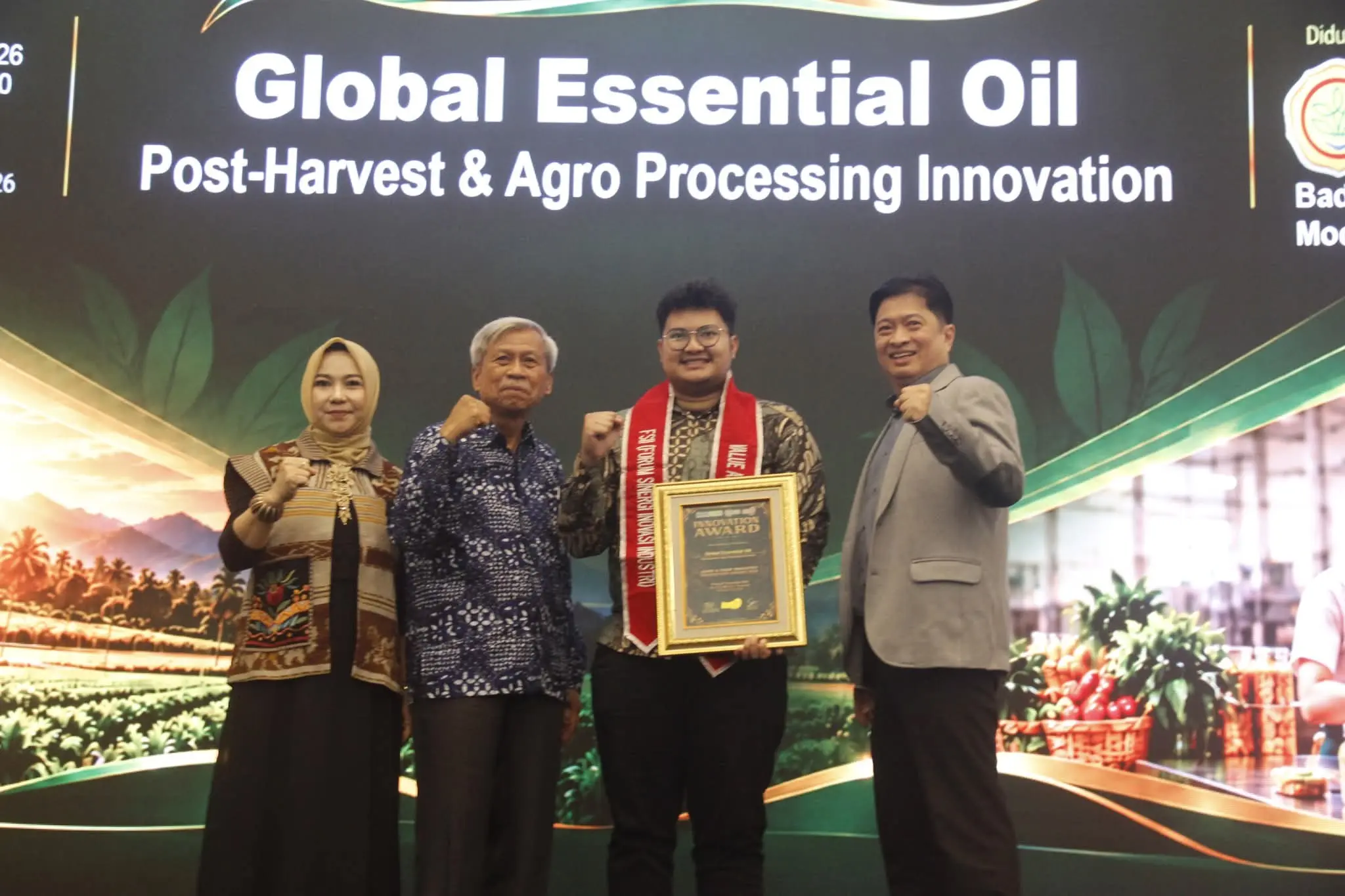
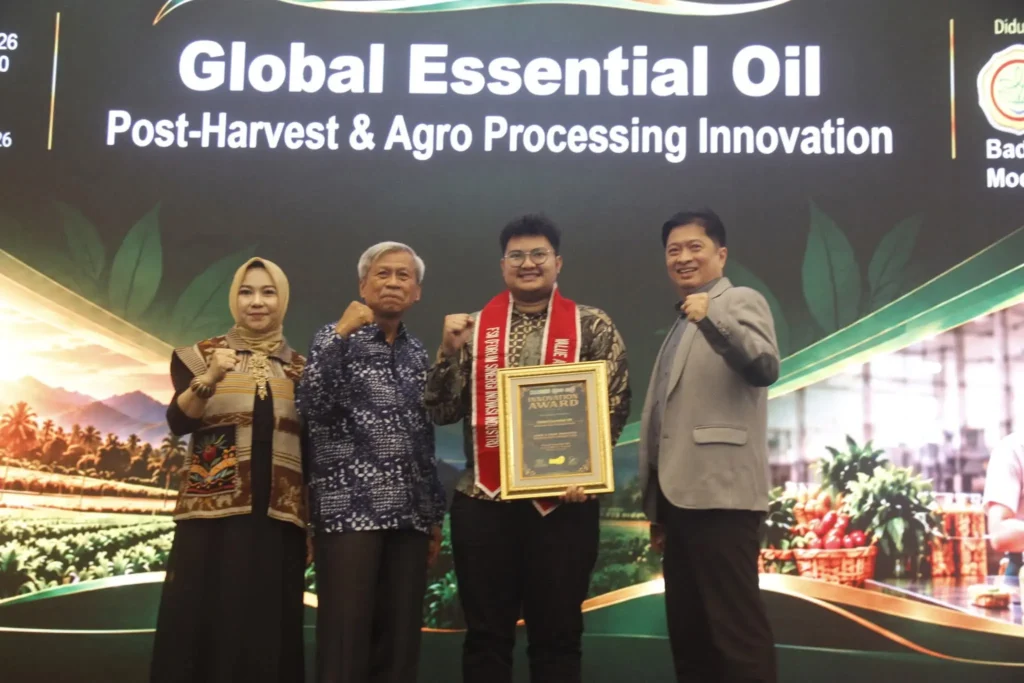
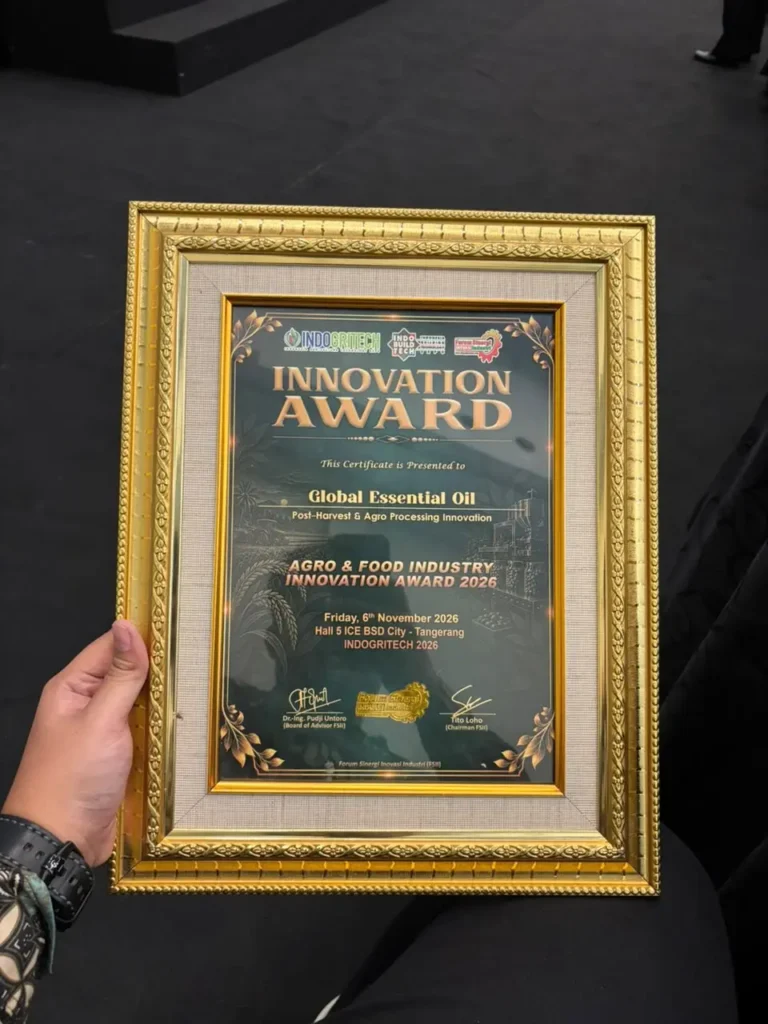
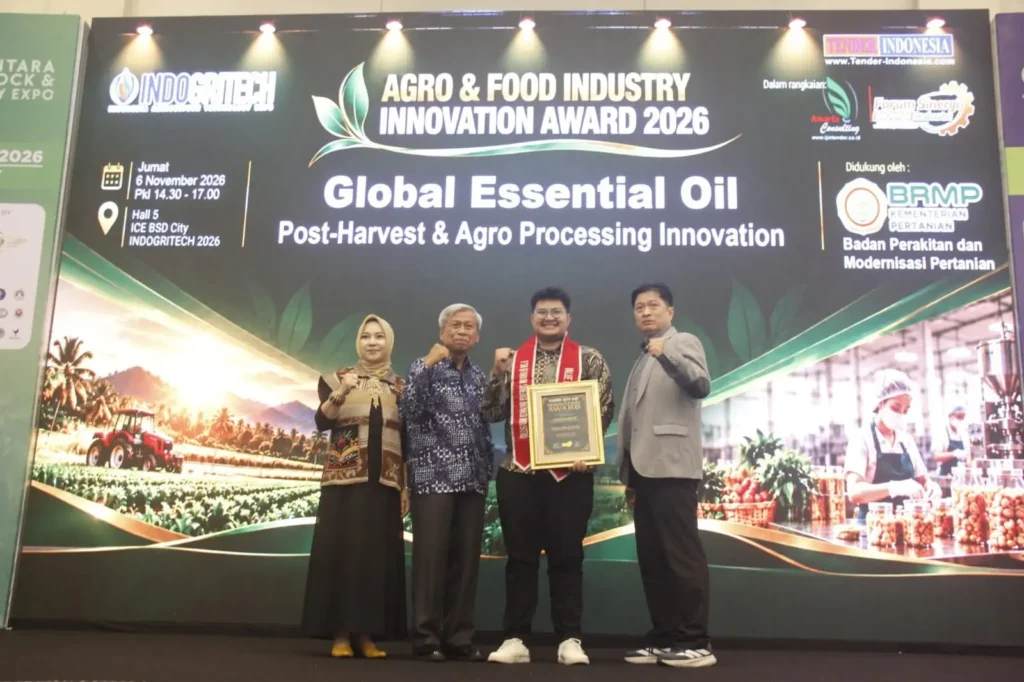
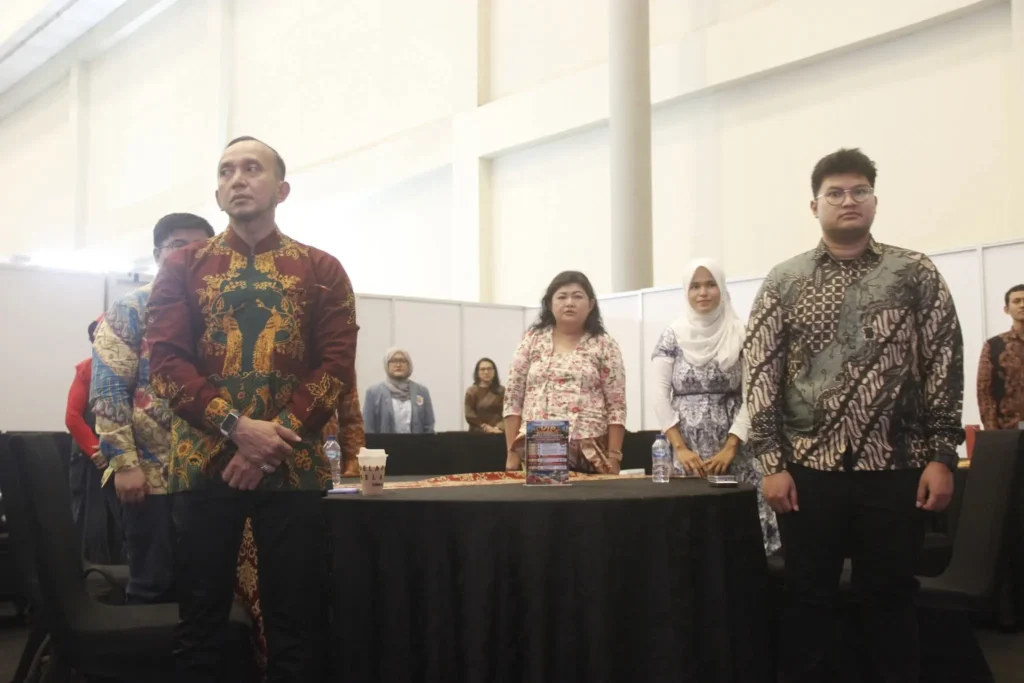
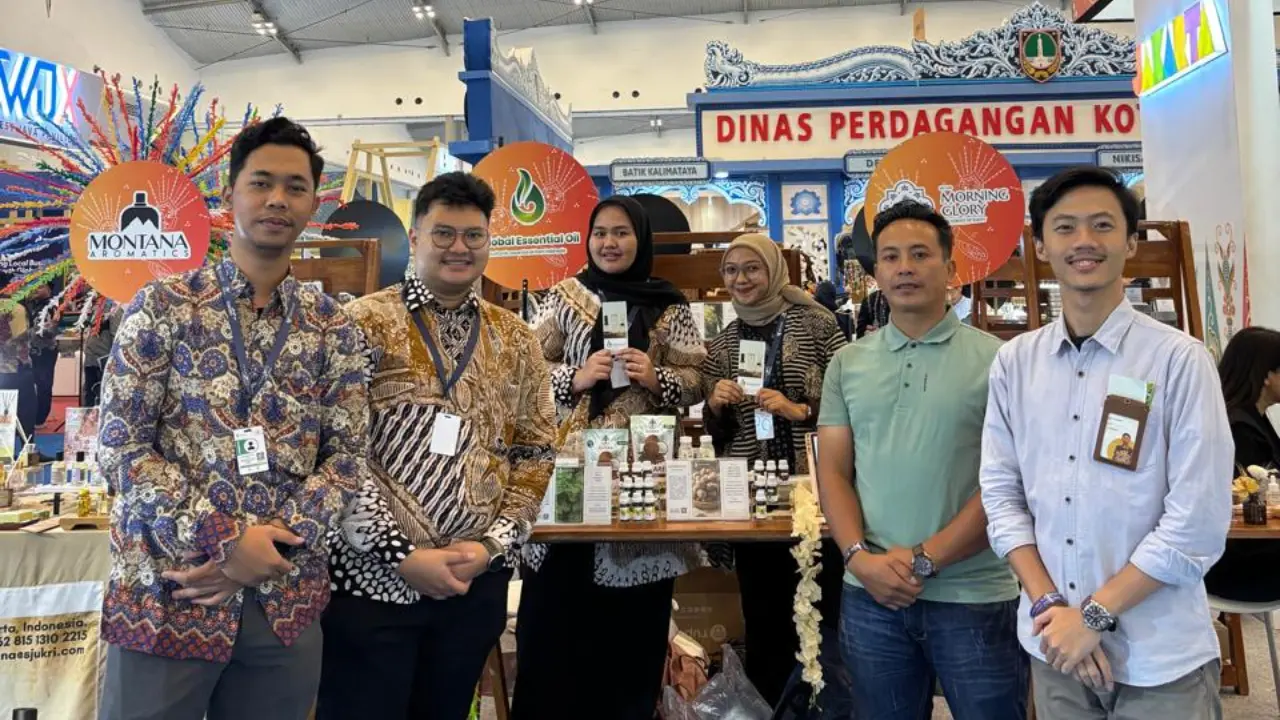
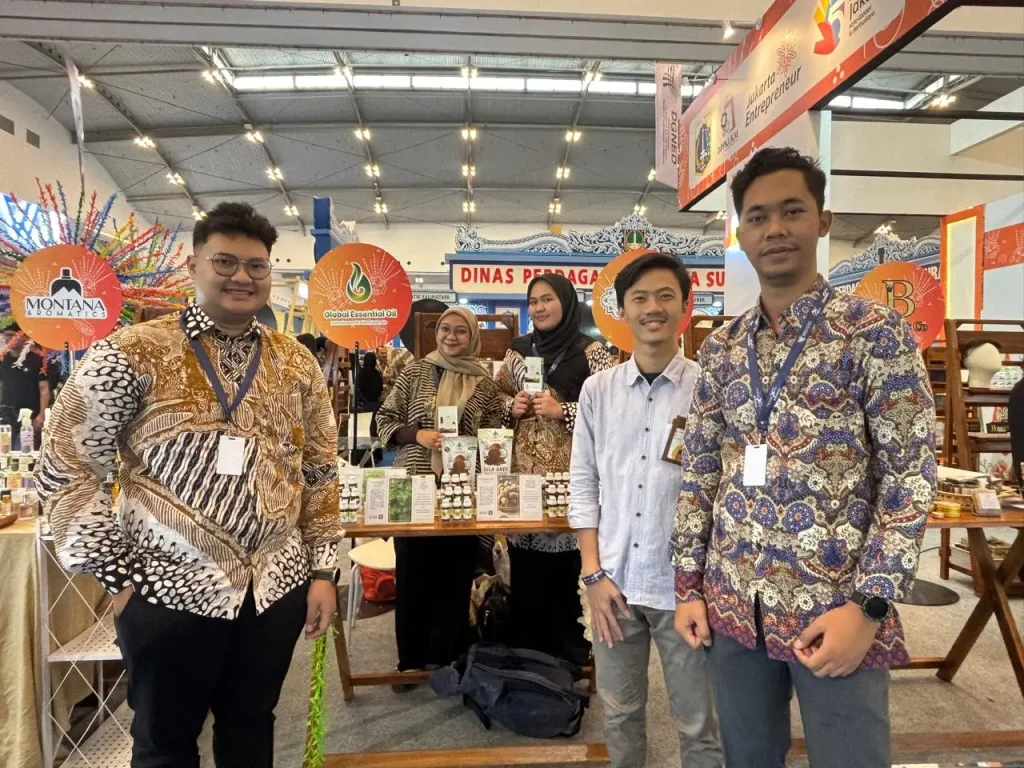
Global Essential Oil received an award in the Post-Harvest & Agro Processing Innovation category at the Agro & Food Industry Innovation Award 2026, held on November 6, 2026, at ICE BSD City in Tangerang, Indonesia.
We are grateful for this recognition, which reflects an important part of our work: creating added value from Indonesia’s agricultural resources through essential oil processing.
Recognition for Post-Harvest and Agro Processing Innovation
Spices and aromatic plants are valuable agricultural commodities in their own right.
Through appropriate post-harvest handling and processing, they can also become essential oils with different applications and commercial opportunities.
This is the value-added approach behind the achievement we are celebrating.
By moving beyond raw materials and developing aromatic ingredients, processing can help connect Indonesian botanicals with industries that use essential oils in finished products.
The resulting value depends on factors such as oil yield, quality, production costs, and market requirements—not simply on turning a spice into oil.
For us, the award is a meaningful acknowledgment of the potential of value-added agro processing and an encouragement to keep building on that potential.
Creating Greater Value from Indonesian Botanical Resources
Indonesia offers a wide variety of aromatic plant materials.
Our portfolio includes patchouli oil, nutmeg oil, and citronella oil—examples of aromatic ingredients used across fragrance, cosmetics, personal care, and other product categories.
Each begins with a plant resource and has a distinct profile for different product applications.
For international buyers, added value involves more than the finished oil itself. Botanical identity, aroma profile, specifications, and consistent communication are also important when evaluating materials for a particular formulation.
We believe that connecting agricultural processing with the needs of manufacturers is an important way to strengthen the relevance of Indonesian essential oils in international markets.
Moving Forward with Innovation and Collaboration
We would like to thank the award organizers and everyone involved in recognizing initiatives that create new opportunities for Indonesian agriculture. We appreciate this milestone and the encouragement it brings to our team.
As we move forward, we remain focused on developing connections between Indonesian botanical resources and businesses that use natural aromatic ingredients.
Whether you are an importer, distributor, fragrance manufacturer, or product developer, we welcome conversations about your sourcing needs.
Contact our team to discuss available essential oils, product information, and next steps.
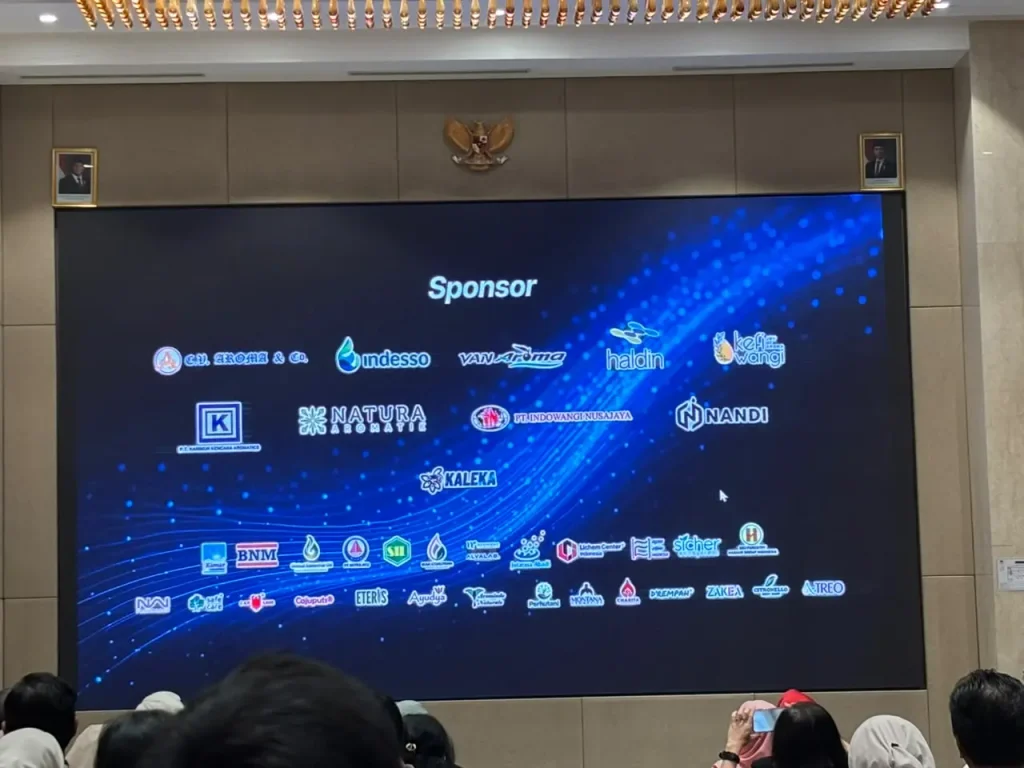
As a sponsor, we were pleased to support a national forum dedicated to the future of Indonesia’s essential oil industry.
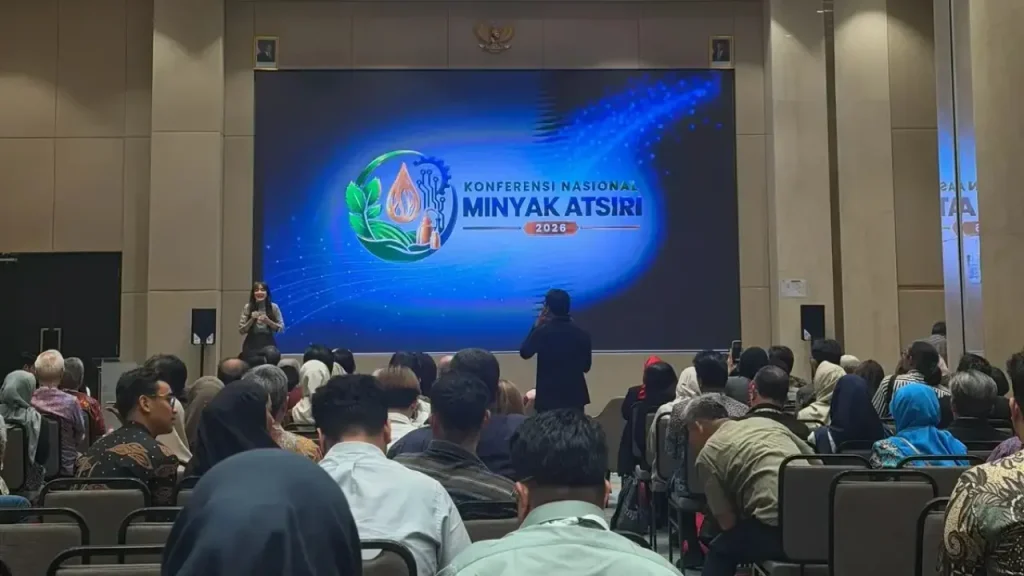
The conference brought together representatives from research, government, and business to discuss innovation in cultivation and production, sustainability, and industry competitiveness.
Connecting with Indonesia’s Essential Oil Community
KNMA 2026 provided an opportunity for our team to be present among people working across the Indonesian essential oil sector.
The conference covered topics that connect different parts of the value chain, from cultivation and distillation to processing, product development, and market access.
For us, essential oil quality is connected to raw materials, production practices, and the people behind each batch. Events like KNMA help us stay close to the wider industry’s priorities and challenges.
Our attendance was conference-focused, with knowledge exchange rather than product displays at the center of our participation.
Strengthening Collaboration Across the Essential Oil Value Chain
One of the themes highlighted during KNMA 2026 was the importance of collaboration between researchers, producers, and industry stakeholders.
For Global Essential Oil, this connects closely with our work serving international buyers who consider product consistency, specifications, and documentation when sourcing natural aromatic materials.
Our portfolio includes Indonesian patchouli oil, nutmeg oil, and citronella oil. Each has its own characteristics and applications, but all benefit from an essential oil industry that continues to improve its knowledge, processes, and communication.
These industry connections remain important to how we serve B2B buyers.
Thank You to the KNMA 2026 Community
We would like to thank the KNMA 2026 organizers, speakers, and participants for bringing together different voices from Indonesia’s essential oil community. We appreciate the opportunity to attend and support this year’s conference as a sponsor.
Although KNMA 2026 has concluded, our commitment to connecting Indonesian essential oils with international markets continues.
If your business is exploring natural aromatic materials for fragrance, cosmetics, personal care, or other manufacturing applications, contact our team to discuss your sourcing requirements and potential next steps.
Farel Alfarizy, Owner of Global Essential Oil, alongside fellow speakers and the RRI team during the Beranda Astacita UMKM talk show at RRI PRO 1 Jakarta on October 26, 2026.
We are pleased to announce that Global Essential Oil is preparing to participate in Choose Jakarta to Netherlands 2026, scheduled for November 26–29, 2026, at De Broodfabriek in Rijswijk, the Netherlands.
The exhibition is part of the Jakarta Provincial Government’s Choose Jakarta initiative, which aims to introduce Jakarta-based businesses to international markets.
We look forward to this opportunity to build new connections and introduce our work in Indonesian essential oils to potential partners in Europe.
Bringing Indonesian Essential Oils to the European Market
At Global Essential Oil, our work connects the Indonesian essential oil supply chain with international business needs, from supporting growers and processing raw materials to quality control and export.
Our product portfolio includes patchouli oil, nutmeg oil, and citronella oil, which are relevant to applications across fragrance, personal care, and other industries.
Through Choose Jakarta to Netherlands 2026, we hope to meet importers, distributors, manufacturers, and other business visitors who are exploring ingredients from Indonesia.
We see the exhibition as a chance to listen to potential buyers, understand their priorities, and discuss possible cooperation.
Questions about product suitability, specifications, documentation, and sourcing requirements are an important starting point for building reliable business relationships.
Sharing Our Global Market Journey with RRI
On October 26, 2026, Farel Alfarizy, Owner of Global Essential Oil, joined the Beranda Astacita UMKM talk show on RRI PRO 1 Jakarta, themed “Choose Jakarta Go Global.”
The discussion covered Jakarta’s efforts to help local businesses reach international markets, including the upcoming exhibition in the Netherlands.
Farel Alfarizy during the Beranda Astacita UMKM talk show at RRI PRO 1 Jakarta on October 26, 2026, discussing the upcoming Choose Jakarta to Netherlands 2026 exhibition.
During the talk show, Farel emphasized the importance of understanding international buyers’ needs and shared a key message:
“Rather than focusing only on selling our products, we should focus on offering solutions to global buyers.”
This perspective reflects our approach to building meaningful business relationships as we prepare to connect with potential partners in the European market.
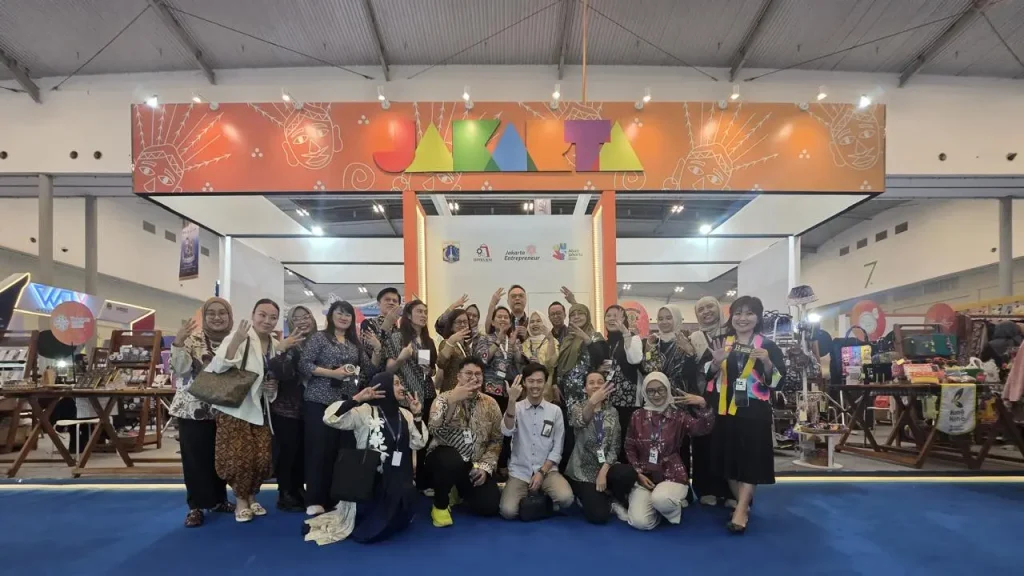
Global Essential Oil took part in the 41st Trade Expo Indonesia (TEI) 2026, held on October 14–18, 2026, at the Indonesia Convention Exhibition (ICE BSD City) in Tangerang, Indonesia.
Throughout the five-day event, our team welcomed visitors to our booth in Hall 8, where we showcased Indonesian essential oils with a special focus on patchouli oil, nutmeg oil, and citronella oil.
The exhibition brought Indonesian businesses and international buyers together for product introductions and business conversations.
For our team, it was a valuable opportunity to meet companies interested in sourcing essential oils from Indonesia and introduce them to Global Essential Oil in person.
Showcasing Indonesian Essential Oils at Hall 8
At our booth in Hall 8, visitors could take a closer look at the essential oils on display and speak directly with our team. We highlighted three of our key offerings: patchouli oil, nutmeg oil, and citronella oil.
For importers, distributors, and manufacturers, these conversations can be a useful first step when evaluating a potential sourcing partner.
We welcomed the chance to introduce our products and discuss opportunities to continue communicating after the event.
Connecting with International Buyers
One of the highlights of TEI 2026 was meeting international buyers face to face.
Throughout the exhibition, we connected with business visitors, exchanged introductions, and explored the possibility of staying in touch beyond the event.
Meeting buyers in person is meaningful to us because it helps build familiarity and opens the door to future conversations about sourcing needs.
We value these connections as part of our ongoing efforts to introduce Indonesian essential oils to businesses in international markets.
Thank You for Visiting Global Essential Oil
We would like to thank everyone who visited our booth in Hall 8 and took the time to meet our team.
We appreciate the interest shown in our products and the conversations we shared during Trade Expo Indonesia 2026.
Although the exhibition has ended, we look forward to keeping these conversations going.
Whether we met at TEI 2026 or you are discovering Global Essential Oil for the first time, we welcome you to contact our team to discuss your essential oil sourcing requirements and next steps.
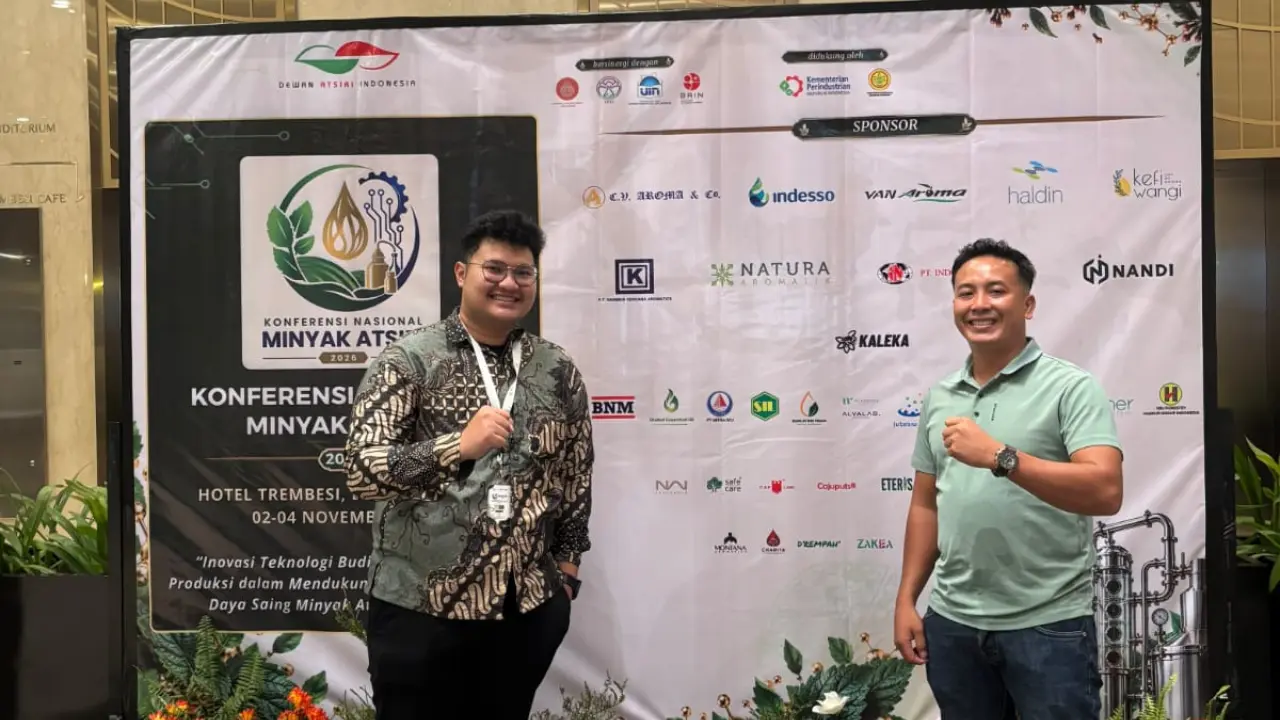
The conference will be held on 2-4 November 2026 at Trembesi Hotel – BSD, Tangerang, bringing together conversations around the development of Indonesia’s essential oil industry.
For Global Essential Oil, the value of KNMA 2026 goes beyond sponsorship visibility.
Our team will attend the conference to take part in industry discussions, connect with other stakeholders, and strengthen relationships across Indonesia’s essential oil ecosystem.
Our participation will focus on discussion, networking, and knowledge exchange rather than a product exhibition.
We see this as closely aligned with the way the essential oil industry develops: through collaboration among growers, distillers, processors, researchers, manufacturers, exporters, buyers, and other organizations across the value chain.
About KNMA 2026
KNMA 2026 will be held on 2-4 November 2026 at Trembesi Hotel – BSD, Tangerang.
As a national conference dedicated to essential oils, the event provides a forum for participants to exchange perspectives on the industry, its challenges, and its opportunities.
For companies working with Indonesian natural aromatic materials, KNMA 2026 offers a relevant setting to stay connected with the wider industry.
More information about the event is available on the KNMA 2026 website.
Global Essential Oil as a Sponsor of KNMA 2026
Global Essential Oil is supporting KNMA 2026 as a sponsor as part of our broader commitment to Indonesia’s essential oil industry.
For us, this sponsorship is not only about brand visibility. It is an opportunity to support an industry forum where practical experience, technical perspectives, market needs, and future opportunities can be discussed together.
A stronger essential oil sector depends on more than the finished product.
Raw materials, cultivation, distillation, post-distillation handling, quality control, documentation, logistics, market access, and buyer requirements are all connected.
Supporting an event that brings industry perspectives together is one way we can contribute to that broader ecosystem.
Why Global Essential Oil Is Supporting KNMA 2026
Global Essential Oil supports the development of Indonesian essential oils.
Supporting the Development of Indonesia’s Essential Oil Industry
Indonesia has a long-standing position in natural aromatic materials.
The industry’s ability to compete internationally depends on the people and processes behind each batch – from farmers and distillers to processors, technical teams, exporters, and manufacturers.
By supporting KNMA 2026, Global Essential Oil wants to contribute to an environment where industry participants can exchange knowledge, understand each other’s challenges, and build stronger working relationships.
Encouraging Collaboration Across the Value Chain
Essential oil quality and commercial readiness are shaped by multiple stages before a product reaches an international buyer.
Discussion across the value chain helps connect production realities with technical requirements, quality expectations, and market needs instead of treating each stage in isolation.
Connecting Indonesian Essential Oils With International Markets
Global Essential Oil works with B2B buyers evaluating Indonesian essential oils for fragrance, cosmetics, personal care, home care, flavor, and other manufacturing applications.
These buyers often ask practical questions about specification, batch consistency, documentation, samples, packaging, destination requirements, and commercial terms.
That international buyer perspective is relevant to local industry conversations.
Stronger alignment between production and buyer expectations can help Indonesian essential oils compete more effectively in global B2B markets.
Industry participation is not a substitute for product specifications, batch evaluation, or technical documentation.
However, staying actively connected to Indonesia’s essential oil ecosystem is one of the ways we remain close to developments in production, quality, and international market requirements.
Global Essential Oil’s Presence at KNMA 2026
The Global Essential Oil team will attend KNMA 2026 in person.
Because the event is conference-focused, our participation will center on discussion, networking, and relationship-building rather than operating a booth or product display.
We look forward to listening to different perspectives from across the sector and discussing how Indonesian essential oils can continue to strengthen their position through quality, consistency, documentation, supply-chain coordination, and market relevance.
For us, direct industry interaction is valuable because sourcing challenges are easier to understand when producers, processors, exporters, technical teams, and other stakeholders can exchange perspectives on what is happening both in the field and in the market.
Connecting Indonesian Essential Oils With Global B2B Markets
Global Essential Oil has experience exporting essential oils to various countries around the world
Indonesia produces a wide range of natural aromatic materials used by international manufacturers.
Although each oil has its own technical profile and applications, buyers typically need the same fundamentals: clear product identity, fit-for-purpose quality, relevant batch documentation, and a supplier that understands B2B procurement requirements.
These materials are evaluated across fragrance, cosmetics, personal care, flavor, home care, and other industrial applications.
Buyers who want a broader overview of Indonesian aromatic materials can also explore our Essential Oils from Indonesia guide, which maps key oils, origins, and industrial applications.
What Global Essential Oil Brings to B2B Buyers
KNMA 2026 is an industry conference, not a sales exhibition for us.
However, the same capabilities that shape our B2B work throughout the year also explain why industry participation matters to Global Essential Oil.
Indonesian Essential Oil and Export Focus
Our business is centered on Indonesian-origin natural aromatic materials and international B2B sourcing.
That means product discussions are not limited to the name of an essential oil.
Buyers may need to define the intended application, required specification, quantity, destination, documentation expectations, packaging, and commercial terms before an order can move forward.
Technical Documentation and Product Evaluation
Depending on the product and batch, buyers can discuss available technical documentation such as product specifications, Certificate of Analysis (COA), GC or GC-MS information where applicable, and SDS/MSDS.
The exact documentation should always be confirmed for the material being evaluated rather than assumed from a generic product description.
Sample evaluation can also be an important step before a bulk commitment.
It allows technical and procurement teams to review the actual material, compare it against requirements, and evaluate performance in the intended application before approving a commercial order.
B2B Sourcing Support
Commercial requirements can vary significantly between buyers.
Packaging, target quantity, destination market, lead time, documentation, and quotation details should be discussed in the context of the actual sourcing requirement.
We prefer to clarify these points early so the commercial offer is aligned with the buyer’s application and procurement process.
Companies still building their supplier-evaluation process can review our guide to sourcing essential oils from Indonesia for a broader framework covering product identity, supplier verification, quality documents, samples, and export considerations.
KNMA 2026 is one moment within the wider development of Indonesia’s essential oil sector.
Progress will continue through improvements in cultivation, distillation, processing, quality control, traceability, documentation, market access, and collaboration.
Global Essential Oil aims to remain part of that process by connecting Indonesian essential oils with international buyers who need reliable natural raw materials for commercial applications.
Discuss Your Indonesian Essential Oil Requirements
If your company is sourcing Indonesian Patchouli Oil, Nutmeg Essential Oil, Citronella Essential Oil, or other natural aromatic materials, our team can discuss your intended application, specification, sample requirements, available documentation, quantity, packaging, destination, and quotation.
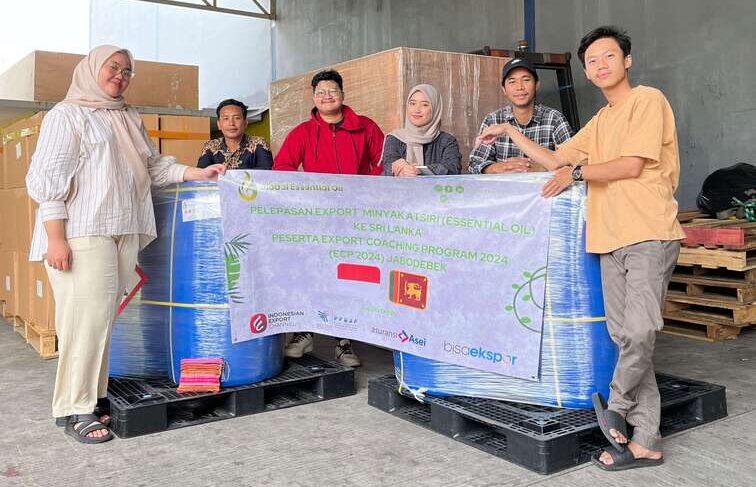
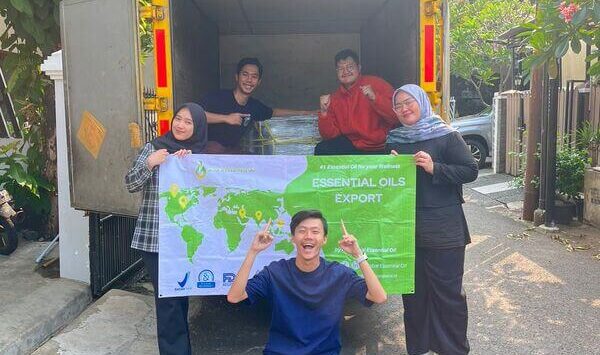
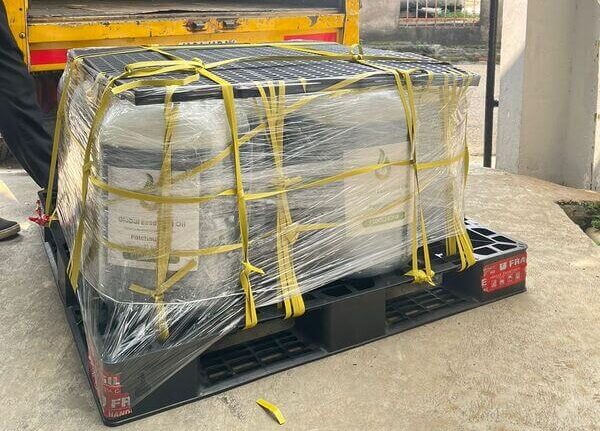
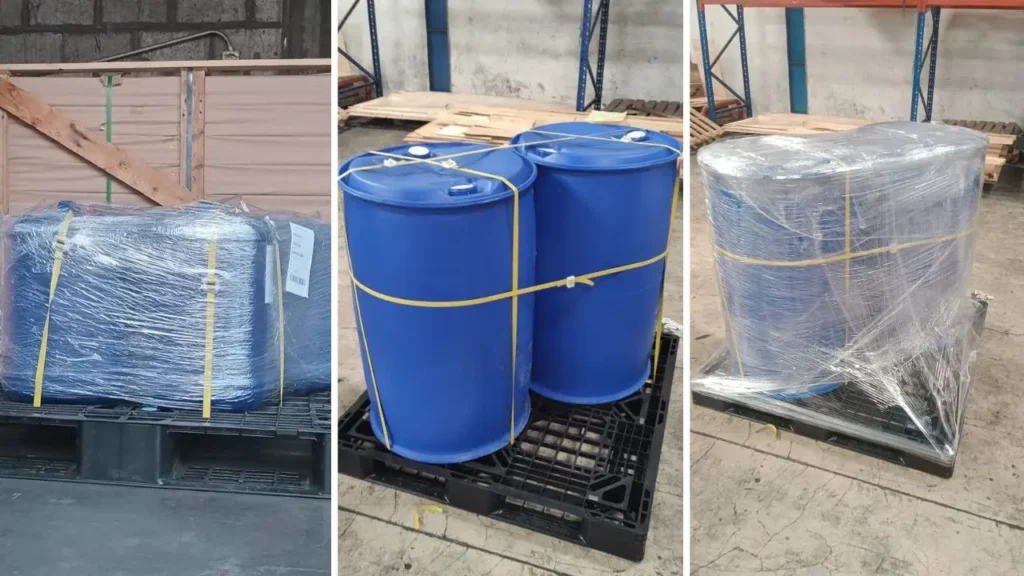
In late 2024, we completed an essential oil export to Sri Lanka from Indonesia.
The shipment took place during a period when our team was experiencing softer international demand for several Indonesian essential oils, making supply coordination and buyer communication especially important.
This shipment is useful as more than a company milestone. It shows how an international order depends on several connected elements: sourcing from producing regions, coordinating with farmers and distillers, checking the batch against buyer requirements, preparing export documentation, and maintaining clear communication until shipment.
Case-study context This article documents a historical 2024 shipment. It is not a live quotation, current market-price report, or guarantee that every shipment uses the same products, packaging, documents, or sourcing route.
Shipment Snapshot
Item
Shipment Detail
Destination
Sri Lanka
Shipment period
Late 2024
Origin
Indonesia
Sourcing regions mentioned in the original update
Java and Sumatra
Product category
Indonesian essential oils
Shipment status
Completed
Commercial context
Completed during a softer international-demand period described by our team at the time
Our 2024 Essential Oil Shipment to Sri Lanka
The late-2024 shipment was part of our wider experience supplying customers in South Asia. The original company update also noted previous export activity to markets including India, Bangladesh, and Pakistan.
Rather than treating the shipment as evidence that demand follows a fixed seasonal cycle, the more useful lesson is that export conditions can change. When demand is softer, suppliers still need to coordinate raw-material availability, production, quality control, commercial terms, and shipment timing without compromising the agreed specification.
Sourcing During a Softer Market Period
At the time, our commercial and product teams described international demand for several essential oils as relatively soft. We do not treat that as a universal year-end rule for every market. Demand can vary by oil, buyer inventory, application, region, and purchasing cycle.
For this shipment, maintaining an active export order helped keep purchasing and production activity moving across the supply chain. The original update stated that much of the material for the shipment came from Java and Sumatra, where our sourcing relationships were active.
How Our Indonesian Supply Network Supported the Shipment
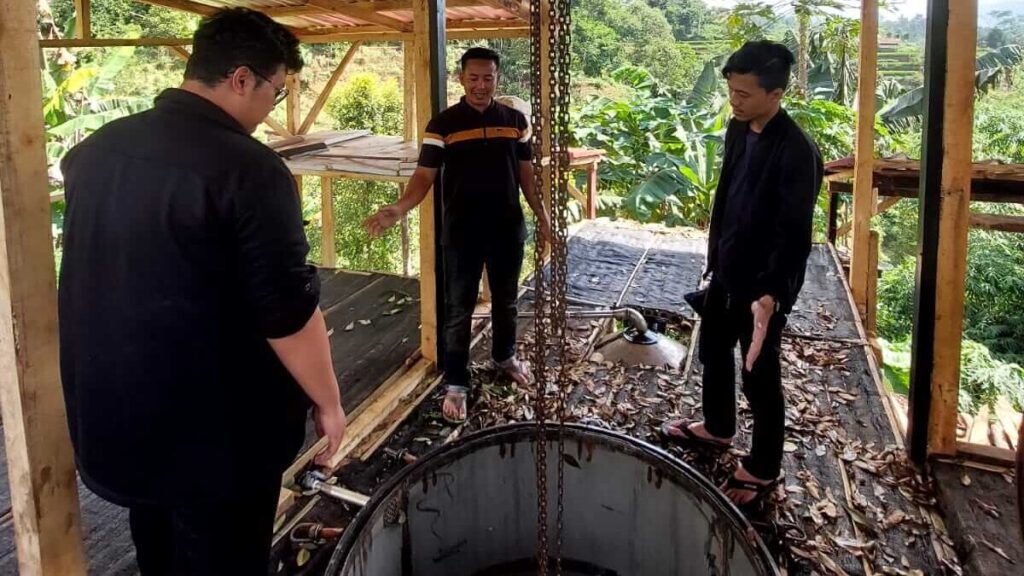
Indonesian essential-oil supply often involves several stages before a finished batch is ready for export. Farmers grow the raw material, local distillers process botanical material into essential oil, and downstream teams coordinate quality, storage, packaging, documentation, and shipment.
Our role is to connect those stages with the buyer’s requirements. That means matching available material with the agreed specification, communicating with the sourcing network, and checking that the finished batch is suitable before shipment.
If you are evaluating suppliers in Indonesia, our guide to sourcing essential oils from Indonesia explains supplier verification, quality checks, documentation, and procurement steps in more detail.
Quality Control Before an International Shipment
A completed export shipment does not begin with logistics. It begins with a clear agreement on what the buyer expects from the product. Depending on the essential oil, the specification may cover botanical identity, origin, aroma, appearance, physical parameters, key chemical constituents, and other batch requirements.
Product Specification and Batch Approval
Before dispatch, the relevant batch should be checked against the specification agreed with the buyer. The exact approval process can differ by product and customer, but sample review and batch-level documentation are important tools for reducing surprises after delivery.
COA and Analytical Documentation
A Certificate of Analysis can summarize batch-specific physical and chemical parameters, while chromatographic analysis such as GC-MS or GC-FID may be used to review the chemical profile where relevant.
If you need to compare supplier documents, see our guide to essential oil COA and GC-MS reports. The exact documents available for a shipment should always be confirmed for the product and batch being purchased.
Packaging, Storage, and Traceability
Quality can also be affected after production. Appropriate packaging, clean containers, storage conditions, batch identification, and consistent document references help protect the material and make the shipment easier to trace.
Export Documentation and Buyer Coordination
International shipments require more than product approval. Commercial and shipping documents need to match the actual order and destination.
Depending on the product, buyer, and destination market, this may involve a commercial invoice, packing list, Certificate of Origin, transport documents, COA, SDS or MSDS, and other supporting documents.
Because document requirements vary, they should be confirmed before dispatch rather than copied from a previous shipment.
Sri Lanka is part of a wider South Asian trade network for essential oils and aromatic materials. World Bank WITS trade data shows that Indonesia exported about US$116,000 and 5,600 kg of products under HS 330129 to Sri Lanka in 2024.
That figure is national trade data for the HS 330129 category – essential oils including concretes and absolutes – and should not be interpreted as the value or quantity of our 2024 shipment. It simply confirms that Indonesia-Sri Lanka trade existed in this broader product category during the same year.
Our more recent company update covers later shipments to Europe and South Asia at a broader regional level. Keeping that article broad allows this page to remain focused on the specific 2024 Sri Lanka shipment.
What This Shipment Shows About Our Export Capability
1. Multi-Region Sourcing
The original update identified Java and Sumatra as important sourcing regions for this shipment. Working across more than one producing region can help a supplier coordinate availability, but the final product still needs to match the buyer’s agreed origin and specification.
2. Supply Coordination
A shipment requires coordination between raw-material availability, distillation, batch approval, packaging, and logistics. A delay at any stage can affect the final delivery schedule.
3. Quality Consistency
International buyers need consistency across the approved sample, production batch, documents, and delivered material. Quality control is therefore part of export readiness, not a separate marketing claim.
4. Documentation Readiness
Clear and consistent documentation helps procurement, logistics, and quality teams review a shipment before it reaches the destination. The required document set should be confirmed for each order.
5. Buyer Communication
Export execution also depends on communication. Specification changes, documentation questions, packaging requirements, and shipment schedules should be resolved before dispatch whenever possible.
What Should You Check When Sourcing Essential Oils from Indonesia?
Confirm the botanical identity and declared origin of the product.
Request the current product specification before comparing quotations.
Review a representative sample when aroma or formulation performance is important.
Check batch-specific COA and available GC-MS or GC-FID information where relevant.
Confirm packaging, net weight, labeling, and storage requirements.
Verify which export and safety documents are available for the actual shipment.
Ask how the supplier manages sourcing and repeat-order consistency.
Confirm lead time and quotation validity instead of assuming previous shipment conditions still apply.
Looking for Indonesian Essential Oils?
If you are sourcing Indonesian essential oils for fragrance, cosmetics, personal care, household products, or other industrial applications, you can discuss your required product, specification, order volume, packaging, and documentation with our team.
We can help you review current product availability and the documents that may be available for the relevant batch.
Contact us to discuss a sample, product specification, or bulk quotation.
Yes. This company update documents a late-2024 export shipment from Indonesia to Sri Lanka. The article focuses on the sourcing, quality-control, documentation, and export coordination behind that historical shipment.
Which essential oils were included in the Sri Lanka shipment?
The original public update did not identify the complete product mix. If you need current product availability, contact our team with the oil, specification, and quantity you are sourcing.
Does every essential oil export use the same documents?
No. Documentation depends on the product, destination, buyer requirements, shipping method, and applicable regulations. The required document set should be confirmed for each shipment.
Can you provide COA or GC-MS documentation?
Available analytical documentation depends on the product and batch. You can request the current specification and available batch documents when discussing an order.
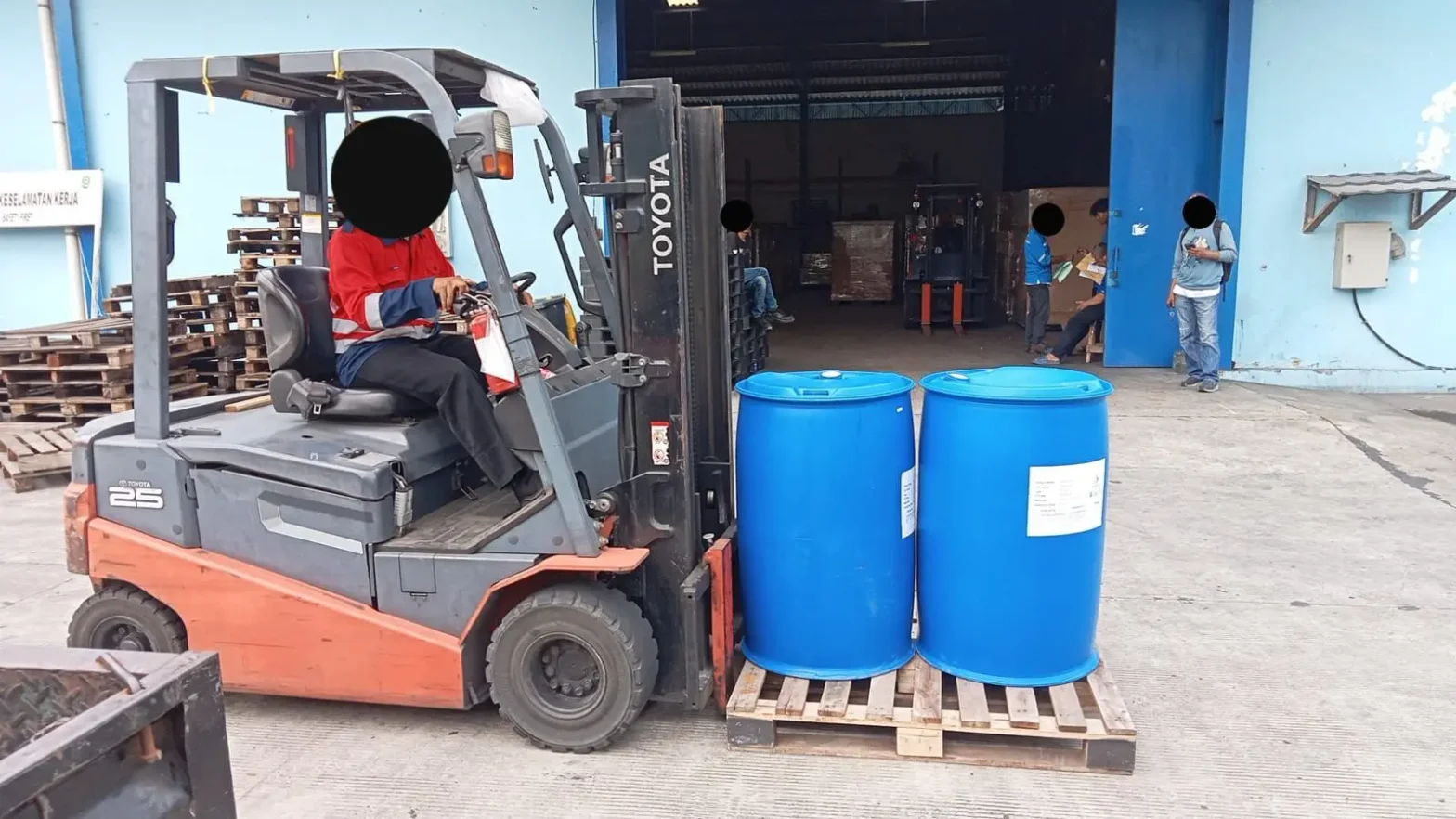
Our patchouli oil export to India included a 250 kg shipment of Indonesian patchouli oil supplied during a period of tight availability in the local market.
The shipment is a useful example of what matters when you source patchouli oil internationally: supply continuity, a clearly defined quality specification, batch-level quality control, and export-ready documentation.
The shipment used Indonesian patchouli oil derived from Pogostemon cablin and was intended for a market where patchouli is widely used in fragrance and cosmetic manufacturing.
This case study focuses on the practical sourcing and quality considerations behind the shipment rather than making broad claims about the entire patchouli market.
Case study summary We completed a 250 kg patchouli oil shipment from Indonesia to India while local supply was relatively tight. The project relied on our sourcing network, quality-control process, and export experience to keep the shipment moving.
Shipment Snapshot
Item
Detail
Product
Indonesian patchouli oil
Botanical name
Pogostemon cablin
Shipment quantity
250 kg
Origin
Indonesia
Destination
India
Source region
Sumatra
Primary commercial relevance
Fragrance and cosmetic formulations
Shipment status
Completed
A 250 Kg Patchouli Oil Shipment from Indonesia to India
The shipment was completed when patchouli availability in Indonesia was relatively difficult. That made sourcing consistency a central part of the project.
At the time, our team relied on an established network of farmers and supply partners to secure material that could be reviewed against the shipment requirements.
This was also not our first essential-oil shipment to India.
The experience helped our team coordinate product availability, quality review, and export preparation for a buyer operating in an important regional fragrance and essential-oil market.
Supply Conditions at the Time
Patchouli prices and availability can change with harvest conditions, production cycles, regional supply, and buyer demand.
During this shipment, the main challenge was not simply finding oil; it was maintaining enough consistency to support an export order while supply was tight.
When you source patchouli oil during a constrained market, it is useful to define the acceptance criteria before the order is confirmed.
That helps prevent a situation where available material does not match the target odor profile, patchouli alcohol range, acidity, or other agreed quality parameters.
How Our Sourcing Network Supported the Shipment
Our sourcing network helped us maintain access to Indonesian patchouli oil even when availability was limited.
For current orders, we still recommend evaluating each shipment at batch level rather than assuming that every origin, harvest, or production lot will have the same profile.
What Quality Parameters Matter in a Patchouli Oil Shipment?
The original shipment was described as Indonesian patchouli oil from Sumatra with a quality profile suitable for fragrance and cosmetic use.
For commercial approval, the important point is not a broad label such as “premium” or “superior,” but whether the actual batch matches the buyer’s agreed specification.
Patchouli Alcohol
Patchouli alcohol is one of the most important reference compounds in commercial patchouli oil. The exact target depends on the buyer specification and intended application.
If you are comparing suppliers, use the actual batch result from the COA or chromatographic report rather than a generic website percentage.
Acidity, Odor, and Batch Consistency
Acidity and odor profile can also influence acceptance, particularly for fragrance applications.
A technically acceptable batch still needs to meet the sensory expectations of the formulation or fragrance brief.
Consistency between the approved sample and the delivered shipment is therefore as important as a single analytical number.
COA and GC Analysis
For a current order, you can compare the supplier specification with a batch-specific Certificate of Analysis and chromatographic data.
The documents should always match the batch or lot being evaluated.
Why Indonesian Patchouli Oil Matters to Fragrance and Cosmetic Buyers
Patchouli oil is widely used in fragrance compositions because its deep, earthy profile works well in base-note structures and can contribute to fragrance persistence.
It is also used in cosmetic and personal-care formulations where the odor profile and raw-material consistency fit the product brief.
For procurement, the commercial questions go beyond aroma alone. You may also need to compare origin, patchouli alcohol, acidity, batch consistency, packaging, available documentation, and supply continuity.
India as a Destination for Indonesian Patchouli Oil
India was the destination for this 250 kg shipment and has remained commercially relevant to essential-oil and fragrance supply chains in the region.
For this case study, the important point is the export process itself: matching the product to buyer requirements, preparing the shipment, and maintaining communication across the sourcing and delivery process.
India is also an important destination for Indonesian essential oils. According to World Bank WITS trade data, Indonesia exported about US$37.15 million of essential oils under HS 330129 to India in 2024, with a reported quantity of approximately 542,154 kg.
If you are comparing material from the two origins, our Indonesian and Indian patchouli oil comparison covers the topic separately so this company update can stay focused on the shipment.
What This Shipment Shows About Our Export Capability
Supply Continuity
The shipment shows why an established sourcing network matters when raw-material availability becomes difficult.
We work to maintain communication with our supply network so that we can identify suitable material and discuss realistic availability with you before an order is finalized.
Quality Control
Quality control is part of the export process, not a final step after the order is packed.
The material should be reviewed against the agreed specification before shipment so that analytical results, odor profile, and batch identity are aligned with the buyer’s approval criteria.
Packaging and Documentation
International orders may require product specifications, COA, chromatographic data, SDS or MSDS, commercial documents, origin information, and suitable bulk packaging depending on the destination and buyer requirements.
Clear communication helps prevent specification disputes later in the process.
Before placing a larger order, you can request product information, available documents, and a representative sample so the material can be reviewed against your formulation and procurement requirements.
Looking for Indonesian Patchouli Oil?
If you are sourcing Indonesian patchouli oil for fragrance, cosmetics, personal care, or other formulated products, you can discuss the required specification, available COA and GC documentation, packaging, sample approval, and bulk quantity with our team.
This 250 kg India shipment is a historical company case study; current availability, specifications, documentation, lead time, and packaging should be confirmed for each new order.
As a leading Indonesian essential oil supplier Europe and South Asia, Global Essential Oil has successfully completed the delivery of multiple container shipments of premium Indonesian essential oils to Europe and South Asia — marking a significant milestone in the company’s journey as one of Indonesia’s leading essential oil manufacturers and exporters.
This achievement reflects years of investment in quality infrastructure, certification, and supply chain reliability — and underscores Indonesia’s position as the world’s most important source of several commercially critical essential oils, including patchouli, clove, lemongrass, vetiver, and nutmeg.
For a company rooted in the volcanic highlands of West Java and the spice islands of Maluku, reaching the laboratories and production floors of Europe and South Asia is more than a commercial transaction — it is a validation that Indonesian essential oil quality can meet the most demanding standards in the world.
Reaching Two of the World’s Most Demanding Markets
Europe and South Asia represent two of the world’s largest and most sophisticated markets for essential oils — and both place significantly different demands on suppliers.
Choosing an Indonesian Essential Oil Supplier Europe: Quality Standards
The European market is widely regarded as the most rigorous quality environment for essential oil imports globally. Buyers in Europe — from fragrance houses in France and Germany to cosmetic manufacturers in the UK and Netherlands — require suppliers to meet a comprehensive stack of standards: IFRA compliance, REACH regulation adherence, Halal certification, and increasingly, GC-FID (Gas Chromatography with Flame Ionisation Detection) laboratory verification as proof of compound purity and authenticity.
GC-FID is a more precise analytical method than standard GC-MS for quantifying compound concentrations in essential oils — and its adoption by European buyers reflects the market’s zero-tolerance approach to adulteration and inconsistency. Meeting this standard requires not just good raw material, but documented, repeatable quality control processes at the manufacturer level.
South Asia: A High-Growth Market with Diverse Demand
South Asia — encompassing markets such as India, Sri Lanka, Bangladesh, and Pakistan — represents one of the fastest-growing regions for essential oil demand globally. The region’s essential oil needs span an exceptionally wide range of applications: traditional Ayurvedic and herbal medicine, modern pharmaceutical compounding, personal care and cosmetics manufacturing, fragrance and perfumery (including attar production), and the region’s enormous soap and detergent industry.
For Indonesian essential oil exporters, South Asia offers a particularly strong fit — the region’s deep familiarity with botanical ingredients and its growing middle class creating premium personal care products align closely with what Indonesian essential oils do best.
Meeting Global Quality Standards: The Challenge Behind the Shipment
Completing a successful multi-container shipment to Europe is not simply a logistics achievement — it is the outcome of an extensive quality assurance process that begins long before the oil reaches the drum.
According to Farel Alfarizy, Product Manager at Global Essential Oil, meeting European market standards requires navigating a multi-layered compliance process: “The key challenges are Halal certification, GC-FID lab results, and consistency in quality control.”
Each of these elements represents a significant operational investment. Halal certification — issued by Indonesia’s MUI (Majelis Ulama Indonesia) — requires regular facility audits and ingredient traceability documentation, and is increasingly a non-negotiable requirement for buyers in both European Muslim-majority consumer markets and across the entirety of the South Asian market.
GC-FID laboratory analysis requires access to calibrated analytical equipment and trained QC personnel capable of interpreting compound profiles and identifying batch-to-batch deviations before any shipment is released. And quality control consistency — ensuring that the oil in drum 50 of a container shipment matches drum 1 in specification — requires systematic process management across every stage from distillation to packaging.
“The key challenges are Halal certification, GC-FID lab results, and consistency in quality control.”— Farel Alfarizy, Product Manager — Global Essential Oil
Beyond the Shipment: Impact on Indonesia’s Essential Oil Ecosystem
Every container that leaves Indonesia carrying essential oils represents far more than a commercial export. Behind each shipment is a network of Indonesian farmers, distillers, and agricultural workers whose livelihoods depend on consistent export demand.
Indonesia’s essential oil industry is built on this ecosystem — smallholder patchouli farmers in Sulawesi and Sumatra, clove growers in Maluku, lemongrass cultivators in West Java, vetiver farmers in Garut. When Indonesian essential oils reach European fragrance houses or South Asian pharmaceutical manufacturers, the value created flows back through this entire chain.
Global Essential Oil’s direct relationships with farmer networks across these regions — and its investment in documentation and quality systems that allow Indonesian-origin oils to meet international standards — is part of what makes these shipments possible, and part of what makes them meaningful.
Looking Ahead: Global Essential Oil’s Vision for Global Expansion
The shipments to Europe and South Asia are not an endpoint — they are a foundation for broader ambitions. Farel Alfarizy outlines the company’s forward roadmap:
“We will be registering several new certifications — including REACH certification, organic certification, and tightening our laboratory testing with GC-FID. Alongside this, Global Essential Oil will be looking for distributor partners in Europe to deepen our presence in that market.”— Farel Alfarizy, Product Manager — Global Essential Oil
REACH (Registration, Evaluation, Authorisation and Restriction of Chemicals) certification is a critical credential for any essential oil supplier aiming to deepen penetration into the European market — it is the EU’s primary chemical safety regulation and increasingly required by European cosmetic and fragrance manufacturers as part of their supplier qualification process. Its pursuit signals that GEO is building for the long term in the European market, not simply completing one-off transactions.
The addition of organic certification would further expand GEO’s addressable market — particularly in the rapidly growing natural and organic cosmetics segment in Europe, where brands are actively seeking certified organic essential oil ingredients to support their product claims.
Alongside Europe and South Asia, Farel confirms that the United States is also on GEO’s expansion radar: “We are also working to develop the US market, which is known to be equally as large as the European market.” The US essential oil market — driven by the country’s large fragrance, personal care, and aromatherapy industries — represents a substantial opportunity for Indonesian manufacturers who can demonstrate the documentation and quality consistency that US buyers expect.
REACH certification: For deeper European market penetration — required by many EU cosmetic and fragrance manufacturers
Organic certification: Targeting the growing natural and organic cosmetics segment in Europe
GC-FID lab tightening: Continuous improvement in analytical verification standards
European distributor partnerships: Building in-market relationships for consistent European presence
US market development: Expanding reach to North America’s large fragrance and personal care industry
Partner with Global Essential Oil for Your Supply Needs
For importers seeking a trusted Indonesian essential oil supplier Europe, South Asia, and beyond, Global Essential Oil offers what the industry’s most demanding buyers require: Global Essential Oil offers what the industry’s most demanding buyers require: verified Indonesian origin, Halal certification, GC-FID quality documentation, and the supply capacity to fulfill multi-container orders consistently.
Our full range of Indonesian essential oils — including patchouli (Dark, Light, and MD grades), clove oil, lemongrass, vetiver, nutmeg, cajuput, citronella, agarwood, and more — is available for bulk export with complete documentation: batch-specific COA, GCMS/GC-FID reports, MSDS, Halal certificate, and Certificate of Origin.
Interested in Sourcing Indonesian Essential Oils for Your Market? Contact our export team to discuss your product requirements, request a sample kit with full GC-FID documentation, or inquire about bulk pricing and container shipment capacity. We respond within 1 business day. → Contact Global Essential Oil — Start Your Sourcing Conversation Now
Our Journey with Bank Indonesia Jakarta Representative Office
Participating in a structured and high-quality business development program is often a defining milestone for growing enterprises. For PT Global Essential Oil, our involvement in the Jawara MSME Development Program organized by the CentralBank of Indonesia Jakarta Representative Office marked an important step in strengthening our business fundamentals, sharpening our strategic mindset, and reinforcing our long-term vision as an exporter of pure essential oils.
The Jawara BI Program is widely recognized as one of Bank Indonesia’s flagship initiatives aimed at empowering micro small medium enterprises (MSMEs) in Indonesia. Through intensive mentoring, structured training modules, and performance-based evaluation, the program is designed to build resilient, competitive, and export-ready enterprises. Representing PT Global Essential Oil in this program was both an honor and a responsibility—one that ultimately resulted in our achievement as the Second Best Participant among all selected MSMEs.
The Role of Bank Indonesia in MSME Development
As the central bank of Indonesia, Bank Indonesia plays a strategic role beyond monetary stability. One of its key mandates includes strengthening the real sector through MSME empowerment, recognizing that MSMEs form the backbone of the Indonesian economy. According to national data, MSMEs contribute significantly to employment creation, domestic value chains, and export potential.
The Jawara BI Program reflects Bank Indonesia’s commitment to ensuring that MSMEs do not merely survive, but grow sustainably with strong governance, financial discipline, and competitive branding. By organizing the program at the regional level—specifically through the Jakarta Representative Office—Bank Indonesia ensures that local enterprises receive hands-on guidance tailored to real business challenges.
About the Jawara BI Program
The Jawara BI Program is not a short seminar or a one-off workshop. It is a comprehensive MSME incubation and coaching program that focuses on fundamental business capabilities, particularly:
Financial Management and Literacy
Branding, Positioning, and Market Communication
Entrepreneurial Mentality and Leadership
Participants are selected through a rigorous screening process and are required to actively engage in training sessions, assignments, evaluations, and presentations. Performance is assessed holistically, combining technical understanding, implementation quality, and mindset transformation.
For PT Global Essential Oil, this structure provided a valuable opportunity to benchmark our internal systems, identify gaps, and refine our strategic direction as a company operating in the global essential oils market.
Strengthening Financial Fundamentals
One of the core pillars of the Jawara Program is financial management. Many MSMEs face challenges not because their products lack quality, but because financial systems are underdeveloped or inconsistent. Through the program, participants were guided to strengthen:
Financial reporting and bookkeeping discipline
Cash flow management
Cost structure analysis
Business feasibility and scalability planning
For PT Global Essential Oil, this training reinforced the importance of aligning financial strategy with long-term export objectives. As a company focused on pure essential oils, where quality control, sourcing, and compliance play a critical role, having a solid financial foundation is essential to ensure sustainability and trust—especially in international markets.
The program encouraged participants to move beyond operational thinking and adopt a strategic financial perspective, ensuring that every business decision is supported by data and measurable impact.
Building a Strong and Authentic Brand
Branding was another key focus area within the Jawara BI Program. In today’s competitive landscape, especially in global trade, branding is no longer limited to logos or packaging—it represents credibility, consistency, and value perception.
Through expert-led sessions and practical exercises, participants learned how to:
Define a clear brand identity and value proposition
Communicate product uniqueness effectively
Align branding with target markets and customer expectations
Build trust through transparency and storytelling
For PT Global Essential Oil, branding discussions were closely connected to our mission of delivering high-quality pure essential oils sourced responsibly and processed with strict quality standards. The program helped us articulate our positioning more clearly—not only as a supplier, but as a value-driven partner in the essential oils supply chain.
This branding clarity is particularly important when engaging with international buyers who prioritize traceability, consistency, and long-term collaboration.
Developing Entrepreneurial Mentality and Leadership
Beyond technical skills, the Jawara Program placed strong emphasis on mental resilience, leadership, and entrepreneurial mindset. This aspect proved to be one of the most transformative elements of the program.
Participants were challenged to reflect on:
Decision-making under pressure
Leadership responsibility in growing organizations
Adaptability in changing market conditions
Long-term vision versus short-term gains
For many MSMEs, growth brings new complexities. Through mentorship and peer discussions, the program encouraged business owners to shift from a purely operational role toward a leadership mindset—one that focuses on strategy, team development, and sustainable growth.
This mental shift is especially crucial for export-oriented companies, where consistency, professionalism, and credibility determine long-term success.
Achieving Second Best Participant Recognition
One of the most meaningful outcomes of our participation was being recognized as the Second Best Participant in the Jawara BI Program. This achievement reflects not only performance during evaluations, but also consistency in participation, quality of assignments, and the ability to internalize and apply the program’s core principles.
For PT Global Essential Oil, this recognition serves as external validation of our commitment to continuous improvement and professional business practices. It also strengthens our credibility as an MSME that is ready to compete at higher levels, including international markets.
Impact on PT Global Essential Oil’s Future Direction
The insights gained from the Jawara Program have had a tangible impact on how we approach business development. Financial discipline, structured branding, and leadership mindset are now integrated into our daily operations and long-term planning.
As a company engaged in the production and export of pure essential oils, we recognize that global competitiveness requires more than product quality alone. It requires governance, consistency, and strategic clarity—elements that were strongly emphasized throughout the program.
Our participation in the Jawara BI Program has reinforced our belief that MSME development is a continuous journey, and that collaboration with institutions such as Bank Indonesia plays a crucial role in accelerating growth.
Closing Remarks
The Jawara BI Program organized by the Bank Indonesia Jakarta Representative Office stands as a strong example of how institutional support can create real, measurable impact for micro small medium enterprises. For PT Global Essential Oil, this experience has been both enriching and transformative.
We extend our appreciation to Bank Indonesia for its commitment to MSME development and for providing a platform that not only educates, but also challenges entrepreneurs to grow beyond their comfort zones. Moving forward, we are committed to applying the knowledge, discipline, and mindset gained from the program to strengthen our role in the essential oils industry—locally and globally.
From March 12 to 14, 2025, representatives from the Papua government held a study visit in Bogor with the aim of exploring the development of patchouli plant products in Papua. This activity is an important step in efforts to introduce patchouli as a new leading commodity in Papua. The event, attended by several relevant parties, including Agung Milyarto, Director of Global Essential Oil Operations, is also expected to open opportunities for broader and deeper collaboration for the future development of patchouli products.
Organized by LK2PI
This event was organized by LK2PI (Institution for Partnership and Consultation in Agricultural Industry Development), an organization focused on the development and empowerment of the agricultural sector in Indonesia. LK2PI plays a crucial role in supporting farmers and agricultural industry players to optimize their agricultural yields through various training programs, consultations, and the use of the latest technologies. In this context, LK2PI is responsible for facilitating this study visit with the aim of enhancing the understanding of how to develop patchouli plants in Papua, as well as introducing the growing market potential of patchouli oil.
The Growing Potential of Patchouli Plants
Patchouli plants (Pogostemon cablin) have now become one of the commodities experiencing rapid growth in the international market. Patchouli oil, derived from the leaves of the patchouli plant, is highly sought after in the perfume, cosmetics, and other personal care industries due to its distinctive, long-lasting fragrance and therapeutic benefits. The global demand for patchouli oil is steadily increasing, creating significant opportunities for patchouli-producing countries, including Indonesia.
Papua, with its supportive climate and soil conditions, has the potential to become one of the patchouli-producing regions capable of supplying the needs of the international market. Patchouli plants could become a new leading commodity that not only has a positive impact on Papua’s economy but also provides opportunities for local farmers to improve their livelihoods. Therefore, this study visit is highly relevant and strategic in opening new insights into the management and development of patchouli plants in Papua..
Support from Global Essential Oil
Global Essential Oil, a company engaged in the production and distribution of essential oils, also supports this event. Rifqi Hermawan, the commissioner of Global Essential Oil, stated that the company fully supports this activity as they see great potential in the development of patchouli plants in Papua. “We hope that this collaboration will be long-term and strengthen the supply chain of patchouli oil from Papua to international markets. This is a great opportunity to support the growth of the patchouli industry, both in terms of production and marketing,” said Rifqi.
The support provided by Global Essential Oil includes technical aspects and market understanding, which can significantly contribute to introducing Papua’s patchouli oil to the global market. The company also sees great opportunities to increase production capacity and build a more efficient distribution system to meet the growing international demand.
Process of Patchouli Plant Development
During the study visit, participants not only gained insights into the patchouli oil market but also learned about the technical processes involved in developing patchouli plants, from planting to the production of patchouli oil.
1. Types of Patchouli Plants Patchouli plants that thrive in tropical regions have several varieties that can be chosen for cultivation according to market needs. The selection of superior seeds and proper planting techniques will affect the quality and quantity of the patchouli oil produced. During this event, participants learned about various types of patchouli plants that are suitable for growing in Papua and how to care for them to achieve optimal results.
2. Planting Methods The process of planting patchouli must be carried out with attention to factors such as selecting the right location, using healthy seedlings, and employing efficient planting methods. Several methods introduced during this event included techniques for group planting and environmentally friendly plant maintenance. With the right approach, patchouli plants can thrive and provide maximum yields in a shorter time frame.
3. Patchouli Oil Production Methods One important aspect discussed at the event was the process of distilling patchouli leaves to produce high-quality patchouli oil. Distillation of the patchouli leaves must be done carefully to maintain the quality of the oil produced. Some distillation techniques introduced included the use of modern distillation equipment, selecting the right temperature, and separating the patchouli oil from the distillation by-products to preserve its aroma and content.
4. Patchouli Oil Market Participants were also taught effective strategies for marketing patchouli oil. Given the growing international demand for patchouli oil, it is important for Papua to identify the right distribution channels and build strong relationships with global buyers. Experts at the event provided insights into how to market patchouli oil, including product branding, attractive packaging, and competitive pricing strategies in international markets.
Thank You for the Collaboration with the Papua Government
This event also provided an opportunity for LK2PI, Global Essential Oil, and the Papua government to establish a closer partnership in developing the patchouli plant industry in Papua. Agung Milyarto, the Director of Operations at Global Essential Oil, expressed his gratitude for the opportunity to collaborate with the Papua government in introducing and developing patchouli as a regional leading product.
“Thank you for the opportunity given to us to work together with the Papua government. We hope that this activity will have a positive impact on the economic development of Papua, as well as provide long-term benefits for farmers and the local community,” said Agung.
Kesimpulan
The study visit held in March 2025 in Bogor marks a positive beginning for the development of patchouli plants in Papua. With the support of LK2PI, Global Essential Oil, and the Papua government, it is hoped that patchouli plants will thrive and become a leading commodity that brings significant benefits to the people of Papua. Through strong collaboration among the relevant parties, Papua has a great opportunity to become one of the best patchouli oil producers in the world, capable of meeting the growing demand of the international market.